
 +382 60 099359


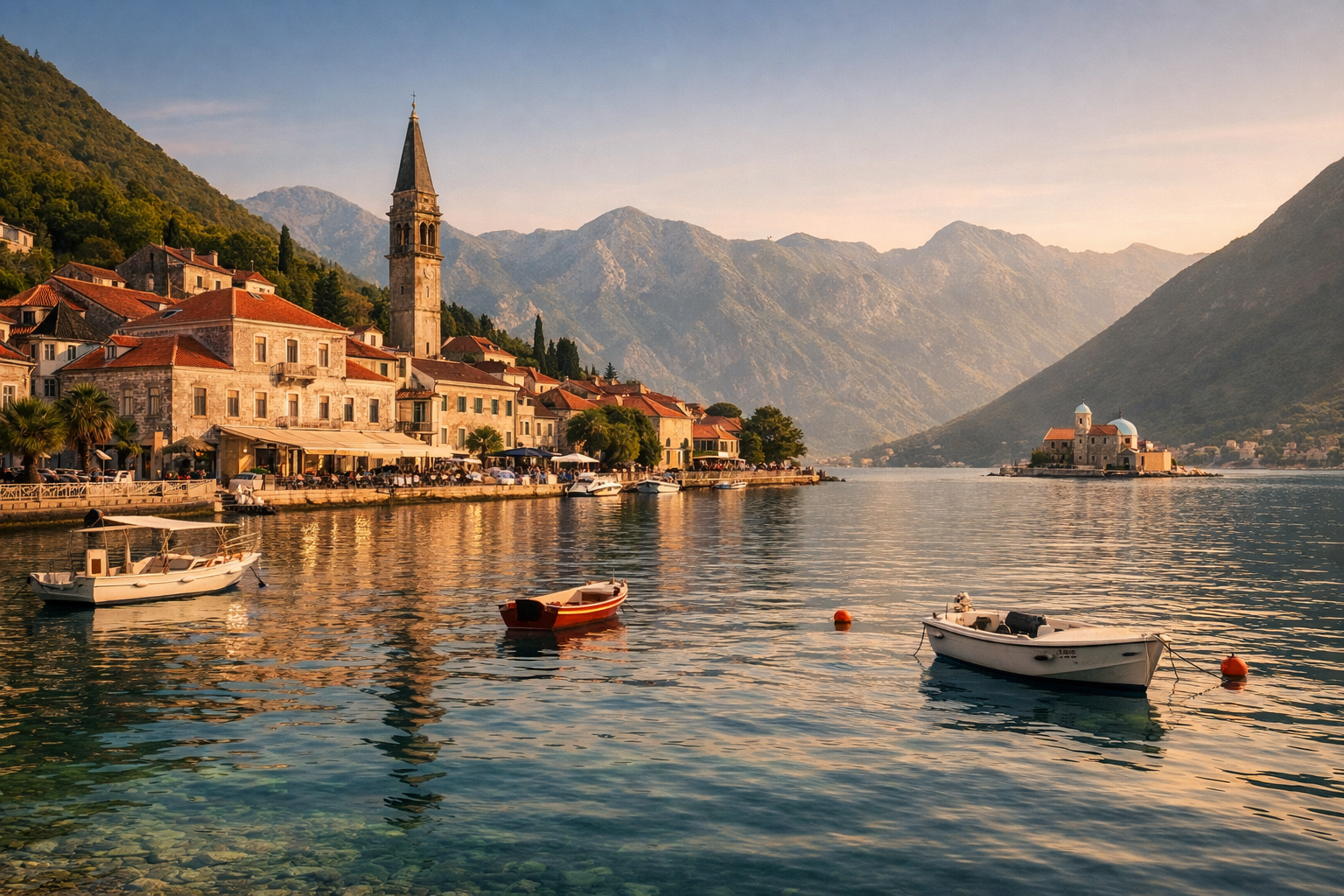

Perast, Montenegro is one of the most intimate and prestigious towns in the Bay of Kotor, attracting both discerning travelers and property buyers. In short, Perast Montenegro is not a typical mass-market resort, but a historic destination defined by a limited supply of real estate, exceptional aesthetic value, and sustained investor interest. This is precisely why search queries such as “real estate in Perast”, “buy property in Perast”, “living in Perast”, and “Perast real estate” continue to remain highly relevant among those seeking not just a seaside apartment, but a rare asset in a truly iconic location.
From a practical standpoint, Perast stands out on several levels: as a travel destination, a place for tranquil living, and a real estate market with inherently limited supply. Situated in one of Montenegro’s most recognizable regions — the Bay of Kotor — Perast does not treat its surroundings as mere scenery, but as an integral part of its lifestyle. Here, waterfront views, a preserved historical setting, proximity to Kotor and Tivat, and a relatively high entry threshold define the overall appeal. According to the official Government of Montenegro portal and publications by the Montenegro Statistical Office (MONSTAT), coastal areas across the country continue to attract steady interest from international buyers, particularly in the segment of seafront properties and heritage locations.
Key takeaway: Perast is not for everyone. It is neither a budget-friendly resort nor a destination for those seeking a dynamic urban lifestyle. However, for buyers who value a historic setting, panoramic bay views, a prestigious address, and limited supply, Perast remains one of the most compelling locations along the entire Montenegrin coast.
Where Is Perast and What Makes It Unique?
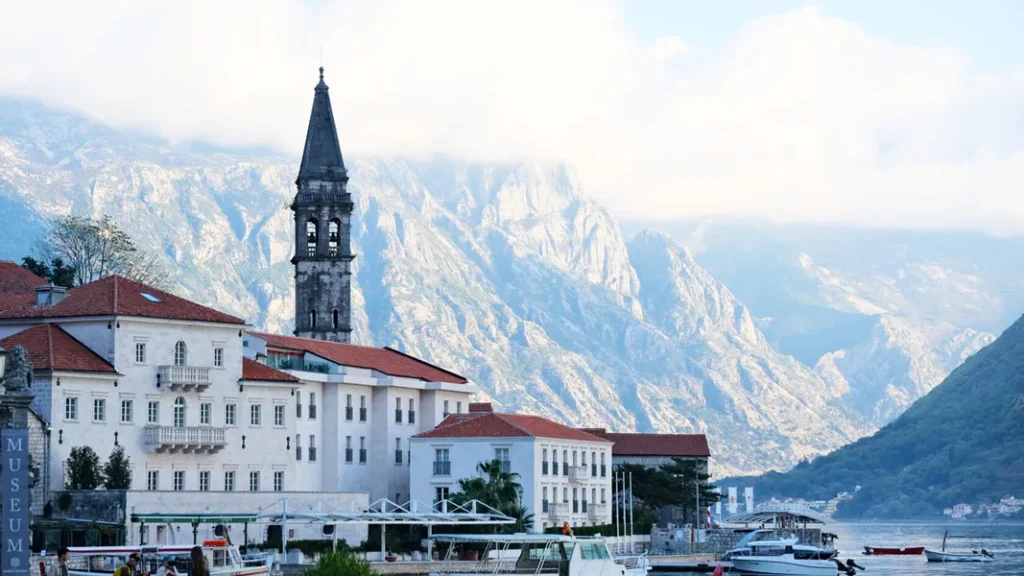
Perast, Montenegro is a small historic town on the Adriatic coast, set within one of the country’s most visually striking and culturally significant areas—the Bay of Kotor. When users search for “where is Perast” or enter queries such as Perast Montenegro, Perast location Montenegro, or Perast guide, they are typically trying to understand two key things: how accessible the town is and what sets it apart from other destinations in Montenegro. The short answer is this: Perast occupies a strategically advantageous location—close enough to Kotor and Tivat for convenience, yet distinct enough to preserve its own identity, sense of seclusion, and rare architectural cohesion.
The defining feature of Perast is that it is not simply a seaside town, but a preserved historical environment with tightly controlled development, high cultural value, and panoramic views over the Bay of Kotor.
From both a real estate and tourism perspective, Perast is widely regarded as a destination “not for everyone.” Unlike larger coastal centers, it lacks the feel of a conventional resort with constant tourist flow. Instead, the town offers a different experience: centuries-old stone houses, a narrow waterfront, views of nearby islands, and an architectural consistency that creates a sense of a unified historical setting. This is precisely why real estate in Perast—and search queries such as “buy property in Perast”—tend to attract buyers who are not looking for a mass-market asset, but for something rare in one of the most prestigious parts of the Bay of Kotor.
Location Within the Bay of Kotor
The Bay of Kotor is where Perast reveals its full character. The town is located in the northwestern part of the bay, between Kotor and Risan, and is administratively part of the Municipality of Kotor. According to the official website of the Municipality of Kotor, Perast has historically been one of the region’s key coastal settlements and continues to hold value as part of the bay’s cultural landscape.
Without unnecessary romanticism, Perast’s geography genuinely works in its favor. On one hand, it is close to the main transport hubs along the coast. On the other, it does not dissolve into the urban intensity that often characterizes larger neighboring towns. For permanent living, seasonal stays, and investment analysis alike, this balance is a significant advantage.
| Location | Approximate Distance from Perast | Practical Significance |
|---|---|---|
| Kotor | around 12 km | Administrative and service hub of the region |
| Risan | around 5 km | Closest access to additional infrastructure and daily services |
| Tivat | around 20–22 km | Access to the airport and international connectivity |
| Tivat Airport | approximately 25–35 minutes by car | Key transport hub for residents and visitors |
This positioning makes Perast appealing to several distinct audiences. For tourists, it serves as a convenient base from which to explore the entire bay. For property buyers, it offers a rare combination of privacy and accessibility. For investors, it provides a location with a strong visual identity—an important factor influencing demand and liquidity. It is no coincidence that in comparisons such as “Perast vs Kotor—which is better?”, the choice often depends less on distance and more on intended use: Kotor is typically favored for a more dynamic urban lifestyle, while Perast is chosen for its prestige, tranquility, and aesthetic appeal.
From a market perception standpoint, Perast stands out not for its scale, but for the quality of its environment: fewer properties, less noise, and a far stronger sense of exclusivity.
For short-term stays, the town is equally convenient. A boat trip to the island of Our Lady of the Rocks typically costs around €5–€10 per person, depending on the season and format, while the waterfront itself allows visitors to combine sightseeing with time by the water. This is why search queries such as “Perast vacation”, “things to do in Perast Montenegro”, and “is Perast worth visiting” remain consistently popular: the town fits equally well into a one-day itinerary or a more immersive coastal stay.
Historical Heritage and UNESCO Status
Perast’s uniqueness cannot be explained by geography alone. Its true value lies in its cultural depth, which is not decorative, but authentic. The town developed as an important maritime and trading center, reaching its peak during the period of Venetian influence. This legacy is reflected in its baroque architecture, stone palaces, churches, and the residences of prominent seafaring families—elements that together create a distinctive visual identity, instantly recognizable even to those who have only seen Perast in photographs.
It is important to clarify the UNESCO aspect. Perast is not an individual UNESCO World Heritage site in its own right, but it forms part of the protected Natural and Culturo-Historical Region of Kotor. This distinction is particularly relevant for those researching real estate in Perast, Montenegro and seeking to understand the legal and urban planning context. The official UNESCO listing confirms that the entire cultural landscape—including Perast—is recognized as part of the region’s exceptional heritage.
In practical terms, this status has several implications. First, the town cannot evolve through aggressive modern development. Second, any renovation or alteration within the historic environment requires a far more considered and regulated approach. Third, the limited supply of properties is not temporary but structural. As a result, real estate in Perast often commands higher prices than comparable properties in less historically significant locations.
For buyers, this means acquiring more than just square meters—you are investing in context: architectural, cultural, and economic. A historic stone house with a view over the bay in Perast is valued differently from a standard apartment in a typical coastal development. Even when renovation is required, the historical setting itself supports property value and sustains long-term demand from both tenants and end buyers.
Perast’s historical heritage is not an abstract advantage, but a tangible pricing factor. The more authentic the property, the better preserved its architectural features, and the stronger its views, the greater its appeal in the market.
It is also worth noting that the town’s cultural significance shapes the everyday living experience. Living in Perast is not just about location—it is about inhabiting a historical environment where architecture, topography, and waterfront views define a distinctive rhythm of life. According to the Montenegrin cultural heritage protection authority, heritage sites in the country are subject to special preservation regimes, directly affecting renovation, usage, and the long-term capitalization of real estate in locations such as Perast.
Ultimately, Perast’s uniqueness can be distilled into three key factors: its exceptional position within the Bay of Kotor, its rare historical integrity, and its limited real estate supply. It is this combination that makes the town stand out not only on the tourist map, but also within the Perast real estate segment, where value is defined not by volume, but by the scarcity of truly distinctive properties.
Living in Perast: What Kind of Town Is It?
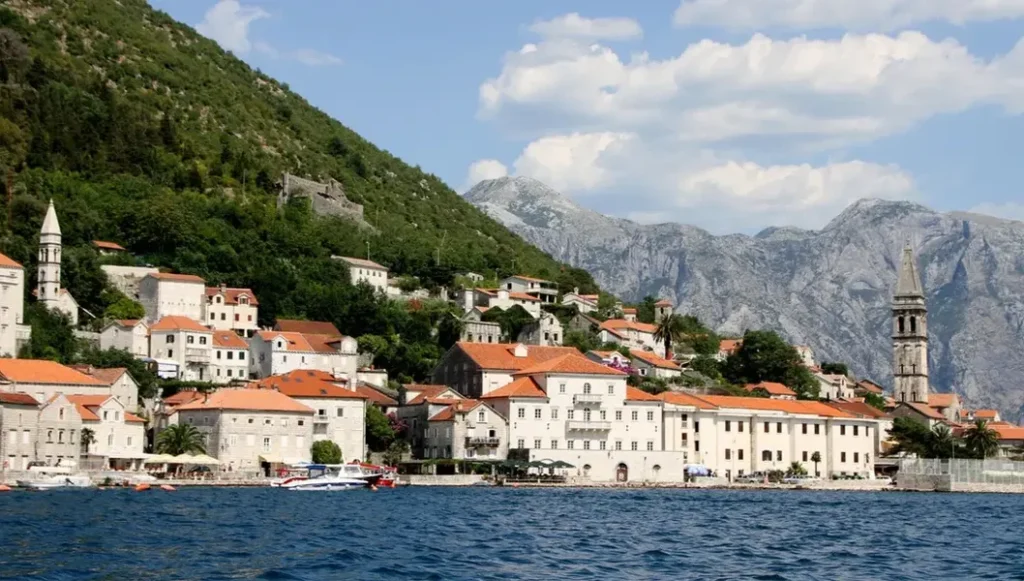
Life in Perast differs significantly from what many people expect from a coastal town in Montenegro. Perast, Montenegro is not a hub of urban activity, but rather a small historic enclave defined by a very slow pace of life, limited internal infrastructure, and a strong emphasis on environmental quality. This is why search queries such as “living in Perast Montenegro”, “Perast Montenegro reviews”, “is Perast a good place to live”, and “expat life Perast” tend to focus less on the romantic image of an old town and more on practical considerations: how comfortable it is to live here year-round, who this lifestyle suits, and what everyday life looks like beyond the postcard view.
Viewed objectively, Perast is a town for those who deliberately choose tranquility, panoramic bay views, a historic setting, and limited residential density. There is little sense of dense urbanization here, very few new residential developments, and almost none of the typical large-scale resort infrastructure. This is both its greatest strength and its primary limitation. For some buyers, it provides the perfect backdrop for a calm life by the sea; for others, it may feel too compact and understated.
Key characteristic of Perast: it is a prestigious historic town designed for peaceful living, not a universal destination suited to every lifestyle scenario.
According to data from the Montenegro Statistical Office (MONSTAT), coastal municipalities consistently attract higher levels of interest from foreign nationals and seasonal residents, which directly impacts the cost of services, rentals, and everyday living expenses. In Perast, this dynamic is particularly evident due to the town’s small size, limited housing supply, and its reliance on nearby Kotor, Risan, and Tivat for many aspects of daily life.
From a budgeting perspective, it is important to recognize that the cost of living in Perast is generally higher than in less prestigious or less tourist-oriented towns in Montenegro. However, the distinction lies not only in price levels but also in the structure of daily expenses: many goods and services are accessed outside Perast itself. As a result, transportation, car ownership, and logistics play a more significant role here than in cities such as Budva or Podgorica.
Tranquility vs. the Tourist Season
Outside the high season, Perast feels almost like a private space. The town is calm, with little noise, minimal traffic, and none of the constant bustle typical of larger resort destinations. Mornings are defined by the sound of the water, quiet conversations along the waterfront, and the occasional passing boat rather than a steady stream of cars. For many, this is precisely why living in Perast is perceived as a privilege.
However, from late spring through early autumn, the atmosphere changes. While Perast remains small, the impact of tourism becomes noticeable. The number of day-trip visitors increases, restaurants operate at a higher pace, and pressure on parking and coastal roads intensifies. This does not turn the town into a noisy resort, but complete seclusion should not be expected in July and August.
A realistic expectation: in winter, Perast is exceptionally quiet and almost meditative; in summer, it becomes a prestigious yet distinctly tourist-oriented destination within the Bay of Kotor.
From a practical standpoint, this means that anyone considering permanent residence should assess their tolerance for seasonal fluctuations in advance. Conversely, for those purchasing property as a second home or an investment, the summer tourist flow can be a clear advantage. It is precisely at this intersection of lifestyle and investment logic that Perast becomes particularly compelling.
Below is an indicative overview of typical monthly expenses for an individual or a couple living in Perast or the surrounding Bay of Kotor area. Actual costs will vary depending on the season, consumption patterns, housing type, and the need for regular travel.
| Expense Category | Estimated Range | Comment |
|---|---|---|
| Groceries (per person/month) | €250–€400 | Basic consumption level; many purchases are often more convenient in Kotor or Risan |
| Utilities | €80–€180 | For a 50–70 m² apartment; costs vary seasonally |
| Internet and mobile services | €25–€45 | Depends on provider and package |
| Dinner for two at a restaurant | €35–€70 | Prices tend to be higher during peak season |
| Coffee by the waterfront | €2–€4 | Typical range for coastal areas |
| Car expenses and local logistics | €50–€150 per month | Especially relevant for regular trips for shopping and services |
For families with children or those seeking a fully self-sufficient urban environment, Perast may feel too compact. For individuals who value a slower pace, architectural quality, and a quiet life by the sea, it represents a rare alternative to more crowded destinations.
Who Is Perast Best Suited For?
Living in Perast, Montenegro is not designed for a broad, universal audience, but rather for clearly defined groups of buyers and residents. Broadly speaking, these can be divided into three main categories: retirees, investors, and remote professionals. While their motivations differ, they are united by an appreciation for Perast’s core advantage—the combination of historical authenticity, safety, aesthetic appeal, and limited real estate supply.
Retirees
For retirees, Perast is particularly appealing due to its tranquility and pace of life. There is no high-density development, no vibrant nightlife, and the overall atmosphere encourages long-term, relaxed living. Waterfront views, a mild climate, walkable routes along the promenade, and proximity to Kotor make it an attractive choice for those seeking a peaceful life by the sea rather than an active social environment.
At the same time, certain limitations must be considered. Perast is not a medical hub, and many services are accessed in neighboring towns. For this reason, having a car, access to taxis, or support from a property management company is particularly important. When selecting a property, it is advisable to evaluate not only the view, but also the practical realities of everyday logistics.
Perast is well suited to retirees whose priorities are peace, safety, and visual quality, rather than immediate access to a wide range of services.
Investors
For investors, Perast represents a niche, supply-constrained, and highly prestigious market. Unlike destinations where supply can quickly expand through new developments, Perast is structurally limited by its historical environment and urban planning constraints. This is why real estate in Perast is often viewed as a rare and highly distinctive asset class.
The investment logic here is driven not by scale, but by quality. Properties with bay views, waterfront locations, restored historic houses, and apartments within heritage buildings are particularly sought after. Depending on the property’s characteristics, seasonal rental income can be significant, while limited supply supports resale demand. For investors, this means that Perast performs best in the premium and upper mid-market segments, rather than in the mass rental category.
According to the Montenegrin Ministry responsible for spatial planning and state property, real estate transactions in historically sensitive areas require particularly careful due diligence regarding documentation and permitted use. This is a crucial consideration for investors evaluating both returns and legal security.
Remote Professionals
For remote professionals and internationally mobile property owners, expat life in Perast can be highly appealing due to its combination of tranquility, panoramic views, and relative proximity to Tivat and Kotor. This lifestyle suits those who do not require a dynamic urban environment on a daily basis, but value visual comfort, reliable internet, and convenient access to airports and regional business hubs.
That said, Perast is not ideal for all remote workers. Those who depend on coworking spaces, a wide range of services, an active expat community, and full urban functionality within walking distance may find Kotor, Tivat, or Budva more practical. Perast is better suited for focused work, quiet living, and immersion in a visually rich environment rather than continuous engagement with a dynamic urban scene.
| Category | Why Perast Works | What to Consider |
|---|---|---|
| Retirees | Peace, safety, mild climate, walkable environment | Limited local infrastructure and reliance on nearby towns |
| Investors | Limited supply, prestige, tourism demand, rare assets | High entry threshold and need for thorough due diligence |
| Remote professionals | Tranquility, aesthetics, sea views, proximity to Tivat Airport | Limited range of services and professional infrastructure locally |
Overall, the answer to whether Perast is a good place to live is positive for those who intentionally seek a historic coastal town with a slow pace, high visual quality, and a unique real estate profile. However, for those whose priorities include extensive infrastructure, a dynamic business environment, schools within walking distance, and urban energy, Perast may prove too restrictive. According to the official Government of Montenegro portal, the development of coastal municipalities is based on balancing tourism, heritage preservation, and livability—and Perast stands as one of the clearest examples of that balance.
Conclusion: Perast is a town for a measured, aesthetically rich, and private lifestyle by the sea. It is chosen not for the breadth of opportunities, but for the quality of the environment itself.
Beaches in Perast: Where to Swim and Relax
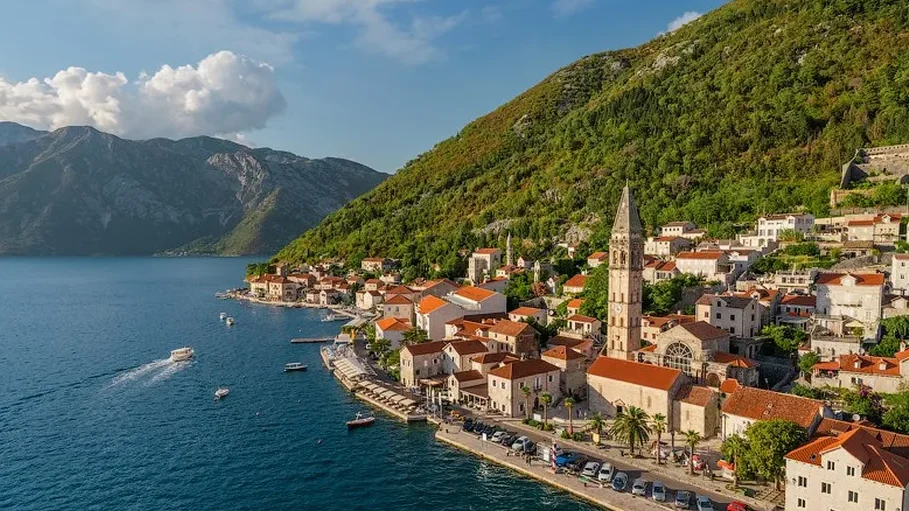
Beaches in Perast differ noticeably from the classic Adriatic resort format. Perast, Montenegro is прежде всего a historic town with a narrow shoreline, a stone waterfront, and direct access to the deep waters of the Bay of Kotor. This is why queries such as “where to swim in Perast”, “Perast beaches”, “swimming in Perast”, and “are there sandy beaches in Perast” require a clear explanation: there are virtually no wide sandy stretches here. Instead, swimming is primarily organized via stone sections, concrete platforms, and pontoons.
This does not make a holiday in Perast, Montenegro any less appealing, but it does reshape expectations. Perast is best suited to those who value clean water, a calm atmosphere, scenic bay views, and the combination of seaside relaxation with walks through a historic town. However, if your priority is a gentle sandy entry into the sea, wide beaches, and traditional family-oriented beach infrastructure, it is worth considering nearby locations in advance.
Key fact: in Perast, swimming does not take place on traditional beaches, but primarily from pontoons, stone platforms, and designated waterfront areas. This defines the local coastal experience.
Seasonal use and coastal management in Montenegro are overseen by state and municipal authorities, including the public enterprise responsible for managing Montenegro’s coastal zone, which supervises much of the seaside infrastructure and its operational framework. For a clearer understanding of the location itself, the official Municipality of Kotor website is also a useful resource, as Perast falls under its administrative jurisdiction.
Beach Characteristics (Stone, Platforms, Pontoons)
The defining feature of Perast’s coastline lies in its natural and architectural layout. Unlike Budva or certain parts of Herceg Novi, there is no extended beachfront. The shoreline of the historic town is narrow, and buildings are positioned close to the water. As a result, swimming areas are organized differently: along the waterfront, you will find stone access points, small concrete platforms, private and public pontoons, as well as equipped sections attached to hotels and restaurants.
From a practical perspective, this means several things. First, entry into the water is often deeper and more abrupt than on pebble beaches. Second, water shoes are recommended in many areas, particularly for children and older visitors. Third, some spots are better suited for relaxed swimming and sunbathing rather than extended stays with young children.
Are there sandy beaches in Perast? Strictly speaking, almost none. While the term “beach” is sometimes used broadly in property descriptions and travel guides, in reality it typically refers to compact waterfront areas rather than sandy coastlines. This is important to keep in mind for both tourists and property buyers considering living in Perast as a long-term seaside lifestyle.
Perast does not compete with classic beach resorts in terms of shoreline width. Its advantage lies not in sand, but in its historical setting, panoramic views, and tranquil swimming format.
From a cost perspective, a day by the water in Perast can range from very affordable to relatively premium, depending on the chosen setup. Public access points along the waterfront are generally free. However, equipped areas at hotels or restaurants typically charge around €15–€35 for a set of two sunbeds and an umbrella during peak season, with high-end locations reaching €40–€60. Drinks and basic orders at the seaside usually add another €10–€25 per person.
| Parameter | Typical for Perast |
|---|---|
| Coastline type | Stone areas, concrete platforms, pontoons |
| Sandy beaches | Virtually absent |
| Water entry | Often deep and relatively steep |
| Suitable for children | Selective; depends on the specific location and level of comfort |
| Public swimming access | Generally free |
| Sunbeds and umbrella | Approximately €15–€35; premium zones higher |
Best Places to Swim
When discussing where to swim in Perast, it is more accurate to think in terms of different formats rather than a single “best beach.” The right choice depends on whether you prioritize convenience, ease of access, service, or a quieter atmosphere.
1. The central waterfront of Perast.
This is the most obvious and popular option. Along the historic part of the town, there are small public access points and platforms that allow easy entry into the water. The main advantages are walkability, panoramic views of the islands, and proximity to cafés. The downside is limited space during peak season and a format that is not always ideal for children.
2. Equipped areas at hotels and restaurants.
Certain waterfront sections offer a more structured beach experience, including sunbeds, umbrellas, service, and sometimes showers and restaurant access. This option is ideal for those planning to spend several hours by the sea in greater comfort. During peak season, the cost for two people typically ranges from €20–€50, depending on the venue and minimum spend requirements.
3. Smaller platforms and pontoons on the outskirts of town.
For a quieter experience away from the main tourist flow, it is worth exploring areas slightly removed from the central promenade. These spots often provide more space and a calmer environment, particularly in the morning or outside peak hours.
4. Boat trips with swimming stops.
For many visitors, a comfortable format of swimming in Perast extends beyond the shoreline. Short boat trips around the bay allow you to combine sightseeing with swimming in more open and visually striking locations. A simple transfer or short excursion typically starts at around €5–€10 per person, while private options are more expensive.
The most comfortable time for swimming in Perast is in the morning and early afternoon, when the waterfront is less crowded and the water appears calmer.
From a practical standpoint, it is also important to consider everyday logistics. During high season, parking in the town is limited, and convenient spots are often paid. Depending on location and time of day, parking near the waterfront or within walking distance can cost approximately €5–€15 per day. For property owners this may be less critical, but for tourists planning to spend a full day by the sea, it is an important factor.
Nearby Alternatives (Kotor, Dobrota)
If Perast feels too compact or if a more conventional seaside setup is preferred, nearby locations are worth considering. This is why many users compare not only “Perast vs Kotor—which is better”, but also the swimming experience in each location.
Kotor offers a more urban coastal experience. While it also lacks wide sandy beaches, access to the water is more varied: there are small pebble and concrete areas, better-developed infrastructure, and a more convenient combination of swimming, cafés, shops, and everyday services. For those combining sightseeing with a quick swim, Kotor is often the more practical choice.
Dobrota, located directly next to Kotor, is widely considered one of the most convenient alternatives for regular access to the sea. Its waterfront is longer than Perast’s, with more swimming spots, a better distribution of visitors, and easier options for spending several hours by the water. Although platforms and stone entry points still dominate, the overall sense of space is often more comfortable.
| Location | Swimming Format | Best For | Estimated Costs |
|---|---|---|---|
| Perast | Pontoons, stone and concrete platforms | Those who value atmosphere, tranquility, and a historic setting | From free public access to €35–€60 for equipped areas |
| Kotor | Small urban beach zones, concrete and pebble areas | Those combining swimming with city services and sightseeing | Comparable or slightly lower than Perast’s tourist spots |
| Dobrota | Extended waterfront with platforms and accessible entry points | Those seeking a more practical and regular seaside experience | Generally mid-range within the bay |
From both a lifestyle and real estate perspective, this distinction is fundamental. Perast stands out for its aesthetics and prestige, but is less practical in terms of beach accessibility. Kotor and especially Dobrota are often better suited for families, extended summer stays, and those who want easier, more frequent access to the water without the concentration of tourism typical of a historic center.
Coastal development and seasonal organization in Montenegro are regulated through official programs, with information published by government bodies such as the Ministry of Tourism of Montenegro. This is particularly relevant for those considering not only a holiday in Perast, but also property acquisition, as the nature of beach infrastructure directly influences both lifestyle and seasonal demand.
Conclusion: Perast is well suited for swimming and seaside relaxation if you are intentionally choosing a historic town with pontoons, deep water, and a more intimate atmosphere rather than a traditional beach resort. For wide, classic beaches, nearby destinations are the better choice.
Top Attractions in Perast
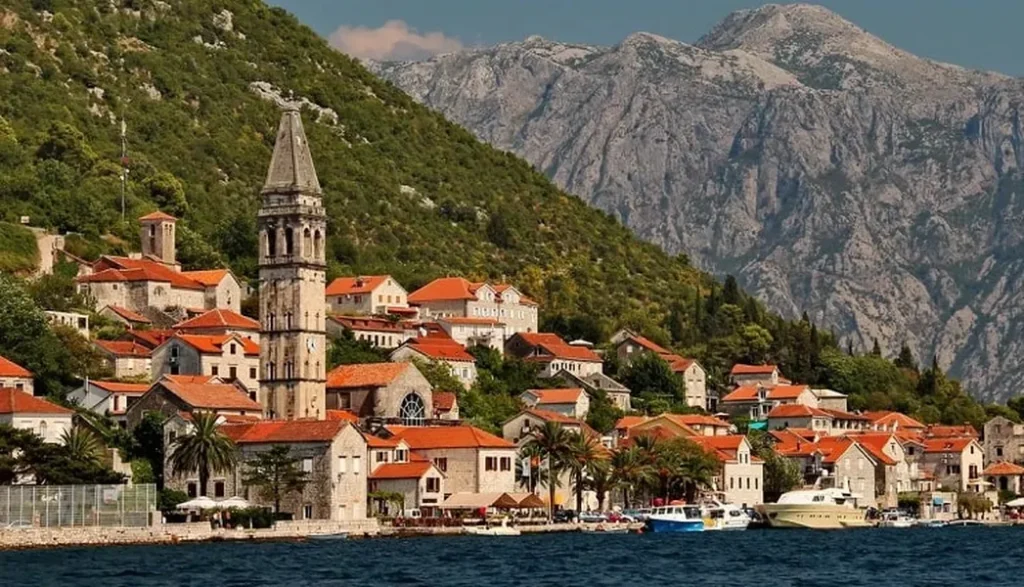
Perast, Montenegro is valued not only for its panoramic bay views and exclusive real estate profile, but also for its rich cultural environment. For a town of its size, it offers a remarkable concentration of landmarks that define its status: island sanctuaries, baroque churches, historic palaces of seafaring families, museums, and a remarkably cohesive architectural landscape. This is why a visit to Perast rarely consists of just a stroll along the waterfront—the town is best experienced as a полноценная cultural destination within any Bay of Kotor itinerary.
From a practical standpoint, Perast’s attractions are not only relevant to tourists. They also play a key role for property buyers and investors, as the town’s historical and architectural value directly supports its appeal, limited supply, and consistent rental demand. According to the official website of the Municipality of Kotor, Perast is considered one of the most significant historic settlements in the bay and continues to hold a distinct place within the region’s cultural landscape.
The defining feature of Perast as a destination is that its landmarks are not confined to a single museum or district—the town itself is the attraction.
Below are the key sites that shape Perast’s identity and are most frequently explored by those researching a Perast guide, planning a visit to Perast, Montenegro, or deciding whether Perast is worth visiting.
Our Lady of the Rocks
Our Lady of the Rocks is undoubtedly Perast’s most iconic landmark and one of the most recognizable symbols of the entire Bay of Kotor. This artificial island, located just off the town’s coastline, is home to a church and museum of the same name. Its silhouette is instantly recognizable and frequently featured in imagery associated with Perast Montenegro.
Its value extends far beyond aesthetics. For Perast, the island serves multiple roles—religious, historical, and symbolic. It defines the town’s panorama, shapes its visual identity, and reinforces the sense of uniqueness that sets Perast apart. For tourists, it is an essential stop; for property owners, it is part of the visual narrative that adds premium value to the location.
The island is typically reached by a short boat transfer from Perast’s waterfront. During peak season, the round-trip cost is usually around €5–€10 per person, depending on the provider and type of excursion. Entry to the church and museum is generally charged separately or included in a combined ticket, with prices typically ranging from €2–€5 per person. Private boat options are available at a higher cost.
If there is one landmark in Perast that should not be missed, it is Our Lady of the Rocks. In terms of recognition, it defines the town’s entire image.
The best time to visit is in the morning or early afternoon, when there are fewer tour groups and it is easier to explore the interior, museum exhibits, and surrounding views at a relaxed pace. For photography, the island is particularly striking both from the water and from the Perast waterfront, especially in soft natural daylight.
St. Nicholas Church
St. Nicholas Church is Perast’s main religious site and one of its most important architectural landmarks. It is easily recognizable by its bell tower, which dominates the skyline of the historic town and serves as a visual anchor for the central area. For first-time visitors, the church often becomes the starting point of any walking route through Perast.
Architecturally, the church reflects the period of Perast’s greatest prosperity as a maritime center. Inside, visitors will find a traditional church interior, the atmosphere of an active place of worship, and a sense of scale that feels particularly striking given the town’s intimate size. The bell tower is also a major draw, offering panoramic views over the bay and the historic townscape.
Access conditions may vary depending on the season, religious calendar, and opening hours. In many cases, entry to the church itself is free, while access to the bell tower or specific areas may require a small fee—typically around €1–€3. As this is an active religious site, visitors are expected to dress and behave appropriately.
St. Nicholas Church is significant not only as an architectural landmark, but as a defining element of the town’s scale and silhouette: without it, Perast would lose a substantial part of its historic identity.
From a practical standpoint, a visit to the church can easily be combined with a walk through the central part of town, exploration of historic palaces, and access to the waterfront. This allows visitors to gain a well-rounded impression of Perast in just 1.5–2 hours, even on a short trip.
Museums and Architecture
One of the strongest arguments for why Perast is worth visiting lies in its architectural integrity. Unlike many coastal towns where historical character has been partially disrupted by modern development, Perast preserves a rare visual unity. Here, you will find historic stone houses, palaces of seafaring families, carved facades, arched entrances, stairways, narrow passageways, and a distinctive baroque aesthetic that defines the town’s character.
The most notable museum is the Perast Town Museum, housed within a historic palace. Its exhibitions focus on maritime history, the lifestyle of the local elite, navigation, and the town’s development during its period of greatest influence. For visitors, it provides an opportunity to understand Perast not only as a picturesque location, but as a former center of maritime culture. Ticket prices typically range from €4–€8, depending on the season and opening schedule.
From a practical perspective, the museum is particularly worthwhile for those seeking a deeper understanding of the town. Without this context, Perast may appear simply as a beautiful destination. With it, the town reveals itself as a place with a clearly defined history, social structure, and maritime significance.
The preservation of such sites is supported by a dedicated cultural heritage protection framework. In Montenegro, these responsibilities are managed by the national authority for the protection of cultural assets. This is important not only for visitors, but also for property buyers in historic areas. If a property is located within a protected zone, any renovation, facade alteration, or structural modification requires careful legal and technical consideration.
| Attraction | Why Visit | Approximate Cost |
|---|---|---|
| Our Lady of the Rocks | Iconic symbol of Perast, panoramic views, church and museum | Boat: €5–€10; entry: €2–€5 |
| St. Nicholas Church | Main church and key element of the historic skyline | Typically €0–€3 depending on access |
| Perast Town Museum | Maritime history, palace interiors, cultural context | Approximately €4–€8 |
| Architectural walk through the town | Palaces, stone facades, baroque environment, waterfront | Free |
For an optimal experience, it is advisable to allocate at least half a day to exploring Perast’s attractions. This is enough time to walk along the waterfront, visit the island, explore the church, tour the museum, and take in the key architectural highlights at a comfortable pace. For a more immersive experience—especially during peak season—a full day is recommended.
The cultural significance of Perast is also tied to its role within the broader historical context of the Bay of Kotor. Issues related to heritage preservation and cultural landscape management are reflected in the official website of the Ministry of Culture and Media of Montenegro, underscoring that Perast should be understood not merely as a local attraction, but as part of a larger national heritage.
Conclusion: Perast’s attractions are not a collection of isolated sites, but a cohesive historical environment in which the island, the church, the museum, and the architecture work together. It is precisely this unity that makes the town exceptionally valuable—both as a tourist destination and as a real estate market.
Infrastructure in Perast: What You Need to Know
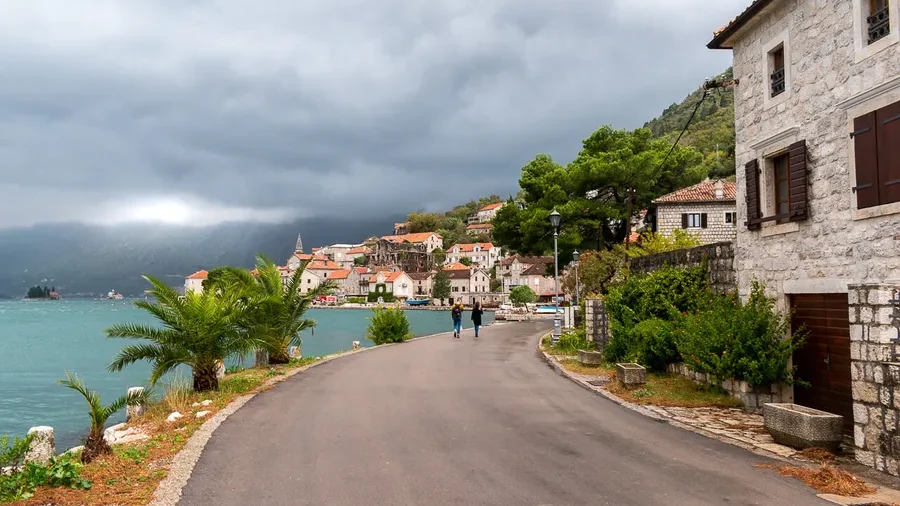
Infrastructure in Perast is one of the most important—and often underestimated—factors for those considering living in Perast, purchasing a second home, or investing in real estate in Perast. Visually, the town creates an almost ideal impression: a historic waterfront, stone architecture, panoramic bay views, and an intimate atmosphere. However, from a practical standpoint, Perast cannot be evaluated as a fully developed urban center in the same way as Kotor, Tivat, or Budva. It is a small historic location where basic services exist, but a significant portion of everyday needs is met outside the town itself.
This is why, when evaluating property here, it is essential to look beyond the façade, the view, and proximity to the water, and instead consider the logistics of daily life: where groceries are purchased, how medical needs are addressed, how convenient school access is, how long it takes to reach the airport, and whether parking is available. According to the official website of the Municipality of Kotor, which Perast belongs to administratively, key public and municipal functions are concentrated in larger nearby towns, primarily Kotor and other settlements around the bay.
The key principle for evaluating Perast: it is a location with a high-quality environment, but not a high density of services. For some buyers, this is a comfortable balance; for others, it is a clear limitation.
For investors and future property owners, this means the following: Perast is an excellent choice as a prestigious, rare, and visually distinctive location. However, for full-time living, comfort depends directly on one’s willingness to rely on the broader infrastructure of the Bay of Kotor rather than the town alone.
Shops, Restaurants, and Healthcare
At a basic level, Perast does offer infrastructure, but it remains limited. The town has small shops, seasonal services, restaurants, and cafés catering to both residents and tourists. For short stays, summer use, or second-home scenarios, this may be entirely sufficient. However, for larger grocery shopping, a wider selection of household goods, pharmacy needs, and specialized services, residents typically travel to Kotor, Risan, or Tivat.
Restaurant infrastructure in Perast is noticeably more developed than everyday services. For a town of its size, there is a strong selection of dining options along the waterfront and within historic buildings. This is a significant advantage for property owners who view their asset as a seasonal residence or rental investment. During peak season, the average restaurant bill per person is typically around €15–€30, while dinner for two at a mid-range venue ranges from approximately €35–€70. In premium, scenic locations, a full meal for two can reach €80–€120.
Grocery costs within Perast tend to be higher if all purchases are made locally and in small quantities. As a result, long-term residents often adopt a hybrid approach: everyday essentials are purchased locally, while larger shopping trips are done in supermarkets in neighboring towns. For a household, this strategy helps manage expenses more effectively. On average, weekly grocery costs for two people range from €70–€120, depending on lifestyle and the proportion of meals eaten out.
From a healthcare perspective, Perast should not be considered self-sufficient. There is no full-scale medical center in the town, so most consultations, diagnostics, and specialized services are accessed in nearby locations. For older buyers and families, this is a critical factor. According to the Ministry of Health of Montenegro, the public healthcare system is organized on a municipal and regional basis, meaning access to many services will inherently involve travel to larger centers.
Practical takeaway: for full-time living in Perast, it is highly advisable to have a car or a clear understanding of taxi and transfer options to Kotor, Risan, and Tivat.
| Category | Situation in Perast | What to Consider |
|---|---|---|
| Grocery stores | Basic shops and small retail outlets available | Larger shopping is usually done in nearby towns |
| Restaurants and cafés | Well developed, especially along the waterfront | Prices are higher during peak season |
| Pharmacies and healthcare | Limited local availability | Many services require travel |
| Household services | Available in limited capacity | Broader options in Kotor and Tivat |
Schools and Education
If the property is intended for full-time family living, the question of education requires careful consideration. Perast is not an educational hub, and it does not offer a wide range of schools, extracurricular programs, or children’s activities within the town itself. In this respect, it is less developed than Kotor, Tivat, or Budva, where educational infrastructure is significantly broader.
In practice, families living in Perast rely on schools and educational institutions in nearby towns. This includes both public and private schools, language programs, extracurricular activities, and sports clubs. Accordingly, when purchasing property here, it is essential to factor in not only the property price, but also the daily logistics of family life.
Transportation costs for school commutes depend on the chosen arrangement. Using a private car, monthly fuel and logistics expenses may range from approximately €80–€180. Regular taxi use would be significantly more expensive, with a one-way trip to Kotor typically costing around €15–€25, depending on the season, time of day, and service provider.
For families with children, Perast is best suited as a शांत and residential location, provided there is readiness to rely on nearby towns for daily infrastructure.
From a long-term perspective, this is not necessarily a drawback, but rather a defining characteristic. If the priority is tranquility, safety, and life by the sea—and commuting for school is an acceptable part of the routine—Perast can be a justified choice. However, if the expectation is to have everything within walking distance, alternative locations may be more suitable.
Transport and Accessibility
In terms of transport accessibility, Perast is well positioned. The town lies along the coastal road connecting it to Kotor, Risan, Tivat, and other destinations around the Bay of Kotor. This makes it convenient for property owners who travel frequently along the coast or use their property seasonally. However, within Perast itself, transport is not structured in the way one would expect from a larger city—private cars, taxis, and transfers play the central role.
For property buyers, Tivat Airport is particularly important, as it provides the primary international access point to Perast throughout the year. Depending on traffic, the journey typically takes around 25–40 minutes. This is a significant advantage for owners who visit for short stays, rent out their property, or maintain an international lifestyle.
A private transfer from Perast to Tivat Airport usually costs around €30–€50. A taxi to Kotor typically ranges from €15–€25, while a trip to Tivat costs approximately €25–€40. For those using a private vehicle, parking is an important consideration: during peak season, spaces within the historic zone are limited, and organized parking may cost around €5–€15 per day, depending on location and availability.
According to the Ministry of Transport of Montenegro, the development of coastal transport infrastructure remains a national priority. However, historic coastal towns such as Perast face inherent limitations due to terrain, dense heritage development, and preservation regulations.
| Transport Parameter | Perast Reference |
|---|---|
| Distance to Kotor | Approximately 12 km |
| Distance to Tivat | Approximately 20–22 km |
| Travel time to Tivat Airport | Approximately 25–40 minutes |
| Taxi to Kotor | Approximately €15–€25 |
| Transfer to Tivat Airport | Approximately €30–€50 |
| Seasonal parking | Approximately €5–€15 per day |
Overall, Perast’s infrastructure model can be summarized as follows: a high-quality living environment within the town itself, combined with reliance on external service centers for certain daily needs. For second-home buyers, investors, retirees, and remote professionals, this is often a comfortable and even desirable setup. For families with school-age children and those requiring a fully developed urban infrastructure within walking distance, it requires more careful consideration.
Conclusion: Perast does not offer an abundance of infrastructure, but it provides what matters most—a high-quality living environment, proximity to Kotor and Tivat, and access to the key services of the Bay of Kotor. With thoughtful planning, this is more than sufficient for comfortable living and sustained investment appeal.
Real Estate in Perast: Prices and Opportunities
Real estate in Perast represents one of the most limited and prestigious segments along the Montenegrin coast. While tourists perceive Perast as a beautiful historic town, buyers and investors view it differently: as a location defined by restricted supply, a high entry threshold, and sustained demand from those seeking not a mass-market property, but a rare waterfront asset. This is why search queries such as “buy property in Perast”, “Perast real estate”, “property prices in Perast”, and “how much does a house in Perast cost” are among the most commercially relevant.
One key point should be clarified from the outset: there is virtually no primary new-build market in Perast itself. This is due not only to the town’s small size, but also to its historical status, architectural value, and strict urban planning regulations. As a result, the majority of available properties consist of apartments within renovated stone buildings, residences in historic structures, and rare offerings in the form of traditional houses. The use and development of properties in such locations fall under the authority of the Montenegrin Ministry of Spatial Planning and State Property, which is particularly important when assessing renovation potential and investment prospects.
Residential complexes in Montenegro
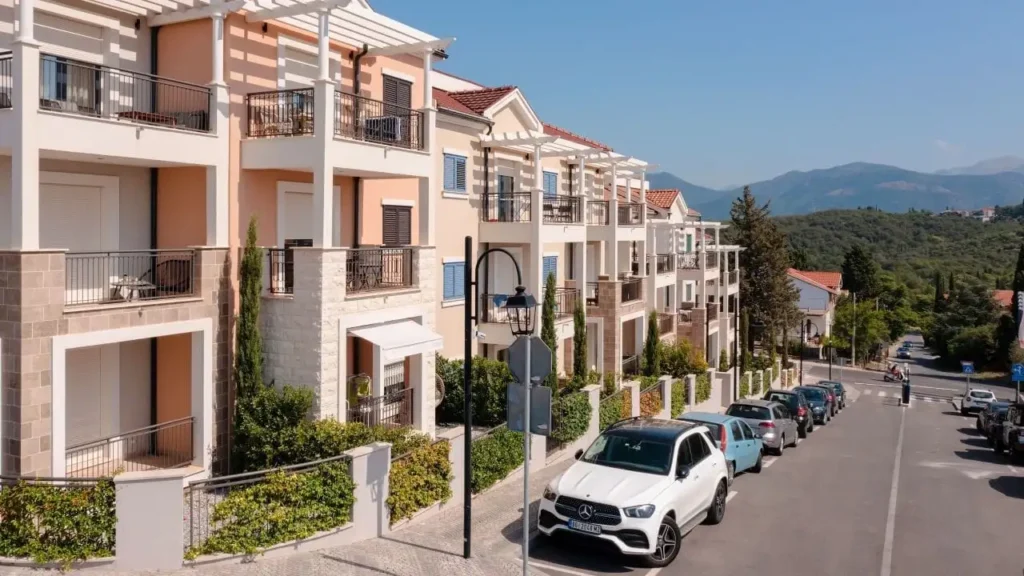

 Tivat
Tivat от 88м²


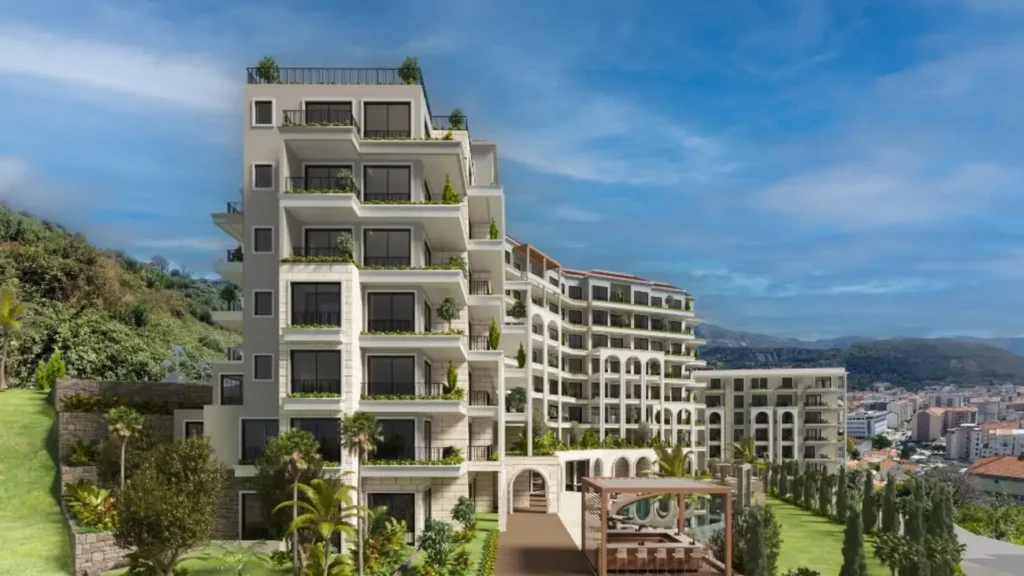
The defining characteristic of the Perast market: buyers are paying not only for square meters, but for historical context, bay views, scarcity of supply, and the prestige of the address.
For some buyers, this translates into a high barrier to entry. For others, it represents an opportunity to acquire an asset that is difficult to replicate—even within the Bay of Kotor. Compared to more mainstream locations where dozens of similar apartments are available, real estate in Perast, Montenegro is typically a highly individual, one-of-a-kind product.
Property Types
In practice, the Perast market can be divided into two main segments: historic houses and apartments, each with its own purchase logic, budget range, and investment profile.
1. Historic houses.
This is the rarest and most prestigious category. Properties may range from fully restored stone houses to those requiring complete renovation. The highest value is attached to homes on the first line, properties with direct bay views, preserved historic facades, internal courtyards, and the potential to retain authentic architectural elements. At the same time, this segment requires particularly careful due diligence regarding documentation, renovation status, and technical condition.
2. Apartments in historic buildings.
This is a more accessible—yet still premium—entry point into the market. These properties are popular among buyers seeking a Perast address without the budget for an entire house. Typically, they consist of units within small stone buildings divided into multiple residences, or renovated properties combining modern interiors with a historic exterior shell.
3. Properties in nearby areas.
Given the limited availability of new developments in Perast, buyers looking for a more modern residential format often consider nearby alternatives such as Dobrota, Kotor, Orahovac, Prčanj, Risan, and partly Tivat. These locations offer properties with underground parking, elevators, swimming pools, property management services, and more predictable technical maintenance. For those prioritizing convenience alongside atmosphere, these options are often more practical.
| Property Type | Description | Best Suited For |
|---|---|---|
| Historic house | Stone heritage property, sometimes with land, terrace, or courtyard | Investors, second-home buyers, and those seeking unique properties |
| Apartments in Perast | Units within historic or renovated buildings | Personal use, holiday living, and rental income |
| Modern properties in nearby areas | Apartments and residential complexes in Dobrota, Kotor, Orahovac, Risan | Buyers prioritizing parking, modern housing stock, and broader infrastructure |
Property Prices
Property prices in Perast are above the regional average due to the limited supply. However, there is no universal price point: values depend on proximity to the waterfront, views, size, renovation quality, facade condition, legal clarity, and the feasibility of lawful use after purchase.
As a general guideline, the market can be described as follows:
- apartments in Perast — approximately €3,500 to €6,500 per m²;
- premium, view-oriented properties in prime locations — from €6,500 to €8,500 per m² and above;
- smaller apartments in good locations typically start from €180,000–€250,000;
- well-renovated apartments in historic buildings usually range from €280,000–€500,000;
- historic houses requiring renovation may start from approximately €350,000–€600,000 depending on condition;
- fully restored houses or prime waterfront properties often range from €700,000 to €1,500,000+.
In Perast, even properties requiring renovation can command high prices if they offer strong location, historical value, and rare views.
For buyers seeking a more modern residential format and comparing Perast with nearby locations, the picture changes. In Dobrota, Risan, and Orahovac, supply is broader and price ranges are generally more flexible, while still offering similar proximity to the sea. This is particularly relevant for those searching for “apartments in the Bay of Kotor” and not yet certain whether they specifically require Perast’s historic housing stock.
| Location | Property Type | Approximate Price Range |
|---|---|---|
| Perast | Historic apartments, rare houses, waterfront properties | Typically €3,500–€6,500 per m², premium higher |
| Dobrota | Modern apartments, residential complexes, view properties | Approximately €2,800–€5,500 per m² |
| Kotor | Historic stock and modern developments near the center | Around €3,000–€6,000 per m² |
| Orahovac / Risan | Quieter locations, including modern properties | Typically €2,300–€4,500 per m² |
| Tivat | New developments, residences, investment projects | On average €3,500–€7,000 per m² and higher in the premium segment |
For legal and technical due diligence, buyers in Montenegro typically review cadastral data, property status, and ownership history. In this context, information available through the official government portal of Montenegro can be particularly useful, as the cost of error in historic coastal zones is significantly higher than in standard new developments.
Investment Potential
From an investment perspective, Perast is attractive for three main reasons: rental income, limited supply, and long-term appreciation of rare properties. This is not a market driven by large-scale speculative development. On the contrary, its value lies precisely in the fact that supply expands slowly—and in some cases, hardly at all.
Rental income.
During the high season, well-positioned properties with bay views, terraces, and good condition enjoy stable demand. Smaller apartments can generate approximately €100–€180 per night, while more premium properties may reach €200–€400+ per night, depending on features, finish quality, and service level. Naturally, overall returns depend on occupancy rates, management costs, and marketing strategy.
Limited supply.
This is arguably the most important value driver. Unlike areas where large volumes of new housing can be developed quickly, Perast’s historical and planning constraints prevent rapid expansion. For owners, this means that well-positioned, high-quality properties tend to remain in demand even during broader market fluctuations.
Price resilience.
Over the long term, rare historic waterfront locations tend to demonstrate stronger resilience than standard mass-market products. While market cycles and corrections still occur, scarcity-driven assets typically preserve value more effectively. According to the Montenegro Statistical Office (MONSTAT), sustained interest in coastal regions and foreign demand remain key drivers of the national market, with this effect being particularly pronounced in supply-constrained locations.
Perast is an investment in rarity, not scale. The strongest properties here derive their value from uniqueness rather than volume.
At the same time, a realistic approach is essential. Buying a house in Perast or acquiring an apartment in a historic building is not only about rental income, but also about maintenance, restoration restrictions, seasonality, and proper legal support. For some investors, a more balanced strategy may involve purchasing a modern property in Dobrota or Tivat, while enjoying Perast as a nearby premium destination for leisure and lifestyle.
In summary, the Perast real estate market is a niche segment for those who understand the value of historic waterfront property and are prepared to invest in a supply-constrained asset. If the priority is modern developments, predictable maintenance, and a broader selection, nearby areas within the Bay of Kotor may be more suitable. However, for those seeking a rare address, panoramic water views, and strong symbolic prestige, Perast remains one of the most compelling locations on the Montenegrin coast.
Pros and Cons of Buying Property in Perast
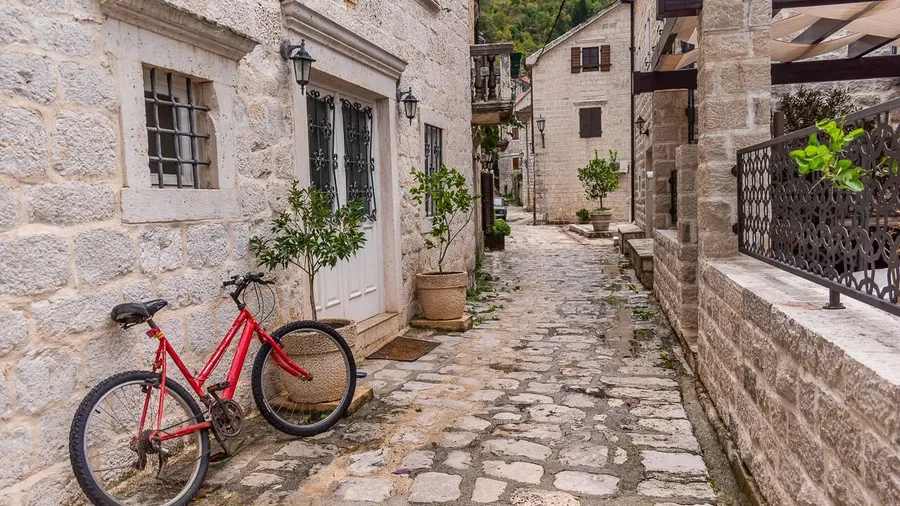
Buying property in Perast is rarely an impulsive decision. In most cases, it follows a careful comparison with nearby locations such as Kotor, Dobrota, Tivat, and Budva. The reason is straightforward: Perast, Montenegro is one of the most exclusive and supply-constrained locations in the Bay of Kotor, where entry prices are above average and available inventory is limited. As a result, the question “is it worth buying property in Perast” cannot be assessed based on price per square meter alone. A proper evaluation must take into account several factors at once: the historical value of the environment, liquidity, operational specifics, seasonal demand, and the legal nuances associated with properties in protected heritage zones.
From a practical standpoint, real estate in Perast, Montenegro is typically chosen by buyers seeking not just a seaside home, but a rare asset with a prestigious address. However, this segment also requires a particularly careful alignment between expectations and reality. The high status of the location offers significant advantages, but at the same time raises the entry threshold and limits flexibility. According to the Montenegrin Ministry of Spatial Planning and State Property, transactions involving properties in historically sensitive coastal areas require enhanced due diligence regarding documentation, usage regulations, and urban planning constraints.
Key takeaway: Perast is not suited to buyers looking for “just any apartment by the sea,” but rather to those who deliberately prioritize uniqueness, historical context, and limited supply.
| Criterion | Advantage | Potential Limitation |
|---|---|---|
| Location | One of the most recognizable addresses in the Bay of Kotor | Small town with limited infrastructure |
| Property type | Rare historic houses and view-oriented apartments | Limited selection and high entry threshold |
| Investment potential | Strong demand for quality assets and constrained supply | Returns depend on seasonality and management quality |
| Pricing | Strong price support driven by location uniqueness | Higher cost compared to many neighboring areas |
| Ownership and maintenance | Prestige and high liquidity for prime assets | Higher maintenance costs and renovation restrictions |
Advantages
The primary advantage of Perast is its uniqueness. There are few places along the Montenegrin coast where historic architecture, waterfront views, and visual cohesion are so closely intertwined. This is not simply a picturesque location—it is a town with a clearly defined identity. From a market perspective, this means one important thing: a property in Perast is far more difficult to replicate than an apartment in a standard coastal development. This is why buyers looking to purchase property in Perast are typically focused on rare, distinctive assets rather than mass-market options.
The second advantage is the prestige of the address. Perast is widely regarded as one of the most aesthetically valuable locations in the Bay of Kotor. For property owners, this carries not only emotional appeal but also market significance. A prestigious address helps sustain tenant demand, enhances resale attractiveness, and makes properties more resilient to competition from more typical locations.
The third advantage is strong demand for high-quality properties. This is particularly true for apartments and houses with direct or panoramic bay views, first-line properties, and well-restored historic homes. During peak season, well-positioned apartments can generate approximately €100–€180 per night, while more premium properties may achieve €200–€400+ per night depending on size, finish, and service level. Even for owners not focused on short-term rentals, the presence of consistent tourist demand positively influences liquidity.
The fourth advantage is limited supply. While this may initially appear to be a drawback, for established property owners it often works in their favor. There is virtually no large-scale new development in Perast, meaning the market is not saturated with similar units. According to the Montenegro Statistical Office (MONSTAT), coastal regions continue to attract stable interest from foreign buyers, and in supply-constrained locations such as Perast, this effect is typically more pronounced.
The fifth advantage is long-term price resilience for rare assets. In Perast, value is determined not only by size, but by the quality of the property’s positioning: historic character, authentic façade, terrace, waterfront access, good accessibility, and legal status of renovations. Strong properties tend to hold their value better than those in more standardized segments. For investors, this is a compelling argument in favor of long-term ownership.
Perast’s strength lies in the fact that value is driven by scarcity, not volume. It is precisely this scarcity that creates prestige and sustains market interest.
An additional factor is the town’s intangible appeal. For some buyers, living in Perast or owning a second home here is not only a financial decision, but also a lifestyle and status choice. While difficult to quantify, this factor plays a meaningful role in the premium segment.
Disadvantages
The primary drawback is the high cost. Compared to neighboring areas, Perast almost always requires a larger initial investment. As a guideline, apartments in Perast are typically priced between €3,500 and €6,500 per m², with premium properties reaching €6,500–€8,500 per m² and above. Smaller apartments generally start at around €180,000–€250,000, while high-quality historic apartments often range from €280,000 to €500,000. Houses frequently exceed €700,000–€1,500,000+.
The second drawback is limited supply. While beneficial for the market overall, it can be restrictive during the purchasing process. The selection of properties in Perast is small, truly high-quality options appear infrequently, and compromise solutions may simply not exist. As a result, buyers often face a choice between acting quickly or waiting for the right opportunity.
The third drawback is seasonality. Despite its intimate character, Perast remains a well-known tourist destination. During peak season, visitor numbers increase, placing additional pressure on the waterfront, parking, and local services. For rental purposes, this is a clear advantage, but for owners seeking complete tranquility in July and August, it may be a disadvantage. Seasonality also affects income, as short-term rental demand is concentrated in the warmer months.
The fourth drawback is maintenance costs and the complexities of owning historic property. If a property is located within a historic building or protected zone, renovation and upkeep costs are typically higher than in standard modern apartments. Even relatively minor works—facades, stonework, carpentry, roofing, and infrastructure—can exceed initial expectations. For example, preparing an apartment for the season may cost around €2,000–€5,000, while major restoration projects can range from €30,000 to €150,000+, depending on condition and scope.
The fifth drawback is limited local infrastructure. While Perast offers an exceptional living environment, it remains dependent on nearby towns such as Kotor, Risan, and Tivat for many everyday needs. For some buyers, this is a comfortable arrangement; for others, it is a limitation. Those requiring a full range of shops, healthcare, schools, and urban services within walking distance may find Perast less practical than neighboring locations.
The sixth drawback is the need for particularly thorough legal due diligence. In historic towns, issues such as property status, boundaries, ownership rights, renovation approvals, and permitted modifications are especially sensitive. According to the Montenegrin cultural heritage protection authority, properties within historic environments are subject to special preservation regimes, which impose additional requirements on alterations and usage. For buyers, this is not a barrier, but a clear signal: cutting corners on legal support is not an option.
The primary risk when buying in Perast is overpaying for atmosphere without fully accounting for operational and legal factors. Properties must be evaluated not only emotionally, but also technically.
| Parameter | What the Buyer Gains | The Trade-Off |
|---|---|---|
| Uniqueness | A rare historic waterfront asset | Higher entry cost |
| Prestige | Strong address and high symbolic value | Limited selection and more complex search process |
| Demand | Strong rental potential and liquidity for quality assets | Income depends on seasonality |
| Historic environment | Architecture, atmosphere, limited supply | Renovation restrictions and higher maintenance costs |
| Location | Proximity to Kotor and Tivat with a high degree of privacy | Not all infrastructure is located within the town itself |
Ultimately, the pros and cons of living in Perast and purchasing property here can be summarized simply: the higher the quality and uniqueness of the environment, the higher the requirements in terms of budget and due diligence. For buyers seeking exclusivity, prestige, and strong demand, Perast remains one of the most compelling locations in Montenegro. For those prioritizing modern formats, wider selection, and more accessible pricing, Dobrota, Risan, Orahovac, or Tivat may be more practical alternatives.
Conclusion: property in Perast is best suited for buyers who understand the value of a scarce historic asset and are prepared to accept its inherent characteristics. In this context, the higher price is not a drawback, but the cost of entry into a truly unique market.
Is Perast a Good Place to Invest?
The short answer is yes—but only if the investor understands the specifics of this market. Perast, Montenegro is not a mass-market destination for quick, standardized transactions. Instead, it is a scarcity-driven historic market with a high entry threshold, limited supply, and elevated expectations for property quality. For this reason, the question “is it worth investing in Perast” should not be approached from a “buy low, sell fast” perspective, but rather as a strategy of long-term ownership of a rare waterfront asset.
For investors exploring Montenegro real estate investment, comparing Perast vs Kotor real estate, or asking is Perast good for investment, the town stands out for three key reasons: price dynamics within a constrained segment, steady rental demand, and the inherent rarity of available properties. At the same time, it is important to consider the limitations: seasonality, a relatively small market size, the historic status of properties, and a comparatively high entry cost.
Perast’s investment strength lies not in transaction volume, but in the quality and rarity of its assets. This is a market where liquidity is driven not by new developments, but by unique addresses, bay views, and historical value.
| Criterion | Assessment for Perast | What It Means for the Investor |
|---|---|---|
| Entry threshold | High | Requires a larger initial budget than many nearby locations |
| Supply | Very limited | High-quality properties are rare and retain their appeal over time |
| Rental potential | Strong in peak season | Best performance comes from view-oriented and well-restored properties |
| Price growth | Stable in the premium segment | Rare assets tend to preserve and build value more effectively |
| Risks | Seasonality, legal due diligence, maintenance costs | Thorough pre-purchase analysis is essential |
Price Dynamics
Property price dynamics in Perast are shaped less by overall supply volume and more by the scarcity of high-quality assets. Unlike markets driven by new residential developments, Perast operates under very different conditions. Its historic character, development restrictions, and small physical footprint naturally limit supply. As a result, even during slower market cycles, strong properties here tend to retain value better than standard units in mass-market locations.
In practical terms, apartments in Perast are typically priced in the range of €3,500–€6,500 per m², while rare view properties, first-line units, and high-quality restored historic spaces can reach €6,500–€8,500 per m² or more. For houses, the entry point is significantly higher: approximately €350,000–€600,000 for properties requiring substantial renovation, and €700,000 to €1,500,000+ for strong, move-in-ready options.
It is important to understand that price growth in Perast does not typically manifest as rapid, market-wide spikes. Instead, it tends to be a gradual strengthening within the premium, supply-constrained segment. Properties that combine several key advantages—bay views, first-line positioning, authentic façades, clean legal status, and high-quality renovation—consistently perform best.
The broader coastal market is supported by sustained interest in Montenegro’s seaside real estate. This is indirectly reflected in data from the Montenegro Statistical Office (MONSTAT), which highlights the importance of coastal municipalities in housing demand, tourism, and foreign investment. In a limited-supply market like Perast, external demand has an even stronger influence on the price of individual properties.
From an investment perspective, Perast performs best where the market rewards scarcity. The less replaceable the asset, the greater its long-term potential to preserve or increase value.
Rental Demand
Rental demand in Perast exists, but it is clearly segmented. This is not a destination for broad, mass-market tourism like Budva, nor does it offer the year-round rental diversity found in parts of Kotor or Tivat. Instead, Perast performs well among visitors seeking an atmospheric stay in a historic setting, privacy, waterfront views, and a higher aesthetic standard of living.
The following types of properties tend to perform best in the rental market:
- apartments with bay views;
- first-line waterfront properties;
- historical apartments after high-quality renovation;
- small houses and premium residences designed for private stays.
In peak season, short-term rental rates typically fall within the following ranges:
- compact, well-finished apartments — approximately €100–€180 per night;
- view apartments and larger units — around €180–€300 per night;
- rare premium properties — from €300–€400+ per night, and in some cases higher.
Actual returns depend not only on pricing, but also on occupancy rates, management quality, presentation (including photography), reputation, and service level. If the property is managed by a professional company, additional costs should be factored in. Short-term rental management fees typically range from 15% to 30% of rental income, depending on the services provided.
Demand is further supported by Perast’s role as a key stop within the broader Bay of Kotor tourism route. The overall appeal of the coastline is reinforced by national tourism policy, as outlined on the official website of Montenegro’s Ministry of Tourism. For investors, this matters for one simple reason: Perast does not exist in isolation—it benefits from the region’s wider tourism ecosystem and shared demand.
Perast performs particularly well in the mid-premium and premium rental segments. While it is less suited to mass-market rentals, high-quality properties can achieve strong average daily rates.
Seasonality must also be taken into account. Peak occupancy occurs during the warmer months, while rental activity declines in the off-season. As a result, Perast is best suited for investors pursuing either a hybrid model (personal use combined with seasonal rentals) or a long-term holding strategy focused on capital appreciation rather than purely monthly cash flow.
Comparison with Kotor and Budva
To determine whether Perast is the best investment location in Montenegro, it is helpful to compare it with two of its most obvious alternatives: Kotor and Budva. This comparison highlights that Perast is not a universal leader across all metrics, but rather a highly compelling niche market.
Perast vs Kotor.
Kotor typically outperforms in terms of overall demand, infrastructure, transaction volume, and year-round rental potential. It offers a broader range of properties and greater flexibility in meeting tenant needs. However, in the Perast vs Kotor real estate comparison, Perast often comes out ahead when the investor prioritizes rarity, privacy, visual appeal, and prestige. In simple terms, Kotor is more versatile, while Perast is more exclusive.
Perast vs Budva.
Budva operates under a fundamentally different investment model. It suits investors seeking an active, large-scale market with high tourist volume, numerous new developments, and diverse rental scenarios. However, this same mass-market nature means Budva lacks the scarcity and historic uniqueness that define Perast. Investors focused on acquiring a rare waterfront asset tend to favor Perast, while those seeking higher turnover, broader selection, and mass demand may prefer Budva.
| Location | Strengths | Limitations | Best Suited For |
|---|---|---|---|
| Perast | Prestige, limited supply, historic and view properties, high exclusivity | High entry cost, limited inventory, seasonal demand | Long-term investors and buyers of rare assets |
| Kotor | Broader demand, stronger infrastructure, year-round rental appeal | Less privacy, higher competition between properties | Investors seeking flexibility and balanced performance |
| Budva | Large market, new developments, strong tourist flow, multiple entry strategies | Lower exclusivity, higher dependence on mass demand | Investors targeting active rental income and liquidity |
From both a legal and investment standpoint, Perast requires a more careful approach to property selection than a typical apartment in a new development. This is especially true for historic buildings, restored homes, and properties located in protected areas. These aspects fall under the regulatory framework of the Montenegrin Ministry of Spatial Planning and State Property, reinforcing an important point: Perast is a market for thoughtful investors, not for superficial purchases.
If the goal is to acquire a rare, visually compelling, and supply-constrained asset, Perast is a highly convincing choice. If the priority is mass rental, fast turnover, and a wide range of options, Kotor or Budva may be more practical.
Final conclusion: investing in Perast makes sense for those focused on asset quality, long-term capital appreciation, and demand for unique properties. It is neither the simplest market nor the most accessible in terms of entry cost—but that is precisely what makes it especially attractive for investors seeking not just square meters, but rare real estate in one of Montenegro’s most iconic locations.
Conclusion
Perast, Montenegro is a rare destination for those who view real estate not merely as a practical purchase, but as a deliberate choice of environment, status, and long-term asset value. This town appeals to buyers who prioritize historical context, panoramic bay views, limited supply, and strong liquidity for high-quality properties. At the same time, the Perast market requires a thoughtful and well-informed approach. Entry-level budgets typically start at around €180,000–€250,000 for compact options, while quality apartments are more commonly priced in the €280,000–€500,000 range. Houses and rare view properties can reach €700,000–€1,500,000+. Before completing any transaction, it is essential to carefully verify the legal status of the property, restrictions related to the historic environment, and tax considerations—drawing, among other sources, on information from the official Government of Montenegro portal and relevant state authorities.
Residential complexes in Montenegro
Key takeaway: Perast is not a mass-market destination, but a conscious choice in favor of rare waterfront real estate, where value is defined not only by square footage, but by the uniqueness of the location itself.
If you are considering property in Perast, planning to buy a house in Perast, looking for apartments in the Bay of Kotor, or comparing Perast with Kotor, Dobrota, and Tivat, leave a request for a free consultation. We will prepare a tailored selection of current listings, guide you through real market prices, expected costs, rental yield potential, and the transaction process for foreign buyers. If needed, we will also assess whether Perast is truly the right fit for your goals or if nearby areas with a more modern housing stock may be a better match.
For an initial consultation, simply send your preferred budget, property type, and purchase goal—whether for living, vacation use, or investment—and we will identify the most suitable options, ranging from approximately €200,000 to premium properties priced at €1,000,000+, in full compliance with Montenegrin regulations and based on data from official MONSTAT statistics and the relevant ministry for real estate and urban planning.
 Real estate in Georgia
 Real estate in Cyprus
 Real estate in the UAE
 Real estate in Bali
 Real estate in Thailand
 Real estate in Spain
 Real estate in Saudi Arabia
 Real estate in Turkey
 Real estate in Zanzibar
 +382 60 099359
 hello@residence-estate.me
 The Old Bakery Residences, Budva 85310, Montenegro


 Get catalogue of TOP-7 objects