
 +382 60 099359


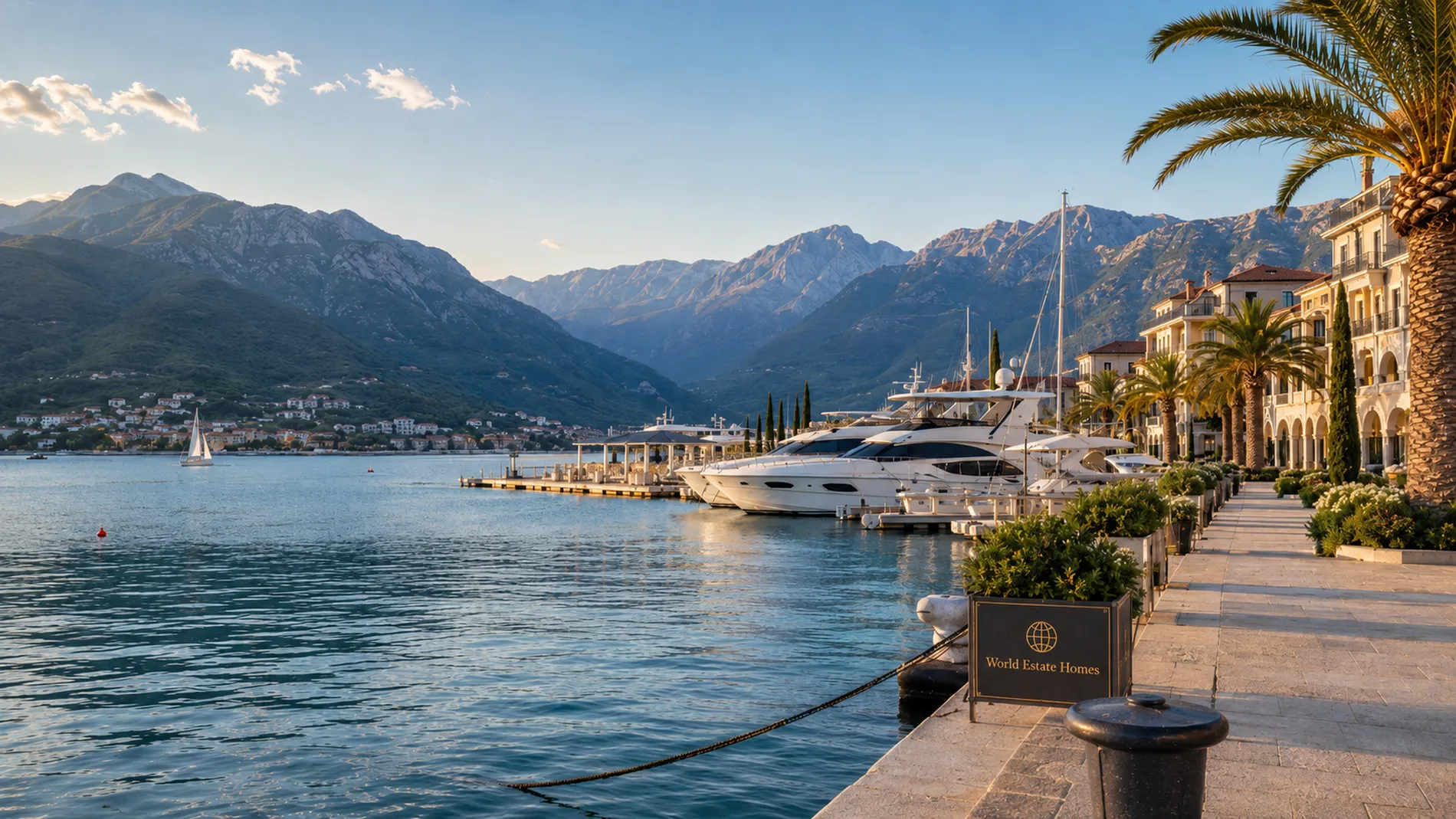

Tivat is one of the easiest places to explore on the Montenegrin coast, combining a luxury marina, a relaxed waterfront, beaches, historic sites, and access to the Bay of Kotor.
Whether you have one day or several days, the best things to do in Tivat include walking through Porto Montenegro, exploring the Pine Promenade, visiting Plavi Horizonti Beach, taking a boat trip, and discovering the villages above the bay.
This guide focuses on five experiences that are genuinely worth adding to your itinerary, especially if you are visiting Tivat for the first time. Some are within easy walking distance of the town center, while others require a car, taxi, or boat. We explain the practical details below.
5 Best Things to Do in Tivat: At a Glance
| What to See or Do | Best For | How Much Time to Allow | Transport Needed? | Best Time |
|---|---|---|---|---|
| Porto Montenegro and the marina | Everyone, especially architecture, yacht, and café lovers | 1.5–3 hours | Walkable from the center | Morning or evening |
| Tivat waterfront and Pine promenade | Everyone; particularly good for families and couples | 1–2 hours | Walkable | Morning or evening |
| Plavi Horizonti Beach | Families, couples, and anyone who appreciates clear water | Half a day or a full day | Taxi or car | June or September |
| Boat trip around the Bay of Kotor | All types of travelers | Half a day to a full day | Boat or organized excursion | May–October |
| Gornja Lastva and nature trails | Hikers, photographers, and anyone looking for peace and quiet | 2–4 hours | Taxi or car | Spring or autumn |
How to Spend One Day in Tivat
If you only have one day in Tivat, focus on the waterfront area first. Start with a morning walk along Pine Promenade, continue to Porto Montenegro for coffee and the marina atmosphere, then choose either a beach visit or a short boat excursion depending on the season.
A realistic one-day itinerary:
Morning:
- Pine Promenade and town park
- Buća-Luković Palace
Midday:
- Porto Montenegro
- Naval Heritage Collection
Afternoon:
- Plavi Horizonti Beach or a boat trip
Evening:
- Waterfront dinner and sunset walk
1. Take a Stroll Through Porto Montenegro
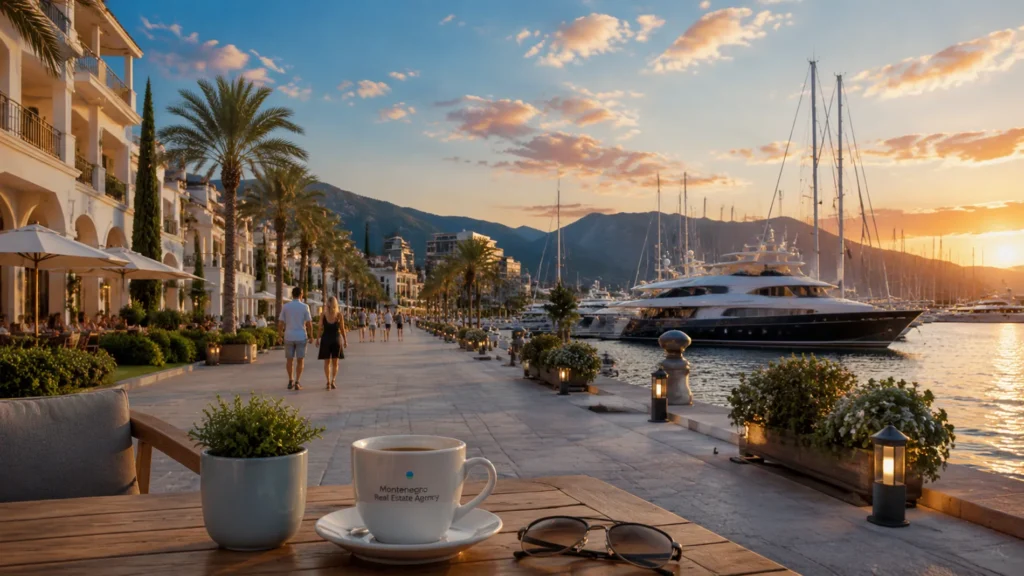
Porto Montenegro is Tivat’s premier modern attraction, and it is easy to see why. What was once a naval arsenal has been transformed into one of Montenegro’s most recognizable luxury marina areas. Its long waterfront promenade offers an unusual combination: views of yachts of every size, elegant architecture, open-air terraces, and atmospheric evening lighting that completely transforms the marina after sunset.
It is well worth visiting even if luxury brands and yachting hold little appeal for you. The real attraction is the promenade itself: broad, comfortable, and lined with views across the water toward the Luštica mountains on the opposite shore. You can walk the full length of the marina, stop at one of the outdoor cafés for a coffee or a glass of wine, and simply watch life unfold across the bay. Come in the morning and you are unlikely to encounter large crowds. In the evening, the waterfront takes on a different character, with soft lighting, yachts reflected in the water, and a livelier atmosphere.
Allow around 1.5–2 hours for the walk. If you would also like to visit the Naval Heritage Collection and stop for lunch, set aside about three hours. Porto Montenegro is within easy walking distance of central Tivat: from the Pine waterfront, it takes roughly 10–15 minutes at a leisurely pace to reach the marina entrance.
What is genuinely worth seeing while exploring Porto Montenegro:
- The main marina promenade, with views of the yachts and the Luštica mountains
- The waterfront square and public spaces, ideal for stopping to take in the surroundings
- The Naval Heritage Collection, a maritime museum housed in historic buildings of the former naval arsenal
- Historic submarines and military vessels, some of which are displayed outdoors
- The illuminated waterfront in the evening, particularly atmospheric during the warmer months
Before becoming a luxury yachting destination, this site was one of the most important naval facilities on the Adriatic, first under Austro-Hungarian rule and later as part of Yugoslavia. The Naval Heritage Collection preserves part of that legacy through a collection of submarines, vessels, and equipment connected to the naval history of the Bay of Kotor. The exhibits are displayed partly outdoors and partly inside the arsenal’s historic buildings.
For anyone interested in the history of the region, this is one of the few places where you can experience the bay’s naval past through original vessels and equipment rather than simply reading about it on displays in a conventional local museum. Opening hours and admission arrangements are best checked shortly before your visit, as they may vary depending on the season.
2. Take a Walk Along Tivat’s Waterfront
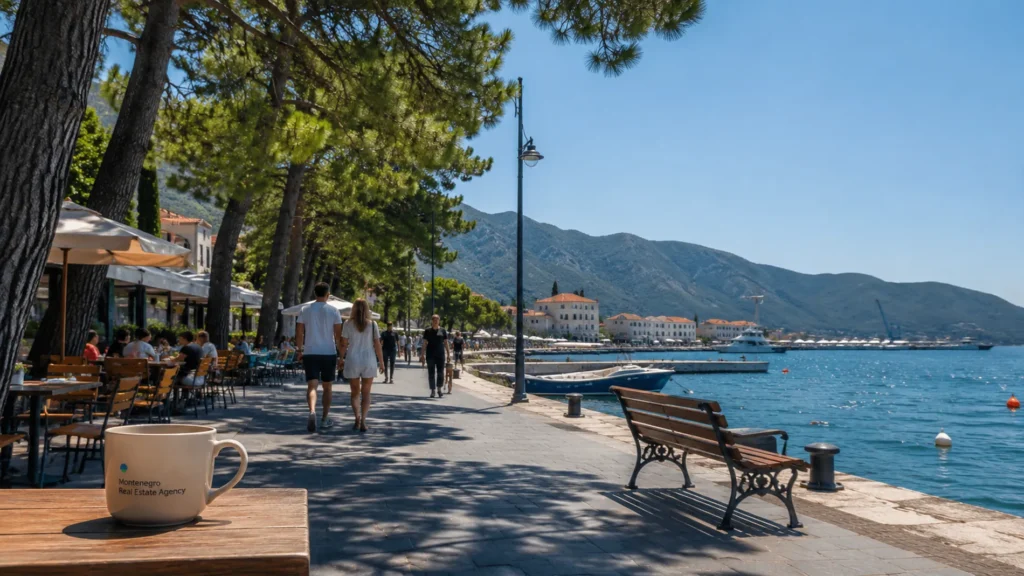
If Porto Montenegro represents Tivat at its polished, international best, Pine Promenade shows the city’s more everyday, local side. Tivat’s main waterfront promenade follows the shoreline of the bay, offering a relaxed walk away from the yachts and upscale restaurants.
The pace here is different: local families with children, couples sitting on benches, cyclists, and the occasional runner. Maritime pines line the waterfront, providing welcome shade during the hottest part of the day — hence the promenade’s name. The views across the bay may not be as expansive as those from a hilltop or a boat, but that is part of the appeal: here, you experience the Bay of Kotor at water level, quietly and without the crowds.
Along the way, you will find small cafés and casual spots frequented by both locals and visitors. The contrast with Porto Montenegro is fundamental: the marina has been designed as a destination in its own right, while Pine Promenade feels like an authentic part of everyday city life by the water. The two walks complement each other and, taken together, provide a much fuller picture of Tivat than either would on its own.
Close to the promenade stands the Buća-Luković Palace complex, one of the few historic landmarks in the very center of Tivat. Its architecture offers a glimpse into the era of the Montenegrin noble families who once owned land in the area. The building itself may not always be open to visitors, but its exterior and the surrounding park provide an attractive historical backdrop to the walk.
The city park near the waterfront is another worthwhile place to stop, particularly for families traveling with children. There is plenty of shade, benches for a break, and a calm, unhurried atmosphere.
The entire route — from the city park along the promenade to the beginning of Porto Montenegro — takes around one to two hours, depending on your pace and how often you stop. The best time to walk is in the morning or toward the evening, once the heat begins to ease. In summer, walking under the open sun around midday can be considerably less comfortable.
You can easily experience both sides of Tivat — the marina and the city waterfront — in a single day without rushing. A natural itinerary is to start with Pine Promenade in the morning, continue on to Porto Montenegro, and finish with lunch or coffee there.
3. Spend the Day at Plavi Horizonti
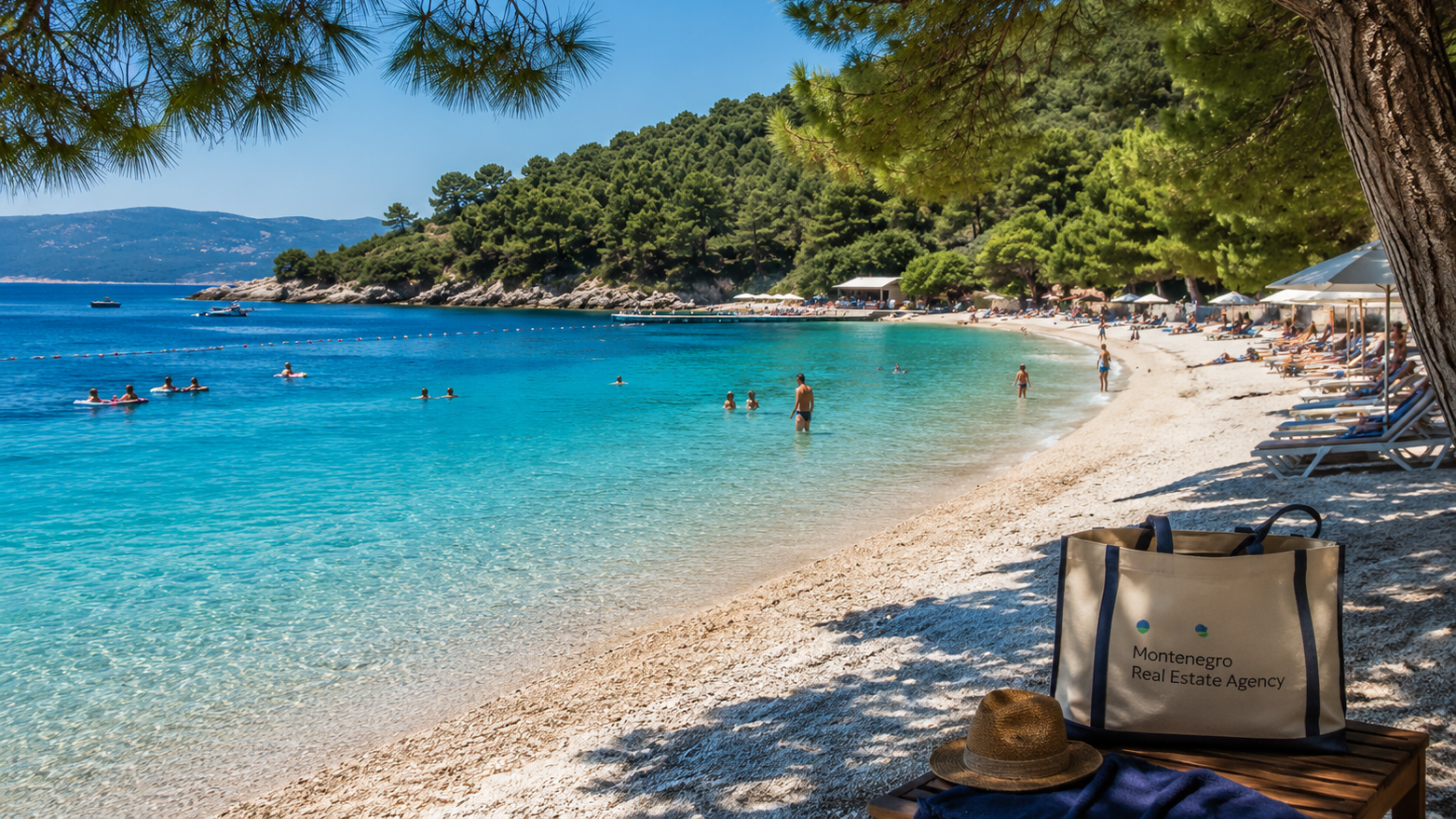
Plavi Horizonti (“Blue Horizons”) Beach is located on the Luštica Peninsula, approximately 7–10 kilometers by road from central Tivat. The easiest way to get there is by taxi or car, as there is generally no public transport service directly to the beach. The distance is relatively short, although the journey can take longer during the summer months due to heavier traffic.
The beach consistently ranks among the top recommendations around Tivat for several reasons. First, its fine sand and clear water with excellent visibility are relatively unusual for the bay, where many beaches are pebbly or have a mixture of pebbles and sand. Second, its location on the more open side of the peninsula gives it a greater sense of space than the beaches in town.
Plavi Horizonti is particularly well suited to families with children. The water is shallow close to shore, the sea is calm and largely free of strong waves on most summer days, and there is plenty of room along the beach. Couples will also appreciate the relaxed atmosphere and surrounding views. For anyone traveling with children or simply looking for a peaceful day by the water, this is one of the best options in the Tivat area.
The main practical consideration is that the beach can become noticeably crowded in July and August, so arriving in the morning is advisable. June and September generally offer a more comfortable experience: the sea is already warm, or still warm after the height of summer, while the crowds are significantly smaller.
Sun loungers and umbrellas are available to rent, but it is best to check current prices on arrival, as rates vary depending on the operator and the time of year.
What to bring to the beach:
- Cash, as cards are not accepted everywhere near the beach
- Plenty of drinking water, particularly if you are visiting with children
- A snorkeling mask — the water is clear enough to make exploring beneath the surface worthwhile
- Plenty of sunscreen, as this is an open beach and shade is not always easy to find
- Comfortable, lightweight footwear for the walk, as parking may be some distance from the shore
If you would prefer somewhere closer to Tivat, there are several urban beaches along the waterfront. However, they generally cannot match Plavi Horizonti for the quality of the water and shoreline. For a proper beach day, Plavi Horizonti is well worth the short trip.
4. Get Out on the Water in the Bay of Kotor
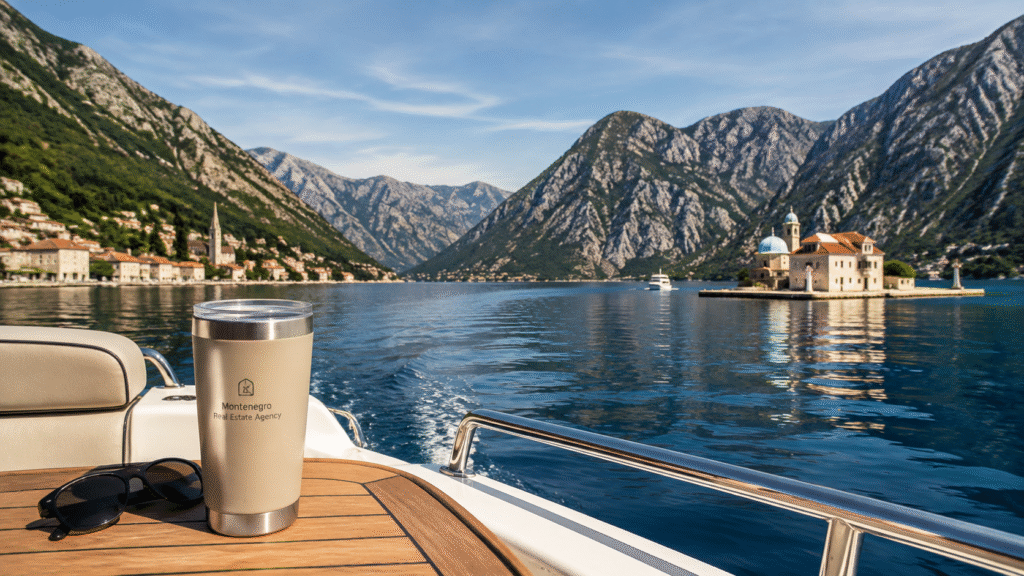
Tivat sits at the entrance to the Bay of Kotor, a system of four interconnected bays and one of the most spectacular fjord-like landscapes on the Adriatic. Its location makes Tivat an excellent starting point for boat trips in almost any direction: north towards Kotor, to Perast and the islands of Our Lady of the Rocks and St. George, or towards the Blue Cave and the former military tunnels along the coast.
A boat trip offers an entirely different perspective on the region — one that simply cannot be experienced from land. Mountains plunging dramatically into the water, villages scattered across the slopes, and narrow passages connecting the different parts of the bay all take on a different character when viewed from the sea.
There are several types of boat trips to choose from. Short excursions lasting two to three hours generally explore the nearby parts of the bay or focus on a particular attraction, such as the Blue Cave. Half-day and full-day group tours usually include several stops, often combining natural landmarks with historic sites. Hiring a private boat offers the greatest flexibility, allowing you to tailor both the route and the timing to your preferences.
The Blue Cave (Plava Špilja) is one of the most popular stops on boat trips departing from Tivat. This rocky sea grotto is known for the striking blue light inside, created as sunlight reflects through the water. The cave can only be reached from the sea, which is why it features on so many boat itineraries. Routes also frequently pass the former military tunnels built as shelters for submarines during the Yugoslav era. Some can be viewed from the water or explored from inside, although the exact stops depend on the tour operator.
The islands of the bay make for another excellent itinerary. From Tivat, it is easy to travel by boat towards Perast and its two famous islands. Our Lady of the Rocks is home to a church with a remarkable collection of maritime votive offerings, while the island of St. George provides one of the bay’s most picturesque natural views. The official Montenegro tourism portal highlights boat trips of this kind as one of the most characteristic ways to experience the Bay of Kotor.
The actual itinerary of a boat excursion often differs from the general description advertised in advance. Before paying, it is worth confirming every planned stop directly with the operator.
Before booking a boat trip, check:
- The exact list of stops and the order of the itinerary
- The total duration of the trip, including departure and return
- How much time is allocated for swimming — it is usually included, but the duration varies
- The boat’s capacity, as a small private vessel and a large group boat offer very different experiences
- What happens in the event of bad weather — whether you receive a refund, can reschedule, or the trip is simply cancelled
The boat excursion season generally begins in May and runs until October, although some operators continue to offer trips outside the main season when weather conditions are favorable. If you are traveling with children, it is best to choose a stable vessel and an itinerary that avoids long stretches of exposed open water.
5. See a Different Side of Tivat
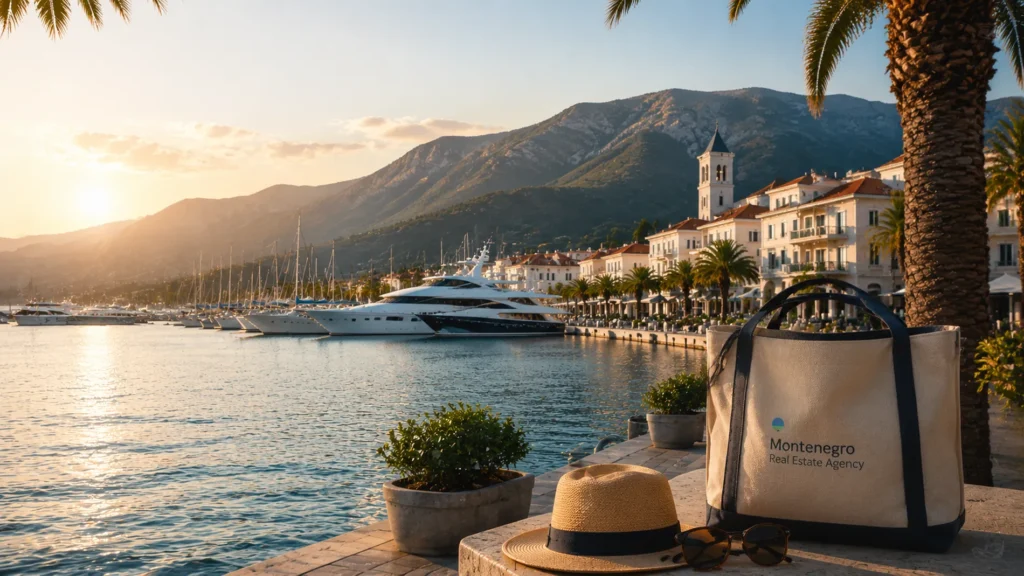
The fifth recommendation is not another waterfront promenade or restaurant, but a deliberate change of pace. The hills above Tivat are home to old villages that existed long before the arrival of modern yacht marinas. Gornja Lastva is the closest of them, with its stone houses, narrow paths, vineyards, and an entirely different perspective on the bay.
You can reach the village by car or hike up from Tivat’s lower neighborhoods. Even if you drive, however, it is worth wearing sturdy, comfortable shoes for the final stretch. The village itself is small, and its appeal lies not in museums or designated viewpoints with information boards, but in its atmosphere and scenery. From this elevation, the Bay of Kotor reveals a different character: broader and deeper, framed by mountains on both sides. Porto Montenegro looks surprisingly small from above, blending naturally into the wider landscape.
The Vrmac ridge, which rises above Tivat and the Kotor basin, offers hiking trails of varying difficulty. Some can be tackled without specialist equipment, but on a hot summer day, it is best to save the hike for the early morning or choose a less physically demanding alternative. In spring and autumn, exploring Vrmac is one of the best ways to spend a few hours around Tivat.
This route is particularly well suited to travelers who have already explored Porto Montenegro and are looking for a change of scenery; visitors spending several days in Tivat who want to venture beyond the waterfront; and photographers, as the elevated views over the bay offer an entirely different perspective.
For those who prefer level terrain and a more leisurely walk, an alternative is Tivat Solila Nature Reserve, a small wetland area near the town. It is particularly appealing to birdwatchers and anyone who wants to spend some time in nature without tackling a climb. It is a completely different experience, but one that also takes you beyond the standard tourist itinerary.
The Luštica Peninsula has its own trails and stretches of coastline, generally quieter than those around the central part of the bay. A car is the most convenient way to explore the area, and a trip there is better treated as a separate day out rather than a quick excursion.
A visit to Gornja Lastva or another village in the hills above Tivat is by no means an essential part of every itinerary. But if you have a few extra hours and want to discover how much more there is to Tivat beyond the waterfront, it is well worth the detour.
How to Choose What to Do in Tivat
The five activities covered in this article suit different types of trips, and they will not be equally important to every traveler. The table below will help you decide what to prioritize.
| If you want to… | Best option | How much time you need | What to keep in mind |
|---|---|---|---|
| See Tivat’s main landmark | Porto Montenegro | 1.5–3 hours | Within walking distance of the center; particularly attractive in the evening |
| Spend the day with children | Plavi Horizonti + the town promenade | Half a day + an evening walk | You will need transport to the beach; arrive early in summer |
| Enjoy the best views | Gornja Lastva or a boat trip | 2–4 hours | A car or taxi is useful; wear comfortable shoes if walking |
| Spend the day by the water | Plavi Horizonti | Half a day to a full day | Transport is essential; crowded in July and August |
| Explore local history | Porto Montenegro + Naval Heritage Collection | 2–3 hours | Check the collection’s opening hours in advance |
| See the bay from the water | Boat excursion | Half a day to a full day | Confirm the route before paying; book ahead early in the season |
| Avoid an overly packed itinerary | Town promenade + one activity | 3–4 hours | A good choice for a relaxed first day |
The main takeaway is that most itineraries do not require you to fit everything into a single day. A couple of days in Tivat is enough to work through the entire list without feeling rushed. If you have less time, choose according to the kind of traveler you are rather than the order of activities in a ranking.
Tivat in One Day
The itinerary below is designed for a full day without unnecessary transport stress, while allowing a realistic amount of time for each activity. It deliberately excludes Plavi Horizonti Beach and a boat trip: both are better treated as separate activities and do not fit particularly well into an already busy day in town.
| Time of day | What to do | Approximate duration |
|---|---|---|
| Morning (8:00–10:00) | Walk along the Pine promenade and through the town park | 1.5–2 hours |
| Late morning (10:00–13:00) | Porto Montenegro: marina promenade and Naval Heritage Collection | 2–3 hours |
| Lunch (13:00–14:30) | Café or restaurant in Porto Montenegro or central Tivat | 1–1.5 hours |
| Afternoon (14:30–17:00) | Buća-Luković Palace, the town center, or some time relaxing by the water | 2 hours |
| Evening (17:00–19:00) | Evening walk along the waterfront, followed by coffee or dinner | As desired |
There are several good reasons to begin the day on the promenade. It is cooler in the morning, there are fewer people around, and the light is better. Porto Montenegro makes more sense around the middle of the day, when the marina becomes livelier. If you are deciding between having lunch there and heading back into town, Porto Montenegro has several good options across different price ranges.
Travelers spending two or three days in Tivat should ideally schedule the beach and boat excursion on separate days. A boat trip is not physically demanding, but it takes up a significant part of the day. Combining it with Porto Montenegro usually means rushing through both. A visit to the beach on the Luštica Peninsula also deserves its own day: you need time to get there, spend several hours by the water, and travel back. If you are planning a nature-focused trip to Gornja Lastva, the morning of your third day is a convenient time to do it.
Practical Tips Before Your Trip
Central Tivat is compact. Porto Montenegro, the Pine promenade, the town park, and most cafés are within easy walking distance of one another. You do not need a car to explore the town itself, but you will need a taxi or rental car to reach the beaches on Luštica and some of the surrounding nature routes.
The peak season is July and August. During these months, the beaches, Porto Montenegro, and the roads across Luštica all experience heavier traffic and larger crowds. June and September generally offer the best combination of warm sea temperatures, pleasant weather, and fewer visitors. Swimming and sightseeing are already possible in May, although not all boat-tour operators may be running their full schedules.
The midday summer heat is an important practical consideration. Temperatures in July and August regularly rise above 35°C. Mountain walks, long periods in direct sunlight, and more strenuous outdoor activities are best planned for the morning or after 5:00 p.m. During the high season, booking boat excursions in advance is also a sensible precaution.
How many days should you spend in Tivat? One or two days are enough for a first introduction. To explore the town at a comfortable pace, spend time at the beach, take a boat trip, and visit one nature destination, allow three days. Tivat also works well as a base for day trips to Kotor, Perast, and Budva, allowing you to broaden your itinerary without having to change accommodation.
If you are staying in Tivat for several days, consider using it as a base for exploring the wider Bay of Kotor. Short trips to Kotor Old Town, Perast, Luštica Peninsula, and nearby beaches allow you to see more of the region without changing accommodation.
Practical tips to keep in mind:
- Check current excursion schedules, attraction opening hours, and prices shortly before your visit.
- Parking at Porto Montenegro and near the beaches can be limited during the high season, so allow extra time.
- Always carry water in summer, as the heat can intensify quickly.
- Taxis are available in Tivat, but it is worth checking whether Bolt or local ride-hailing apps are operating in the area during your stay.
- For boat trips, ask the operator about their cancellation policy in case of bad weather.
Is Tivat Worth Visiting?
Tivat is one of those places that is easy to underestimate. It does not make the same dramatic first impression as Kotor, with its fortified Old Town, nor does it offer the lively nightlife associated with Budva. What it does offer is convenience, variety, and an appealing sense of authenticity: a world-class modern marina alongside a relaxed waterfront with a distinctly local atmosphere, clean beaches within easy reach, and plenty of opportunities to get out on the water or head into the mountains.
Tivat is particularly well suited to travelers who value the freedom to set their own pace. For visitors who are considering staying longer in Montenegro, Tivat is also one of the coastal areas worth exploring from a residential perspective because of its infrastructure, airport access, and connection to the Bay of Kotor. There is no sense that you need to follow a fixed itinerary here. You can spend the entire day on the water, devote it to walking and exploring, or combine the two. It works equally well for families, couples, and solo travelers.
Use Tivat as a base for exploring the Bay of Kotor, and make time for at least one boat trip, and the region begins to reveal itself from an entirely different perspective. The water, mountains, islands, and small coastal villages are ultimately what draw people here. The marina waterfront is simply a gateway to that experience, not the experience itself.
 Real estate in Georgia
 Real estate in Cyprus
 Real estate in the UAE
 Real estate in Bali
 Real estate in Thailand
 Real estate in Spain
 Real estate in Saudi Arabia
 Real estate in Turkey
 Real estate in Zanzibar
 +382 60 099359
 hello@residence-estate.me
 The Old Bakery Residences, Budva 85310, Montenegro


 Get catalogue of TOP-7 objects