
 +382 60 099359


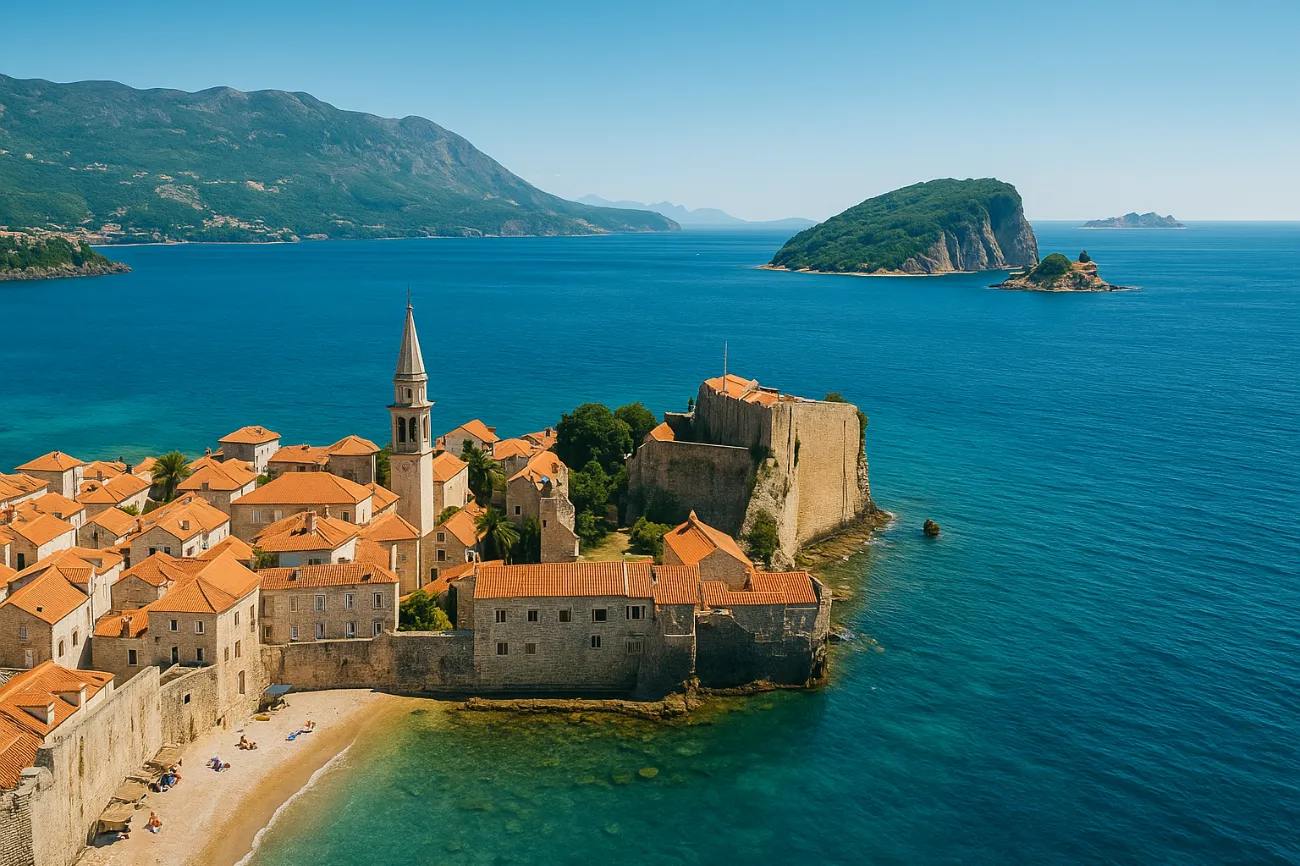

Budva is considered one of the most convenient destinations in Montenegro for independent travelers, thanks to its compact layout, straightforward logistics, and well-developed tourist infrastructure.
Budva is one of the most compact yet historically rich cities on the Adriatic coast. Within just a few kilometers, it brings together a medieval Old Town enclosed by fortified walls, beaches with crystal-clear waters, iconic architectural landmarks, island landscapes, and a vibrant resort atmosphere. This unique combination makes Budva equally well suited for a short visit or for a more leisurely exploration over several days.
This article highlights ten of Budva’s key attractions, offering a well-rounded view of the city from multiple perspectives — from ancient heritage and Venetian fortifications to natural beaches, panoramic viewpoints, and a dynamic modern nightlife scene. The route is designed to be flexible and easy to adapt to your pace, the season, and your personal interests, without the need for complicated logistics or long-distance travel.
1. Explore Budva’s Historic Old Town (Stari Grad)
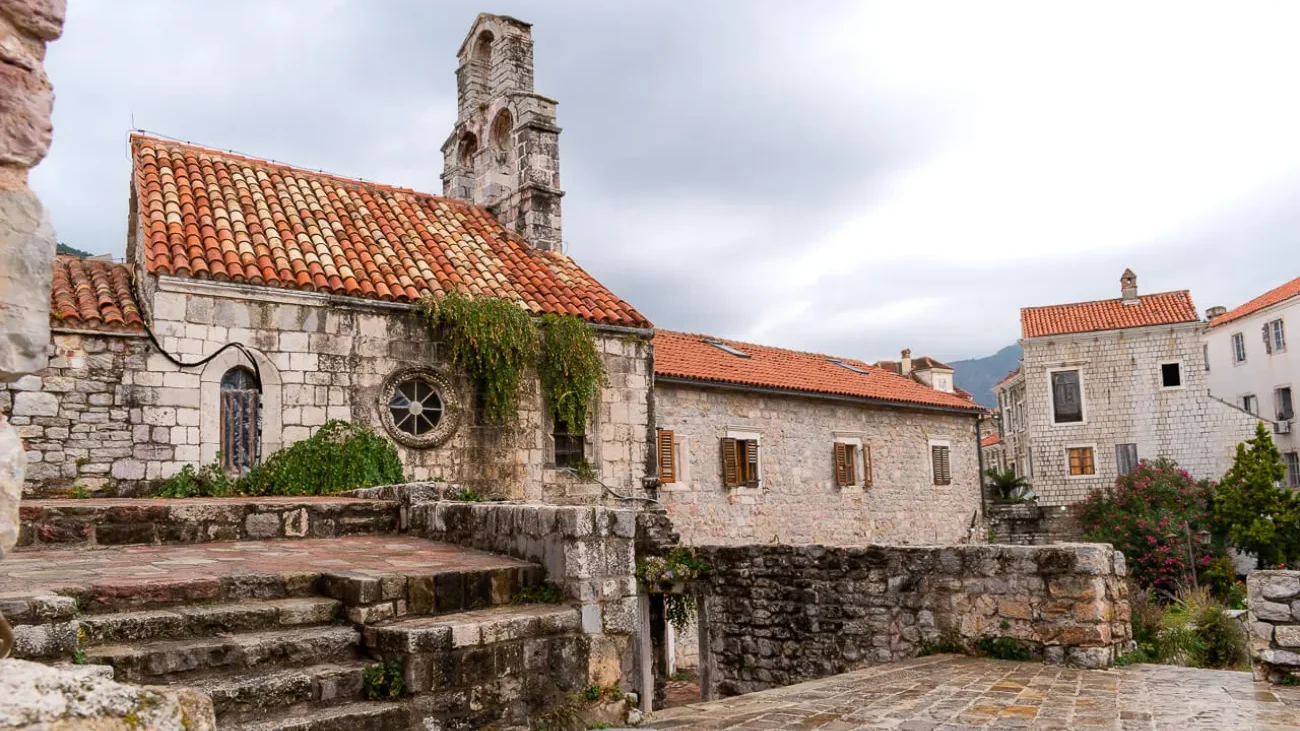
Budva’s Old Town is a compact medieval quarter enclosed by Venetian walls, where a 15th-century citadel, stone churches, a museum, and intimate squares coexist within an area of less than 0.5 km². It’s easy to combine cultural sightseeing with a seaside stroll here: from the main gate to the breakwater is just a 3–5 minute walk. For general orientation and official information about the location, refer to the National Tourism Organisation of Montenegro’s page on Budva and the municipal website Opština Budva.
> At a glance: entry to the Old Town is free, surfaces are cobblestone, it’s open year-round, and the best photos are taken early in the morning and at sunset.
Location and How to Get There
The Old Town sits on the south-western edge of Budva, between the Slovenska Plaža promenade and Richard’s Head Beach. The main gate is located by the Sea Tower, right next to the waterfront promenade.
– From Tivat Airport: 20–25 km, around 30–40 minutes by taxi. The average transfer cost is €25–40, depending on season and vehicle class.
– From Podgorica: 60–65 km, approximately 1–1.5 hours via the mountain road and the Sozina tunnel.
– By bus: arrive at Budva bus station (about 1 km from the walls), then walk 10–15 minutes along the promenade.
– By car: parking is available near the Old Town and along the seafront (a common landmark is TQ Plaza shopping centre). Rates are typically €2–3 per hour in high season.
– On foot: the entire Old Town perimeter is pedestrian-only; access is free and open 24/7.
> Important: during the high season (June–September), traffic is heavy—allow an extra 20–30 minutes to find parking near the walls.
What to See
The Old Town represents the living fabric of Budva: narrow lanes, laundry strung between buildings, the scent of the sea, and the aroma of basil drifting from restaurant kitchens. Key highlights include:
– The Citadel (Citadela, 15th century) — a fortified complex with a terrace and museum exhibitions. It offers the best panoramic views of the Old Town, Sveti Nikola Island, and nearby beaches. Paid entry.
– The Church of St. John (St. Ivan / St. John) — the cathedral with its tall bell tower, a defining landmark of the Old Town; inside are icons and fragments of historic frescoes.
– The Church of the Holy Trinity (1797) — a compact church with a distinctive three-colour façade, located on the square near the walls of the Santa Maria in Punta monastery.
– Budva City Museum — exhibits from antiquity and the medieval period, including ancient amphorae, coins, and mosaics. The institution’s official resource is Museums and Galleries of Budva.
– Venetian walls and gates — walk the perimeter toward the Sea Tower and the “Mogren Gate” near the path leading to Mogren Beach.
– Viewpoints: the Citadel terrace; a platform along the southern wall above the sea; the pier by the Sea Gate (ideal for sunrise shots of the Old Town).
– Squares and alleys: Trg Pjesnika (Poets’ Square), which hosts intimate concerts in summer; small streets lined with craft shops between the churches of the Holy Trinity and St. John.
> Dress code: when visiting churches, shoulders and knees should be covered; photography inside may be restricted.
Admission Fees and Opening Hours
Below are approximate guidelines for visiting the main sites within the Old Town. Opening hours may vary by season and during religious holidays; for the most up-to-date information, check the official municipal website or inquire on site.
| Location | Price | Typical Opening Hours |
|---|---|---|
| Old Town (area) | Free | 24/7 |
| Citadel | ~€3.50 adults; concessions from €2 | Summer: approx. 09:00–20:00; shoulder season: 10:00–16:00 |
| Budva City Museum | ~€3 adults; ~€1.50 children/students | Summer: approx. 09:00–21:00; winter: 09:00–17:00 (possible closed day) |
| Churches of St. John and the Holy Trinity | Usually free; donations welcome | Daytime hours; breaks during services |
Additional options:
– Guided tours of the Old Town with a licensed guide: from €10–15 per person in a group (1–1.5 hours).
– Audio guides and brochures: available seasonally at Tourist Organisation information centres.
> Tip: carry cash in euros for entrance tickets and small cafés in the Old Town—card terminals are not available everywhere.
Budva’s Old Town can easily be fitted into a 1–2 hour visit, or you can linger into the evening: explore the churches and museum, climb to the Citadel terrace, take photos by the sea wall, and end the walk with dinner on one of the squares. To plan events and city festivals, follow announcements on the official platforms of Opština Budva and the National Tourism Organisation of Montenegro.
2. Relax on Budva’s Beaches
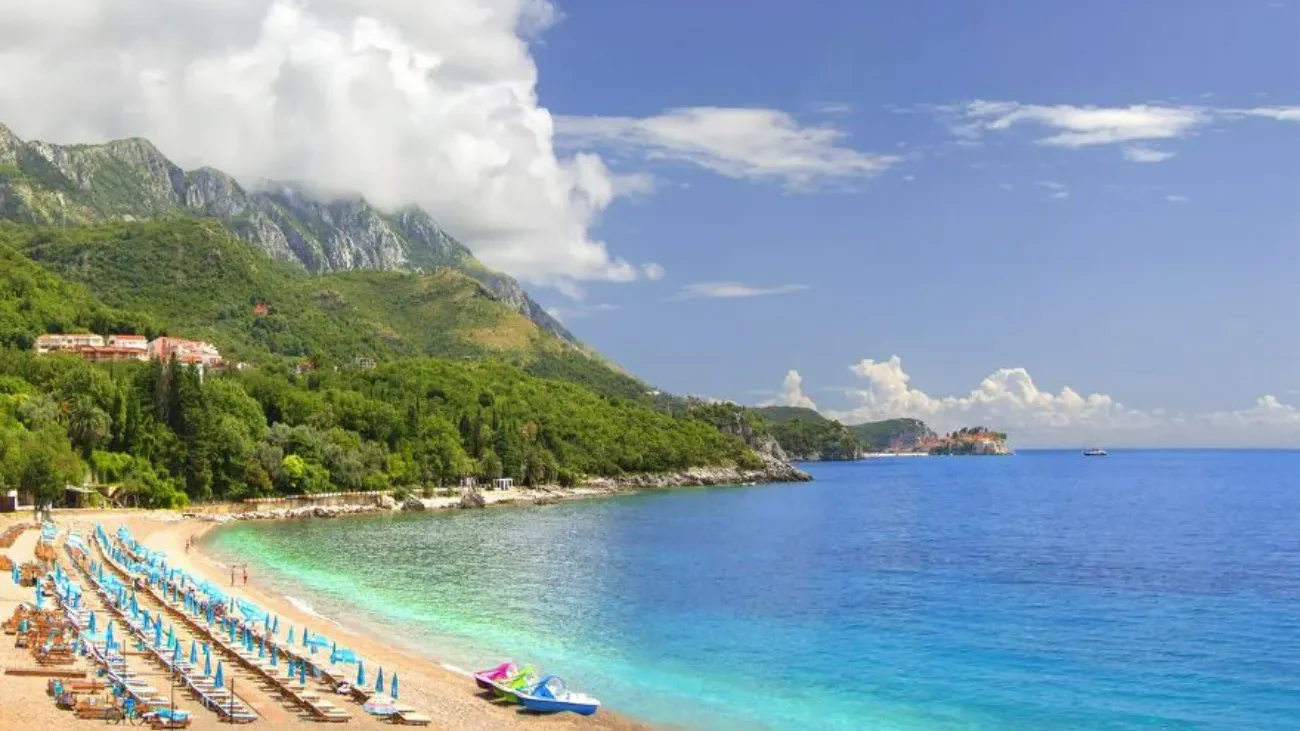
The Budva Riviera is known for its succession of pebble and mixed sand-and-pebble beaches with crystal-clear Adriatic waters. Within the city limits, you can easily reach Mogren Beach (a twin cove tucked beneath the cliffs of the Old Town), Slovenska Beach (the main urban shoreline), and, a little farther out, Jaz Beach and the terraced Ploče beach club. Beach infrastructure operates throughout the high season, and selected areas undergo annual certification for water quality and service standards—updates are published by the Public Enterprise for Coastal Zone Management of Montenegro.
> Key facts: the sea is exceptionally clear, access to public beaches is free, only sunbeds/umbrellas and services are paid; the best season runs from May to September.
Location and How to Get There
– Mogren Beach — located in the western part of Budva, a 10–15 minute walk from the Old Town. Access is via a pedestrian path along the cliff, passing the Ballerina statue and the “Mogren Gate.” There is no parking nearby—leave your car along the seafront or in the town centre.
– Slovenska Plaža (Slovenska Beach) — the central city beach, stretching about 1.6 km along the promenade. Landmarks include TQ Plaza and the marina. Easily accessible on foot from anywhere in central Budva.
– Jaz Beach (Jaz Beach Budva) — approximately 2.5–3 km northwest along the E65 road toward Kotor. Reachable by intercity buses heading toward Kotor (get off at the nearest stop, then walk 10–15 minutes), or by taxi from central Budva for €6–10 one way, depending on the meter and season. Seasonal parking is available near the beach.
– Ploče Beach — a terraced beach club beyond the headland near Trsteno, about 9–10 km from central Budva on the road toward Tivat. Best reached by car or taxi; in high season, shuttle services may operate from Slovenski Boulevard (check schedules via Opština Budva).
> Important: in peak months (July–August), allow an extra 20–30 minutes for traffic and parking when heading to Jaz or along the road to Ploče.
What to See and What to Do
– Mogren (I & II). Two sheltered coves separated by a rocky outcrop with a natural arch. Calm mornings and gentle seas make this an ideal spot for swimming and snorkelling. Photo highlights include the path by the Ballerina statue and views of the Old Town from the eastern edge of the beach.
– Jaz. A wide crescent of pebbled shoreline, popular for relaxed daytime beachgoing and evening concerts (the site has hosted major summer festivals in various years). Sunsets face west, offering excellent light for photography.
– Slovenska Plaža. A lively promenade lined with cafés, children’s play areas, SUP and kayak rentals, and organised sunbed zones. Well-maintained sections include showers and changing cabins.
– Ploče. Multi-level terraces with stair access to the sea, sun decks, seawater pools, and daytime DJ sets. A full beach-club concept with an elevated level of service.
– Activities. SUP and kayak rentals (with views of the fortress walls and coastal grottoes), parasailing along Slovenska Beach, and boat trips to Sveti Nikola Island (“Hawaii”) departing from the marina. Official information on the beach season and water quality is published by the coastal management authority and the National Tourism Organisation of Montenegro.
> Tip: arrive at Mogren between 08:00 and 10:00 for fewer crowds and glassy water; for sunset, head to Jaz or the outer terraces of Ploče.
Prices and Operating Hours
Below are indicative prices and operating times for beach infrastructure (seasonal and subject to change). Public-access areas have no entrance fee; service hours for rentals and lifeguards are generally daytime only.
| Beach | Sunbed / Umbrella | Parking | Activities | Service Hours |
|---|---|---|---|---|
| Mogren | set (2 sunbeds + umbrella) ~ €12–20 | — (use seafront parking) | SUP / kayak ~ €10–15 per hour | rentals & cafés: 09:00–18:00/19:00 |
| Slovenska Plaža | ~ €12–22 per set (front rows cost more) | city parking €2–3 per hour | parasailing from €40–60; pedal boats €10–15 per hour | infrastructure: 08:00–20:00 |
| Jaz | ~ €12–20 per set | seasonal parking €3–5 per day | water activities €10–50 | cafés / rentals: 09:00–19:00 |
| Ploče | sunbed & umbrella ~ €15–25 (by zone) | on-site €3–5 per day | seawater pools included in zone access | beach club: 10:00–20:00; evening events as scheduled |
Additional notes:
– Showers / changing cabins / toilets: available on organised sections, free or paid depending on the operator (typically €0.50–1 per use).
– Lifeguards: on certified beaches, on duty during daylight hours in high season (specific locations and dates are published by the managing authority).
– Water taxis to Sveti Nikola Island from the marina pier: approximately €4–6 round trip, operating on an ad-hoc seasonal schedule (confirm locally or via the national tourism portal).
> Important: public beaches are open around the clock, but rentals, cafés, and lifeguard services operate on a daytime and seasonal basis (usually May–September).
> Money matters: carry some cash in euros—card terminals are not available everywhere; the official events calendar and city announcements are published by Opština Budva.
These four key beaches can easily be combined over 1–2 days: morning at Mogren, daytime at Jaz or Ploče, and an evening stroll along Slovenska Plaža. For up-to-date beach status (flags, water quality, coastal works), rely on official sources—the coastal zone authority and the official tourism portal of Montenegro.
3. Island Escapes: Sveti Stefan & Sveti Nikola
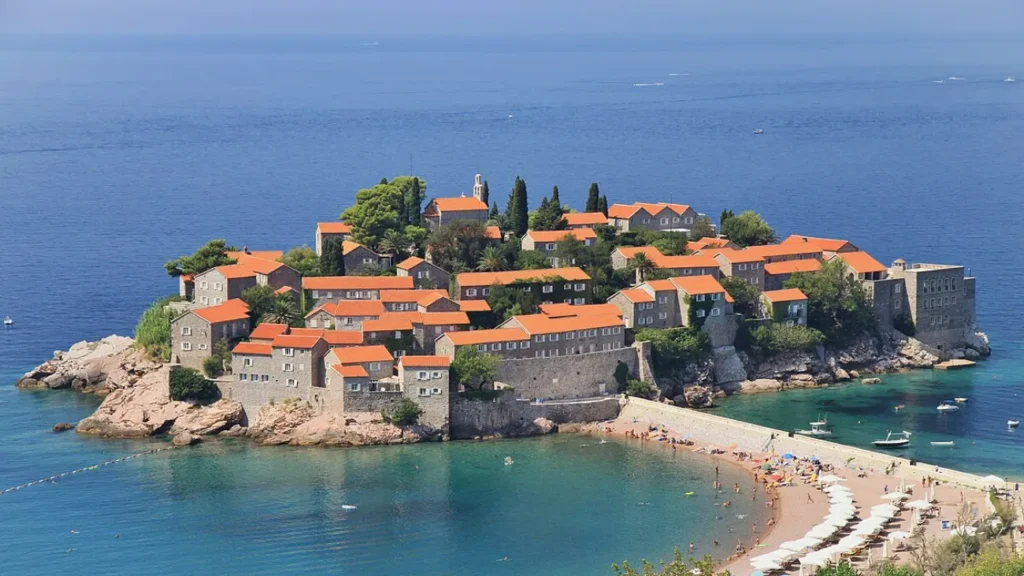
Two of Budva’s most instantly recognizable “island” icons are the resort islet of Sveti Stefan and the natural island of Sveti Nikola (locally nicknamed “Hawaii”). The former is an iconic Adriatic postcard, while the latter offers beaches, walking paths, and crystal-clear water, reachable by water taxi in just 10–15 minutes. When planning your visit, rely on official updates from the National Tourism Organisation of Montenegro, municipal notices from Opština Budva, and seasonal coastal-use regulations published by the Public Enterprise for Coastal Zone Management.
> Key points: access to the Sveti Stefan island resort itself is restricted to non-guests; Sveti Nikola is seasonally accessible by boat. Bring some cash in euros for transport and beach services.
Location and How to Get There
– Sveti Stefan. The village and island resort lie 9–10 km southeast of Budva, along the E65 road toward Petrovac and Bar. Intercity buses from Budva stop at “Sveti Stefan” (15–25 minutes, €2–3 per ticket). A taxi costs around €10–15 one way, depending on the meter and season. Parking along the seafront and roadside is limited; in high season, private parking operates at roughly €2–3 per hour. The coastal promenade and the causeway to the island are open for walking and photography.
– Sveti Nikola (Hawaii). A small uninhabited island about 1 km offshore from Budva, opposite the Old Town and Bečići. Water taxis depart from Budva Marina and piers along Slovenska Beach. In high season, crossings typically run every 15–30 minutes (usually 09:00–19:00); in shoulder seasons, services depend on weather conditions and passenger demand.
> Important: in strong winds or rough seas, crossings to Sveti Nikola may be suspended. Check current notices at departure piers and via Opština Budva.
What to See
– Sveti Nikola. Southern and eastern coves with coarse pebbles and turquoise water, short pine-lined trails leading to viewpoints, and snorkelling spots along the rocky shoreline. Roe deer inhabit the island—do not feed wildlife and help keep the area clean. In summer, small cafés and sunbed rentals operate. The best views toward Budva and the Old Town open up from the central ridge above the beach.
– Sveti Stefan. The main highlights are the panoramic viewpoints along the elevated section of the E65 road and the waterfront near the causeway. Nearby is Miločer Park, shaded by cedars and olive trees, with walking paths leading to Queen’s Beach (Kraljičina Plaža) and King’s/Miločer Beach. Access to certain beach sections and park areas may vary by season—always check current visiting rules via the national tourism portal or local information centres.
> Photo tip: for crowd-free shots, arrive at the Sveti Stefan viewpoint between 08:00 and 09:00, or visit at sunset. On Sveti Nikola, sturdy footwear is recommended—the shoreline is pebbly.
Costs and Operating Times
Below are indicative costs and operating guidelines (subject to change depending on season and service provider).
| Service / Location | Approximate Cost | Schedule / Notes |
|---|---|---|
| Water taxi Budva – Sveti Nikola – Budva | €4–6 round trip per person | Seasonal, typically 09:00–19:00; weather dependent |
| Sunbed / umbrella on Sveti Nikola | €10–20 per set | By zone; free beach areas also available |
| Sunbed / umbrella at Miločer / near Sveti Stefan | €20–40 per set | Higher prices in front-row areas |
| Parking near Sveti Stefan | €2–3 per hour (summer); €5–10 per day | Private and municipal parking options |
| Bus Budva – Sveti Stefan | €2–3 one way | 15–25 minutes; routes toward Bar / Petrovac |
| Access to the Sveti Stefan island resort | Closed to non-guests | Causeway and waterfront promenade are freely accessible |
Additional notes:
– Beach infrastructure hours (cafés, rentals, lifeguards) are primarily daytime and seasonal (May–September). Updates and beach regulations are published by Morsko Dobro.
– Miločer and surrounding parks are open for walking; certain beach areas may operate under specific rules set by the operator (check notices at entrances and updates from Opština Budva).
– Water safety: observe flags and signage on beaches. In windy or rough conditions, trips to Sveti Nikola may be restricted (seasonal advisories are published via the national tourism portal).
> Money matters: card terminals are not available everywhere on piers or on the island—carry small amounts of cash in euros. Any environmental fee, if applicable, is usually included in the water taxi fare or paid on site.
A well-balanced one-day itinerary looks like this: morning viewpoints and a walk through Miločer Park with photos of Sveti Stefan; daytime swimming and snorkelling on Sveti Nikola; and an evening return to Budva for dinner along the promenade. For transport schedules, city events, and current beach status, rely on official sources—Opština Budva, Morsko Dobro, and the national tourism portal.
4. Budva City Walls
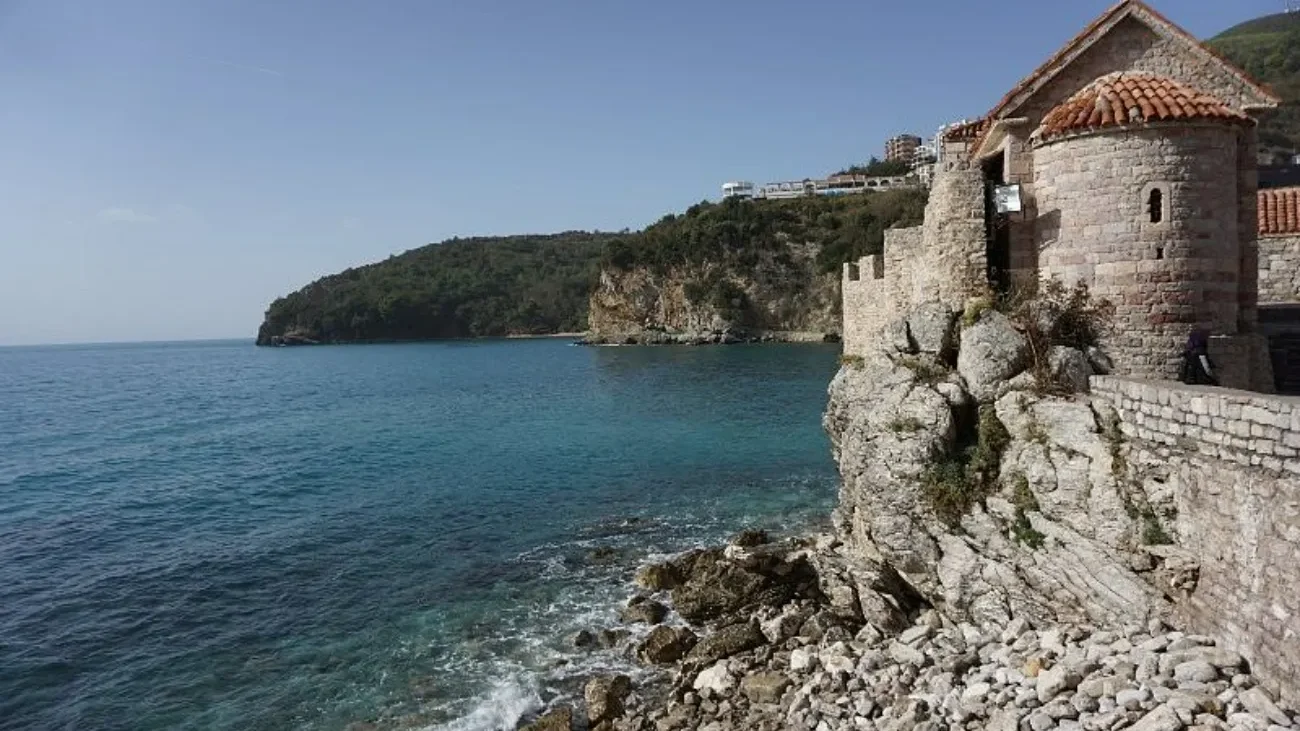
The Budva City Walls form a Venetian defensive ring that encloses the Old Town and extends toward the sea with bastions and towers. The outer perimeter is freely accessible, allowing visitors to stroll along the walls while capturing panoramic views of the Adriatic and the terracotta rooftops below. Parts of the inner walls and terraces can be accessed through the Citadel entrance. For general orientation and up-to-date city announcements, consult the official municipal portal Budva Municipality and the national tourism website montenegro.travel.
Key points: walking along the outer walls is free of charge and available 24/7; access to the fortifications and viewpoints inside the perimeter is most often via the Citadel (paid entry, scheduled hours).
Location and how to get there
– The fortified perimeter surrounds the Old Town in the southwest of Budva: from the Sea Gate (by the marina) to the southern sea bastion and the Mogren Gate leading to the path toward Mogren Beach.
– On foot: 10–15 minutes from the bus station along the seafront to the Sea Gate; 5–10 minutes from Slovenska Plaza along the promenade.
– By car: parking is available near TQ Plaza and along the seafront (in season, €2–3 per hour). Vehicle access inside the walls is prohibited.
– Tourist information points and posters for city events occasionally held near the walls are published on budva.me.
Timing tip: the softest light is in the morning (08:00–10:00) and at sunset; during the day the walls heat up, so bring water and sun protection.
What to see
– Sea Gate and the northern perimeter. The classic entrance to the Old Town with views of the marina and bastion. This is a convenient starting point for a circular walk along the outside of the walls.
– Southern bastion and sea wall. The most cinematic section, with waves breaking at the foundations and views toward Sveti Nikola Island. From the carved stone edge of the bastion, a perfect photo axis opens onto the Old Town rooftops.
– Mogren Gate. A passage leading to the trail toward Mogren Beach and the “Ballerina” sculpture; along the way, you’ll find striking angles of the wall and the Citadel corner.
– The Citadel (inner terraces). Access to parts of the fortifications, viewpoints, and museum spaces is via the Citadel ticket office. From inside, the views of the sea wall and the island are especially expansive. Details about the museum areas are available at Museums and Galleries of Budva.
– Squares and lanes beneath the walls. Areas under the bastions open onto the squares of the Church of the Holy Trinity and St. John’s Church—ideal for combining a walk along the walls with visits to churches and the local museum.
| Wall section | Access | Difficulty | What you’ll see |
|---|---|---|---|
| North (Marina – Sea Gate) | Free, exterior | Easy, level promenade | Marina, northern towers, entrance to Stari Grad |
| Southern sea bastion | Free, exterior | Moderate, steps/stone | Sveti Nikola Island, sea wall, breaking waves |
| Mogren Gate | Free | Moderate, narrow path | Cliffs, the “Ballerina,” western wall line |
| Citadel (inner terraces) | Paid entry | Steps, terraces | Panoramas of the Old Town and the bay |
Safety: paving stones and steps can be slippery after rain or during sea spray; wear shoes with non-slip soles and use handrails where provided.
Admission and opening hours
– Walk along the outer wall perimeter: free of charge, open 24/7.
– The Citadel (access to inner fortifications and terraces): approximately €3–3.5 for an adult ticket; children and concessions from €2. Typical hours: summer 09:00–20:00, shoulder season 10:00–16:00.
– Guided tours of the Old Town and fortifications with a licensed guide: from €10–15 per person (1–1.5 hours); private tours by arrangement.
– Events near the walls and inside the Citadel (concerts, exhibitions): announced separately on the municipal site budva.me and the tourism portal montenegro.travel.
Important: certain wall sections and passageways may be temporarily closed for restoration or during events—check on-site notices and official resources.
The visit is best planned as a circular route: start at the Sea Gate, walk along the northern wall to the southern bastion, exit via the Mogren Gate, and finish on the Citadel terraces. This way, you’ll enjoy both sea views and sweeping panoramas of the Old Town, with time to explore museum spaces as well. Bring cash in euros—card terminals are not available at all ticket counters or small shops near the walls.
5. The Dancing Girl Statue
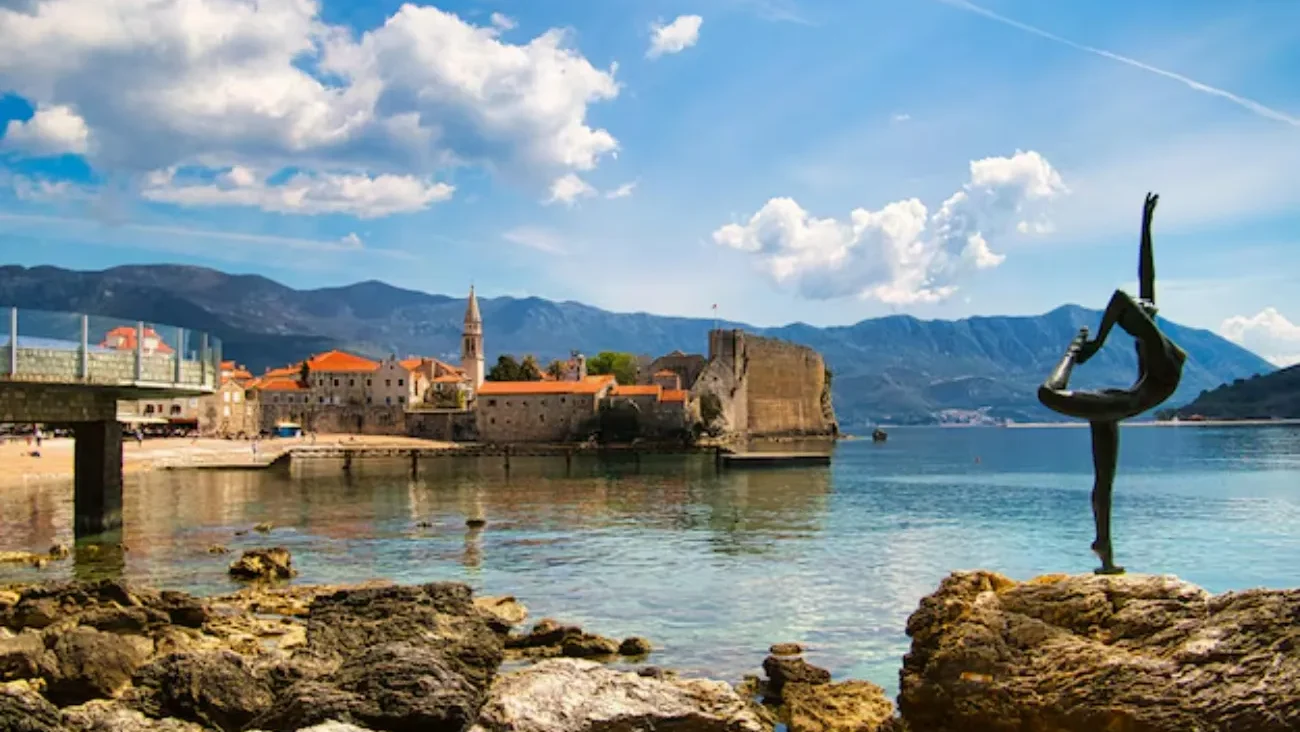
The sculpture known as the “Dancing Girl” (often referred to as the “Ballerina from Budva”) is one of Budva’s most recognizable symbols and a favorite vantage point for panoramic shots of the Old Town set against the Adriatic Sea. The figure stands on a coastal rock along the path from the Old Town to Mogren Beach, making it easy to combine a visit with a short walk along the city walls and the shoreline. For orientation and official city announcements, rely on trusted sources such as Montenegro’s national tourism portal montenegro.travel and the municipal website Budva Municipality.
Key takeaway: access to the statue is free, the viewpoint is open 24/7, and the best light is in the morning and at sunset.
Location and how to get there
– On foot from the Old Town: exit through the Sea Gate to the waterfront, follow the promenade along the city wall toward the Mogren Gate, then continue along the cliffside path—about 8–12 minutes at an easy pace.
– From Slovenska Plaza (central Budva): walk along the seafront toward the Old Town, then continue to the Mogren Gate—15–25 minutes total, depending on your starting point.
– By car: park near TQ Plaza or at public parking areas along the seafront (in high season, typically €2–3 per hour), then continue on foot only (no vehicle access).
– Accessibility: the coastal path includes stone surfaces and steps and narrows in places; it is not suitable for strollers or visitors with limited mobility.
Important: after rain or during heavy surf, the stone can be slippery. Wear shoes with good grip; in stormy conditions, sections of the path may be temporarily closed—check updates on budva.me.
What to see
– Scenic viewpoints: the classic composition places the statue in the foreground with the silhouette of the Old Town, its walls, and the bell tower of St. John’s Church on the horizon. Arrive at sunrise for golden light; warm sunset tones wash beautifully over the walls and rooftops.
– The route to Mogren Beach: continue past the statue along the path—through rocky passages and viewpoints overlooking the Citadel corner—to the coves of Mogren I and II.
– The legend: local lore suggests the statue represents a young woman waiting for a sailor—or a dancer/gymnast—symbolizing hope and the promise of return.
– Additional viewpoints: lookouts along the southern city wall, the pier near the Sea Gate (a strong angle combining “statue + walls”), and the Citadel terraces (wide coastal panoramas).
– Photo etiquette: the shoreline here is narrow and waves can surge close—avoid wet rocks and keep a safe distance so as not to block the path or disturb other visitors.
Photography tip: for people-free shots, arrive at the statue between 08:00–09:00 or after sunset; place tripods only where they do not obstruct passage.
Admission and opening hours
– Access to the statue and coastal path: free, 24/7. Lighting is limited after dark; bring a flashlight.
– Old Town guided tours that include the statue: from €10–15 per person (group tours, 1–1.5 hours); private tours by arrangement with a guide.
– Seafront parking: in season, typically €2–3 per hour (public/private lots).
– Seasonal restrictions: during storms, certain sections of the coastal path may close temporarily for safety reasons; monitor notices on the municipal portal and general coastal advisories from Morsko Dobro.
Money matters: carry small amounts of cash in euros for parking and waterfront cafés—card terminals are not available everywhere.
An ideal route is to start at the Sea Gate, walk along the wall to the Dancing Girl statue, take photos, and continue on to the Mogren coves. When planning timing and weather, consult Montenegro’s official tourism portal montenegro.travel and announcements from the Budva Municipality.
6. Top Hill — Budva’s Premier Summer Nightclub
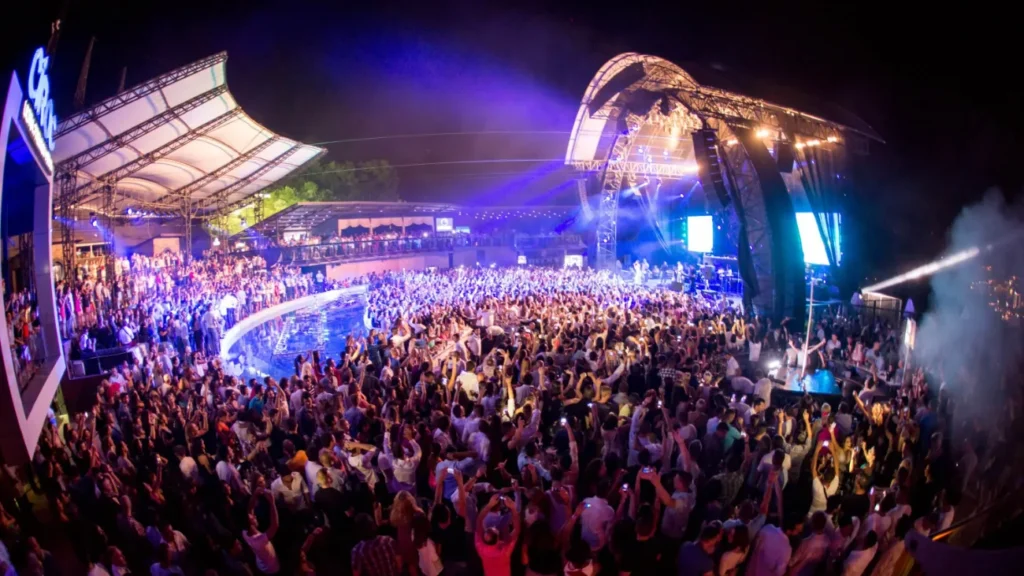
Top Hill is an open-air summer venue perched on a hill above Budva, offering sweeping panoramic views of the Old Town and the Adriatic Sea. The club is known for its powerful sound system, immersive light shows, and appearances by European and Balkan artists. During the high season, it becomes a focal point of nightlife along the Budva Riviera. Event schedules and official city announcements are best checked on the Budva Municipality website and the national tourism portal montenegro.travel.
Important: Top Hill operates seasonally (typically during the summer months) and opens for evening and night events; entry is ticketed or by guest list.
Location and how to get there
– Address and setting: the venue is located on a hill above central Budva (Topliški put area), approximately 2–3 km from the seafront. The terraces overlook the Old Town and Slovenska Beach.
– Taxi: €5–10 from the city center or promenade (prices vary by season, time of night, and traffic). Late at night, this is the most convenient way to get there and back.
– On foot/by car: access is via a winding uphill road; walking takes about 30–40 minutes uphill. Parking on-site is limited, so arrive early during peak season.
– Public transport: night bus services are generally unavailable; plan on taxis or event-organized transfers.
Tip: pre-book your return taxi for after the show—demand is high at peak hours.
What to expect and what makes the club stand out
– Panoramic terrace: the defining visual is nighttime Budva spread out below—illuminated city walls and the harbor at your feet. The venue is fully open-air, with dancing under the stars.
– Stage and sound: a large main dance floor, professional lighting, lasers, LED screens, and event-regulated pyrotechnics.
– Music and lineups: EDM, house, techno, and regional pop; summer seasons feature guest DJs and live acts.
– Seating areas: general dance floor, elevated platforms, and VIP tables/lounges with service available by advance reservation.
– Facilities: multiple bars, a cloakroom (event-dependent), controlled entry, security, and restroom facilities.
Dress code and age: face control and a smart-casual dress code may apply; entry is 18+ with valid ID.
Pricing and opening hours
Below are indicative figures that vary depending on the artist, event format, and date. For current notices and listings, see budva.me and the national tourism portal.
| Item | Approximate cost | Notes |
|---|---|---|
| General admission | €10–25 | Depends on artist/day; presale is cheaper |
| VIP table (deposit) | €100–300+ | Minimum spend varies by area and event |
| Bar prices | Beer €4–7; cocktails €8–12 | Premium brands cost more |
| Cloakroom | €1–2 | Event-dependent |
| Taxi (city center ↔ Top Hill) | €5–10 | Night rates are higher than daytime |
– Operating hours: events typically start after 23:00 and run until 04:00–05:00. The main season is summer (usually June–September); off-season events are occasional.
– Payment: cards are generally accepted at the bars, but carry some cash in euros for small or quick purchases.
– Safety and comfort: the venue is open-air; evenings on the hill can be cool—bring a light jacket. If you’re sensitive to loud music, consider earplugs and stay hydrated.
Important: always confirm ticket details and entry conditions (including age limits, ID requirements, and prohibited items) on the day of the event. Capacity limits apply on peak dates.
An optimal visit plan is to arrange transportation in advance and arrive early in the lineup to secure a good spot along the railings overlooking the bay. For guaranteed seating and service, book a VIP table 1–2 days ahead. Seasonal city notices about major events and traffic arrangements are published on the official platforms—Budva Municipality and montenegro.travel.
7. Slovenska Plaža, Budva
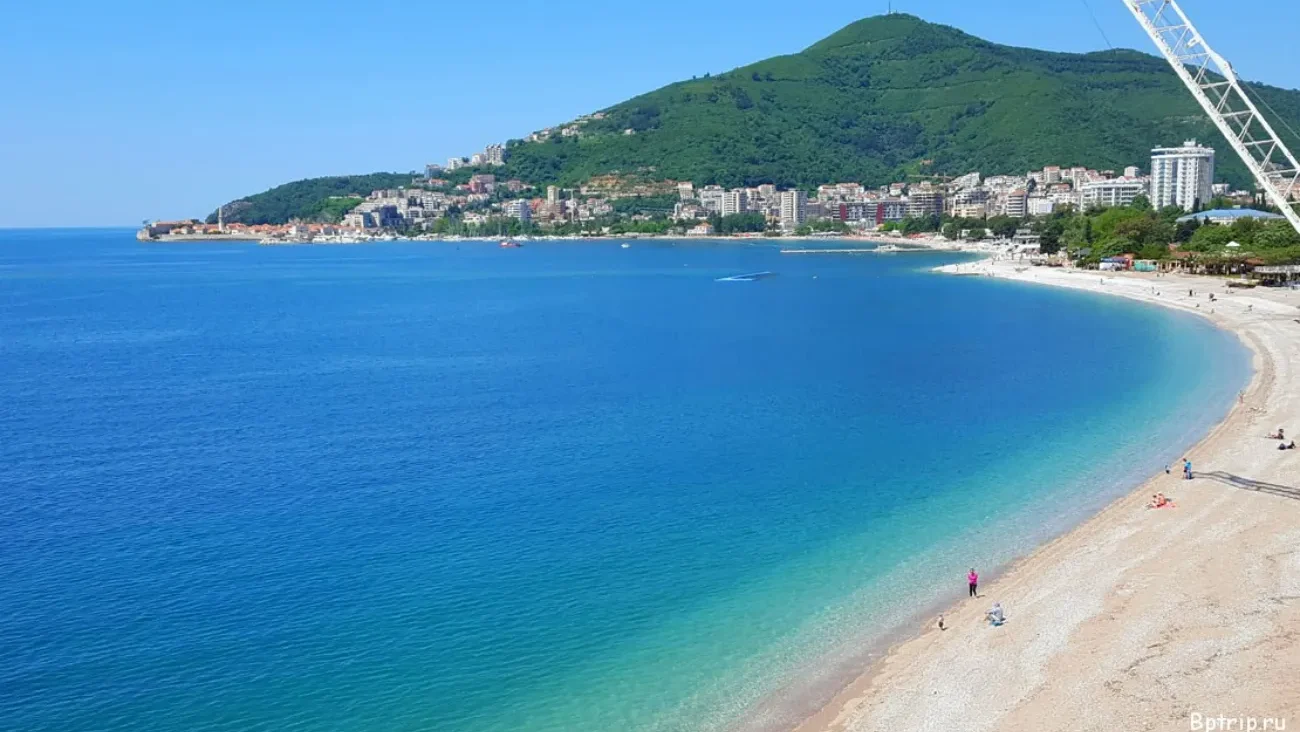
Budva’s main urban shoreline is a long pebble-and-sand beach stretching for about 1.6 km, lined with a well-maintained promenade, cafés, rental kiosks, and water sports facilities. It’s easy to combine swimming, an evening stroll, and a boat ride to Sveti Nikola Island from here. General visitor information is published by Montenegro’s National Tourism Organization on its Budva page at montenegro.travel and by the local municipality at Budva Municipality.
Key points: access to public sections is free and available 24/7; only sunbeds, umbrellas, and water activities are paid. The best season is May–September.
Location and how to get there
– Location: Budva’s central bay, running from the marina by the Old Town to the area around the Slovenska Plaža hotel complex.
– On foot: 5–10 minutes from the Old Town along the seafront promenade.
– Public transport: from Budva’s bus station, a 10–15 minute walk along Mediteranska Street to the promenade.
– By car: public and private parking is available along the seafront and near TQ Plaza (in high season, typically €2–3 per hour).
– Accessibility: a long promenade with benches and shaded areas; in some sections, walkways or ramps lead down to the water (availability and condition are seasonal—check locally and in updates from Morsko Dobro).
Tip: in July–August, allow an extra 20–30 minutes to find parking near the central promenade.
What to see and things to do
– The promenade: evening walks with views of the Old Town and Sveti Nikola Island, street musicians, and summer markets.
– Swimming and relaxation: a pebble entry into the water with a gentle slope, organized beach areas with showers and changing cabins. Water shoes are recommended on rockier sections.
– Water activities: SUP and kayak rentals, parasailing, pedal boats; boats and water taxis to Sveti Nikola Island depart from piers along the beach.
– Family-friendly amenities: playgrounds, ice cream stands, and cafés with terraces; shaded sides of the promenade are comfortable for daytime breaks.
– Photo spots: the western end closer to the marina offers angles toward the Old Town walls; central piers frame the island and the curve of the bay.
Water safety: follow flag colors and posted signs; lifeguard stations operate during daylight hours in season.
Pricing and opening hours
Below are indicative prices and operating times for beach infrastructure. Rates and schedules vary by zone, season, and service provider.
| Service | Approximate cost | Typical hours | Notes |
|---|---|---|---|
| Sunbed + umbrella set | €12–22 for two sunbeds + umbrella | 08:00–19:00 | Front rows cost more; free-access areas are available |
| SUP / kayak rental | €10–15 per hour | 09:00–19:00 | Deposit/ID as required by the rental operator |
| Parasailing | €40–60 per flight | Daytime | Weather- and sea-dependent |
| Water taxi to Sveti Nikola Island | €4–6 round trip | 09:00–19:00 (seasonal) | Departures from piers along the beach |
| Shower / toilet | ~€0.5–1 | Daytime | By service zone |
| Seafront parking | €2–3 per hour | 24/7 | Spaces are limited in high season |
– Visiting hours: public sections are open 24/7; rentals, cafés, and lifeguards operate on a seasonal daytime schedule (typically May–September).
– Water quality and beach status (flags, temporary restrictions) are published by the state coastal operator at morskodobro.com and in notices from the Budva Municipality.
– Tourist maps, event listings, and information about nearby attractions are available on the official portal montenegro.travel.
Money matters: card terminals aren’t available everywhere—carry cash in euros for sunbeds, showers, and small expenses.
Slovenska Plaža works well for a full day out: a morning swim in the free-access areas, daytime activities (SUP/kayak, parasailing), and an evening promenade walk with views of the Old Town. For timing and service status, rely on official sources.
8. Budva City Museum
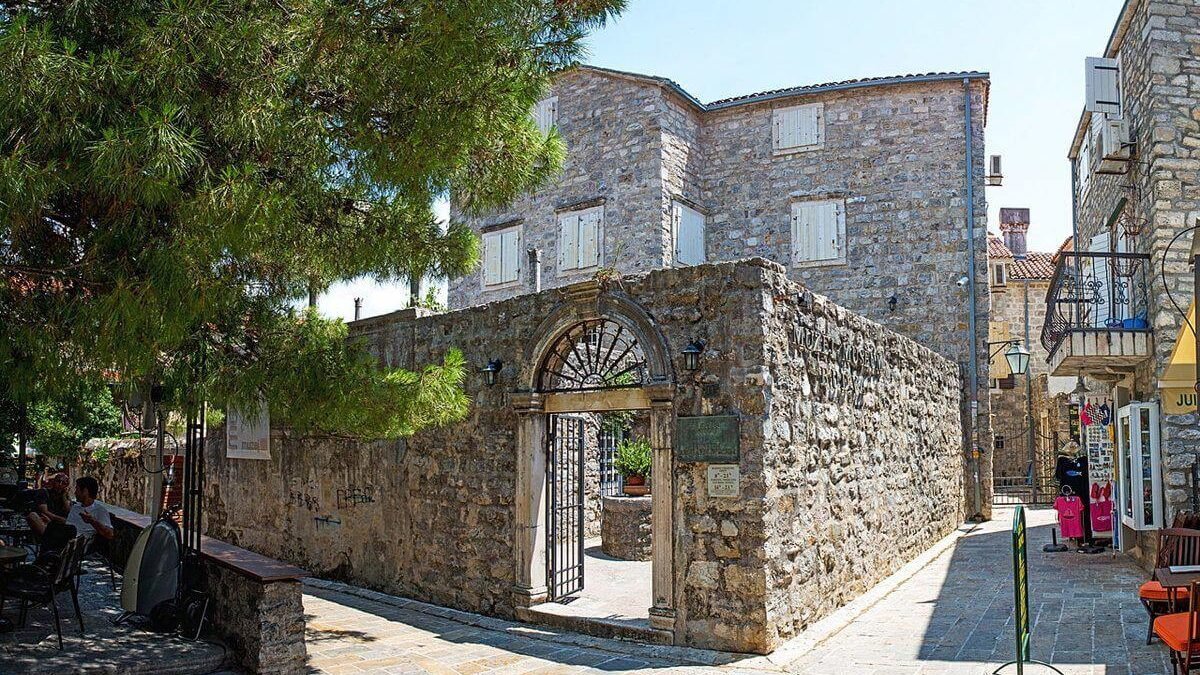
Budva City Museum is the principal archaeological and historical collection of the municipal institution “Museums and Galleries of Budva.” Its holdings span a long timeline—from Illyrian and Ancient Greek presence through the Venetian period—and include ceramics and amphorae, glass vessels, jewelry, coins, epigraphic monuments, and everyday household objects. Up-to-date information on exhibitions and temporary shows is published on the Museums and Galleries of Budva portal, while general visitor guidance can be found on Montenegro’s official tourism website and the Budva Municipality site.
Key point: the museum is easy to visit in 30–60 minutes as part of a walk through the Old Town; the exhibition is compact yet informative, with a strong focus on finds from Budva’s famous necropolis.
Location and how to get there
– Location: Budva Old Town (Stari Grad), within easy walking distance of the main gates. From the Sea Gate, it’s a 3–5 minute walk through narrow streets toward the squares by St. John’s Church and the Church of the Holy Trinity.
– On foot: from anywhere in the Old Town—2–7 minutes; surfaces are cobblestone.
– Public transport: from Budva’s bus station (about 1 km), allow 10–15 minutes on foot along the promenade to the Sea Gate, then follow signs.
– By car: parking is available along the seafront and near TQ Plaza (in high season, typically €2–3 per hour); vehicle access to the Old Town is restricted.
Timing tip: visit at opening time or after 16:00, when galleries are quieter and it’s more comfortable to read labels and study the displays.
What to see
– Classical antiquity. Finds from the Budva necropolis and urban excavations: amphorae (including Hellenistic and Roman examples), fine ceramics, glassware, jewelry, and coins. Dedicated cases highlight Adriatic trade routes.
– Late Antiquity and the Middle Ages. Epigraphic stones, masonry elements and household items, fragments of liturgical objects, weapons, and everyday artifacts.
– Venetian Budva. Domestic items, iconography, and small-scale sculpture that illuminate urban life under Venetian rule.
– Lapidarium and archaeological sections. Carved stone elements and architectural fragments offering a concise overview of the Old Town’s building history.
– Temporary exhibitions. Seasonal projects focused on local history and regional archaeology; schedules and announcements are published on the museum’s website.
Photography: permitted without flash; tripods and selfie sticks are generally prohibited. Medium-sized bags may be checked at the cloakroom or with gallery staff.
Admission and opening hours
The prices and hours below are indicative and may vary by season or on public holidays; check muzejibudva.me or notices from the Budva Municipality for current details.
| Item | Approximate price | Typical hours | Notes |
|---|---|---|---|
| Admission (adults) | ~€3 | Summer: 09:00–21:00 Winter: 09:00–17:00 | Last entry ~30 minutes before closing |
| Concessions (children/students) | ~€1.5–2 | Valid ID required | |
| Guided tour | from €10–15 per group | By advance booking | Languages: Montenegrin/English (confirm availability) |
Additional notes:
– Payment: cards and cash are accepted, but bring small euro notes for brochures and souvenirs.
– Accessibility: entry involves steps; assistance for visitors with limited mobility may be available—check in advance via the official website.
– Visitor materials and Old Town maps are available on the national tourism portal.
Important: opening hours may change during city events or restoration works—always check the latest notices on budva.me.
Pair your museum visit with nearby highlights: the squares by St. John’s Church and the Church of the Holy Trinity, the sea wall, and the Citadel terraces. This loop takes about 1.5–2 hours and offers a cohesive overview of Budva’s past—from ancient amphorae to Venetian bastions. Bring water, comfortable shoes, and a small amount of cash in euros, and follow current exhibitions and hours at muzejibudva.me.
9. Church of St. John
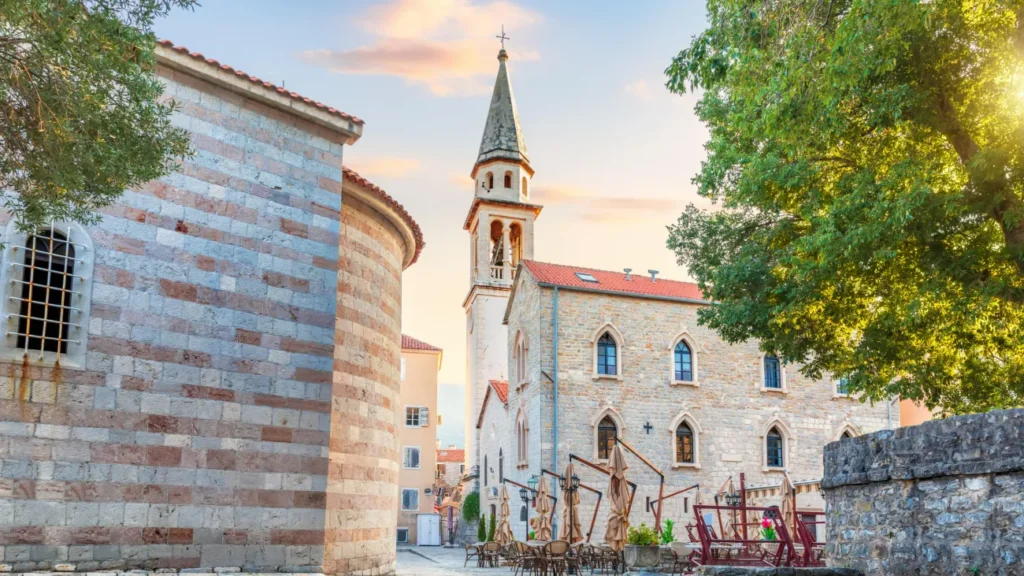
Once the cathedral of the Old Town, the Church of St. John is one of Budva’s key landmarks: its slender bell tower is visible from the seafront, while the small square at the entrance links the church to the museum quarter and the city walls. Historians date the earliest Christian sanctuary on this site to the first centuries of Christianity on the Adriatic coast; the present-day appearance took shape between the 14th and 18th centuries, with the bell tower added in the 19th century. General visitor guidance and city notices are available via the official resources of the Budva Municipality and the national tourism portal montenegro.travel.
Key point: entry to the church is usually free (donations are welcome); rules of decorum and a dress code apply—covered shoulders and knees.
Location and how to get there
– Location: Budva Old Town (Stari Grad), in the quarter between the Citadel square and the Church of the Holy Trinity. From the Sea Gate, it’s a 3–5 minute walk along cobbled lanes.
– Public transport: from Budva’s bus station (about 1 km), walk along the promenade toward the Sea Gate, then follow signs to the cathedral quarter—around 15–20 minutes in total.
– By car: parking is available near TQ Plaza and along the seafront (in high season, typically €2–3 per hour). Vehicle access to the Old Town is restricted.
Timing tip: visit at opening time or after 16:00—quieter conditions make it easier to appreciate the interior and iconostasis; during services, access may be limited.
What to see
– Architecture and bell tower. A basilica with a restrained façade and a tall 19th-century bell tower—one of Budva’s most recognizable silhouettes. From the entrance square, there are photogenic views across the Old Town rooftops and toward the sea wall.
– Interior and iconostasis. Inside, iconography, statuary, and liturgical objects reflect the layered history of the church, from early Christian motifs to Venetian influences.
– Artifacts and restoration. After the 1979 earthquake, restoration work uncovered masonry fragments and religious objects, some of which are displayed in Budva’s museum spaces (current exhibitions are listed on the Museums and Galleries of Budva website).
– The surrounding ensemble. Within a few minutes’ walk are the Citadel, the Church of the Holy Trinity, and the City Museum—a compact “cultural triangle” ideal for a short, half-hour route.
Etiquette: keep voices low and photograph without flash; during services, photography and movement through the nave may be restricted by parish staff.
Admission and opening hours
Below are typical visiting conditions (subject to seasonal changes, the religious calendar, and city events; check notices on budva.me and guidance on montenegro.travel).
| Item | Conditions | Time guidelines | Notes |
|---|---|---|---|
| Church entry | Free; donations welcome | Daily; breaks during services | Queues may form in peak season |
| Visiting hours | Open during daytime | Summer: approx. 09:00–19:00 Shoulder season: reduced hours | Exact times posted at the entrance |
| Tours | Exterior viewing is unrestricted; interior visits outside services | By arrangement with a guide | Combine with a visit to the City Museum |
| Dress code | Covered shoulders and knees | At all times | Head coverings for women—by tradition |
Money matters: bring a small amount of cash in euros for donations and leaflets; card terminals are generally not available inside the church.
A concise visit takes 10–15 minutes: quietly take in the interior, then step back onto the square for photographs of the bell tower framed by narrow streets. For updates on city events and possible access restrictions in the Old Town, consult official notices from the Budva Municipality.
10. Church of the Holy Trinity
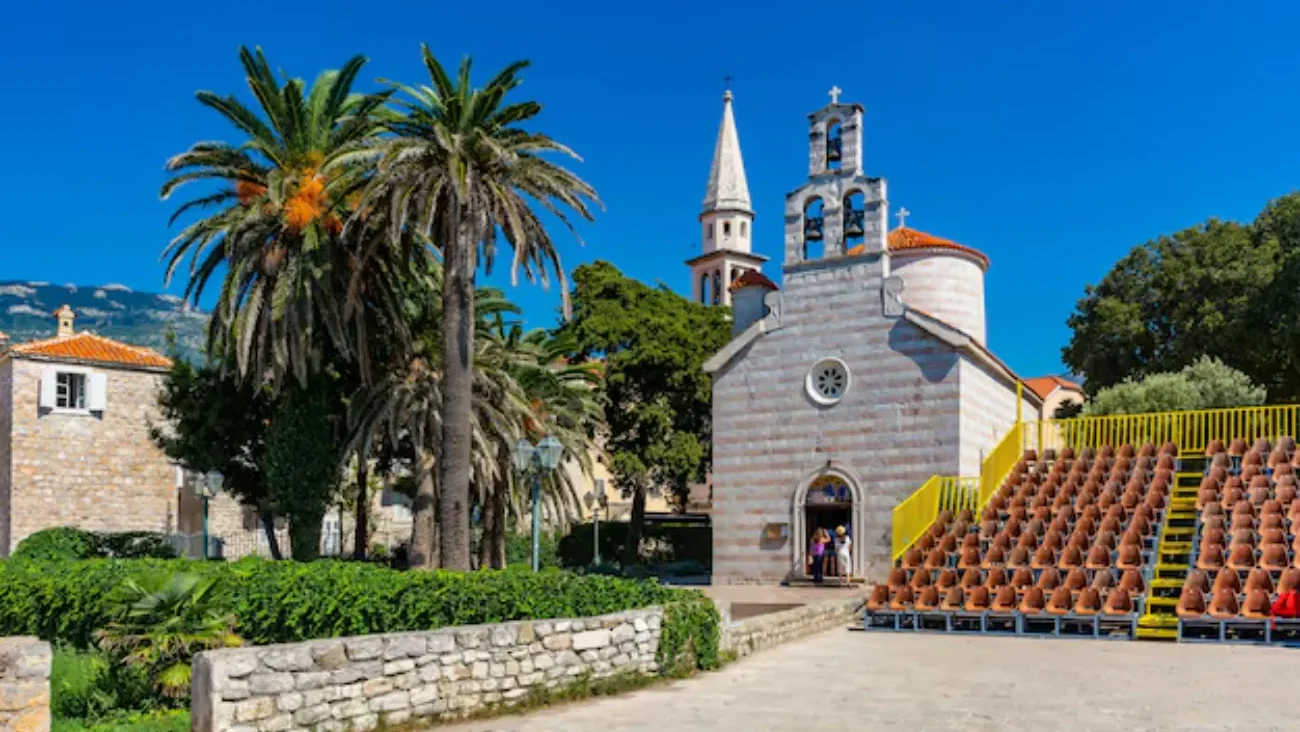
The Orthodox Church of the Holy Trinity is one of the key sacred landmarks of Budva’s Old Town, renowned for its distinctive striped stone façade and intimate interior. Built in 1797 on the square by the southern bastion, it stands next to the Citadel and the Church of St. John. General visitor information about Budva is published on the national tourism portal montenegro.travel and the municipal website Budva Municipality.
Key point: entry to the church is usually free (donations are welcome); a dress code applies—covered shoulders and knees, and quiet, respectful behavior during services.
Location and how to get there
– Location: Budva Old Town (Stari Grad), on the square by the southern city wall, immediately adjacent to the Citadel.
– On foot: from the Old Town Sea Gate, a 3–5 minute walk along cobbled streets toward the southern bastion.
– Public transport: from Budva’s bus station (about 1 km), walk along the promenade to the Sea Gate, then follow signs—around 15–20 minutes in total.
– By car: parking is available along the seafront and near TQ Plaza (in high season, approximately €2–3 per hour); vehicle access to the Old Town is restricted.
Timing tip: for a quieter visit, arrive at opening time or after 16:00; access inside may be limited during services.
What to see
– The striped façade (1797). Three-tone stonework and a modest pediment with a small belfry create one of the Old Town’s most recognizable silhouettes.
– Interior and icons. A classic Orthodox iconostasis and a compact interior that underscores the church’s historical character.
– The square in front of the church. A convenient vantage point for views of the Citadel, the sea wall, and Old Town rooftops; benches and shaded areas are close by.
– Cultural context. Just steps away are the Budva City Museum (current exhibitions and hours are listed on the Museums and Galleries of Budva portal) and the Citadel with its terraces.
– Photo opportunities. The façade catches warm light in the morning and toward sunset; note the perspectives created by the narrow streets leading into the square.
Etiquette: photograph without flash and do not cross barriers; during services, keep silent and follow directions from parish staff.
Admission and opening hours
Below are typical visiting conditions (subject to seasonal changes and the church calendar; check notices at the entrance and on the Budva Municipality and national tourism portal).
| Item | Conditions | Approximate hours | Notes |
|---|---|---|---|
| Church entry | Free; donations welcome | Daily; no fixed schedule | Closed during services and maintenance |
| Visiting (outside services) | Open interior viewing | Summer: approx. 09:00–19:00 Shoulder season: reduced hours | Last entry ~15–30 minutes before closing |
| Photography | No flash; tripods not permitted | Daytime | Photography may be restricted during services |
| Dress code | Covered shoulders and knees | At all times | Cover head and shoulders if required |
Additional notes:
– Tours: visits to the church are commonly included in Old Town walking routes; guided group tours typically cost €10–15 per person (1–1.5 hours).
– Payment: there are no card terminals inside—bring a small amount of cash in euros for donations and leaflets.
– Visitor information: Old Town maps, cultural listings, and city notices are available at budva.me and montenegro.travel.
Important: due to religious holidays and city events, access to the square and visiting hours may change temporarily—check current notices on official resources.
The best route pairs a visit to the church with a walk to the Citadel and the City Museum: all sites lie within a few minutes’ walk, allowing you to build a cohesive historical and cultural overview of Budva’s Old Town in 45–60 minutes.
A Convenient Itinerary: How to See All the Sights and How Much Time
Below is an optimized itinerary that brings together all the key highlights and helps you understand how long it realistically takes to explore Budva at a comfortable pace.
Day 1 — Old Town and Coastline (3–4 hours)
1. Budva Old Town (Stari Grad)
Start your route at the Sea Gate. A walk through the narrow streets, squares, and along the city walls takes approximately 45–60 minutes.
2. Budva City Museum
Located inside the Old Town. Allow 30–45 minutes to explore the exhibition.
3. Church of St. John
Within easy walking distance from the museum. A brief visit takes 10–15 minutes.
4. Church of the Holy Trinity
Situated next to the Citadel. A short stop of around 10 minutes is sufficient.
5. Citadel and City Walls
Time for the terraces, viewpoints, and a walk along the outer perimeter of the walls — 30–45 minutes.
6. Dancing Girl Statue
From the Sea Gate, walk along the wall toward the path leading to Mogren Beach. A photo stop and short walk take 15–20 minutes.
Total for the first half of the day: approximately 3–4 hours at a relaxed pace.
It’s convenient to finish with lunch or coffee in the Old Town.
Day 1 (Afternoon) — Beaches (4–6 hours)
7. Mogren Beach I & II
Ideal for swimming and unwinding after sightseeing. Plan 2–3 hours.
8. Slovenska Plaža (Slovenska Beach)
Perfect for an evening stroll, dinner, and sunset. Can be combined with swimming or a relaxed walk along the promenade — 1.5–2 hours.
Day 2 — Islands and Panoramas (4–6 hours)
9. Sveti Nikola Island (Sveti Nikola / “Hawaii”)
A morning or midday water-taxi trip. Swimming, walking, and snorkeling — 3–4 hours.
10. Sveti Stefan
An afternoon visit featuring scenic viewpoints, coastal walks, and Miločer Park — 1.5–2 hours.
Evening (Optional)
Top Hill
For those who want to end the day with Budva’s nightlife. Plan to head there after 22:30–23:00.
Quick Timing Summary
- Minimum: 1 full, intensive day (without the islands)
- Optimal: 2 days
- Most comfortable: 2–3 days, including beaches and island visits
Conclusion
Budva is a rare example of a resort city where history, nature, and modern infrastructure coexist within easy walking distance of one another. The Old Town allows you to immerse yourself in the past in a short amount of time, the beaches let you feel the rhythm of the Adriatic, and the nearby islands and viewpoints reveal panoramas that draw visitors back again and again.
Thanks to its compact layout and well-developed infrastructure, Budva’s main attractions can be explored at a relaxed pace — without complicated logistics or long transfers. Whether you are visiting for a single day, a weekend, or a longer stay, the city naturally adapts to your rhythm, offering everything from quiet strolls to active recreation and vibrant evening experiences.
With some advance planning and by relying on official sources of information, Budva reveals itself as a coherent and well-structured destination, where each day can be spent differently without ever leaving the city or its immediate surroundings.
 +382 60 099359
 hello@residence-estate.me
 The Old Bakery Residences, Budva 85310, Montenegro


 Get catalogue of TOP-7 objects