
 +382 60 099359




Foreigners can access property financing through select banks in Montenegro — but the answer to whether you specifically qualify is considerably more nuanced than a simple yes. Several Montenegrin banks publish loan products that explicitly mention non-resident borrowers. Others use the term “non-resident” in ways that carry additional conditions, such as requiring local employment or a regulated residence permit. The gap between a product being open to non-residents in principle and an individual applicant receiving approval can be substantial.
Being eligible to apply is not the same as receiving mortgage approval. The published criteria a bank lists on its website describe which profiles it will consider. Actual credit decisions depend on income, residency, the property itself, the applicant’s creditworthiness, and internal bank policy — all assessed individually.
This article is based on official bank publications and other sources available as of September 2026. Mortgage conditions in Montenegro can and do change, and any figures or eligibility terms here should be confirmed directly with the relevant bank before you enter into any legally binding commitments. Nothing here constitutes financial or legal advice.
Montenegro mortgage for foreigners: the key numbers
| Question | Current published information |
|---|---|
| Can a non-resident get a mortgage? | Yes — selected banks explicitly accept non-resident applicants |
| Dedicated non-resident product | Lovćen banka |
| Lovćen loan amount | €10,000–€500,000 |
| Lovćen maximum term | 10 years |
| Lovćen fixed rate | From 6.95%; published EIR 7.20% |
| Lovćen variable rate | From 3.45% + 6M Euribor |
| CKB maximum loan | €300,000 |
| CKB maximum term | 30 years, subject to eligibility |
| Hipotekarna published down payment | 20% for its housing loan |
| UCB published rate | 5.00–6.50% |
| Adriatic Bank housing-loan rate | 4.99% fixed on the currently published product |
| Main hurdle for an overseas buyer | Eligibility, income verification, own funds and acceptable collateral |
These are published product parameters, not guaranteed terms. A bank may offer different conditions or decline an application after assessing the borrower and the property.
Can foreigners get a mortgage in Montenegro?
The short answer is: some can, through some banks, under the right conditions. Mortgage availability for foreigners in Montenegro is not uniform across the banking sector, and the picture varies significantly depending on who the borrower is.
Some banks in Montenegro publish dedicated products for non-resident property buyers. Lovćen banka, for instance, maintains a current product page explicitly for non-resident property purchase loans, with published parameters for amounts, terms and rates. Other banks, including CKB, have housing loan products that reference non-residents but attach additional eligibility conditions — specifically, employment and regulated residence in Montenegro — which effectively means those products serve a particular subset of foreign buyers rather than all foreign applicants.
A critical point that many online sources handle poorly: you cannot treat every bank’s use of the word “non-resident” as identical. One bank’s non-resident product may be designed for a foreign investor living abroad. Another bank’s non-resident wording may be limited to foreigners who work and hold legal residence locally. Conflating these two situations produces the contradictory claims you will find scattered across the internet — some sites saying mortgages are readily available to foreigners, others suggesting they are nearly impossible to obtain. Both observations can be partly true, depending on which bank and which buyer profile you are discussing.
There are also reported instances of outdated information suggesting that Montenegrin banks stopped lending to non-residents after 2020. Current official bank pages in September 2026 demonstrate that non-resident lending has not disappeared; availability is bank-specific and strongly profile-dependent. Relying on old or secondhand sources to assess your options risks both missing genuine opportunities and building false expectations.
The table below sets out how the primary foreign buyer profiles tend to be positioned relative to mortgage lending, without suggesting specific outcomes for any individual applicant.
Table 1: Foreign buyer profile and likely lending considerations
| Buyer profile | Published availability | Main factors banks may assess | What to verify |
|---|---|---|---|
| Foreign national living and earning abroad, no local ties | Potentially eligible through specific non-resident products (e.g. Lovćen banka) | Verifiable foreign income, bank statements, source of funds, own contribution | Whether the bank’s non-resident product applies to your country of residence and income source |
| Foreign national with Montenegro residence permit | May have access to a broader range of products, depending on the bank’s eligibility criteria | Residence documentation, stable income (local or foreign), length of stay | Which banks accept foreign-source income alongside a local permit |
| Foreign national employed in Montenegro | Broader access, including banks with residence/employment conditions (e.g. CKB) | Employment contract, local salary evidence, residence documentation | Whether income level meets debt-service requirements |
| Foreign entrepreneur or business owner | Assessed individually; self-employed applicants face additional scrutiny | Business financials, tax documentation, account inflows, business stability | Which banks accept self-employment income and in what documented form |
| Buyer with mixed income (partly local, partly foreign) | Depends on bank and income structure | How banks categorise and weight each income stream | Whether combined income meets the bank’s criteria |
No column in this table represents a guaranteed outcome. Banks reserve the right to decline applications that technically fall within a published category if the overall creditworthiness assessment does not support lending.
Banks offering mortgages to foreign buyers

The information below is drawn from official published product pages as of September 2026. Bank products change, and the parameters shown here may have been updated by the time you read this. Always check the current terms directly with the bank.
Lovćen banka
Lovćen banka publishes a dedicated product for non-residents purchasing property in Montenegro. As of September 2026, the published parameters on Lovćen banka’s non-resident property loan include:
- Loan amount: €10,000 to €500,000
- Repayment term: 12 to 120 months (1 to 10 years)
- Fixed nominal rate: from 6.95% per annum
- Effective interest rate (fixed): 7.20%
- Variable rate: from 3.45% + 6-month Euribor
- Effective interest rate (variable example): 6.20%
- Loan account maintenance: €1 per month
These are the published starting parameters. The rate a specific applicant is offered, if approved, will depend on their individual profile, income, the property, and the bank’s assessment at the time of application. The €0 administrative fee shown on the product page should also be verified, as fee structures can change.
The 10-year maximum term is notably shorter than some banks offer for standard residential mortgage products. This affects the monthly repayment amount considerably — more on the mechanics of this below.
CKB
CKB’s housing loan product covers amounts from €10,000 to €300,000, with repayment terms from 12 to 360 months (up to 30 years). The CKB product page explicitly mentions non-residents as a potential borrower category — but the eligibility wording includes non-residents with employment and regulated residence in Montenegro, along with clients who can demonstrate other regular, verifiable income.
This distinction matters. CKB’s extended term (up to 30 years) can produce significantly lower monthly repayments than a 10-year product at a comparable rate. However, the employment and residence condition means this product does not automatically extend to every foreign buyer. A buyer living and earning entirely abroad who has no Montenegrin employment contract would need to confirm with CKB directly whether their specific profile qualifies.
Other banks
Several other Montenegrin banks also publish products that reference non-residents. Universal Capital Bank’s current housing loan product page indicates availability to both residents and non-residents with published rates of 5.00–6.50% and a maximum term of 84 months (as of September 2026), subject to its collateral and lending conditions. Adriatic Bank’s mortgage and housing loan products indicate that borrowers may be resident or non-resident, provided they meet the bank’s creditworthiness requirements. Hipotekarna banka publishes a housing loan that is also available to qualifying non-residents, with a 20% down payment required as a general loan condition, a maximum term of 10 years for non-resident borrowers, and an age limit of 65 at the point of the final repayment — as of September 2026. In all cases, the precise eligibility conditions and documentation requirements must be confirmed directly with each institution, as internal policies and product terms change.
The Central Bank of Montenegro’s consumer loan comparison publishes an informative list of products offered by licensed credit institutions, including housing loans. This is a useful starting reference for comparing product categories across the banking sector.
Table 2: Examples of published mortgage options relevant to foreign buyers (September 2026)
| Bank | Non-resident eligibility | Amount | Maximum published term | Published rate | Age / down payment / collateral note |
|---|---|---|---|---|---|
| Lovćen banka | Dedicated non-resident property loan | €10,000–€500,000 | 10 years | Fixed from 6.95%; variable from 3.45% + 6M Euribor | Individual assessment |
| CKB | Non-residents with employment and regular residence in Montenegro; other provable regular-income profiles listed | €10,000–€300,000 | 30 years | Fixed or variable; representative examples | Minimum age 21; maximum 70 at final instalment on published product |
| UCB | Residents and non-residents | Verify current limit | 7 years | 5.00–6.50% | Published collateral requirements apply |
| Adriatic Bank | Resident or non-resident meeting creditworthiness requirements | From €20,000 | 15 years | 4.99% fixed on current housing-loan page | Maximum age 65 at final instalment |
| Hipotekarna banka | Residents and qualifying non-residents | Based on creditworthiness/property value | 10 years for non-residents | Verify current product | 20% published down payment; maximum age 65 at final repayment |
How we checked these figures: bank eligibility, rates, loan amounts and terms in this table were checked against the lenders’ published product information in September 2026. Where a bank does not publish a universal condition for foreign borrowers, we have not estimated one.
Not sure which properties fit your financing budget?
Tell us your available own funds, preferred location and approximate purchase budget. We will help you narrow the search to properties that match your real purchasing parameters.
Find properties that match my budget
Resident vs non-resident mortgage: what actually changes?
| Factor | Foreign buyer living abroad | Foreign buyer resident/employed in Montenegro |
|---|---|---|
| Bank choice | More limited | Potentially broader |
| Published dedicated product | Lovćen has a specific non-resident product | Standard housing products may become available depending on eligibility |
| Income | Foreign income must be acceptable and verifiable to the lender | Local salary/income can fit products requiring Montenegro employment |
| Loan term | Dedicated Lovćen product: max. 10 years | Some qualifying products extend to 30 years |
| Monthly payment | Can be substantially higher when the available term is shorter | Longer term can reduce monthly repayment |
| Property assessment | Required | Required |
| Approval | Individual | Individual |
The practical difference is often not citizenship itself but which lending product your residence, employment and income profile makes available. A foreign national employed and resident in Montenegro may therefore have access to a very different product set from a buyer who lives and earns entirely abroad.
Mortgage rates, terms and down payments
Understanding mortgage economics in Montenegro requires distinguishing between several concepts that are sometimes conflated in shorter guides.
Nominal interest rate is the stated annual percentage the bank applies to the outstanding loan balance. It does not capture fees or other costs.
Effective interest rate (EIR), sometimes referred to as APR depending on jurisdiction, is a broader measure designed to reflect the true annual cost of the loan by incorporating applicable fees and charges alongside the nominal rate. For comparison purposes, the EIR is more useful than the nominal rate — though even EIR may not capture every transaction cost associated with the property purchase itself.
Fixed-rate mortgages carry an interest rate set for the loan term or a defined initial period. The monthly payment is predictable.
Variable-rate mortgages typically track an external benchmark — in Montenegro, the 6-month Euribor is common — plus a fixed margin. The published Lovćen banka variable rate, for example, is expressed as 3.45% + 6M Euribor. When Euribor moves, so does the rate. A lower starting rate comes with exposure to future rate movements.
What happens if Euribor changes?
For a product quoted as:
3.45% + 6-month Euribor
the total nominal rate changes when the reference rate resets according to the loan terms.
| 6M Euribor | Margin | Resulting nominal rate |
|---|---|---|
| 1.50% | 3.45% | 4.95% |
| 2.50% | 3.45% | 5.95% |
| 3.50% | 3.45% | 6.95% |
| 4.00% | 3.45% | 7.45% |
These are illustrative scenarios, not Euribor forecasts. Check both the current benchmark and the contract’s reset mechanism before choosing a variable-rate loan.
Consumer credit rules changed in late 2025
Montenegro’s new Consumer Credit Law has applied since November 2025 and strengthened the regulatory framework around consumer lending, including creditworthiness assessment, disclosure and limits connected with the effective interest rate. The Central Bank of Montenegro publishes the applicable maximum effective interest rate under the statutory methodology on a quarterly basis.
For a mortgage applicant, the practical point is simple: compare the effective interest rate (EIR) rather than looking only at the nominal headline rate, and use the lender’s current pre-contractual information when comparing offers.
Mortgage terms you need to understand
- Nominal interest rate — the annual interest rate applied to the outstanding loan balance.
- EIR (Effective Interest Rate) — a broader measure of borrowing cost that incorporates specified fees and charges and is more useful for comparing loan offers.
- Euribor — a euro money-market benchmark used as the reference rate in some variable-rate mortgages. For example, a rate quoted as
3.45% + 6M Euriborconsists of the bank’s margin plus the applicable six-month Euribor rate.
- LTV (Loan-to-Value) — the relationship between the loan amount and the property value used by the lender when determining how much it is prepared to finance.
- Own contribution / down payment — the portion of the purchase funded by the buyer rather than by the mortgage.
- Mortgage / collateral — security over the property in favour of the lender. The property must meet the bank’s requirements before it can be accepted as collateral.
Loan-to-value (LTV) and own contribution
Banks finance a percentage of the property value, not necessarily the full purchase price. The remainder — the own contribution, or down payment — must come from the buyer. Lovćen banka’s published product page does not specify a universal LTV percentage that applies to all non-resident applicants; CKB’s product also presents representative examples rather than a fixed LTV for foreigners.
Required own contribution varies by bank and borrower profile. Some lenders publish specific minimum contribution or collateral ratios — Hipotekarna banka, for instance, currently publishes a 20% down payment as a condition of its housing loan, which is also available to qualifying non-residents (as of September 2026). Other banks determine the required contribution during the individual credit assessment. The figure that applies to your application should be confirmed directly with each lender, as it cannot be generalised across the sector.
There is also an important mechanical point about property valuation. The lender will normally require a valuation of the property used as collateral. That valuation may affect the maximum amount the bank is willing to lend. For illustration, assuming a lender calculates its maximum advance by reference to its own valuation: if you agree to purchase an apartment for €280,000 but the bank’s valuation comes in at €240,000, the bank’s lending may be based on the lower figure rather than the agreed price. If the lender bases its limit on that valuation, the buyer may need to provide additional own funds to bridge the gap — on top of any standard own contribution requirement. The exact calculation varies by lender and should be confirmed before signing purchase commitments.
The lender’s valuation and the seller’s asking price are not necessarily the same number. If the lender’s valuation limits the amount it is prepared to advance, a shortfall relative to the purchase price may require the buyer to contribute additional own funds. Confirm how your chosen lender calculates its maximum advance before committing to a purchase price.
Table 3: Loan term and rate structure — how the mechanics play out
| Scenario | Term | Rate structure | Monthly payment effect | Primary risk |
|---|---|---|---|---|
| Shorter term (e.g. 10 years) | 120 months | Fixed | Higher monthly repayments; total interest paid is lower | Affordability pressure month to month |
| Longer term (e.g. 25–30 years) | 300–360 months | Fixed | Lower monthly repayments; significantly more total interest paid | Long-term cost of credit |
| Variable rate, shorter term | 120 months | Variable (e.g. 3.45% + 6M Euribor) | Lower initial payments if Euribor is low | Rate rises increase payments; limited hedging window |
| Variable rate, longer term | 300 months | Variable | Lower initial payments; extended exposure to rate movements | Compounding cost risk over a long horizon |
The difference in monthly outgoings between a 10-year and a 25-year mortgage at the same rate can be more significant than the difference between two rates at the same term. If you are modelling affordability, the term deserves at least as much attention as the headline rate.
How much cash should you have before applying?
There is no reliable universal down-payment percentage for every foreign borrower in Montenegro. Instead, calculate your cash requirement in four parts:
- Required own contribution — whatever your chosen bank requires for your borrower profile.
- Any valuation shortfall — if the bank values the property below the agreed purchase price and bases lending on that valuation.
- Purchase costs — applicable taxes, notarial and legal costs, registration and other transaction expenses.
- Mortgage-related costs — valuation, insurance, translations, certification and bank-related charges where applicable.
Example: if a property costs €280,000 but the lender values it at €240,000, do not assume that the difference is automatically financed. Depending on the lender’s lending calculation, part or all of that €40,000 valuation gap may have to come from your own funds in addition to the required contribution.
Before paying a reservation fee or kapara, ask the bank two separate questions: “What percentage will you finance?” and “Is that percentage calculated from the purchase price, the bank valuation, or another amount under your lending rules?”
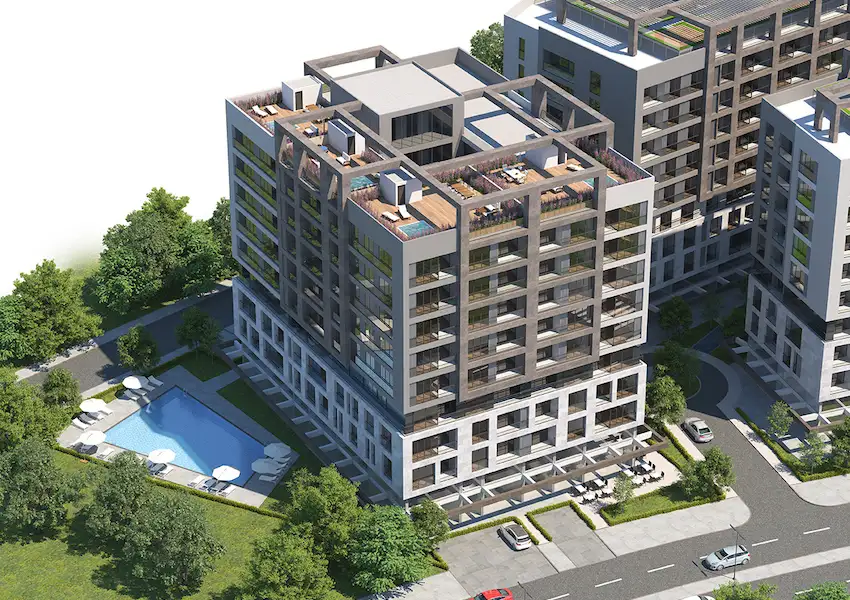
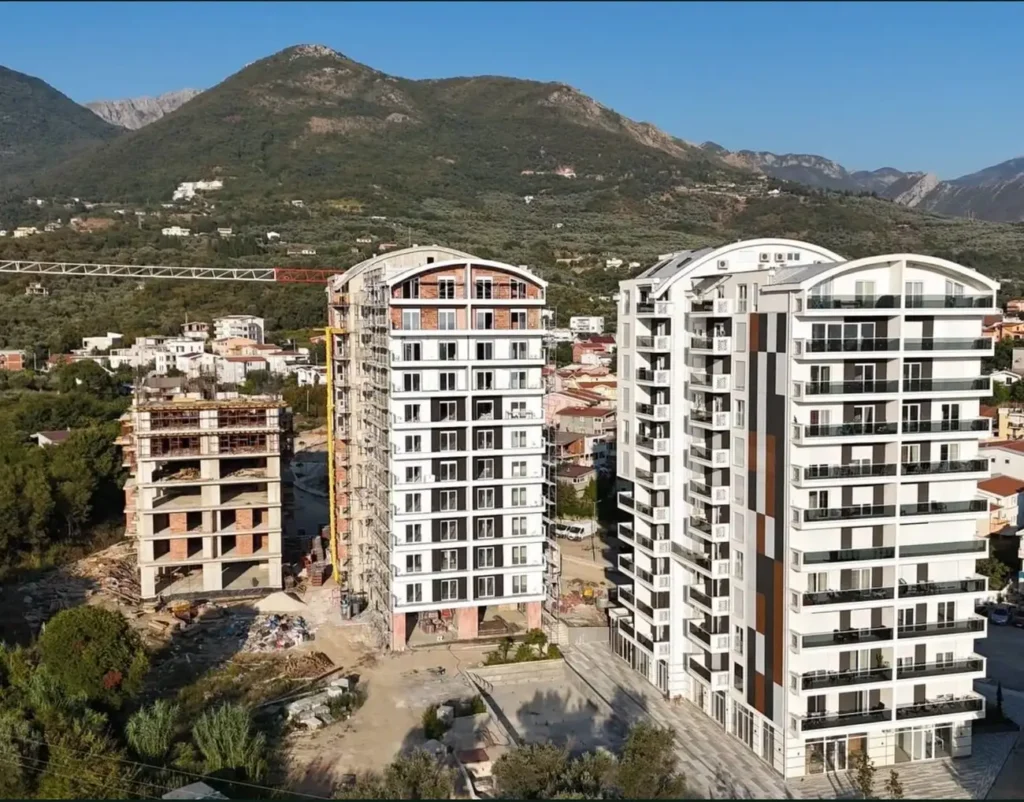
Take a look at residential complexes in Bar


 Bar
Bar от 37,5м²
 Barот 30.95м²
Quick eligibility checklist
Before contacting a bank, check whether you can answer yes to most of these questions:
- Can you document your regular income?
- Can you provide bank statements showing where that income comes from?
- Can you explain and document the source of your down-payment funds?
- Do you have sufficient own funds for the required contribution and possible valuation shortfall?
- Are your existing monthly debt obligations manageable?
- Can your foreign documents be translated/certified in the form required by the bank?
- Is the property legally registered and acceptable as mortgage collateral?
- Can you accommodate a shorter loan term if the bank does not offer you 20–30 years?
- If the rate is variable, could you still afford the payment if Euribor rises?
- Have you checked your eligibility before paying a non-protected deposit?
A “yes” to every question does not guarantee approval. A “no” identifies an issue worth resolving with the lender before committing to a property.
What banks check before approving a foreigner
Banks assessing a mortgage application consider both the borrower’s creditworthiness and whether the proposed collateral meets the lender’s requirements. Neither element can be overlooked, and a weakness in either can affect the outcome of the assessment.
On the applicant side, the assessment typically covers:
- Stable, verifiable income — the bank needs to be confident that repayments can be sustained. Salaried employees usually provide employment documentation; self-employed applicants and business owners provide business financials, tax returns and account statements.
- Bank statements showing regular inflows, consistent with the stated income.
- Existing debt obligations — a borrower who already services significant debt in another country may have a lower assessed capacity to take on additional obligations.
- Source of funds — particularly where the down payment is substantial, banks may ask where the funds originated, as part of standard compliance checks.
- Age and the repayment horizon — some banks apply maximum age limits at the point of loan maturity, which affects how long a term is available to older applicants. Published age limits differ by lender. For example, CKB’s current published product states a maximum age of 70 at the final instalment, while Adriatic Bank’s housing-loan information sets the final maturity no later than age 65. Always check the limit for the specific product because it can materially shorten the available term for an older borrower.
- Residency status — not automatically disqualifying if absent, but it can affect which product the applicant is eligible for and how the bank assesses risk.
- Nationality and jurisdiction — banks are subject to AML and compliance requirements that may affect how they handle income from certain countries or jurisdictions. This is not a blanket restriction but a case-by-case compliance consideration.
- Local banking relationship — some lenders offer particular pricing or conditions where regular income is paid through an account with the bank. Whether this affects eligibility or only pricing is lender-specific.
Factors that can make a foreign buyer’s application easier to assess:
- Income that is well-documented, consistent and from a transparent source
- A long employment history with the same employer
- Business financials that show stable revenue over multiple years (for self-employed applicants)
- Compliance with any account or income-routing requirements the chosen lender imposes
- Montenegro residence permit, where a lender’s published eligibility criteria require or take account of local residence
- A higher own contribution, reducing the bank’s exposure
- Property that is straightforward to value and has clean title documentation
- Willingness to obtain the bank’s required insurance products
None of these factors guarantee approval. They describe conditions that generally support a cleaner application.
Documents foreign applicants may need
Document requirements vary across banks and may also differ depending on the applicant’s profile. The following list covers categories that Montenegrin banks commonly request, based on published product information, but the specific documents required for your application should be confirmed directly with your chosen bank before you begin the process.
Identity and status:
- Valid passport
- Residence permit, where applicable
- Work permit, where relevant to the product
Loan application:
- Completed bank application form
- Any credit-register or credit-history consents required by the lender
Income documentation (employed):
- Employment certificate or letter confirming employment status
- Employment contract (or recent renewal)
- Recent payslips — typically covering the last several months
- Bank statements showing salary inflows
Income documentation (self-employed / business owner):
- Business registration documentation
- Financial statements for the business
- Personal and/or business tax returns
- Bank statements for business and personal accounts
Existing financial obligations:
- Information on active loans, credit cards, or other regular commitments
Property documentation:
- Preliminary purchase agreement (usually required before final credit decision)
- Recent property title extract from the Montenegrin cadastre
- Property valuation report (usually commissioned by the bank)
- Evidence of the seller’s legal ownership
Own funds:
- Bank statements evidencing the availability of the down payment
Compliance:
- Source of funds documentation for the down payment, particularly for larger contributions
- Additional documents as requested under the bank’s KYC / AML procedures
One point that is frequently underestimated: banks may require foreign-issued documents to be translated into Montenegrin, and may specify whether a certified or court-certified translation is necessary. Confirm the required form for each document with the lender before you begin assembling your application. Whether an apostille or other form of legalisation is required depends on the issuing country, applicable international arrangements, the type and intended legal use of the document, and the receiving institution’s requirements. Clarifying this early matters — waiting for certified translations can add meaningful time to an already extended process.
How the mortgage process works

The sequence below reflects the general flow of a property purchase involving bank financing in Montenegro. Individual cases may differ, and some steps may be combined, run in parallel, or handled differently depending on the bank and the deal structure.
Step 1: Establish your real financial position Before approaching banks or viewing property, clarify what own funds you have available — not just for the down payment, but for transaction costs, translations, legal fees, taxes, and the margin if the bank’s valuation is lower than the asking price. Knowing your genuine ceiling before you start looking protects you from committing emotionally to a property you cannot fund.
Step 2: Assess your eligibility with banks directly Contact the banks you are considering before selecting a property. Explain your residency status, nationality, income source and approximate purchase budget. Ask explicitly which product applies to your profile and what the eligibility conditions are. This step eliminates banks that are unlikely to approve your profile and helps you understand what documentation you will need to prepare.
Ask the bank these questions
Do you currently lend to someone with my nationality, residence status and country of income?
Do you accept my type of income?
What maximum loan amount and term could apply to my profile?
What own contribution would you require?
Is the lending limit calculated against the purchase price or your valuation?
What happens if your valuation is below the agreed price?
What is the nominal rate and the current EIR?
Is the rate fixed, variable or mixed?
Which fees and insurance policies are mandatory?
Which foreign documents need translation, certification or apostille?
What property types will you accept as collateral?
Do you finance properties under construction?
What age limit applies at final repayment?
What must happen before the loan can be drawn down?
Which conditions must be satisfied before I safely commit to a purchase contract?
Ask for the answers applicable to your profile, rather than relying on a general mortgage brochure.
Step 3: Obtain an indicative assessment where available Some banks will provide an informal or indicative assessment of how much they might be prepared to lend to a borrower with your characteristics, without it constituting a binding commitment. Where this is available, use it — it gives you a clearer budget for property searches and helps identify potential issues before you are invested in a specific transaction.
Step 4: Select a property that meets bank financing requirements Not every property is suitable as collateral for a bank loan. Before focusing on a specific property, discuss the type and condition of property you are considering with the bank. Collateral eligibility varies by lender — some current banking products expressly cover qualifying apartments under construction, while other property types or situations may be subject to additional conditions. Properties with title complications or that are difficult to value may also face additional scrutiny at the collateral assessment stage. Understanding the bank’s collateral criteria early avoids investing time and legal fees in a property the lender will not finance.
Step 5: Review title and legal documentation Before signing a preliminary agreement or paying a deposit, have a qualified local legal professional check the property’s title, encumbrances, cadastral registration, and any outstanding issues. See “How to buy property in Montenegro” for more on the legal purchase process.
Step 6: Structure the preliminary contract carefully A valid preliminary agreement can create binding contractual obligations depending on its terms and applicable formal requirements, and its consequences should be reviewed by a qualified legal professional before signature. If your purchase depends on bank financing, the structure of the agreement — including the deposit or kapara amount, what conditions apply if financing is not secured, and the payment timeline — should be carefully considered before signing. Paying a deposit or contractual earnest money before financing is confirmed can create a risk of loss or other contractual liability if the purchase does not complete; the consequences depend on how the payment and any financing condition are drafted. Your legal adviser and the bank should both be consulted before the preliminary agreement is signed.
Step 7: Bank valuation and underwriting The lender will normally require a property valuation carried out in accordance with its own requirements — whether through an appointed valuer, an internal process, or another approved method. This is a separate exercise from any valuation you may have seen from the seller or an agent. The bank’s credit decision is based in part on this valuation, and a valuation below the agreed purchase price may affect how much the bank is prepared to advance.
Step 8: Loan documentation, insurance and mortgage security Once the bank issues a credit approval, you will need to execute loan documentation, arrange any insurance the bank requires (typically property insurance, and in some cases life insurance), and formalise the mortgage security. In Montenegro, the mortgage is registered against the property in the cadastre.
Step 9: Closing, payment and mortgage registration The transfer of ownership rights in real estate must comply with Montenegro’s applicable notarial form requirements. Loan funds are disbursed in accordance with the lender’s approved drawdown procedure and the purchase documentation — the payment mechanics should be confirmed with the bank before closing. The mortgage is registered against the property in the cadastre, and you take ownership subject to that registered security.
If your ability to complete the purchase depends on bank financing, do not treat approval as guaranteed until the bank has issued its written credit decision. Entering into unconditional payment obligations before that decision is confirmed carries financial risk that is difficult to reverse.
The property must qualify too
A common gap in how mortgages are discussed for foreign buyers is the focus almost entirely on borrower eligibility — as if approval depends only on the applicant. In practice, the property also has to satisfy the bank’s requirements as collateral.
Montenegrin banks assess the property they are asked to take security over, and a property that cannot serve as reliable, registerable collateral will typically not support a mortgage, regardless of the borrower’s creditworthiness. The key dimensions banks assess on the property side include:
- Clean title and ownership documentation — the seller must demonstrably own what they are selling, and the title must be registerable in the buyer’s name through the cadastre.
- Existing encumbrances — existing mortgages, liens or other registered charges must be reviewed and may need to be discharged, subordinated or otherwise resolved before the lender can obtain the required security position.
- Property valuation — the bank’s internal or commissioned valuation must support the financing amount requested.
- Acceptability as collateral — the bank’s valuation and collateral review may take account of factors affecting the property’s acceptability and value as security. The specific criteria applied are lender-specific.
- Construction status — off-plan or partially completed properties raise different considerations than completed, registered dwellings.
- Legal registration — the property must be properly registered in the cadastre and capable of having a mortgage registered against it.
This is one of the stronger arguments for involving a local legal professional at the due diligence stage, before committing to a purchase — not just to protect your interests as a buyer, but to understand whether the property will pass the bank’s collateral assessment. For a practical overview of the purchase process and what to check, see “How to buy property in Montenegro“.
Common reasons a mortgage application can fail
A mortgage can become unworkable because of the borrower, the property, or the structure of the transaction.
| Borrower-related | Property-related | Transaction-related |
|---|---|---|
| Income cannot be adequately verified | Title/registration problems | Purchase timeline is too short for bank processing |
| Existing obligations reduce borrowing capacity | Existing encumbrances cannot be resolved as required | Deposit obligations arise before financing is secured |
| Source of funds cannot be adequately documented | Bank valuation is too low | Buyer cannot cover a valuation shortfall |
| Applicant does not meet a product’s residency/employment criteria | Property does not meet lender collateral criteria | Required documents are incomplete |
| Requested term conflicts with applicable age limit | Construction status is unacceptable for the chosen product | Conditions for drawdown cannot be satisfied |
A rejection by one lender does not establish that every other lender will reach the same decision, because eligibility and collateral policies differ.
Mortgage costs beyond the interest rate
The headline interest rate — even the effective interest rate — does not represent the full cost of using bank financing to purchase property in Montenegro. A number of additional costs arise in connection with the transaction, some of which are absorbed into the EIR calculation and some of which are not.
Table 4: Mortgage costs beyond the headline rate
| Cost item | What it is | When it arises | What to confirm with the bank / adviser |
|---|---|---|---|
| Bank valuation fee | Paid for the bank’s independent property assessment | During underwriting | Whether it is charged at the bank’s rate or the appointed valuer’s rate |
| Property insurance | Cover for the financed property; typically required by the bank | Before loan drawdown; annual renewal | What minimum coverage is required and whether bank-arranged insurance is mandatory |
| Life / credit insurance | Sometimes required to cover the loan balance in the event of death or incapacity | Before loan drawdown | Whether this is required and at whose discretion |
| Loan administration / account fee | Ongoing maintenance charge for the loan account | Monthly or annually during the loan term | Lovćen banka’s published product shows €1/month; confirm your bank’s current fee |
| Mortgage registration fee | Cost of registering the mortgage security in the cadastre | At or around closing | Current cadastral registration fees; legal and notarial costs around registration |
| Notarial fees | Cost of executing transaction documents through a notary | At closing | Scale of notarial fees in Montenegro |
| Legal / advisory fees | Costs of engaging a local legal professional | Throughout the transaction | Whether your legal adviser charges fixed fees or hourly rates |
| Document translation and certification | Translating and certifying foreign-language documents | During application preparation | Which documents need certified translation; whether apostille is required |
| Property transfer tax | Real estate transfer tax may apply depending on the transaction and its VAT treatment | At or around closing | Confirm the current tax treatment of the specific property with a qualified adviser |
For a detailed breakdown of property acquisition taxes in Montenegro, see “Montenegro property taxes“.
The effective interest rate is a useful benchmark for comparing loan products, but it may not capture every transaction cost listed above — particularly notarial fees, taxes and external legal costs. When budgeting for a financed purchase, treating the mortgage costs and the transaction costs as separate categories, then combining them, gives a clearer picture of total expenditure.
Why the loan term matters so much
| Loan term | Approx. monthly payment | Approx. total repaid | Approx. total interest |
|---|---|---|---|
| 10 years | €1,161 | €139,330 | €39,330 |
| 15 years | €899 | €161,790 | €61,790 |
| 20 years | €775 | €186,070 | €86,070 |
| 25 years | €707 | €212,030 | €112,030 |
This is a mathematical illustration using the same 7% nominal rate in every scenario, not a representation of currently available terms from any particular bank. Fees, insurance and other transaction costs are excluded.
Illustrative example: financing a Montenegro property
The following is a simplified illustrative calculation designed to show the mechanics of mortgage financing. It is not a current bank offer, and the rate and term used are for illustration only. Actual loan conditions depend on the bank, the applicant, and the property.
Scenario:
- Property purchase price: €250,000
- Own contribution (buyer’s funds): €100,000 (40%)
- Loan amount: €150,000
- Nominal interest rate (illustrative fixed): 7.00%
- Loan term: 10 years (120 months)
A standard annuity loan at 7.00% over 120 months produces a monthly repayment of approximately €1,742.
Total repaid over 120 months: approximately €208,995, of which approximately €58,995 represents interest.
Now consider the same loan amount and rate over 25 years (300 months):
Monthly repayment: approximately €1,060 Total repaid: approximately €318,050, of which approximately €168,050 represents interest.
The longer term reduces the monthly payment by around €682 — but the total interest cost more than doubles. This illustrates why the loan term can have a more pronounced effect on total borrowing cost than a modest difference in interest rate.
For a Lovćen banka non-resident product at the published maximum term of 10 years, a borrower financing €150,000 at a fixed rate would face monthly payments broadly consistent with the first scenario, depending on the actual rate assigned. For a longer-term product such as CKB’s (where 30 years is available subject to eligibility), the same loan amount could produce meaningfully lower monthly payments — at the cost of significantly higher total interest.
Which financing route should you investigate first?
| Your situation | First route to investigate |
|---|---|
| Living abroad + foreign income + no Montenegro residence | Dedicated non-resident bank products |
| Montenegro residence + local employment | Standard housing products that accept your profile |
| Large own contribution but mortgage eligibility uncertain | Compare a smaller mortgage with a cash-heavy purchase |
| Buying a qualifying new-build | Bank financing and developer instalment plan |
| Own valuable property in your home country | Compare Montenegro lending with financing secured at home |
| Bank financing unavailable | Cash purchase / developer payment structure |
Alternatives if a Montenegro mortgage does not work
Not every foreign buyer who would like bank financing will be able to secure it on terms that make sense for their situation. There are several alternatives worth understanding.
Larger own funds contribution / cash purchase One alternative is to increase the amount you fund from your own resources, reducing or eliminating the need for a bank loan. For buyers able to fund the acquisition without a local mortgage, a cash purchase can remove the lender’s underwriting and collateral-assessment stages, and may therefore simplify or shorten the financing side of the transaction. It also gives more flexibility in choosing properties that might not qualify as bank collateral. The main constraint is capital availability.
Financing secured against assets in your home country Some buyers find it more accessible, or financially advantageous, to raise financing against assets they already own in their country of residence — an existing mortgage remortgage, a home equity facility, or a portfolio loan — and use the proceeds to fund a Montenegro purchase. The terms available depend on the home country, the lender and the borrower’s financial position. This is not automatically cheaper or easier than a Montenegrin mortgage, but it can be a realistic route when local bank eligibility is limited. Tax implications in the buyer’s home country should be considered independently.
Developer payment plans Some new-build or off-plan property developers in Montenegro offer instalment payment plans that allow buyers to spread the purchase price over a construction timeline or a defined period after completion. These are not mortgages — they are structured contractual arrangements with the developer — and the terms vary considerably from project to project. An instalment plan does not eliminate buyer risk; it may mean you are committed to purchasing a property before construction is complete, which carries its own legal and financial considerations. The developer’s project documentation, including building permits, reservation agreements and final sale contracts, should be reviewed carefully by a local legal professional regardless of the payment structure.
New developments with staged payment options
 Budvaот 63м²
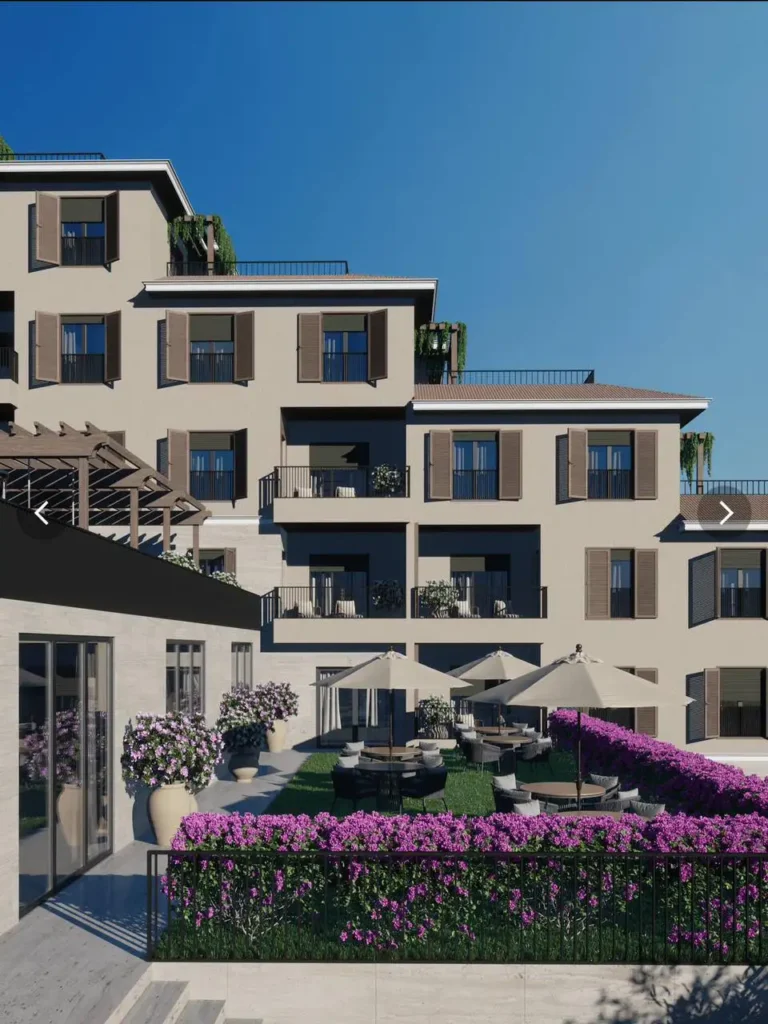 Budvaот 39,63м²
 Budvaот 38.52м²
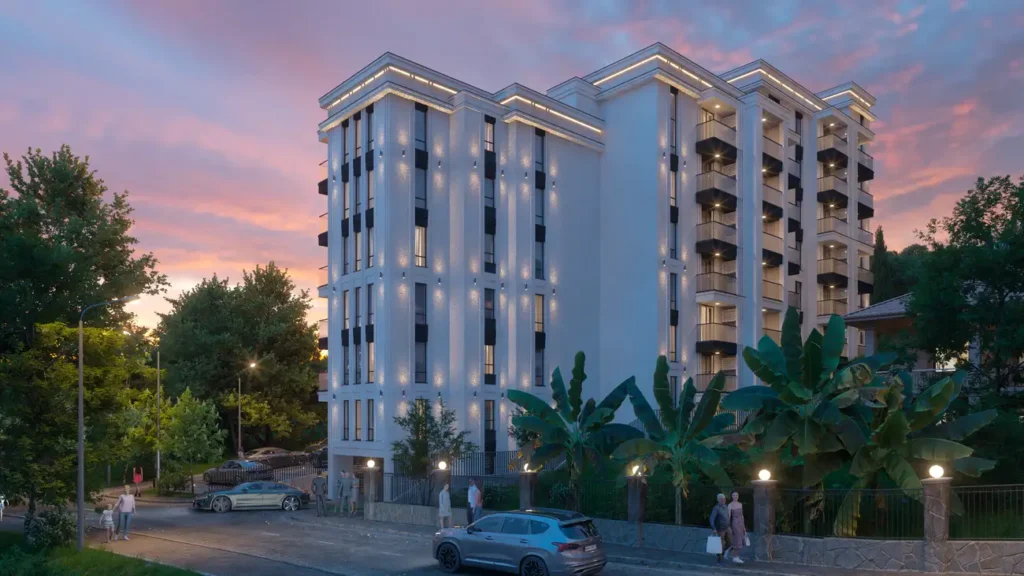 Budvaот 28м²
Building a qualifying profile over time For buyers who are planning a move to Montenegro or have a longer horizon, establishing the conditions that some banks require or take account of — residency or local employment in particular — may make additional products available where those statuses form part of a lender’s eligibility criteria. Building a documented income history can also strengthen an application over time. This is not a short-term solution, but it is worth considering if longer-term residency is part of the plan.
Buying property with mortgage finance

The interaction between mortgage financing and the property search can be easy to underestimate when financing is investigated only after a property has been selected.
If your purchase depends on bank funding, the sequence matters. The bank will assess the specific property you are buying, not just the general category of property or the price range. A property that is perfect by every aesthetic and lifestyle measure may present problems as bank collateral — title issues, construction status, or a valuation that does not support the financing amount needed. Discovering this after you have signed a preliminary agreement and paid a deposit is a painful and expensive situation.
Sharing your financing situation with your agent from the start allows property searches to be focused on homes that are more likely to satisfy a lender’s requirements, in a price range that reflects the combination of bank financing and your available own funds. Sellers’ expectations around payment timelines also need to align with the time required to process a bank application — which can extend beyond what a seller expecting a quick cash-like transaction would anticipate.
Once you have a clear sense of your financing structure — how much a bank might lend you and on what terms — your property search becomes more purposeful. The Residence works with buyers at this stage to identify properties that fit both their preferences and their real purchase parameters. Find properties that match your plans.
Understanding which locations in Montenegro suit your lifestyle, investment objectives or living plans is equally relevant before you search.
The deposit structure in the preliminary agreement deserves particular attention when financing is involved. A preliminary agreement may provide for a deposit or kapara. If the transaction does not complete, the treatment of that payment depends on the contract, the reason for non-completion, and the applicable rules on contractual liability and earnest money — the consequences are not automatic and vary by situation. If there is a realistic possibility that your mortgage application may not be approved, or may come back with conditions you cannot meet, the agreement should be reviewed by a legal professional before you sign. Possible negotiated approaches include a lower deposit, a longer contractual timeline, or agreed conditions that allow the buyer to exit without the full contractual consequences — subject to the seller’s agreement and appropriate legal advice. The right structure depends on the specific transaction and what both parties are willing to accept.
Before you start viewing properties
Do first: identify banks that accept your borrower profile → establish realistic loan amount → calculate available own funds → obtain the lender’s document list.
Before paying a deposit: confirm property eligibility → understand valuation/LTV mechanics → have the preliminary agreement reviewed → make sure the contractual timeline works with financing.
Before closing: satisfy the bank’s final conditions → arrange required insurance → confirm drawdown mechanics → complete mortgage registration.
 Real estate in Georgia
 Real estate in Cyprus
 Real estate in the UAE
 Real estate in Bali
 Real estate in Thailand
 Real estate in Spain
 Real estate in Saudi Arabia
 Real estate in Turkey
 Real estate in Zanzibar
 +382 60 099359
 hello@residence-estate.me
 The Old Bakery Residences, Budva 85310, Montenegro



 Get catalogue of TOP-7 objects