
 +382 60 099359


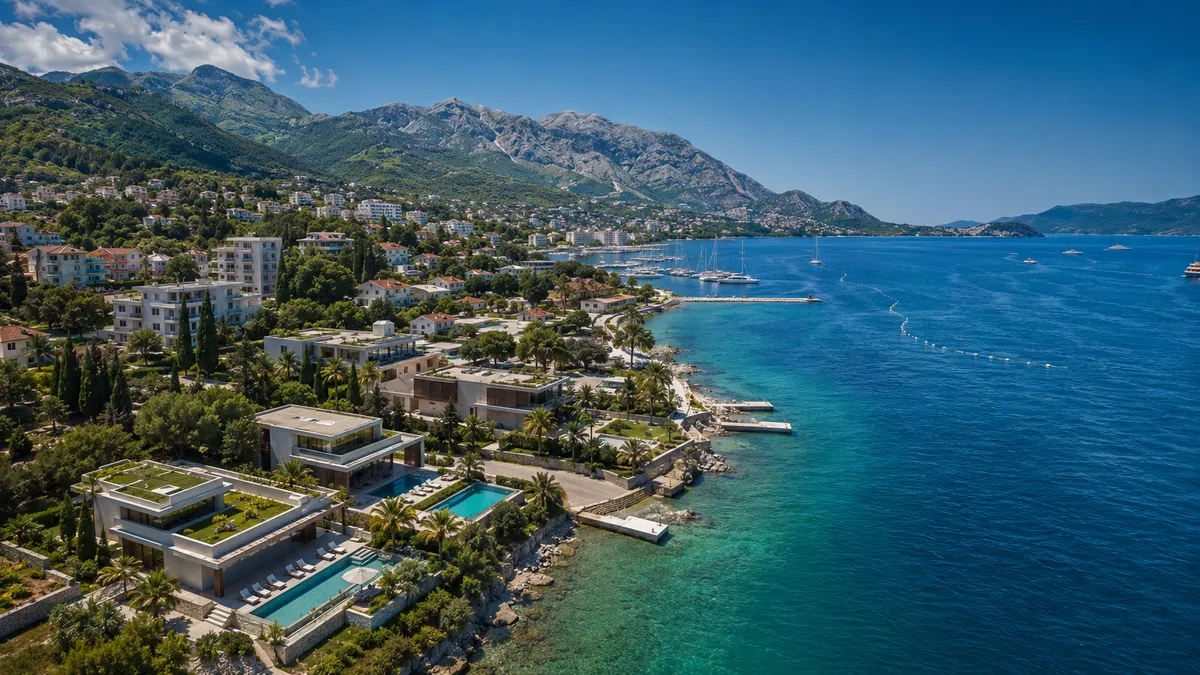

Montenegro has attracted steady interest from international buyers — and for reasons that are easy to understand. The Adriatic coastline stretches through some of the most dramatic scenery in Southern Europe. In many segments, Montenegro may still appear more accessible than some established Mediterranean coastal markets, though price differences depend heavily on location, property type, sea proximity, building quality, and legal status. Montenegrin law generally allows foreign nationals to acquire residential and commercial real estate, but restrictions apply to certain land categories and protected or strategic property — and eligibility should always be checked for the buyer’s specific nationality and the property in question.
That combination — accessible ownership rules, a recognized lifestyle appeal, and relative affordability — makes Montenegro genuinely worth considering for buyers seeking a holiday home, a relocation property, or a real estate investment. The country is an EU candidate state, which adds a longer-term dimension that many international buyers find relevant, though EU membership timelines should never be treated as guaranteed.
This guide explains the full process of buying property in Montenegro: what foreigners can legally buy, what the purchase process looks like from start to finish, what due diligence means in practice, what taxes and costs to budget for, and what mistakes to avoid. It covers both coastal markets and the inland regions, new-build and resale transactions, and remote purchases for buyers who cannot travel frequently.
This article is general guidance only, not legal or tax advice. Rules, tax rates, and procedures can change. Before completing any purchase, buyers should work with a qualified Montenegrin lawyer and, where needed, a certified tax adviser.
Can Foreigners Buy Property in Montenegro?
The short answer is yes — with some conditions depending on property type.
Foreign nationals from many jurisdictions can generally purchase apartments, houses, villas, and commercial premises in Montenegro in their own name. There is no general prohibition on foreign individual ownership of residential property, and there is no requirement to form a Montenegrin company in order to hold title to a standard residential asset. That said, eligibility and practical banking checks should be verified for the buyer’s specific nationality and circumstances — rules and restrictions can vary.
The legal basis for this sits in Montenegro’s Law on Ownership and Other Property Rights, which broadly permits foreigners to acquire immovable property under conditions of reciprocity — meaning that property rights available to Montenegrin citizens are generally available to citizens of countries that grant similar rights to Montenegrin nationals. As noted by CEE Legal Matters in their 2025 Montenegro Real Estate Guide, the acquisition of immovable property by foreign nationals is permitted, subject to specific restrictions for certain categories of land and property.
Those restrictions matter and are worth understanding clearly. Foreign nationals are generally restricted from purchasing:
- Agricultural land, forests, and forest land as standalone assets
- Land containing natural resources (water, mineral deposits, and similar)
- Property designated as cultural monuments or within protected cultural heritage zones
- Land in military or strategic zones
- Property near state borders, where additional restrictions may apply
An important nuance: Montenegrin law provides limited exceptions for agricultural and forest land. In certain cases — for example, where a residential building is located on such land — a foreign individual may be permitted to acquire up to 5,000 m² of agricultural or forest land as part of the transaction. Every land purchase by a foreign national needs individual legal review to establish whether an exception applies.
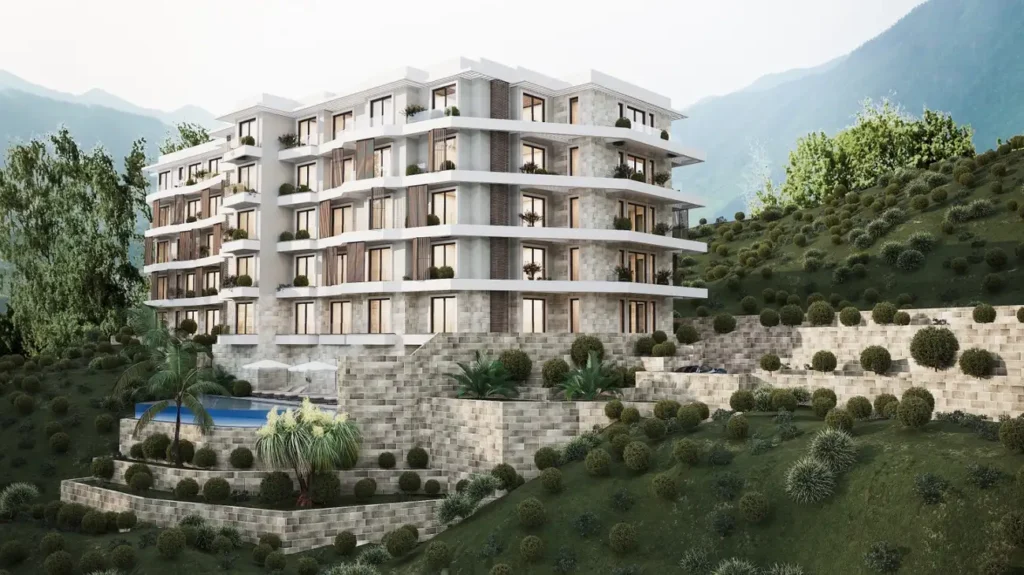
See what you can buy in Montenegro


 Bar
Bar от 37,5м²
 Kotorот 32.5м²
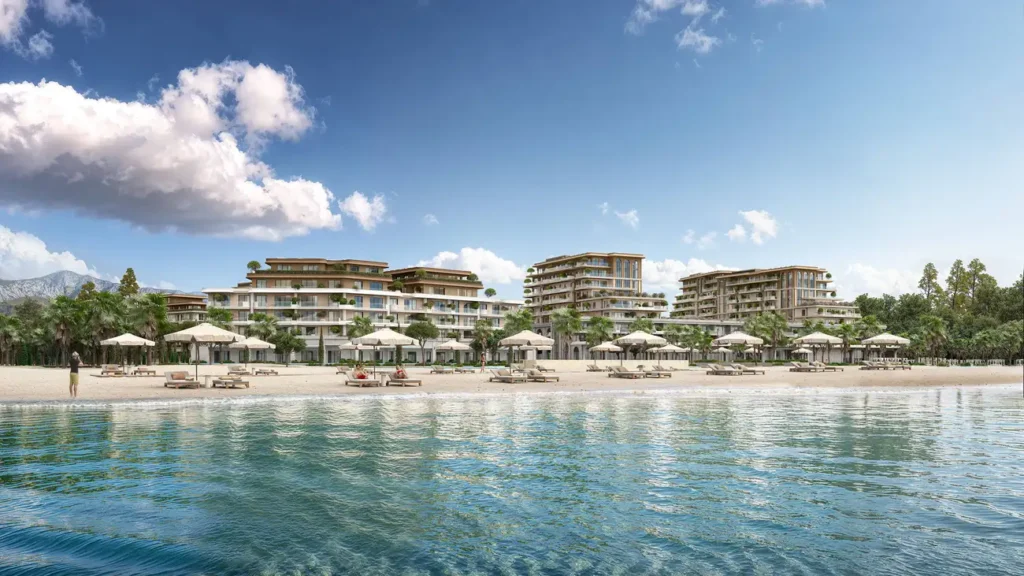 Ulcinjот 31.77м²
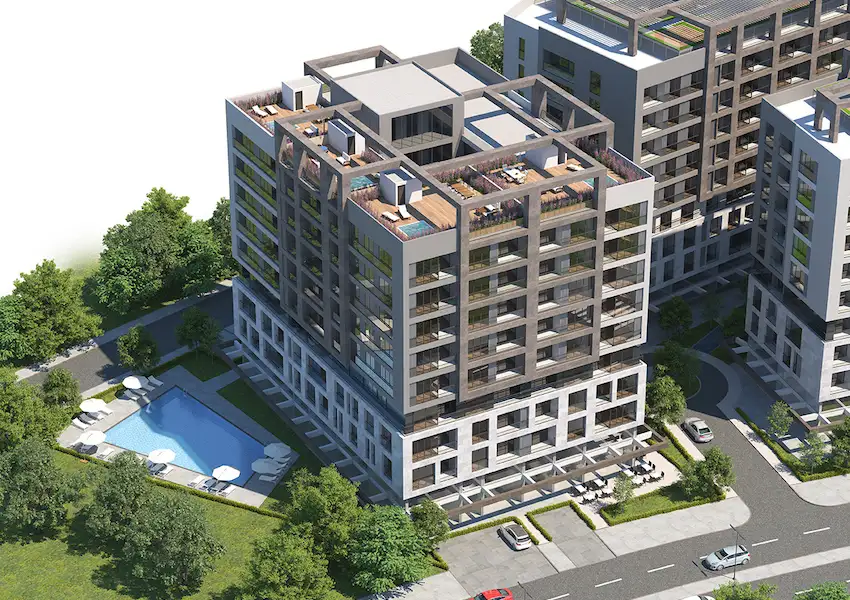 Barот 30.95м²
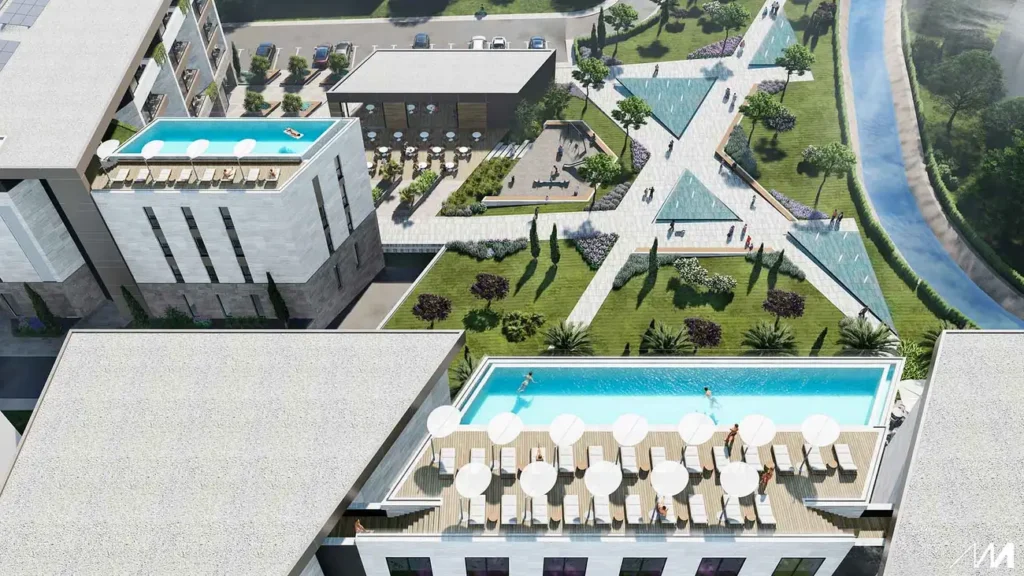 Tivatот 45.37м²
 Budvaот 50,69м²
The exact scope of restrictions and how they apply to a specific property requires verification by a local lawyer — particularly for land plots, rural properties, or properties in sensitive coastal or mountain areas. The rules on some of these categories have evolved, and what was restricted at one point may have changed, or vice versa.
For apartments and houses in urban areas, the process for foreign buyers is generally straightforward from a legal eligibility standpoint. The complexity lies in due diligence, document verification, and the purchase process itself — not in the foreign ownership question.
Buyers should also note that purchasing property in Montenegro does not automatically grant residency, citizenship, or any other immigration benefit. The rules around temporary residence based on property ownership exist but are subject to conditions and can change. Always verify current immigration rules separately with a qualified Montenegrin immigration lawyer.
What You Can Buy
The table below gives a practical overview of common property types and their availability to foreign buyers. This is general guidance — specific properties may have characteristics that change the picture, which is why individual legal checks are always necessary.
| Property type | Generally available to foreign buyers? | Key checks required | Best suited for |
|---|---|---|---|
| Apartment (urban) | Yes | Title, cadastre, building legality, debts | Lifestyle buyers, rental investors |
| House / villa | Yes | Title, boundaries, building permit, legalization | Family buyers, lifestyle relocation |
| New-build apartment | Yes | Developer title, permits, company status | Buyers seeking newer stock |
| Off-plan apartment | Yes, but higher risk | Developer track record, land title, building permit, payment schedule, and whether any deposit protection or escrow is available | Risk-tolerant buyers with lead time |
| Commercial premises | Yes | Zoning, lease agreements, title | Business buyers, commercial investors |
| Urbanized land plot | Potentially available, subject to legal eligibility, land category, and zoning | Urban plan, zoning, land category, access, utilities, buildability | Self-build, development |
| Agricultural / forest land | Generally restricted as standalone land; limited exceptions may apply where a residential building is part of the transaction | Requires individual legal review — ownership depends on specific circumstances | Not recommended without prior legal assessment |
| Property near strategic / border zones | Potentially restricted | Requires specific legal check | Requires case-by-case assessment |
The distinction between what is legally permitted and what is practically safe to buy is important. A property may be technically purchasable but carry serious practical risks — an unresolved legalization issue, an informal access road, unclear boundaries, or outstanding debts. These are not legal ownership restrictions but they can make a property expensive, illiquid, or difficult to use. Due diligence catches these problems before a contract is signed.
Step-by-Step Buying Process
Buying property in Montenegro follows a recognizable structure, but several stages require more care than buyers sometimes expect. Skipping or rushing any of the early stages is where most problems begin.
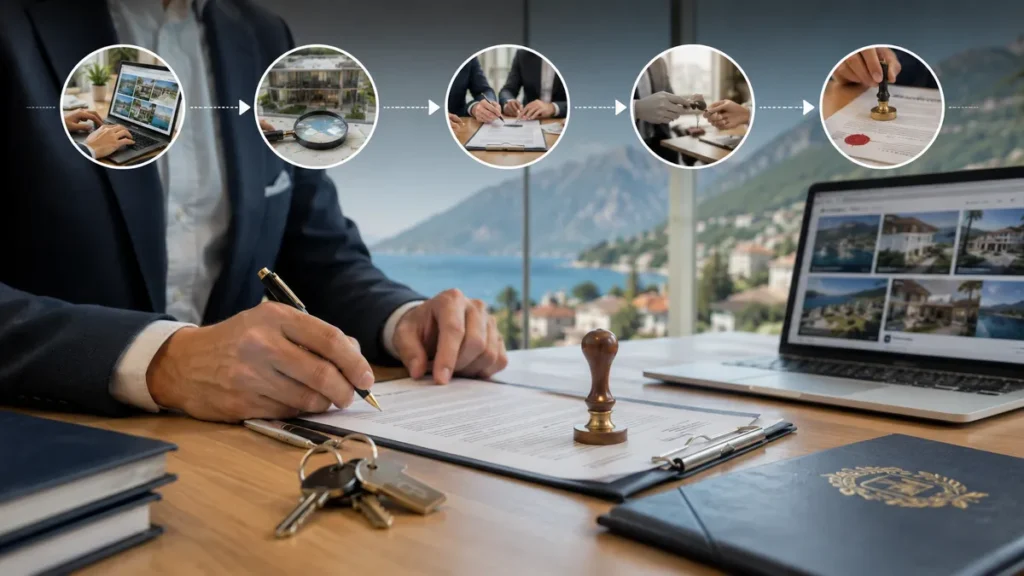
1. Define your goal and budget
Before searching for properties, clarify what you actually need: a holiday apartment you visit a few times a year, a full relocation home, a rental investment, or a land plot for development. Each of these points toward a different location, property type, price range, and set of legal considerations. Budget should include the purchase price plus all acquisition costs — not just the listed price.
2. Choose a region and property type
Montenegro is small but varied. The coastal strip from Herceg Novi to Ulcinj offers very different markets from Podgorica or the northern mountain regions. Once you know what you’re buying it for, narrowing the region becomes easier. The location section further in this guide covers this in more detail.
3. Shortlist properties and inspect
Work with a reputable local agent who can show you verified listings with accurate information on location, legal status, and asking price. Physical inspection is strongly recommended — remote purchase based solely on photographs and video carries real risks, especially for houses and villas where condition, access, and setting are difficult to assess remotely.
4. Request and review documents before making any payment
This is one of the most important steps. Before committing any funds — even a small reservation deposit — ask to see the key property documents. A credible seller or their agent will have no reason to refuse. Reviewing documents at this stage, with a lawyer if needed, can prevent costly mistakes.
A reservation deposit paid before any document check is money at risk. In Montenegro, recovering a deposit when a transaction fails can be slow and uncertain. Always review core documents before committing funds.
5. Make an offer
Offers in Montenegro are typically verbal or in a brief written note, subject to document verification and contract. The asking price is often negotiable, particularly in the resale market. Newer developments may have less flexibility but sometimes offer payment-stage discounts for off-plan purchases.
6. Reservation agreement or preliminary contract
Once price and key terms are agreed, the parties may sign a reservation agreement (sometimes called a pre-contract or preliminary agreement), which commits both sides to proceed and usually involves a deposit, often around 10% of the agreed price, although the amount can vary depending on the transaction and the parties involved. This agreement should specify: price, payment schedule, completion deadline, deposit conditions, and what happens if either party withdraws. A lawyer should review this document before it is signed.
7. Lawyer due diligence
Before the main contract is prepared, your lawyer should conduct thorough checks — title, cadastre records, encumbrances, permits, urban plan status, debts, and seller authority. This stage is covered in detail in the next section.
8. Sales contract at the notary
The final sale and purchase contract in Montenegro must be notarized to be legally valid and registerable. The notary verifies the identity of both parties, confirms the document content is consistent, and certifies the signatures. Note that the notary acts as a neutral authenticator — the notary does not act as the buyer’s legal adviser. Your own lawyer is separate from the notary.
9. Payment and transfer tax
Payment is typically made at or around the time of contract signing or shortly after, per the agreed schedule. Property transfer tax applies to many resale transactions. The filing and payment deadline is short — commonly described as 15 days from the relevant tax event or assessment, depending on the procedure applied — but buyers should confirm the exact deadline and payment sequence with their lawyer or tax adviser before signing. On new builds sold for the first time, VAT may apply instead of transfer tax.
10. Cadastre registration
After the notarized contract and evidence of tax payment, the buyer’s ownership is registered in the Real Property Cadastre. Registration in the cadastre is the step by which ownership rights are recorded and become legally effective — it is not enough to hold a notarized contract alone. The cadastre is the official public record of property rights, encumbrances, and surface areas, as set out in Montenegro’s Law on State Surveying and Cadastre of Immovable Property, unless a specific law provides otherwise.
11. Handover and post-purchase setup Once registered, the practical handover takes place — keys, meter readings, utility accounts, building management contact, and any agreed inventory. If you are not resident in Montenegro, set up a local point of contact for ongoing management.
| Stage | What happens | Who is involved | Risk if skipped |
|---|---|---|---|
| Goal and budget definition | Clarify purchase purpose and total cost | Buyer, agent | Wrong property type or location |
| Document pre-check | Review title and key permits | Buyer, lawyer | Buying into a legal problem |
| Offer and negotiation | Agree price and basic terms | Buyer, seller, agent | Overpaying or misaligned expectations |
| Reservation / pre-contract | Commit to terms, pay deposit | Both parties, lawyer | Unfavorable terms, lost deposit |
| Due diligence | Full legal and technical check | Lawyer, possibly surveyor | Hidden encumbrances, illegal construction |
| Notarized sales contract | Final legally binding agreement | Notary, both parties | Contract not legally valid |
| Tax payment | Transfer tax or VAT settled | Buyer, tax office | Penalties, registration blocked |
| Cadastre registration | Ownership formally recorded | Lawyer or notary, cadastre | Title not legally recognized |
Due Diligence Checks
Due diligence is the stage where a buyer’s lawyer examines the property’s legal, technical, and financial position before the final contract is signed. It is not optional, and it is not something that can be replaced by trusting the seller’s description or an agent’s assurance.

A thorough due diligence process for a standard residential property in Montenegro should cover the following:
Title and cadastre extract (list nepokretnosti)
The cadastre extract is the primary document showing who is legally registered as the owner, the property’s surface area, the cadastre parcel number, and any registered encumbrances. This document can be obtained from the Real Property Cadastre and should be current — not a months-old printout. The registered owner on the cadastre must match the person selling the property.
Mortgages, liens, and encumbrances
The cadastre extract will show any mortgages, pledges, or other encumbrances registered against the property. If a mortgage is registered, the contract should clearly regulate how and when it will be discharged — often through repayment from the purchase price — and registration of the buyer’s title should not proceed until the lawyer confirms that the release mechanism is safe and the encumbrance has been lifted. Do not rely on a verbal assurance that a mortgage “will be cleared before closing.”
Building permit and use permit
For houses, villas, and many developments, the buyer’s lawyer should verify the available construction, use, or legalization documents applicable to that specific building and period of construction. A use permit (upotrebna dozvola) confirms that the building was constructed as approved and is legal to occupy. Requirements can differ for older buildings, legalized properties, and reconstructions. Properties where these documents are absent or unclear may carry legalization risk that can be expensive and time-consuming to resolve.
Legalization status
A significant number of properties in Montenegro — particularly older houses and extensions — were built without full permits. Montenegro has operated legalization programs to bring these into compliance, but not all properties have been legalized. If a property lacks a use permit and has not been legalized where required, the buyer may take on a significant legal and financial risk that can affect future use, renovation, financing, resale, or registration. This is especially relevant for houses and villa-style properties outside established developments.
Urban planning and zoning for land
For land plots, urban planning documents are critical. The fact that a plot exists in the cadastre as a separate parcel does not mean it is buildable. Urban plans determine what can be built on a plot, at what density, and for what purpose. A plot that the seller describes as “buildable” should be verified against the current spatial plan for that municipality.
Not every land plot in Montenegro can be legally built on.
Always verify zoning status through the relevant municipal authority or via a lawyer with access to the spatial planning documents before purchasing land.
Access road
Does the property have a legally recorded access route? Some rural or semi-rural properties are reached via informal tracks or roads that cross neighboring land without any registered easement. If legal access is not recorded, the buyer may find access challenged in future.
Utilities
Confirm that the property has legal connections to electricity, water, and sewage (or a documented alternative). For off-grid or rural properties, verify the nature of existing utility arrangements and what establishing formal connections would involve.
Outstanding debts
Outstanding utility, management, and local tax liabilities should be checked and contractually settled before completion. Unresolved arrears can create practical obstacles or disputes for the new owner, and what happens to pre-sale debts can depend on the type of debt, the contract terms, and the municipality. Request documentation confirming arrears are cleared, or make settlement an explicit condition of completion.
Seller authority
If the seller is acting through a Power of Attorney (POA), verify that the POA is valid, current, certified by a Montenegrin notary, and gives specific authority to sell this particular property at this price. Outdated or insufficiently specific POAs have caused problems in transactions.
Off-plan developer checks
If buying off-plan, due diligence extends to the developer’s company: its registered status, financial health, ownership of the land, the building permit for the development, and whether there is any mechanism to protect buyer deposits if the project stalls.
Due diligence checklist:
- [ ] Current cadastre extract showing registered owner
- [ ] No active mortgages, liens, or encumbrances on title
- [ ] Building permit matching the actual structure
- [ ] Use permit (upotrebna dozvola) confirming legal occupancy
- [ ] Legalization documents where applicable
- [ ] Urban plan extract confirming land use and buildability (for land)
- [ ] Legal access route recorded
- [ ] Verified utility connections
- [ ] No outstanding utility debts, building management fees, or property tax
- [ ] Seller identity and authority confirmed (POA checked if applicable)
- [ ] Developer company status and land title checked (for off-plan)
Taxes and Purchase Costs
The advertised purchase price is never the total cost of acquiring property in Montenegro. The total acquisition cost depends on whether the transaction is resale or new build, whether VAT is already included in the developer’s price, and which professional fees apply. For resale purchases, buyers should budget several percentage points above the purchase price, with transfer tax usually representing the largest additional cost. New-build purchases may involve VAT instead of transfer tax, which changes the cost picture considerably.

The listed price is not your acquisition cost. Budget carefully before agreeing a purchase price, so that the total spend — including all fees and taxes — stays within your actual limit.
| Cost | When it applies | Typical basis | Notes |
|---|---|---|---|
| Purchase price | At contract / per payment schedule | Agreed between parties | Negotiate before signing |
| Property transfer tax | Resale transactions | Progressive: 3–6% of assessed value (PwC) | Paid by buyer; deadline is short — confirm exact timing with your lawyer |
| VAT | First sale of new build | Standard rate 21% (PwC) | Confirm in writing whether VAT is already included in the developer price or added separately |
| Notary fee | Every transaction | Set by notary fee scale, related to value | Compulsory; varies by contract value |
| Lawyer fee | Recommended for all | Varies by firm, complexity, and fee structure; may be fixed or percentage-based | Independent legal advice is essential |
| Certified translation | Where documents need translation | Per page or per document | Required for foreign-language documents |
| Cadastre registration fee | At registration | Set by cadastre authority | Varies by property value |
| Bank / payment costs | Cash transfers, wire fees | Depends on sending bank and amounts | Budget for currency conversion if applicable |
| Real estate agency fee | If using an agency | Varies by agency, property, and agreement | Confirm in writing before viewings or negotiations begin |
| Annual property tax | Ongoing, each year | Assessed locally by municipality; depends on property value, type, and location | Confirm the applicable rate for the specific municipality |
| Rental income tax | If property is rented | Applicable tax on net rental income | Verify current rates with a tax adviser |
According to PwC’s Tax Summaries for Montenegro, the property transfer tax on immovable property is progressive and ranges from 3% to 6%. The indicative bracket structure is as follows:
| Assessed value | Transfer tax |
|---|---|
| Up to €150,000 | 3% |
| €150,001 – €500,000 | €4,500 + 5% on the amount above €150,000 |
| Above €500,000 | €22,000 + 6% on the amount above €500,000 |
The applicable rate and assessment basis can vary, so buyers should confirm the expected tax with their lawyer based on the specific property and its declared or assessed value.
For new-build first sales, VAT typically applies rather than transfer tax. Buyers should clarify with the developer whether the advertised price is inclusive or exclusive of VAT — this is not always stated clearly in listings.
Annual property tax is assessed locally by the municipality and depends on the property’s assessed value, location, type, and the applicable municipal rates. Buyers should confirm the rate for the specific municipality where they are purchasing. Non-resident owners remain liable regardless of whether they use the property.
New Build, Resale, or Land
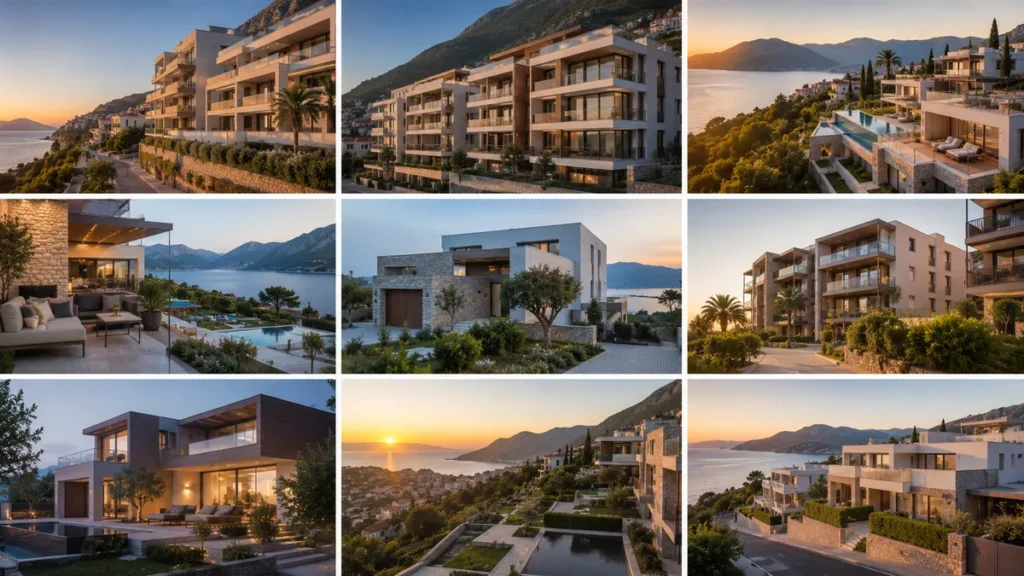
Different property types come with different opportunity profiles and risk characteristics. The table below gives a high-level comparison.
| Option | Main advantage | Main risk | Best for | Extra checks needed |
|---|---|---|---|---|
| New-build apartment | Modern spec, clear title in established developments | Price premium, less character | Buyers wanting modern stock, simplicity | Developer title, VAT inclusion, warranties |
| Off-plan apartment | Lower entry price, payment in stages | Completion risk, developer risk | Risk-tolerant buyers with lead time | Developer track record, land title, building permit, contractual protections, whether any deposit protection is available |
| Resale apartment | Often better locations, immediate availability | May need updating, title complexity | Buyers wanting location over spec | Full due diligence, debt checks, legalization |
| House / villa | Space, privacy, potential for rental | Legalization gaps, maintenance, boundaries | Lifestyle and family buyers | Building permit, use permit, boundary records |
| Land plot | Build to specification, development upside | Zoning, permits, utilities, access, longer timeline | Buyers with development intent and patience | Urban plan, access, utility feasibility |
New-build developments in Montenegro range from small boutique projects to larger resort-integrated schemes. For buyers who want modern specifications and a more straightforward purchasing process, established new-build developments can sometimes be operationally simpler — but they still require developer credential checks, permit verification, VAT clarification, and careful review of the purchase contract. Warranties and snagging provisions vary and should be negotiated in the purchase agreement.
Off-plan purchases carry meaningful risk. A deposit paid to a developer who then runs into financial difficulty, loses the building permit, or simply fails to complete is a difficult situation to recover from. Buyers should not proceed with off-plan transactions without verified developer credentials, a review of the land title and building permit, and ideally some form of deposit protection or escrow mechanism.
Resale properties can offer access to the most desirable and established areas — older buildings in Kotor’s Bay area, apartments in central Budva, seafront properties — where no new-build stock exists or supply is very limited. The trade-off is that these properties need more careful legal checking and may require renovation or updating.
Houses and villas require the most comprehensive due diligence. Boundary records in the cadastre may not match what is physically on the ground. Extensions may have been added without permits. Older properties may carry legalization issues. A thorough check, and sometimes a physical survey, is worthwhile before proceeding.
Where to Buy in Montenegro
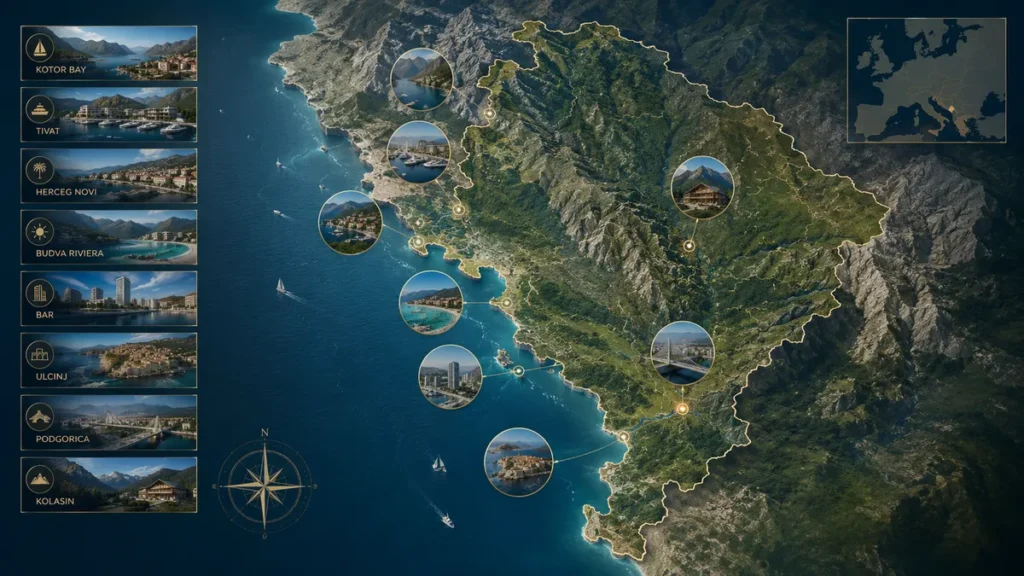
Montenegro is a small country — roughly 280 kilometres of coastline — but the property markets within it are very different from each other. Choosing the right region depends heavily on what you’re buying the property for.
Not sure which area, budget, or property type fits your plans? Start with The Residence property selection quiz — it helps narrow the search before you speak with an advisor.
| Region | Buyer profile | Strengths | Watch-outs |
|---|---|---|---|
| Budva Riviera | Lifestyle, rental investors, holiday buyers | Tourism activity, beach access, rental demand, developed infrastructure | Dense in peak season, some older buildings need checking |
| Kotor Bay | Premium buyers, heritage and views seekers | UNESCO heritage setting, dramatic landscape, international appeal | Limited new supply, some properties need full legalization checks |
| Tivat (including Porto Montenegro) | International and luxury buyers | Modern marina infrastructure, international airport, premium positioning | Price premium; Porto Montenegro has its own management framework |
| Herceg Novi | Family buyers, lifestyle relocation | Established coastal town, less intense tourism, good value relative to Budva | Hillier terrain, some older building stock |
| Bar | Practical buyers, residents | Good transport links (rail, ferry, motorway), relative affordability | Less lifestyle-oriented, lower tourism premium |
| Ulcinj | Emerging interest buyers | Long sandy beaches (Ada Bojana, Velika plaža), more affordable entry | Infrastructure still developing, check utilities carefully |
| Podgorica | Year-round residents, professional buyers | Capital city services, steady local demand, no tourism seasonality | Not a holiday destination; rental is local market-driven |
| Kolašin / north | Mountain lifestyle, ski and nature buyers | Ski resort, clean mountain environment, growing tourism interest | Seasonal nature, check road access and building legality for rural plots |
Budva is often regarded as one of the main coastal markets for international buyers, with a wide range of stock from studio apartments to villa-scale properties. Short-term rental income can be stronger during peak season, but net performance depends on purchase price, occupancy, nightly rates, management costs, taxation, and maintenance — buyers should work from realistic projections rather than best-case estimates.
Kotor Bay offers some of the most distinctive property in the Adriatic — walled historic towns, stone houses built into hillsides, views across the bay. Supply in some historic and bay locations can be limited, which may influence pricing, but buyers should not assume future price growth without current market evidence. More limited choice also means a greater need for careful due diligence on older and heritage buildings.
Tivat (including Porto Montenegro) have attracted a different buyer: those looking for a contemporary, marina-oriented lifestyle with a level of infrastructure and management quality closer to Western European standards. It comes at a price premium that reflects both the offer and the buyer profile.
Herceg Novi is often considered by buyers looking for a coastal lifestyle without the intensity of Budva. The bay views, the green hillsides, and the more relaxed pace appeal to family buyers and those looking for a primary relocation.
Bar and Ulcinj represent more affordable entry points to the Montenegrin coast, with different character and — particularly in Ulcinj — a longer beach profile than anywhere else on the Montenegrin coastline. Buyers here should check infrastructure and utility quality carefully, particularly for rural or peripheral plots.
Podgorica is not a holiday property market, but it is a functioning urban real estate market for those who will actually live and work in Montenegro. Rental demand is driven by local professionals and diplomats rather than tourism.
Kolašin and the northern mountains attract buyers interested in ski tourism and mountain lifestyle. The Kolašin area has attracted more attention from lifestyle and mountain-oriented buyers in recent years, but this is a younger and more seasonal market than the coast — buyers should verify access roads, utilities, and building legality carefully for any rural or mountain plot.
Buying Remotely
Many international buyers of Montenegrin property cannot travel repeatedly during a purchase process. Buying remotely is possible, and some buyers do complete transactions this way, but it increases reliance on legal representation, document checks, and trusted local inspection — and therefore requires more careful preparation, not less.
The standard legal mechanism for remote purchase is a Power of Attorney (POA), by which the buyer authorizes a named representative (typically their lawyer) to sign documents and take actions on their behalf. As noted by Henley & Partners, immovable property in Montenegro may be purchased remotely via a certified Power of Attorney. The POA must be specific — naming the property, the price, and the scope of authority — and must be properly authenticated. If signed abroad, it typically needs to be apostilled and, where relevant, translated into Montenegrin by a certified translator.
Practical considerations for remote buyers:
- Engage a lawyer with clear instructions and regular reporting before any POA is granted
- Arrange a physical viewing if at all possible before committing to purchase — video walkthroughs do not replace seeing a property in person, particularly for houses, villas, and anything requiring renovation
- Use a trusted agent who can provide honest condition reports and local context, not just sales materials
- Confirm payment channels in advance — bank-to-bank transfers into Montenegro require correct IBAN and SWIFT details, and some banks require source of funds documentation
- Do not sign a preliminary agreement, pay a deposit, or grant a POA based solely on a virtual tour and a telephone conversation with a seller or agent you have not independently verified
Remote purchase also creates a greater dependency on the quality of your professional team. Selecting a lawyer and agent independently, rather than through introductions from the seller, provides important protection.
Financing and Payments

Many international buyers of property in Montenegro use personal funds transferred from abroad, rather than local mortgage finance. Local bank lending to non-residents, while not impossible, is not straightforward and should not be assumed.
Local Montenegrin bank mortgages may be available to non-resident foreign buyers in some cases, but lenders typically require extensive documentation: proof of income, tax records from the buyer’s home country, a professional valuation of the property, and a clean title. Interest rates, loan-to-value ratios, and eligibility criteria vary by bank and are subject to change. Do not assume mortgage finance is available before confirming with a specific bank.
Developer payment plans for off-plan and some new-build properties can offer an alternative to full upfront payment, allowing buyers to pay in stages tied to construction milestones. These plans can be useful but should be treated as a commercial arrangement with a developer — not as regulated mortgage finance. The same due diligence applies to the developer.
Currency and transfer considerations: Montenegro uses the euro, which simplifies matters for eurozone buyers. For buyers from the UK, the US, CIS countries, or the Middle East, currency conversion and transfer timing introduce an element of exchange rate risk. Large transfers should be planned in advance. Buyers may compare bank and regulated foreign-exchange providers, taking into account fees, exchange rates, timing, and compliance requirements.
Payment security: Where possible, payments at contract stage should be structured to minimize unprotected exposure. Escrow-style arrangements, where funds are held by a neutral party pending contract completion, are not universally standard in Montenegro but can sometimes be arranged. At a minimum, ensure that significant payments are tied to verifiable contractual milestones and made only once documents have been verified.
After the Purchase
Registration at the Real Property Cadastre is the final legal step — until this is complete, you are not yet the formally registered owner, even if you hold a notarized contract and have paid in full. The registration process requires the notarized contract, proof of tax payment, and an application to the cadastre authority. Processing times vary.
Once registered, the following practical steps apply:
Utility transfers: Electricity, water, and communal services should be formally transferred to the new owner’s name. Continuing in the previous owner’s name creates practical and potential legal complications.
Building management: If the property is in a multi-unit building or development, there will typically be a building management arrangement with associated fees (maintenance, cleaning, shared infrastructure). Confirm the management company, the fee structure, and any existing arrears before taking over.
Insurance: Property insurance may not be compulsory for all cash buyers, but lenders or specific contracts may require it. In any case, buyers should consider taking out property insurance — particularly for holiday homes or properties left vacant for extended periods.
Annual property tax: Montenegro levies annual property tax on all owners, including non-residents. The rate is assessed locally by the municipality and depends on the property’s value, type, and location — confirm the applicable rate for the specific municipality where you are buying. Ensure that the property is registered for tax in your name and that you receive and pay annual bills.
Rental setup: If you intend to rent out the property, check the current municipal and tourism registration requirements and tax obligations before listing it for short-term rental. Rental income is taxable, and the rules and rates can change. Seek local tax advice before setting up any rental arrangement.
Property management for non-residents: If you live abroad, a reliable local property manager is worth engaging — to handle maintenance, key holding, rental management if applicable, utility payments, and any issues that arise between visits.
Residence permit possibility: Owning property may support an application for temporary residence in Montenegro, but it does not automatically grant any right of residence. Since amendments to the Foreigners Act that entered into force on 17 January 2026, third-country nationals who seek temporary residence based on property ownership are generally required to provide evidence that the property has a value of at least EUR 150,000, based on a decision by the Tax Authority. This minimum value requirement does not apply to EU citizens and certain EEA/Swiss categories. The rules, conditions, and approval process can change. Any buyer interested in residence should verify the current immigration rules with a qualified Montenegrin immigration lawyer — not rely on property market sources.
Common Mistakes
The most expensive mistakes in Montenegro property transactions are usually not dramatic — they are the result of moving too quickly, skipping verification steps, or placing too much trust in the wrong people.
Mistakes to avoid:
- Paying any deposit before reviewing key documents. Even a small reservation deposit can be difficult to recover if the transaction falls through due to a document problem you could have spotted earlier.
- Assuming every land plot is buildable. Cadastre registration as a separate plot does not mean the municipal urban plan permits construction on it. Always check the spatial plan before buying land.
- Ignoring legalization status. Houses and extensions built without permits are common. Buying one transfers the problem to you. Legalization can be time-consuming, costly, and in some cases not possible.
- Not checking encumbrances and debts. A mortgage registered against the property, or outstanding communal charges, can become the buyer’s problem if not resolved before completion.
- Trusting scanned documents as final verification. Document checks require original or officially certified copies, and cadastre extract verification should be current at the point of signing — not a document provided by the seller from months earlier.
- Underestimating renovation and running costs. Older properties in coastal areas, particularly stone houses or apartments in historic buildings, may require significant investment. Build a realistic budget before committing.
- Assuming rental income is automatic or predictable. Rental demand in Montenegro is seasonal and location-dependent. Properties need management, marketing, and maintenance. Returns vary significantly.
- Not budgeting for taxes and professional fees. Arriving at the purchase price and then discovering that taxes, notary fees, lawyer fees, and agency commission add another 8% is an avoidable surprise.
- Buying in the wrong location for the intended use. Bar may be less aligned with buyers seeking the strongest short-term resort rental profile compared with more established tourism markets. A studio apartment in a resort town may suit a holiday rental investor but not a family seeking a primary home. Clarify the purpose before choosing the location.
- Not using independent legal support. Even if a lawyer is recommended by an agent or seller, the buyer should confirm that the lawyer acts only for the buyer and has no conflict of interest. Seek independent legal advice through your own research or a referral from a source you trust separately from the transaction.
Key Takeaways
- Foreign nationals can generally buy apartments, houses, and commercial property in Montenegro in their own name, without needing a local company structure. Restrictions apply to agricultural land, forest land, natural resources, and certain sensitive zones.
- The cadastre is the official public record of property rights. Registration in the Real Property Cadastre is the step by which ownership is recorded and becomes legally effective — a notarized contract without registration is not sufficient.
- Due diligence is not optional. A lawyer should verify title, encumbrances, permits, debts, urban planning status, and seller authority before any final contract is signed. This is where problems are caught — before they become the buyer’s.
- Budget beyond the purchase price. Transfer tax (3–6% for resale per PwC), notary fees, legal fees, translation, cadastre registration, and any agency commission all add to the total. The exact amount depends on the transaction type — confirm with your lawyer before agreeing a purchase price.
- Land purchases require extra care. Zoning, buildability, access, utilities, land category, and foreign ownership rules all need specific verification for any plot. Not every plot in the cadastre is legally buildable.
- Rental income and residence are not automatic outcomes of purchase. Rental requires registration and is taxable. Residence — particularly for third-country nationals since the 2026 Foreigners Act amendments — requires meeting specific conditions, including a minimum property value threshold. Verify current rules with relevant specialists.
- Professional support can significantly reduce legal and practical risks. In many cases, the cost of independent legal and tax advice is modest compared with the potential cost of unresolved title, permit, or tax problems discovered after completion.
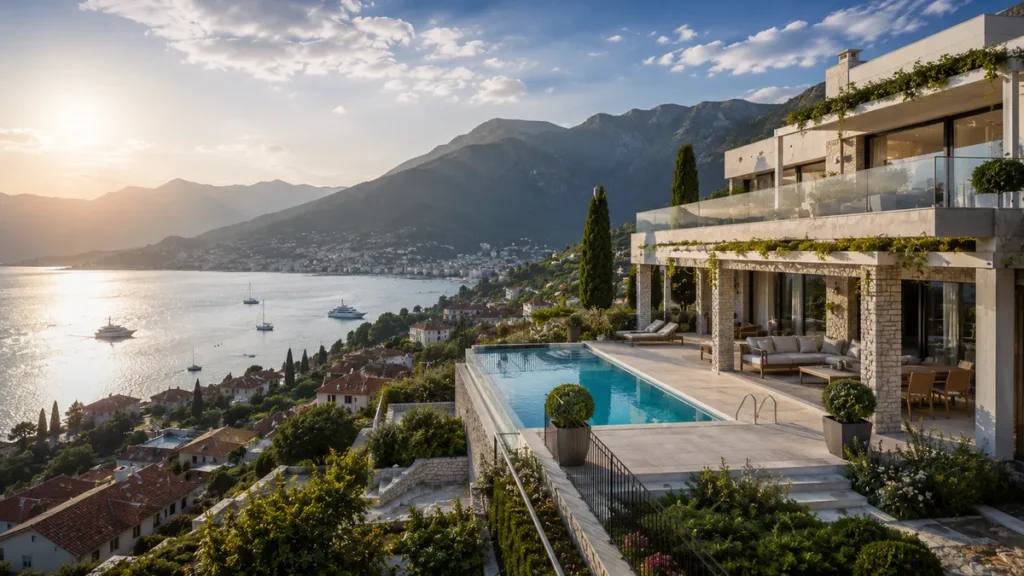
Buying Property in Montenegro — A Practical Summary
Montenegro’s property market offers a genuine combination of coastal lifestyle appeal, accessible foreign ownership rules, and a price point that remains competitive against comparable Adriatic and Mediterranean markets. For international buyers who approach the process with realistic expectations and adequate professional support, it is a market worth serious consideration.
The process is generally manageable with proper legal support, but each stage requires careful verification and documentation. Define what you are buying and why, before choosing a location. Choose the location based on your actual purpose, not just visual appeal. Review documents before committing funds. Engage a lawyer who works for you, independently of the seller. Budget for the full acquisition cost, not just the listed price. Register the title in the cadastre before considering the purchase complete.
The market spans a wide range of buyer profiles: from studio apartments in Budva aimed at summer rental income, to stone houses in Kotor Bay for those seeking heritage and character, to ski-oriented properties in the north for mountain lifestyle buyers. Finding the right match between property type, location, and purpose is the starting point for a good transaction.
The Residence is a Montenegro-based real estate agency working with international buyers across the country’s key markets — coastal, urban, and inland. Whether you are at the early research stage or ready to begin a specific search, our team can provide market-level guidance and direct property introductions based on your goals.
If you are considering buying property in Montenegro and would like to discuss your plans with a local expert, contact The Residence to arrange a consultation.
 Real estate in Georgia
 Real estate in Cyprus
 Real estate in the UAE
 Real estate in Bali
 Real estate in Thailand
 Real estate in Spain
 Real estate in Saudi Arabia
 Real estate in Turkey
 Real estate in Zanzibar
 +382 60 099359
 hello@residence-estate.me
 The Old Bakery Residences, Budva 85310, Montenegro



 Get catalogue of TOP-7 objects