
 +382 60 099359


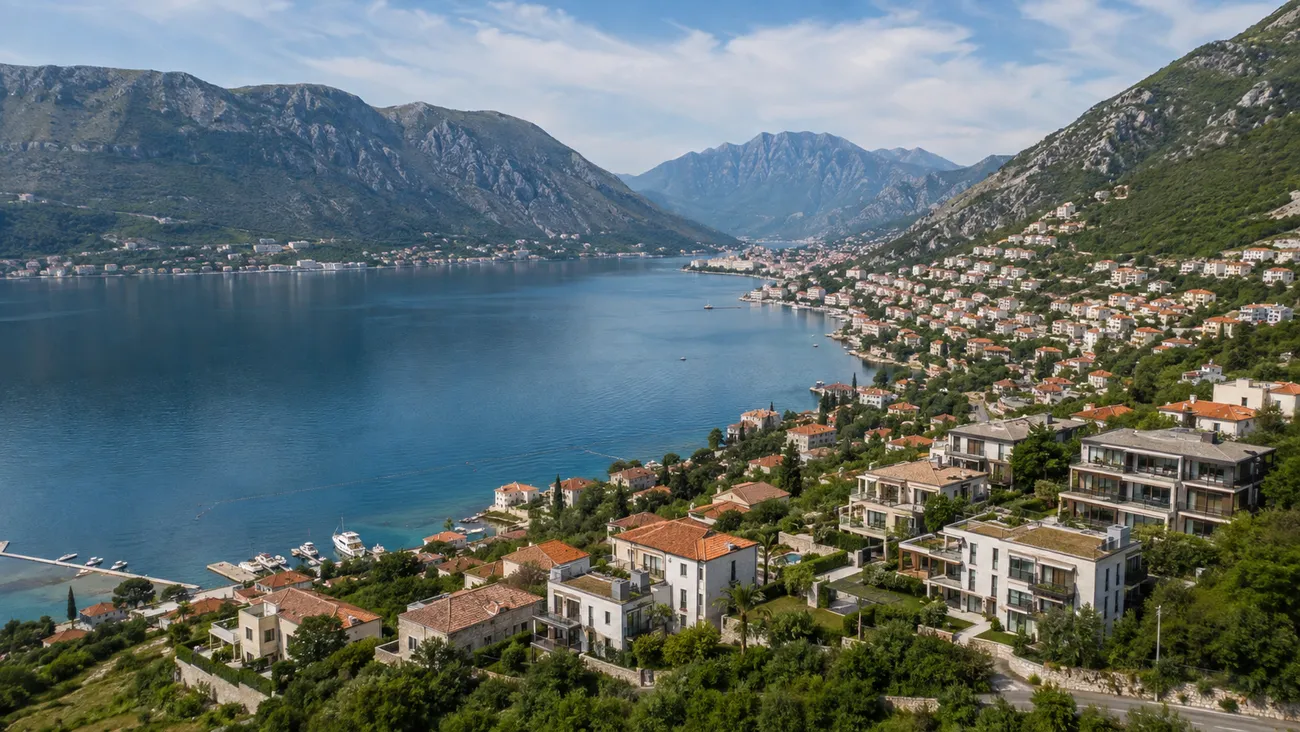

Montenegro is a compact country, but travel times between coastal markets can vary considerably, particularly during the summer season — and its property markets behave very differently from one another. Budva, Tivat, Kotor, Bar and Podgorica are not interchangeable. Each has a distinct price level, rental profile, buyer base and set of trade-offs. A decision that makes commercial sense in one location can be difficult to justify in another, even at the same budget.
The question most buyers arrive with is straightforward: where in Montenegro? The answer depends on what the property needs to do. A buyer seeking a summer holiday home has different priorities from someone planning a permanent relocation. A short-term rental investor is evaluating a different set of variables than a family looking for schools and services. Understanding which market fits your actual goal is the starting point for any useful comparison of the best places to buy property in Montenegro.
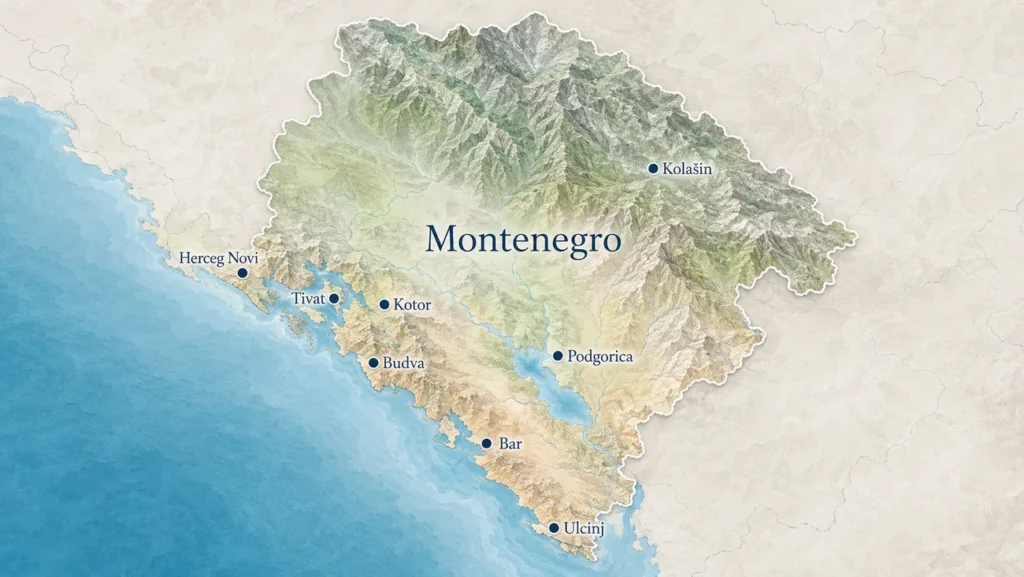
This guide structures that comparison by buyer goal, not just by geography. It covers the major coastal markets — Budva, Tivat, Kotor, Herceg Novi and Bar — alongside the capital Podgorica and the less-discussed options of Ulcinj and Kolašin. Each section addresses both the strengths and the real limitations of that market, because overestimating a location’s rental potential or liquidity is one of the more common and costly mistakes international buyers make.
Best Places at a Glance
The short answer: the best location in Montenegro is the one whose demand profile, property type and price level match what you expect the property to do. Budva is the strongest candidate for tourism-oriented coastal purchases. Tivat serves the premium and international lifestyle segment. Kotor offers heritage character and relative scarcity within the Bay. Herceg Novi and Bar provide alternative coastal options at different price and lifestyle points. Ulcinj is a distinct southern coastal market built around long sandy beaches, seasonal tourism and a lower entry-price segment than Montenegro’s premium marina locations. Podgorica functions as a residential and long-term rental market rather than a holiday destination. Kolašin represents a separate mountain and ski-property market with completely different demand drivers from the coast.
Montenegro Property Market 2026: Quick Numbers
| Indicator | Latest official figure |
|---|---|
| Average new-build price in Montenegro, Q1 2026 | €2,445/m² |
| Average new-build price in the coastal region | €2,575/m² |
| Average new-build price in Podgorica | €2,395/m² |
| Share of individual-accommodation overnight stays recorded in seaside resorts in 2025 | 94.8% |
| Main coastal short-term rental season | Primarily summer, with large differences by town and property |
| Main year-round residential rental market | Podgorica |
Which Montenegro Location Should You Shortlist First?
| Your priority | Start with | Also consider | Probably not your first choice |
|---|---|---|---|
| Short-term holiday rental | Budva | Kotor, Tivat | Podgorica |
| Premium marina lifestyle | Tivat / Porto Montenegro | Luštica Bay, Portonovi | Bar |
| Historic character | Kotor Bay | Herceg Novi, Perast | Podgorica |
| Permanent family living | Podgorica | Herceg Novi, Bar, Tivat | Kotor Old Town |
| Lower coastal entry budget | Bar | Ulcinj, selected Herceg Novi stock | Porto Montenegro |
| Privacy and resort-style living | Luštica Bay | Portonovi, Paštrovići coast | Central Budva |
| Long-term residential rental | Podgorica | Bar | Kolašin |
| Ski / mountain property | Kolašin | — | Coastal markets |
| Frequent international flights | Tivat | Podgorica | Remote bay villages |
| Renovation / character project | Kotor Bay | Herceg Novi | New marina developments |
This is a shortlist tool, not an investment ranking. A strong property in the “second-choice” market can still be a better purchase than a weak property in the theoretically ideal city.
MONSTAT price statistics cover dwellings in new residential buildings sold for the first time. They are useful as a market baseline but should not be interpreted as average asking prices for Budva, Tivat, Kotor or individual developments.
| Location | Best for | Market character | Rental profile | Relative price level | Main drawback |
|---|---|---|---|---|---|
| Budva | Short-term rental, holiday home | Active tourist coastal market | Strongly seasonal, high summer demand | Upper-mid | Congestion, competition, oversupply risk in some developments |
| Tivat | Premium lifestyle, international buyers | Marina-driven, newer stock | Seasonal with premium nightly rates | Premium | High entry cost; ordinary stock ≠ Porto Montenegro pricing |
| Kotor / Bay of Kotor | Heritage property, distinctive holiday home | Limited supply, UNESCO context | Seasonal tourism demand | Upper-mid to premium | Parking, congestion, renovation complexity |
| Herceg Novi | Lifestyle, retirement, family | Established residential, Bay setting | Moderate seasonal demand | Mid-market | Lower international tourist intensity than Budva |
| Bar | Value coastal, year-round living | Practical, local-economy-anchored | Moderate; weaker summer tourist pull | Comparatively affordable | Less prestige; lower short-term rental upside |
| Podgorica | Long-term rental, relocation, year-round | Capital city, residential | Year-round, tenant-driven | Mid-market | No coastal appeal; limited holiday rental demand |
| Ulcinj | Southern beach property, resort and lower-entry coastal buyers | Sandy-beach tourism / emerging resort market | Seasonal; different visitor profile | Comparatively affordable | Service availability varies; limited international buyer base |
| Kolašin | Mountain/ski property, winter tourism | Resort-oriented, niche | Winter-seasonal with some summer hiking | Mid-market | Short rental season; accessibility; requires separate demand assessment |
There is no single best place to buy in Montenegro. The strongest location depends on what you need the property to do after you buy it.
How to Choose the Right Location
Before comparing individual cities, it is worth identifying which factors actually matter for your situation. Buyers who skip this step often find themselves attracted to a well-known name — Budva because it is mentioned everywhere, or Tivat because of the marina — without checking whether those markets fit their specific goals.
The following criteria form a practical framework:
1. Purchase budget. Montenegro’s coastal markets span a wide range. A budget of €100,000 reaches very different property types in Ulcinj, Bar, Herceg Novi and Tivat. In some premium Tivat developments, €100,000 does not reach a studio.
2. Intended use — holiday home, rental or permanent residence. These three uses pull in different directions. A property optimised for short-term rental requires location, access, parking and presentation that matter less for a family home.
3. Short-term versus long-term rental. This is one of the most consequential distinctions in Montenegro. Coastal markets — particularly Budva — generate strong summer demand for short-term lets, but that demand is substantially weaker outside the main summer season. Long-term rental demand follows a different pattern, concentrated in Podgorica and, to a lesser extent, in practical coastal towns with year-round populations.
4. Tourism seasonality. Montenegro’s coastal tourism is intensely seasonal. High summer occupancy statistics for Budva or Kotor reflect July and August performance. They say little about April or November.
5. Airport accessibility. Tivat Airport serves the Bay of Kotor and Budva Riviera. Podgorica Airport covers the capital and can serve Bar. Travel time to the airport affects both owner convenience and the attractiveness of a property to short-term rental guests arriving by air.
6. Property type and condition. A stone house in the Bay requires different maintenance, renovation capability and budget tolerance than a new-build apartment in Budva or Podgorica.
7. Resale liquidity. Some markets have more active secondary transaction volumes than others. A highly seasonal market may have concentrated demand but also more competing sellers at the same time of year.
8. Infrastructure and services. Year-round living requires schools, healthcare, reliable utilities and connectivity. The availability and intensity of services can change noticeably outside the main tourist season, particularly in smaller resort areas.
9. Management and operating costs. A short-term rental property requires management, cleaning, maintenance and marketing. These costs reduce net returns and should be accounted for before any yield comparison.
10. Tolerance for crowds and peak-season character. Budva in August is a very different environment from Budva in November. Buyers who intend to use the property personally during peak season should visit during that period.
Tourist demand and year-round rental demand are not the same thing. High nightly rates in July do not automatically produce a strong annual return. Net return depends on the full occupancy calendar, management fees, maintenance, vacancy periods and operating costs — not the peak-week headline rate.
The gap between stated gross yield and realistic net return can be substantial. Treat any yield figure from a developer or listing agent as a starting point for further scrutiny, not a guaranteed outcome.
Budva
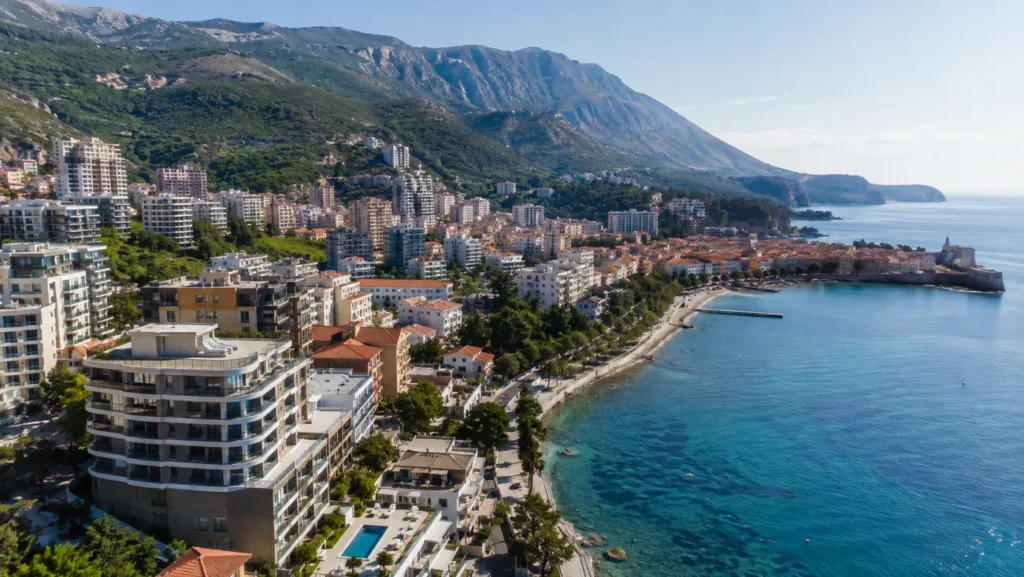
Budva is the market most international buyers encounter first, and for obvious reasons. It is one of Montenegro’s most active and internationally recognised coastal tourism destinations, with a recognisable Old Town, a string of beaches, a dense supply of apartments and one of the largest and most visible short-term rental markets in the country.
Tourism intensity is Budva’s defining characteristic. The town and the wider Budva Riviera attract substantial summer tourism demand. This creates genuine activity in the short-term accommodation market from June through September. For a buyer whose primary goal is short-term rental income, Budva offers a significant concentration of that demand during the main tourist season.
The property stock is varied. Budva’s centre and immediate seafront command higher prices. Developments further inland or in lower-demand positions within the same postcode perform materially differently. Micro-location within Budva matters as much as the city name itself. An apartment three blocks from the beach, without parking, in a block with many competing units, does not automatically benefit from the reputation of the broader market.
The Budva Riviera extends beyond the administrative town centre. Locations such as Bečići and Rafailovići have their own established rental markets and in some cases offer better value relative to beach proximity than central Budva. Buyers should evaluate specific walking times to the water, not just the listed town name.
At the premium end of the Budva Riviera, Sveti Stefan, Miločer and the surrounding Paštrovići coast form a different submarket from central Budva or Bečići. Buyers here are typically paying for privacy, views, limited prime supply and a quieter lifestyle rather than proximity to nightlife or maximum rental turnover. These locations should therefore be compared with premium Bay or marina property, not simply with standard Budva apartments.
Seasonality is a real constraint. Short-term rental demand in Budva is strongly concentrated in the warmer months and can be substantially weaker outside the main summer season. Annual return calculations should reflect the full calendar, not the peak months in isolation. Occupancy can fall substantially outside that window, depending on the property, pricing, management and target guest segment.
Budva has a large and visible resale market, although actual liquidity varies materially by price, micro-location and property type. A large overall stock also means competition between rental properties is significant, and oversupply in individual developments is a genuine risk. New developments with many similar units entering the rental market simultaneously can compress individual unit performance.
Best suited to: short-term rental buyers; holiday-home buyers; buyers who prioritise participation in an active, internationally recognised coastal market.
Watch for:
- Oversupply risk in large developments with many identical units
- Parking availability — a significant practical issue for rental guests and owners
- Construction quality variation across the development stock
- Actual walking time to a usable beach (not the distance stated in listings)
- Property management costs, which reduce net yields materially
- Rental projections presented by developers or agents — treat these as optimistic scenarios, not conservative forecasts
Current Properties to Compare in Budva


 Budva
Budva от 63м²
 Budvaот 37.9м²
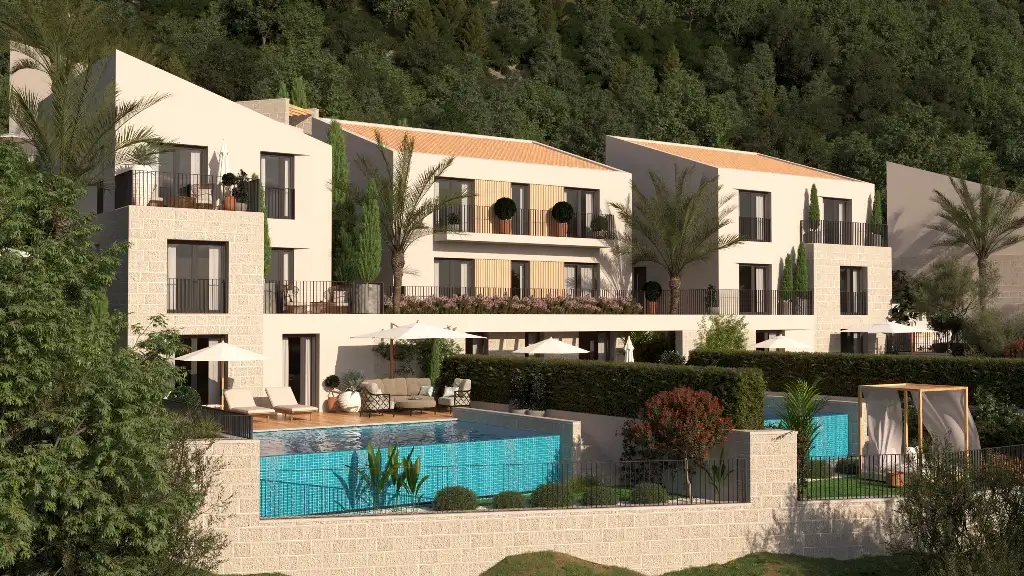 Budvaот 261.69м²
 Budvaот 28м²
Where to Look Within Budva
| Area | Better for | Main trade-off |
|---|---|---|
| Central Budva | Rental activity, walkability | Noise, congestion, parking |
| Bečići | Beach-focused holiday property | Large amount of competing stock |
| Rafailovići | Waterfront lifestyle | Limited parking and dense summer activity |
| Hillsides / Babin Do | Views, larger apartments | Walking gradient and distance to beach |
| Sveti Stefan / Paštrovići | Premium lifestyle, privacy | Higher entry level, smaller market |
Tivat
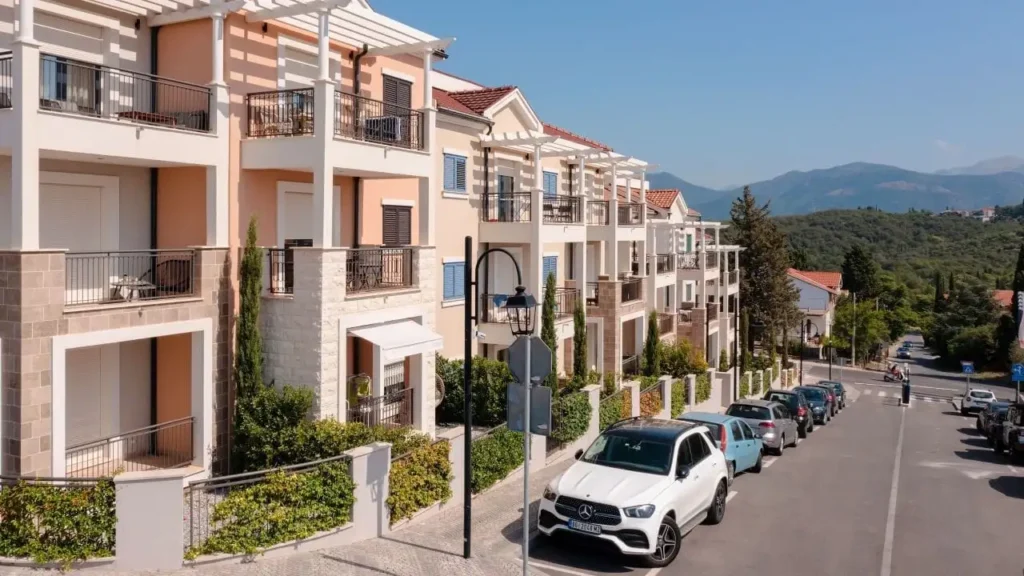
Tivat occupies a different position in the Montenegro market from any other coastal town. Its international profile is largely built on Porto Montenegro — a luxury marina development that transformed the town’s property landscape and attracted a buyer segment that would not otherwise have looked at this part of the Adriatic.
The critical point for any buyer evaluating Tivat: the town is not one homogeneous price segment. Porto Montenegro and branded waterfront residences operate at premium price levels with a specific buyer base, management infrastructure and service offering. An ordinary apartment in residential Tivat is a different product in almost every respect — price, tenant profile, rental demand, management complexity and resale audience.
Conflating the two when assessing “Tivat property prices” produces seriously misleading conclusions.
What Porto Montenegro and the broader marina ecosystem bring to the wider Tivat area is genuine international visibility, a functioning high-season luxury visitor economy and infrastructure that supports premium lifestyle requirements year-round. Tivat Airport is a practical advantage: it is close to both the marina and the broader Bay of Kotor area, and it handles direct international routes during the summer season. For buyers who value access and shorter transfer times, this is a meaningful factor.
Tivat has a meaningful supply of newer residential developments, some offering modern specifications and professional management. Construction quality, utility provision and maintenance standards should nevertheless be checked at the level of the individual building — these characteristics are not uniform across the town’s residential stock.
High acquisition prices in premium Tivat developments can put downward pressure on percentage yields unless rental income increases proportionately. This does not automatically make such a purchase a weak investment — a premium address may support buyer and tenant demand — but resale performance and income generation depend on pricing, unit quality, management and prevailing market conditions, not on the address alone. A €400,000 budget should be checked against current branded-residence inventory, as pricing in Porto Montenegro can differ substantially from standard Tivat stock.
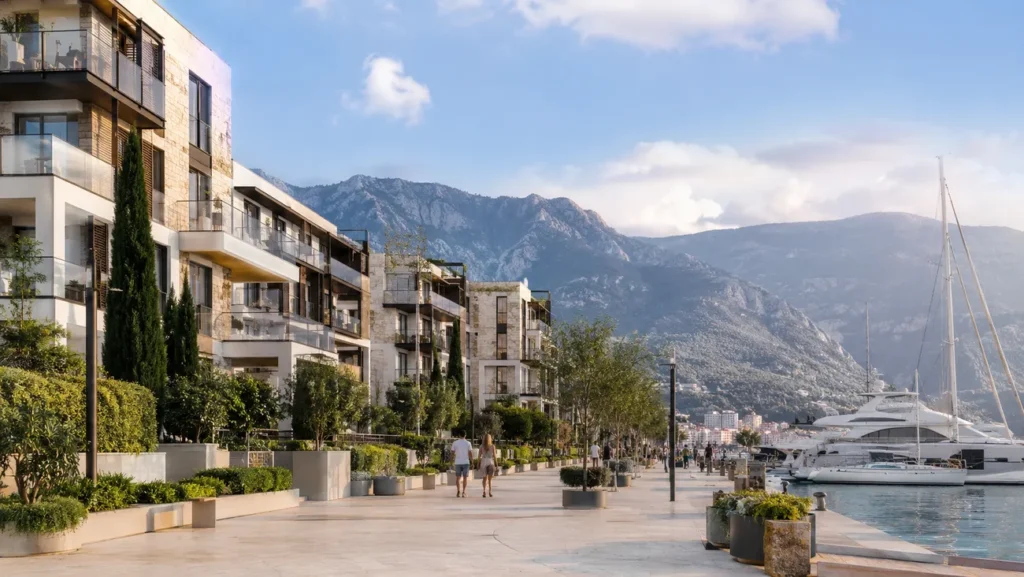
Best suited to: premium buyers; international lifestyle buyers; buyers who prioritise newer, well-managed stock; buyers who value proximity to Tivat Airport; buyers seeking a marina-linked environment.
Watch for:
- Entry price — the highest-specification developments carry a substantial premium over standard Tivat stock
- The gap between Porto Montenegro pricing and standard residential Tivat pricing — these are different products requiring separate evaluation
- Yield calculations that do not account for management, vacancy and operating costs
Where to Look Within Tivat
| Area | Better for |
|---|---|
| Porto Montenegro | Premium marina / lock-and-leave ownership |
| Seljanovo | Balanced residential + coastal living |
| Kalimanj | Urban convenience and marina proximity |
| Donja Lastva | Quieter lifestyle and sea views |
| Mrcevac | Lower entry point and airport proximity |
| Luštica Bay | Master-planned premium resort environment |
Luštica Bay and the Luštica Peninsula
Luštica Bay deserves to be assessed separately from central Tivat. Although administratively connected with the wider Tivat area, it offers a different ownership experience: a master-planned coastal environment rather than a conventional Montenegrin town.
The development combines residential neighbourhoods, a marina, hospitality, restaurants and retail, while its long-term masterplan includes Centrale, Marina Village, The Peaks, additional hotels, a second marina and an 18-hole golf course. The official Luštica Bay masterplan envisages more than 1,000 residences and over 500 villas and townhouses as the destination continues to develop.
For buyers, the distinction matters. A property in Luštica Bay is typically competing with other managed resort and branded-residence products rather than with a standard apartment in central Tivat.
Best suited to: buyers seeking a managed premium environment; second-home owners; families who value privacy and resort infrastructure; buyers comparing Porto Montenegro with newer master-planned communities.
Watch for:
- higher entry prices than many conventional residential areas;
- service and management charges;
- dependence on the specific neighbourhood and development phase;
- the difference between buying for lifestyle and modelling pure rental yield;
- resale competition from future phases of the same masterplan.
Choose central Tivat if walkable town life and immediate airport access matter most. Consider Luštica Bay if you prefer a master-planned resort environment, newer stock and a more self-contained lifestyle.
Compare Tivat, Porto Montenegro and Luštica Bay Properties
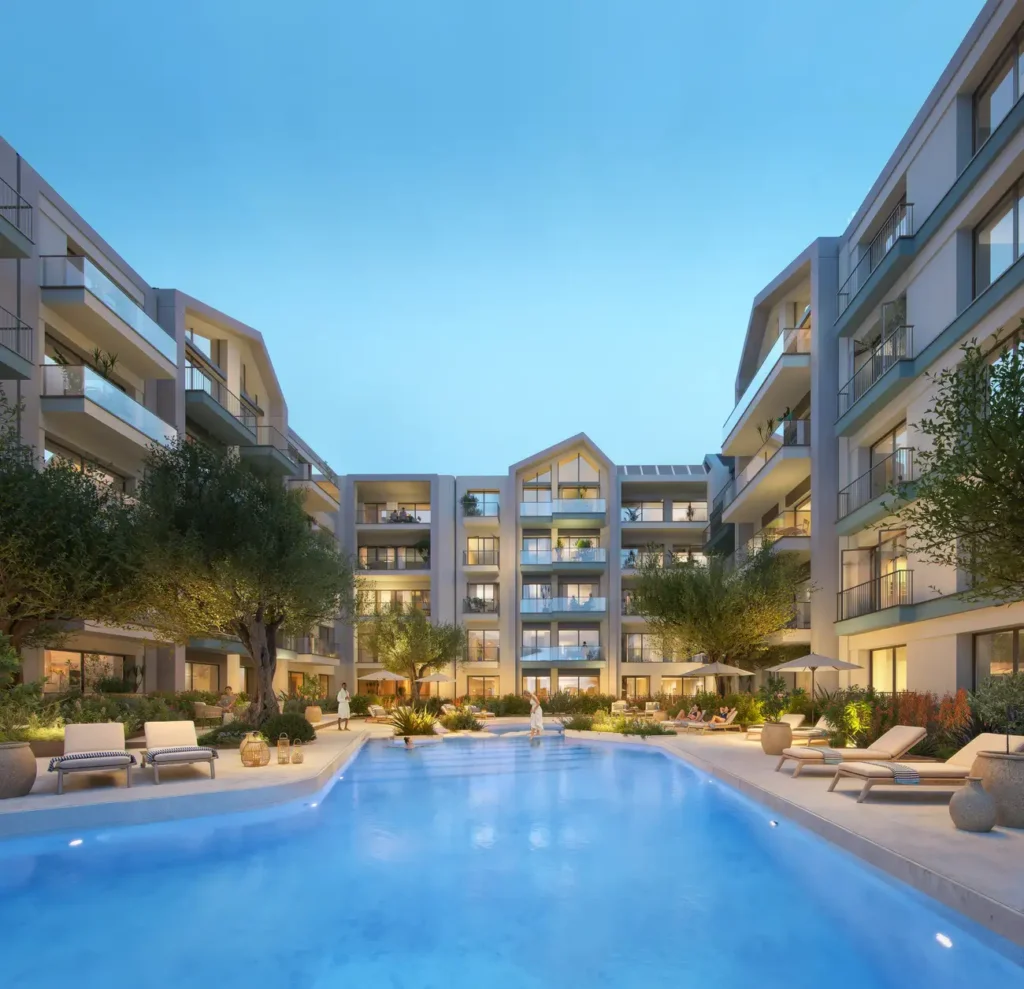
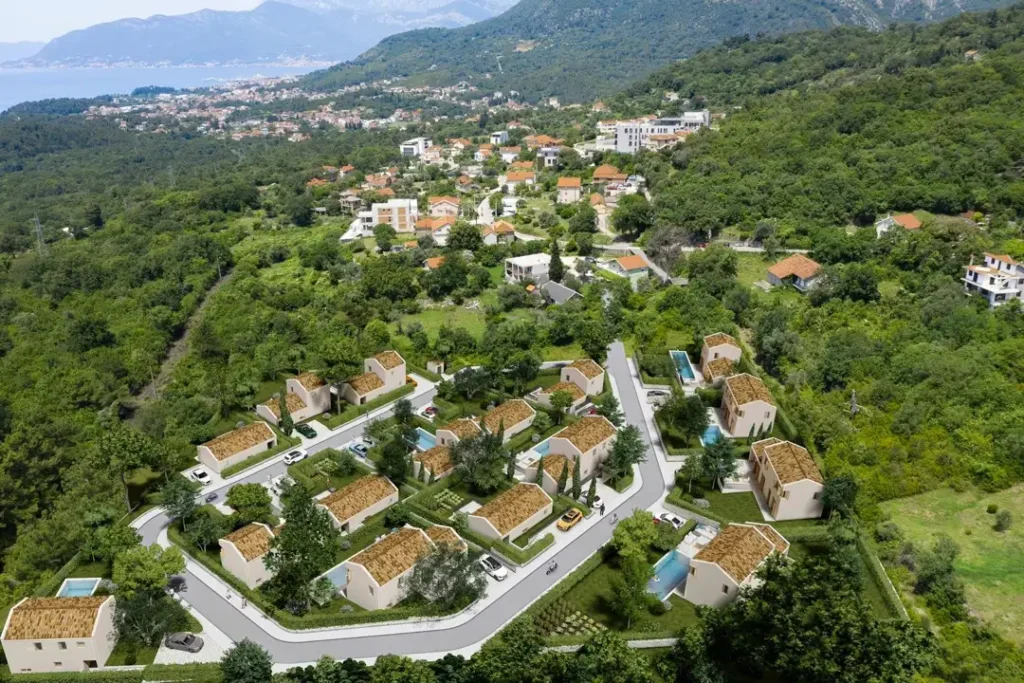

Kotor and the Bay of Kotor
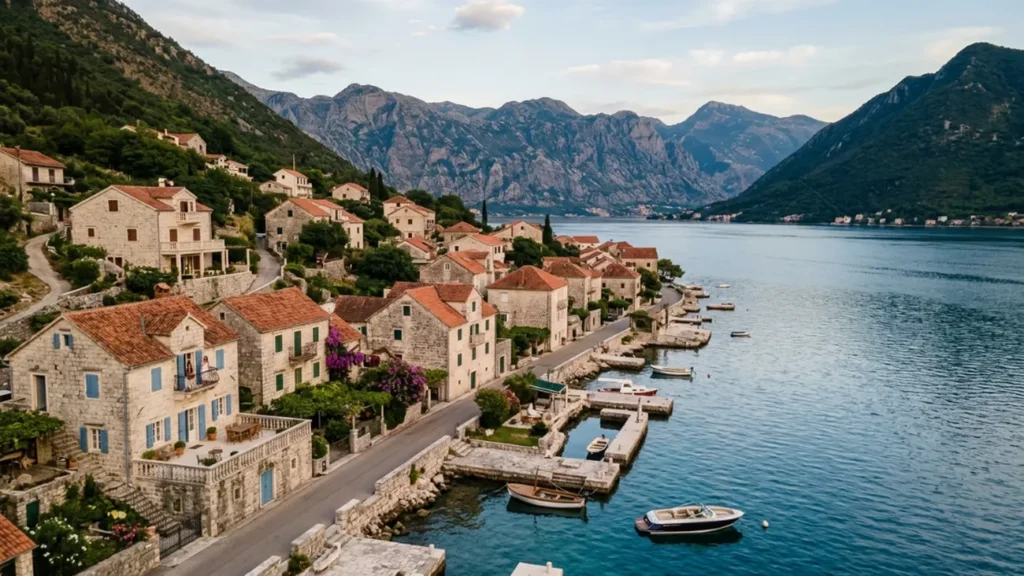
Kotor’s UNESCO World Heritage status gives it an international profile that few small towns of its size would otherwise have. The Old Town — a medieval walled settlement on the Bay — attracts visitors from across Europe and beyond. For property buyers, that recognition translates into consistent tourism demand and a certain cachet that supports holiday rental income during the season.
The supply of property within and immediately adjacent to Kotor Old Town is limited by the nature of the environment. Development within the UNESCO property and buffer zone is subject to significant heritage and planning constraints; the World Heritage Committee has called for stronger controls on new construction in this area. The existing stone building stock is finite. Scarcity of supply is a genuine characteristic of certain Kotor properties — though it should not be read as an automatic guarantee of value appreciation.
The Bay of Kotor is not just Kotor town. The bay extends through Dobrota, Perast, Risan and further. Each village has its own character, price point and practical profile. Dobrota, immediately north of the Old Town, has an established market for stone houses and apartment conversions. Perast is considerably smaller and has a more limited property supply. Properties further around the bay may offer relative value but require careful assessment of road access, particularly given the congestion that affects the bay road in summer.
Renovation complexity is a real factor for buyers attracted to stone property. Historic buildings require specialist trades, specific materials and patience. Planning consent for alterations in conservation areas adds time and uncertainty. Buyers without renovation experience or reliable local contacts should factor these costs into any acquisition decision. The purchase price of a stone house in the Bay rarely reflects the full cost of bringing it to a comfortable, rentable condition.
Parking and road access deserve explicit attention. The approaches to Kotor Old Town are narrow and the town itself is pedestrianised. During peak season, congestion on the bay road is serious. For buyers who plan to drive regularly, or who expect rental guests to arrive by car, these are practical daily-life constraints.
Humidity is relevant for some bay properties, particularly those in low-lying or north-facing positions. The bay’s microclimate is mild but moisture management in historic stone buildings requires ongoing attention.
A premium address can support buyer and tenant demand without necessarily producing the highest rental yield. Kotor’s heritage appeal creates demand, but management complexity, seasonal access issues and renovation costs require honest assessment before purchase.
Best suited to: heritage and lifestyle buyers; buyers seeking a distinctive, character-driven holiday home; buyers who value relative scarcity and authenticity over volume; buyers with renovation experience or tolerance.
Herceg Novi
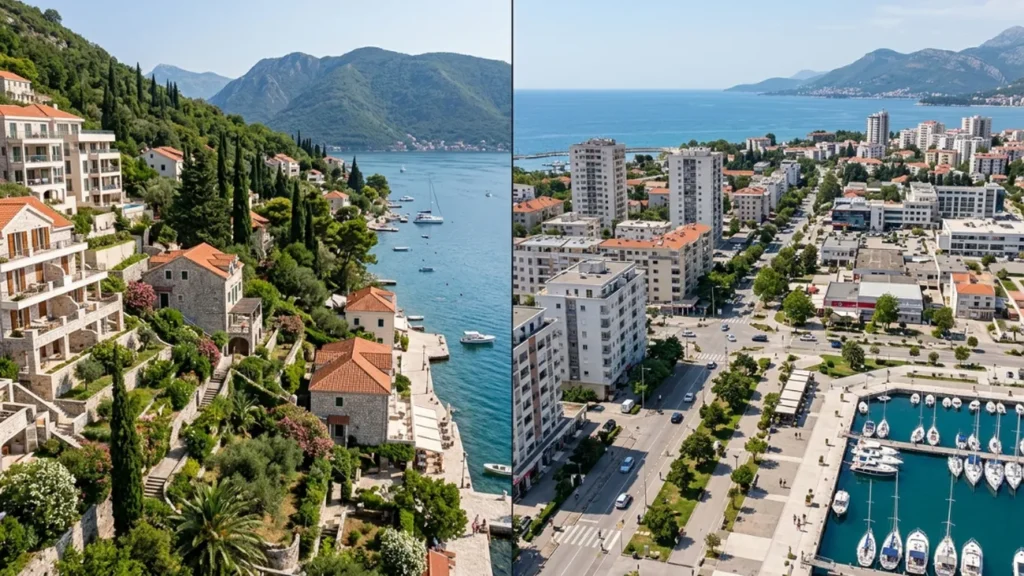
Herceg Novi sits at the entrance to the Bay of Kotor, closer to the Croatian border than to Budva. It is sometimes described simply as a more affordable alternative to Kotor, but that framing misses what makes this market distinct.
The town has an established year-round residential character that differs from Budva’s intensely tourist-focused summer economy. There is a settled local population, a functioning commercial centre and an environment that remains liveable outside the peak season. The fortified old town and hillside setting give it genuine character, although summer traffic and access conditions differ from those around Kotor Old Town.
Herceg Novi is not one price segment: Portonovi changes the comparison
Buyers should not treat the entire Herceg Novi Riviera as a mid-market alternative to Tivat. Portonovi represents a distinct premium segment within the municipality, combining branded and serviced residences, a 238-berth marina and the One&Only resort.
That means two properties only a short drive apart can compete in completely different markets: a conventional apartment in Herceg Novi or Igalo may appeal to relocation and value-focused buyers, while a Portonovi residence competes with premium marina and branded products elsewhere on the Montenegrin coast.
When comparing Herceg Novi with Tivat, separate conventional residential stock from Portonovi. Otherwise the price and rental comparison becomes misleading.
Igalo, the settlement adjacent to Herceg Novi, has an established health and wellness tourism tradition, adding a visitor segment that differs from conventional beach tourism. This gives the Herceg Novi area an additional dimension beyond the standard summer coastal market — though the effect on season length and rental demand should be assessed against actual booking data for the specific property and micro-location, not assumed from the town’s general reputation.
The terrain is a practical consideration. The town is built on a hillside, and movement around it involves stairs and slopes. For older buyers or those with mobility considerations, this is worth assessing on the ground. Property at different elevations has different views, different access characteristics and different walking distances to the waterfront.
Relative value compared with Tivat and the most desirable Kotor locations is one of Herceg Novi’s genuine attractions for buyers who want a Bay of Kotor setting without the highest entry costs. It is not the cheapest coastal option — Bar and Ulcinj sit lower on the price scale — but it offers a combination of bay environment, established community and accessible pricing that suits a specific buyer profile well.
Short-term rental demand exists but is less intense than in Budva. Buyers who purchase in Herceg Novi primarily for rental yield should model conservative occupancy, not Budva-level assumptions.
Best suited to: lifestyle buyers who value a residential, year-round character over resort intensity; buyers approaching or in retirement; families considering relocation; buyers who want a Bay of Kotor setting without committing to Tivat or Kotor premium prices.
Bar
Bar operates as Montenegro’s main southern port and functions as a practical coastal town rather than a resort destination. It has a year-round local economy, services and transport infrastructure that many seasonal coastal towns lack — including the main rail connection to Podgorica. Bar also has Montenegro’s principal commercial port and has had seasonal or periodically operated ferry connections with Italy; current passenger schedules should be checked separately before relying on this as a practical route.
For buyers seeking a coastal base primarily for personal use or year-round living, Bar offers a genuine combination of sea access, services and comparatively accessible pricing. The entry point here is lower than in Budva, Tivat or Kotor. More property for the same budget is a real advantage for buyers whose goal is comfortable coastal living rather than maximum rental return.
Bar has a different and less resort-oriented tourism profile than Budva. Short-term holiday rental demand exists but is weaker and less consistent. A buyer who acquires a Bar property expecting Budva-equivalent short-term rental income needs to reconsider the model. The town’s appeal is different: practical, liveable, connected — not branded or resort-oriented.
For buyers considering Bar, long-term residential rental deserves separate consideration alongside the seasonal holiday market. The local working population, port activity and year-round services create a tenant base that differs in character from coastal holiday destinations.
The town centre, the beach areas at Šušanj and the surrounding villages each have different characters. As with every coastal market, position within Bar — proximity to the beach, access to parking, building quality — matters considerably.
Best suited to: value-focused coastal buyers; buyers planning primary or secondary permanent residence; buyers who prefer practical infrastructure, connectivity and services over branding and resort character; buyers planning long-term rental over holiday let.
Podgorica
Podgorica is excluded from many buyers’ shortlists simply because it is not on the coast. That omission is understandable for buyers seeking a beach holiday home, but it produces a significant blind spot for anyone evaluating Montenegro as a rental investment or relocation destination.
The capital functions on a different logic from the coastal markets. Its economy is driven by government, business, education and services rather than seasonal tourism. Rental demand in Podgorica is year-round and tenant-driven — it comes from working professionals, students, families and diplomatic or corporate tenants rather than summer visitors.
This creates a fundamentally different investment profile. The absence of a high summer peak means no equivalent of Budva’s July occupancy. But long-term rental demand in Podgorica is less directly exposed to coastal tourism seasonality. Individual vacancy still depends on the property, rent level, condition and tenant market — but the income structure is built on twelve-month demand rather than a narrow seasonal window.
According to MONSTAT’s latest available statistics for Q1 2026, the average price per square metre of dwellings in new residential buildings was €2,445/m² nationwide, €2,395/m² in Podgorica and €2,575/m² in the coastal region. These figures cover first-sale transactions in new residential buildings only and do not represent average prices across the full resale market or all property types. They should be treated as market-level indicators rather than transaction averages for individual city micro-locations.
As the capital, Podgorica offers a broad concentration of schools, healthcare, retail, administrative and business services. For families relocating, this is a practical advantage. The city is also better connected for year-round international travel than smaller coastal airports, which operate reduced winter schedules.
Podgorica should be evaluated as a residential and long-term rental market. Comparing its yield profile with Budva’s short-term rental numbers is a category error — the products, tenants and income structures are different.
Best suited to: buyers planning permanent or year-round relocation; families who need consistent urban services; investors focused on long-term residential rental; buyers who want reduced exposure to tourism seasonality.
Ulcinj
Ulcinj is Montenegro’s southernmost coastal property market and should be assessed separately from Budva, the Bay of Kotor and the premium marina markets around Tivat. Its defining feature is a different coastal environment: long sandy beaches, a strong summer tourism profile and closer cultural and geographic links with Albania and the wider southern Adriatic.
Velika Plaža is the key location shaping the area’s tourism and development potential. Montenegro’s official tourism portal identifies it as one of Ulcinj’s principal beach destinations, while new resort-scale developments are bringing professionally managed residential and hospitality stock to a market that historically had a more fragmented property supply.
From a buyer’s perspective, Ulcinj can offer a lower entry point than premium Tivat, Porto Montenegro or the most expensive parts of the Bay, but the market should not be treated as simply “cheap Montenegro.” Micro-location matters significantly. Property close to Velika Plaža, established tourist infrastructure or a professionally managed resort may have a very different rental and resale profile from conventional apartments elsewhere in the municipality.
The Residence currently lists Porta Rai on Velika Plaža from approximately $220,999. The project combines residential and hotel use, professional hospitality management and resort infrastructure, illustrating how the Ulcinj market is beginning to include a more structured resort-investment segment alongside conventional coastal property.
Best suited to: buyers looking for southern coastal property; buyers who prefer sandy beaches over the Bay landscape; investors considering emerging resort stock; buyers seeking an entry point below Montenegro’s most expensive premium marina locations.
Watch for:
- strong summer seasonality;
- large differences between Velika Plaža resort property and conventional Ulcinj residential stock;
- infrastructure and utility quality at the exact micro-location;
- distance from Montenegro’s main international airports;
- realistic rental demand outside the main summer season;
- developer and management structure in large new resort projects.
Ulcinj should be compared with Bar and selected parts of the Budva Riviera for price and coastal use — not with Kolašin, whose property market is driven by entirely different demand.
Kolašin
Kolašin is Montenegro’s main mountain property market and should be analysed separately from every coastal location in this guide. Its demand is driven primarily by winter sports, mountain tourism and resort development rather than beaches, marinas or summer coastal travel.
Kolašin 1450 and Kolašin 1600 form the core of the ski-market proposition. Kolašin 1600 is approximately 91 km from Podgorica, although actual driving time depends on road and weather conditions.
For buyers, this creates a different investment model. Occupancy depends on the winter season, snow conditions, resort infrastructure, management quality and the ability of the destination to attract visitors outside the peak ski period. Summer hiking and nature tourism can broaden demand, but coastal occupancy assumptions should never be transferred directly to Kolašin.
Best suited to: ski-property buyers; mountain lifestyle buyers; investors specifically comfortable with seasonal resort demand; buyers seeking a non-coastal second home.
Watch for:
- length and reliability of the ski season;
- distance from lifts and resort infrastructure;
- professional rental-management availability;
- winter road access and parking;
- heating and mountain-specific operating costs;
- future competing supply from resort development;
- the difference between town-centre Kolašin and ski-area property.
Treat Kolašin as a separate asset class within Montenegro. A property that works well as a mountain resort investment should not be judged by Budva, Tivat or Kotor rental benchmarks.
Which Location Fits Your Goal?
The table below maps common buyer goals to the most relevant markets. It is a starting framework, not a definitive ranking — individual properties within each location vary considerably.
Not sure whether Budva, Tivat, Kotor or another part of Montenegro fits your budget and goals? Tell us what you are looking for, and The Residence can help narrow the search to locations and properties that match your priorities.
| Buyer goal | Locations to consider | Why | Main trade-off |
|---|---|---|---|
| Short-term holiday rental | Budva, Tivat (premium), Kotor | Highest tourism density and international recognition | Strongly seasonal; significant management overhead |
| Premium lifestyle / international buyer | Tivat, Kotor Bay | Marina infrastructure, newer stock, international environment | High entry cost; yield requires unit-specific modelling |
| Holiday home, personal use | Budva, Kotor Bay, Herceg Novi, Tivat | Range of character options and coastal environments | Each has distinct seasonal/access constraints |
| Permanent relocation | Podgorica, Herceg Novi, Bar | Year-round services, residential infrastructure | Podgorica is inland; coastal towns vary in year-round service quality |
| Family living | Podgorica, Herceg Novi, Bar | Schools, healthcare, consistent services | Podgorica has no coast; Bar and Herceg Novi have moderate international connectivity |
| Long-term residential rental | Podgorica, Bar | Year-round tenant demand; less seasonal exposure | Lower nightly rate potential; different tenant management |
| Lower entry budget | Bar, Ulcinj, Herceg Novi | More accessible pricing relative to Tivat/Budva/Kotor premium | Varies by location; lower price does not equal strong yield |
| Historic / character property | Kotor Bay, Herceg Novi | Stone architecture, limited supply, heritage character | Renovation complexity, maintenance, planning constraints |
| Mountain / ski property | Kolašin | Mountain resort development, winter tourism | Separate demand thesis; short season; infrastructure assessment required |
Where to Start at Different Budgets
| Budget | Where to start looking | What the current market can offer |
|---|---|---|
| Around $120,000 | Budva / Bečići, Kotor, Bar | Entry-level apartments and selected new developments. Current examples in The Residence catalogue include projects starting at roughly $98k in Budva/Bečići, $105k in Kotor and $111k in Bar. Choice is limited and availability can change quickly. |
| Around $200,000 | Bar, Kotor, Tivat, Budva / Bečići, Ulcinj | A much broader choice of studios and one-bedroom units appears. Standard Tivat becomes realistic, while Ulcinj resort stock and larger units in lower-priced coastal markets enter the comparison. |
| Around $300,000 | Budva, Bečići, Tivat, Bar, Kotor | Buyers can compare better-located apartments, larger layouts and selected serviced or branded developments. In Budva, several current resort-style projects fall around the $280k–$330k entry range. |
| Around $400,000–500,000 | Tivat, Porto Montenegro, Luštica Bay, premium Budva / Bečići | This is where the comparison changes materially: current inventory includes Luštica Bay Centrale, Crown Tivat Residence, Porto Montenegro Vero&Versa and premium Budva stock. Service charges, management model and resale audience become increasingly important. |
| Around $900,000+ | Luštica Bay premium stock, Porto Montenegro, high-end Tivat and Budva residences, villas | Upper-premium residences, larger layouts and selected villas become realistic. Current examples include The Dreams by Dukley and Luštica Bay The Peaks. |
These figures are based on current asking prices in The Residence inventory as of August 2026 and are intended as search starting points, not fixed market thresholds. Availability and developer pricing can change quickly.
Scenario illustration 1: A buyer with €200,000 seeking short-term rental income should focus on Budva and evaluate specific units for beach proximity, parking access, competition from surrounding developments and management costs. The same buyer purchasing a standard apartment in Bar should recalibrate expectations: year-round living can work well, but equivalent Budva-style holiday rental returns are unlikely.
Scenario illustration 2: A buyer with €400,000 drawn to Tivat should be precise about which segment they are entering. A budget at that level should be checked against current branded-residence inventory — pricing in Porto Montenegro can differ substantially from standard Tivat stock — and the relevant question is whether the buyer’s goal (lifestyle use, long-term appreciation, rental income) is better served by available options in Tivat or by a well-located property elsewhere on the coast.
Scenario illustration 3: A buyer seeking year-round rental income rather than holiday letting should weight Podgorica seriously, even without coastal appeal. The tenant profile — working professionals, long-term contracts — typically means lower exposure to seasonal vacancy than a Budva holiday rental, alongside a different yield and management structure.
Living vs Investment: the Same City Can Score Differently
| Location | Permanent living | Short-term rental | Long-term rental | Premium lifestyle | Ease of management |
|---|---|---|---|---|---|
| Budva | Good | Strong | Moderate | Good | Moderate |
| Tivat | Very good | Strong in premium stock | Good | Very strong | Strong in managed developments |
| Kotor Bay | Moderate | Strong in the right micro-location | Limited–moderate | Strong | More complex |
| Herceg Novi | Very good | Moderate | Good | Good / premium around Portonovi | Moderate |
| Bar | Very good | Moderate | Good | Limited | Relatively straightforward |
| Podgorica | Very good | Weak | Strong | Urban rather than resort | Relatively straightforward |
| Luštica Bay | Good for the right buyer | Managed resort model | Limited conventional market | Very strong | Strong where professional management is provided |
| Kolašin | Seasonal | Winter-focused | Limited | Resort niche | Property-specific |
Prices and Rental Potential
The table below summarises the relative market positioning of each location. Where official data is available, it is cited with appropriate caveats.
| Location | Relative purchase cost | Main rental market | Seasonality | Typical buyer profile |
|---|---|---|---|---|
| Budva | Upper-mid | Short-term holiday let | Strongly seasonal (Jun–Sep peak) | International holiday buyers, rental investors |
| Tivat | Premium (marina stock) / Upper-mid (standard) | Short-term holiday let; some long-term | Seasonal with premium summer rates | International premium buyers, lifestyle buyers |
| Kotor / Bay | Upper-mid to premium | Short-term tourism; some holiday home | Seasonal, summer concentration | Heritage/lifestyle buyers, international buyers |
| Herceg Novi | Mid-market | Moderate short-term; some year-round | Moderate seasonal | Lifestyle buyers, retirees, families |
| Bar | Comparatively affordable | Long-term residential; moderate short-term | Lower seasonal variation | Value buyers, relocators |
| Podgorica | Mid-market | Long-term residential | Year-round | Families, working professionals, long-term investors |
| Ulcinj | Comparatively affordable | Short-term seasonal | Strongly seasonal | Budget coastal buyers |
| Kolašin | Mid-market | Winter ski rental; some summer | Bi-seasonal (winter primary) | Mountain/resort buyers |
On price data: According to MONSTAT’s latest available statistics for Q1 2026, the average price per square metre of dwellings in new residential buildings was €2,445/m² nationwide, €2,395/m² in Podgorica and €2,575/m² in the coastal region. These figures cover first-sale transactions in new residential buildings only and should not be interpreted as average prices for the entire property market or for individual towns.
For rental yield context, the Global Property Guide publishes indicative gross yield data for Montenegro as a secondary market reference. Any gross yield figure — whether from that source, a developer or a listing agent — reflects income relative to purchase price before vacancy, management fees, maintenance, taxes and other operating costs are deducted. Net rental returns are lower than gross yields once applicable vacancy, management, maintenance, taxes and other operating costs are deducted. The gap depends on the management structure, occupancy pattern and cost base of the specific property.
Tourism and Rental Demand
Montenegro’s coastal tourism statistics provide useful context for the short-term rental market, but they require careful interpretation. According to MONSTAT’s tourism data for 2025, seaside resorts accounted for 94.8% of all overnight stays in individual accommodation in Montenegro, confirming the strong concentration of private accommodation demand on the coast.
The relevant question for a property buyer is whether that macro-level observation translates into performance for a specific unit in a specific building. Tourist arrivals and overnight stays do not translate directly into occupancy or rental yield for an individual apartment. Performance at the unit level depends on a set of property-specific factors that aggregate tourism statistics cannot capture:
- Micro-location — distance to the beach, views, noise environment
- Parking availability
- Property quality, furnishing standard and presentation
- Competition from neighbouring units in the same building or area
- Active management, listing optimisation and responsiveness
- Guest reviews and platform ratings
- Operating expenses including cleaning, maintenance and management fees
A coastal property in a high-traffic location with strong management and good reviews can outperform the market average. A comparable property with poor management, no parking and weak reviews in the same town will underperform regardless of the city’s headline tourism numbers.
The seasonal concentration of Montenegro’s coastal tourism means that annual performance is largely determined by a narrow window. A property that captures strong occupancy at competitive rates during the main season, with well-controlled operating costs, can deliver a reasonable net return. The same property with high management fees, mid-season voids and direct competition from identical units in the same stairwell will not.
New Build or Resale?
Both new build and resale property are available across Montenegro’s main markets. The right choice depends on budget, risk tolerance, intended use and the specific supply available in the target market.
| Factor | New build | Resale |
|---|---|---|
| Purchase price | Often priced at a premium to comparable resale stock, though this varies by development and location | Typically lower entry point for comparable property; varies by condition and location |
| Condition | Newly completed units may offer modern finishes; off-plan units carry completion and specification risk | Variable — requires independent inspection |
| Energy efficiency | Newer buildings may offer better energy performance; verify through building specification and actual costs | Older stock often less efficient, though this varies |
| Amenities | May include pool, gym, parking by design | Varies; often limited in older buildings |
| Transaction history | Less information on previous ownership | Established ownership history available via cadastre |
| Renovation | Major renovation less likely in a completed unit; snagging, furnishing or additional fit-out may still be required | May be needed; adds cost and time |
| Completion/developer risk | Relevant for off-plan purchases — verify developer track record and contractual protections | Not applicable |
| Rental readiness | Often requires fitting out and furnishing | May be partly furnished or immediately rentable |
For new developments purchased off-plan, developer risk is a real consideration. Buyers should verify the developer’s track record, construction timeline and the contractual protections available before committing.
For resale property, cadastral due diligence is essential. The Real Estate Administration of Montenegro maintains the Real Estate Cadastre, which is the authoritative register of property ownership and encumbrances. The current cadastral record should be reviewed before the buyer enters into the final sale transaction.
For a complete overview of taxes, transfer costs and transaction structure, see: “Montenegro property taxes — a practical guide for buyers“.
What to Check Before Choosing a Property
Identifying the right city or region is the first filter. It does not replace property-level due diligence. The right city cannot compensate for a property with legal or structural problems.

The following checklist applies after the location decision:
Title and registration
- Confirm cadastral ownership matches the seller — verified against the Real Estate Cadastre
- Check for liens, mortgages or encumbrances registered against the property
- Verify the registered area matches the physical property
- Confirm any extensions, conversions or alterations are legally registered
Building and access
- Check the legal status and condition of shared areas (stairwells, roof, foundations)
- Confirm vehicle access and parking — whether guaranteed by title or informal
- Assess building condition and age of major systems (roof, plumbing, electrics)
- Obtain a professional survey for older or substantially renovated property
Utilities and services
- Confirm utility connections are legal and in the seller’s name
- Check for outstanding utility debts or service charges
- Verify internet and mobile connectivity for the specific location
New build specifics
- Review developer documentation, permits and construction approvals
- Confirm the legal basis for off-plan sales if purchasing before completion
- Clarify what is included and what requires additional fitting out
Rental use specifics
- Verify that the intended short-term accommodation use can be operated lawfully and confirm the applicable approval, categorisation and tourism-registration requirements for the owner and property
- Understand any management or rental restrictions in the building or development
- Assess actual walking time and access to beach/town centre — not the developer’s stated distance
Practical location assessment
- Visit the property and immediate area at different times of day
- Assess seasonality of the immediate neighbourhood — does it function year-round?
- Evaluate noise, congestion and the character of adjacent uses in peak season
For a complete guide to the purchase process: “How to buy property in Montenegro“.
Key Takeaways
- Budva is one of Montenegro’s most active tourism-driven coastal markets and a strong candidate for short-term rental or holiday home purchase — but seasonality, competition and management costs require honest modelling before acquisition.
- Tivat serves the premium and international lifestyle segment. The market is not uniform: Porto Montenegro and standard residential Tivat are different products at different price levels with different rental profiles. Yield and resale performance depend on unit-specific factors, not the location name alone.
- Kotor and the Bay offer heritage character and relative supply constraints in certain locations, but renovation complexity, access issues, planning constraints and maintenance of historic property are genuine costs that often go understated.
- Herceg Novi combines Bay of Kotor setting with established residential character and relative value — suited to lifestyle and relocation buyers rather than those seeking maximum short-term rental yield.
- Bar is a practical coastal market with year-round services and comparatively accessible pricing. Its rental logic is better suited to long-term residential lets than holiday accommodation.
- Podgorica functions as a year-round residential and long-term rental market, with a tenant profile and income structure that differs fundamentally from coastal holiday-let markets.
- Ulcinj offers a distinct southern coastal proposition centred on sandy beaches, seasonal tourism and an emerging resort-development segment. Entry prices can be below Montenegro’s premium marina markets, but infrastructure, seasonality and micro-location require careful assessment.
- Kolašin represents a separate mountain and ski investment thesis — seasonality, infrastructure and rental demand require independent assessment, not coastal benchmarks.
- Micro-location and individual property quality can matter as much as the city name. Two apartments in the same town with different beach access, parking and management quality can have significantly different investment outcomes.
- Official MONSTAT new-build price data (Q1 2026: €2,445/m² national average; €2,575/m² coastal; €2,395/m² Podgorica) covers first-sale transactions in new residential buildings only — it is not a market-wide average and should not be applied as a universal benchmark.
- Any yield or return figure should be treated as gross until management, vacancy, maintenance and operating costs are deducted.
Choosing Where to Buy
The decision follows a logical sequence. First, define the purpose: holiday home, short-term rental, long-term rental, permanent relocation, or a combination. The purpose determines which markets are even relevant to consider. A buyer who needs year-round services and stable rental income has a different shortlist from someone seeking peak-season holiday occupation and summer rental income.
Second, select the market. Use the buyer goal comparison table as a starting point, then examine specific locations within that market. Understand the seasonal pattern, the competition, the management infrastructure and the realistic — not optimistic — cost and vacancy structure before the numbers start to look like returns.
Third, narrow to micro-location. The city name is a starting point. What drives individual property performance is the specific position within that city: beach access, parking, building quality, view orientation, proximity to noise sources and the competitive density of other rental units in the immediate vicinity.
Fourth, conduct property-level due diligence. Verify ownership through the Real Estate Cadastre. Check for encumbrances. Assess the building structure and legal status of all elements. Verify utility connections. Walk the route to the beach or town centre — not at 9am on a Tuesday, but at midday in peak season.
The best location is not necessarily the most famous one. It is the market whose demand profile, property type, seasonality and pricing match what you expect the property to do — and whose specific unit, after proper investigation, holds up to scrutiny on title, condition and realistic return.
Final Location Checklist Before You Start Viewing Properties
Before creating a property shortlist, answer these seven questions:
- Is the property mainly for living, holidays, short-term rent or long-term rent?
- What is the maximum total purchase budget, including taxes, legal fees, furnishing and parking?
- Do you need the town to function normally in winter?
- How important is airport access?
- Are you comfortable with a managed resort and recurring service charges?
- Do you prefer liquidity and a larger resale market, or scarcity and character?
- Can you tolerate summer congestion, stairs, renovation or car dependence?
If you cannot answer these yet, do not start with individual listings. First narrow the choice to two or three markets, then compare properties inside them.
 Real estate in Georgia
 Real estate in Cyprus
 Real estate in the UAE
 Real estate in Bali
 Real estate in Thailand
 Real estate in Spain
 Real estate in Saudi Arabia
 Real estate in Turkey
 Real estate in Zanzibar
 +382 60 099359
 hello@residence-estate.me
 The Old Bakery Residences, Budva 85310, Montenegro



 Get catalogue of TOP-7 objects