
 +382 60 099359


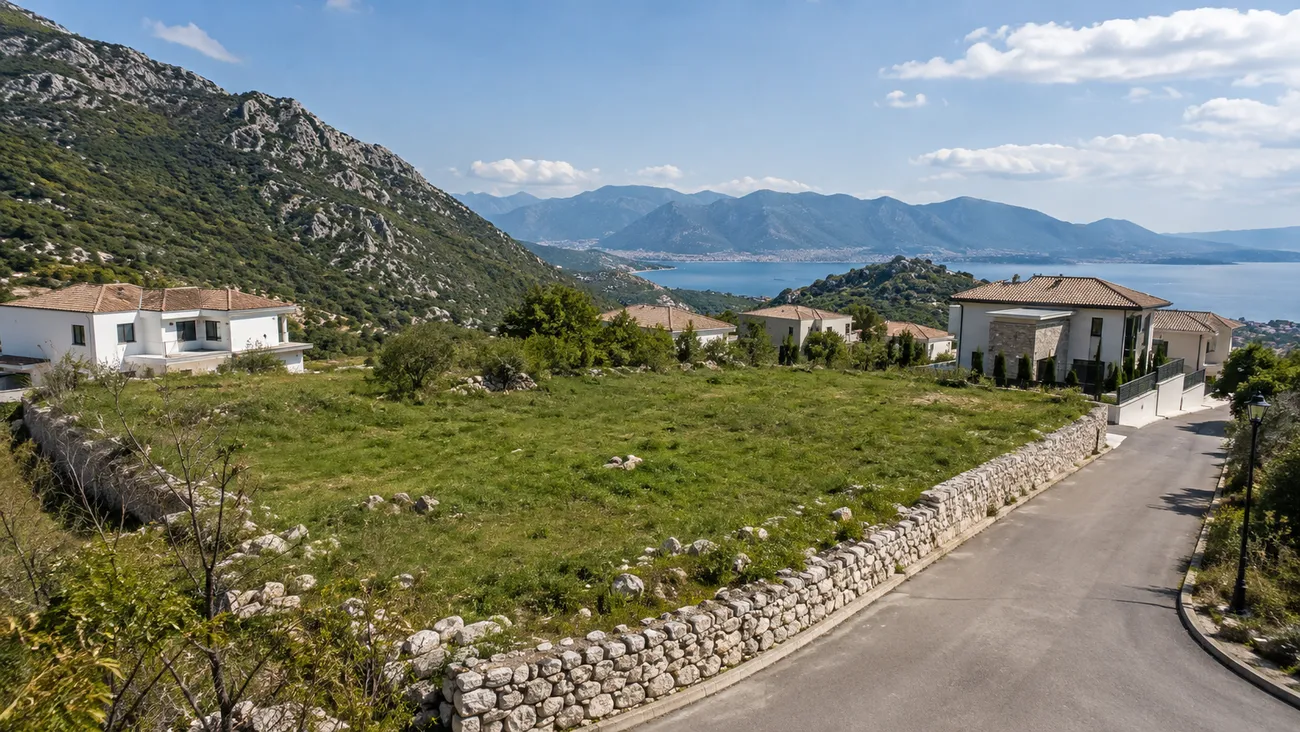

Buying land in Montenegro as a foreigner is possible, but the answer depends on the specific category of land, its designated use, its location and how the transaction is structured. This is not a straightforward yes or no. Foreigners may generally acquire many categories of real estate, subject to statutory restrictions that vary by land type, location and, in some cases, the nationality of the buyer and applicable international agreements.
Foreigners can generally buy construction land in Montenegro directly, provided the parcel does not fall within a restricted category. Direct foreign ownership is restricted for agricultural land, forests and forest land, islands, certain border areas, natural resources, public-use property and cultural assets of special significance. A limited exception may apply to up to 5,000 m² of agricultural or forest land purchased together with a residential building located on it.
Purchasing land is materially more complex than buying a completed apartment. With a finished property, the key questions are typically ownership, encumbrances and condition. With land, there are additional layers to examine before a transaction makes sense:
- Whether the land category permits direct foreign acquisition under the applicable law
- The cadastral classification and what it reflects about registered land type
- The planning designation, which is recorded in a separate set of documents and determines what development, if any, is allowed
- The permitted building parameters — footprint, gross area, height, setbacks
- Whether road access is legally registered or merely visible on a map
- Whether utility connections are technically and administratively feasible
- Whether existing structures on the parcel are properly registered and legalised
- Whether easements, liens, restitution claims or co-ownership rights affect the title
Skipping any of these checks before paying a deposit can lead to significant financial loss or ownership of a plot that cannot be developed as intended.
This guide explains each of these issues in detail. It covers the land categories available to foreign buyers, the statutory restrictions and 5,000 m² exception, cadastral and planning checks, building rights, legal access, utility connections, company ownership, due diligence, transaction steps, taxes and the practical costs that may arise before construction can begin.
This guide provides general information and does not replace advice from a qualified Montenegrin lawyer, tax adviser, architect or licensed surveyor. Laws, municipal plans and administrative practice change, and individual circumstances vary. Legal information in this article reflects publicly available sources as at July 2026; buyers should verify current rules before relying on any specific point.
A plot may have one classification in the cadastre and a separate land-use designation under the applicable planning document. Neither document should be read in isolation: the cadastral record is relevant to title and registered land type, while planning documents determine whether and how the land may be developed. A parcel classified as construction land in the cadastre still requires confirmation of its planning designation, permitted parameters and access before any purchase decision is made.
Several categories of land warrant particular attention before assuming a purchase is straightforward:
- Agricultural land, where direct foreign acquisition is subject to statutory restrictions, with limited exceptions
- Forests and forest land, which carry their own protective regime
- Land in border zones, where additional rules may apply — the applicable border-zone provisions should be verified for the specific parcel under current law
- Islands, which are subject to specific regulatory treatment
- Land connected to natural resources, public-use areas or cultural assets of special significance, where restrictions apply regardless of who owns the land
- Parcels whose current cadastral classification or planning designation does not support the buyer’s intended use
Foreign Ownership at a Glance
The following table gives a simplified overview. Every parcel still requires individual verification because cadastral classification, planning status and location can change the result.
| Land category | Direct purchase by a foreign individual |
|---|---|
| Construction land | Generally possible, subject to parcel-specific verification |
| Agricultural land | Restricted |
| Forest and forest land | Restricted |
| Agricultural or forest land up to 5,000 m² with a residential building | May qualify for the statutory exception if all conditions are met |
| Islands | Restricted |
| Border-zone land covered by Article 415 | Restricted |
| Natural resources and public-use property | Restricted |
| Cultural assets of exceptional or special significance | Restricted |
| Acquisition by inheritance | May be possible on the same terms as for Montenegrin citizens |
Inheritance is treated separately from an ordinary purchase. Article 415 provides that a foreign natural person may acquire real estate by inheritance on the same terms as a Montenegrin citizen. The inheritance procedure, title history and any restrictions affecting the property should still be reviewed individually.
Foreign ownership, planning permission and the right to build are three separate questions. A positive answer to one does not automatically answer the other two.
One practical point worth establishing at the outset: the seller’s verbal or written description of a plot — “building land”, “villa plot”, “urbanised land” — is a commercial characterisation, not a legal one. The starting point for any land purchase is requesting the cadastral record, known in Montenegro as the List Nepokretnosti, and establishing the registered category before making any commercial commitment.
For a broader overview of how property transactions work in Montenegro, see How to buy property in Montenegro.
Land Types and Ownership Limits
Foreign ownership restrictions are primarily set out in Article 415 of Montenegro’s Law on Ownership and Other Property Rights (Zakon o svojinsko-pravnim odnosima). The provision follows a prohibited-category approach: foreign persons may acquire real estate unless the property falls within one of the categories specifically restricted by law or another applicable rule.
The table below provides a working summary of common land and property categories encountered by foreign buyers in Montenegro. It is intended as orientation rather than a definitive legal determination of any individual parcel. Each entry should be verified against the current cadastral record and applicable law for the specific plot.
| Land or property type | Can a foreign individual usually buy it directly? | What must be checked |
|---|---|---|
| Urban construction land with adopted plan | Generally available for direct acquisition because construction land is not included in the prohibited categories under Article 415, provided the parcel does not fall within another restricted category | Cadastral classification, planning document, building parameters, access, utilities, applicable statutory restrictions |
| Land with a registered residential building | Often accessible, but depends on land category, building status, area and registration | Ownership, encumbrances, cadastral land category, registration and legalisation of building, applicable restrictions |
| Undeveloped residential plot within a planning zone | Requires full due diligence; not automatically available to all foreign buyers | Adopted planning document, urban plot boundaries, permitted parameters, access, cadastral category |
| Agricultural land | Generally restricted; a statutory exception may allow a foreign individual to acquire up to 5,000 m² together with a residential building located on that land | Current cadastral category, area of parcel, presence and registration status of residential building, applicable law, legal advice required |
| Forest and forest land | Restrictions apply; a statutory exception analogous to agricultural land may apply for up to 5,000 m² with a residential building | Category, protected status, applicable forestry law, individual legal advice required |
| Mixed-use parcel | Depends on proportions, dominant classification and designation | Which categories are present, dominant use, what planning permits, applicable restrictions |
| Land connected to natural resources, public-use areas or cultural assets of special significance | Significant restrictions may apply regardless of buyer — these are ownership restrictions, not only development restrictions | Applicable restriction type, whether it applies to acquisition or use, legal advice required |
| Border-zone land | May require specific authorisation; applicable rules should be verified under current law | Applicable provision, distance from land border, specific authorisation requirements |
| Island property | Subject to specific rules | Applicable restrictions, public-interest designations, legal advice required |
| Land with unclear or outdated cadastral classification | Cannot be assessed until classification is clarified | Current cadastral category, whether reclassification proceedings are underway, legal advice required |
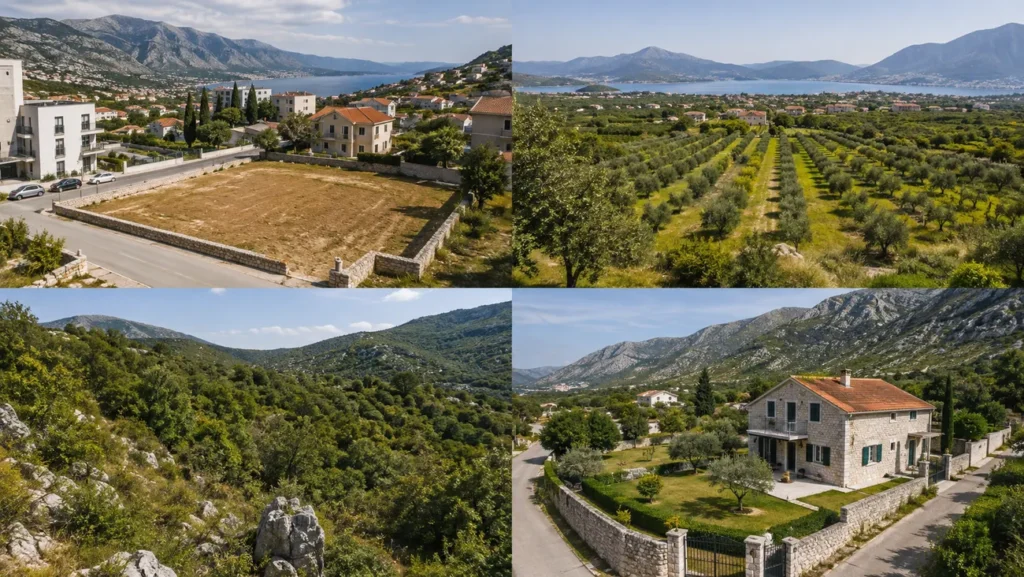
The 5,000 m² exception should be read narrowly. Three conditions must generally be satisfied together: the land must not exceed 5,000 m² in total, a residential building must stand on the land, and the transaction must transfer the land together with that dwelling. A small agricultural parcel without a residential building does not qualify merely because its area is below the threshold.
The category entries in that table reflect the formal legal classification recorded in the cadastre, not the physical appearance of the land or the seller’s description. A plot can look like an obvious building site but still carry an agricultural or forest classification. Equally, a planning document may permit certain development on a parcel, but that does not resolve whether a foreign individual can acquire the parcel directly under the applicable ownership legislation.
The decision to proceed should be based on documentation, not on the marketing description. A seller advertising a plot as suitable for a villa is making a commercial representation. The cadastral record reflects the legal status. These two things sometimes align and sometimes do not.
A concrete example: a seller lists a parcel as a “sea-view villa plot” with a generous area. On review, the cadastral record shows the land is registered as an orchard or pasture. A planning document for the area may permit some construction on land in that zone, but the classification may place the parcel in a restricted category for direct foreign acquisition. Separately, the permitted building area under the planning document may be considerably smaller than the parcel’s total area implies. Both issues need to be resolved before price negotiations begin.
Is There a General Land Ownership Limit?
Montenegrin law does not impose one universal maximum area that a foreigner may own across all permitted categories of land. The frequently cited 5,000 m² threshold is not a general ownership allowance. It is a narrow exception relating to certain agricultural, forest and forest-land transactions where a residential building is transferred together with the land.
For construction land, the decisive questions are normally whether the parcel falls within a prohibited category, whether direct acquisition by the particular buyer is permitted, and whether the cadastral and planning documents support the intended use. A buyer should therefore not apply the 5,000 m² figure to an ordinary construction plot.
Cadastre and Planning Status
Understanding the difference between the cadastral record and the planning status of a plot is one of the most practically important distinctions in Montenegrin land purchases. Many buyers treat these as a single question; they are not.
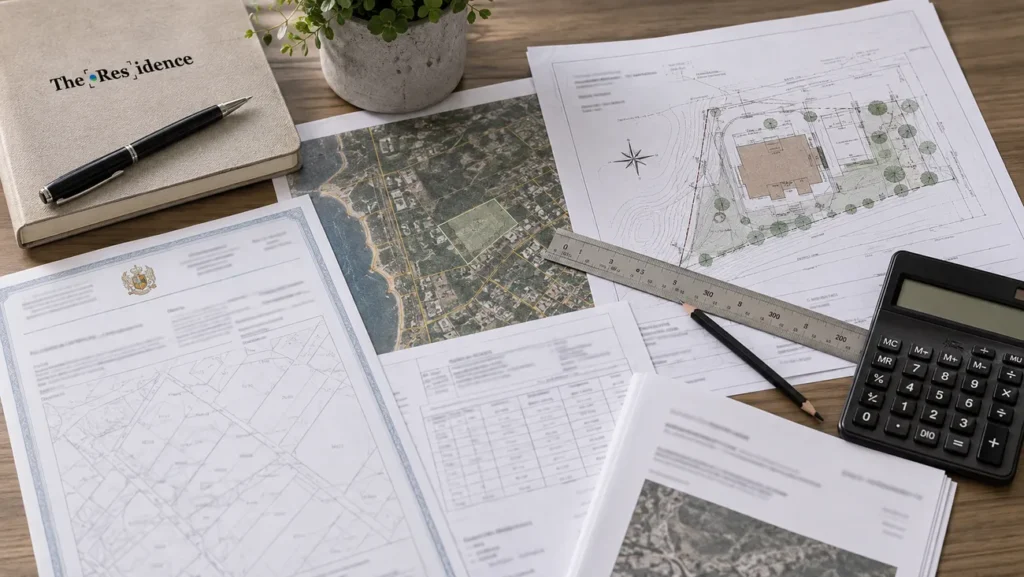
The Cadastral Record
The List Nepokretnosti (property folio) is the official document that records a parcel’s legal status in the cadastre. It is maintained by the Real Estate Administration of Montenegro, the state body responsible for cadastral records and registration of property rights. Official instructions for obtaining a title deed or cadastral extract are published by the government here.
A standard review of a List Nepokretnosti should cover the following:
- Registered owner and ownership share
- Cadastral municipality and parcel number
- Parcel area as recorded
- Registered land category (construction land, agricultural land, forest, etc.)
- Buildings or structures recorded on the parcel and their status
- Mortgages and financial charges
- Liens and pledges
- Third-party claims or disputed ownership
- Easements — registered rights of way or other rights held by neighbouring owners or utilities
- Restrictions on use or transfer
- Annotations indicating pending court proceedings, registration requests or administrative actions
The online cadastral portal allows preliminary checks, but an official extract obtained directly from the Real Estate Administration or through a licensed professional should be used for any decision-making purpose. An online search is a starting point, not a substitute for formal due diligence.
The Planning Documents
The cadastral record tells you who owns the land and in what category it is registered. It does not, by itself, tell you what can be built on it or whether any development is permitted at all. That question is answered by the applicable planning documents.
Since March 2025, spatial planning and construction in Montenegro have been governed by separate legislation: the Law on Spatial Planning and the Law on Construction of Buildings. These two laws replaced the former combined statute. The applicable planning document, the competent authority and the permit procedure must therefore be checked under the current legal framework. Any reference to the pre-2025 combined law should be treated as historical context rather than current procedure.
Key planning concepts that buyers regularly confuse:
- Cadastral parcel: the unit of land as recorded in the cadastre, with its own parcel number and area.
- Urban plot: the unit of land as defined in the planning document for development purposes. An urban plot may correspond to a single cadastral parcel, or it may comprise several cadastral parcels, or parts of different parcels combined.
- Land-use designation: the permitted purpose of the land under the planning document — residential, commercial, mixed, green space, infrastructure corridor, and so on.
- Urban and technical conditions: the formal planning parameters issued for a specific urban plot by the competent planning authority, typically specifying permitted use, maximum footprint, gross construction area, number of floors, height, setbacks from boundaries, parking requirements and access conditions.
- Construction index: the ratio of permitted gross floor area to urban plot area.
- Footprint (coverage) index: the ratio of maximum ground-floor building footprint to urban plot area.
Never value a plot only by its total square metres. The relevant figure may be the buildable area, the permitted gross floor area or the buyer’s actual share of the urban plot.
Planning parameters are generally defined by reference to the relevant urban plot or planning unit, but their application to a specific cadastral parcel must be confirmed from the current planning documentation. A practical scenario: a cadastral parcel of 1,200 square metres lies within an adopted planning zone. The planning document assigns building potential to an urban plot that includes not just this parcel but also an adjacent parcel belonging to a different owner. The buyer’s share of the urban plot may carry only a portion of the available building rights, and those rights may be difficult to exercise independently without agreement with the neighbouring owner. None of this is visible from the cadastral area figure alone.
This is why a proper review of planning documents — not just the cadastral record — is an essential part of land due diligence in Montenegro.
Can You Build on the Land?
Owning a plot of land in Montenegro does not by itself confer the right to build on it. The right to build is a separate question, determined by the planning documents applicable to the specific parcel, the current planning designation and the formal permitting process. Under the construction framework in force since March 2025, a building permit is again required as a mandatory administrative step. The competent authority for permits depends on the type, size and location of the proposed building; for structures up to 3,000 m², permitting is generally within municipal jurisdiction, while larger or specialised structures may fall under state-level authority. Buyers who treat development rights as an automatic consequence of ownership may encounter significant practical and financial difficulties.
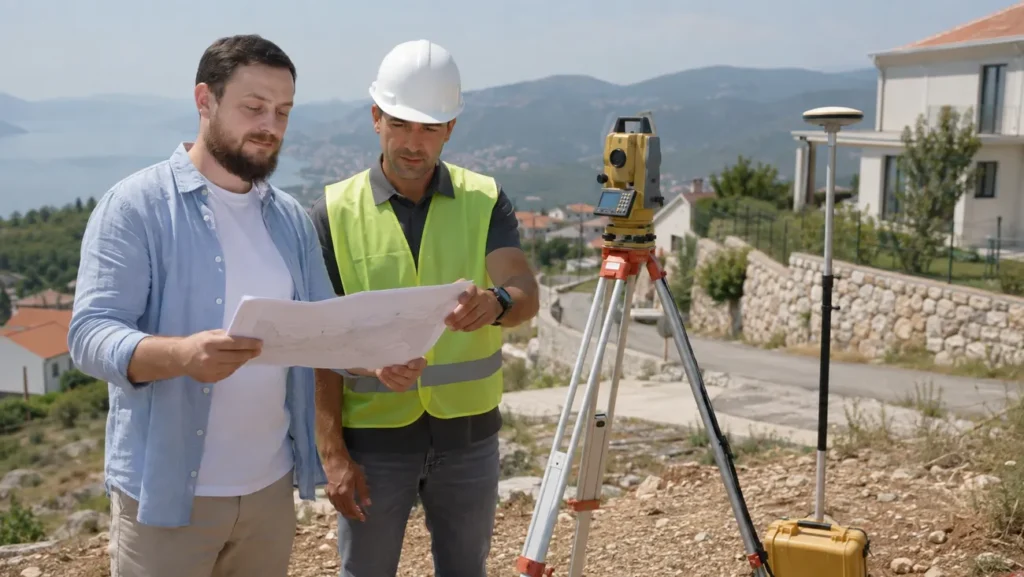
Before any price negotiation proceeds, the following questions should be checked against the relevant planning documentation for the specific parcel:
- Is there a current, adopted planning document covering this land?
- What is the designated land use for this parcel or urban plot?
- What are the boundaries of the relevant urban plot?
- What use is permitted for any future building?
- What is the maximum permitted footprint (coverage index)?
- What is the maximum permitted gross construction area (construction index)?
- How many floors and what maximum height are permitted?
- What are the mandatory setbacks from parcel boundaries?
- What parking or manoeuvring area is required?
- Is there a legally registered road access to the parcel?
- What are the conditions for connecting to electricity, water and sewage?
- Are there terrain, geotechnical or seismic constraints that affect buildability?
- Are there coastal zone, heritage zone or environmental restrictions?
- Are any structures currently on the parcel properly registered and legalised?
- Is any land consolidation, parcel adjustment or subdivision required before a building permit can be applied for?
Several specific situations arise frequently in the Montenegrin market and deserve explicit attention.
No adopted planning document. A parcel may lie within an area covered only by a general spatial plan, without a detailed municipal planning document. In this situation, the path to a building permit is uncertain and may depend on future planning decisions that are outside the buyer’s control. Buyers should not proceed on an assumption that a detailed plan will be adopted and will permit their intended development.
Infrastructure corridors. Part of a parcel may fall within a road corridor, utility easement or public infrastructure zone identified in the planning document. That portion of the land is typically not buildable and may eventually be subject to expropriation. The total parcel area is not therefore the buildable area.
Slope and retaining walls. Sloped parcels — common in coastal and mountain locations — often require substantial retaining-wall construction before any building can begin. This cost is frequently underestimated and can make an apparently affordable plot considerably more expensive in practice.
A low price per square metre can become expensive once access, retaining walls, utility connections and planning limitations are included.
Unregistered road access. A visible track, unpaved road or access route shown on a map does not constitute legally registered access. If access to the parcel is not recorded as a registered easement in the List Nepokretnosti or as a dedicated public road in the planning document, the buyer may lack a clearly registered and readily enforceable right of access. The legal position should be checked through the cadastre, planning documents and any relevant easement agreement or court decision.
Utility connection conditions. The presence of an electricity line, water pipe or sewage network in the vicinity of a parcel does not guarantee connection. Formal technical conditions for connection must be obtained from the relevant utility providers, and these conditions may specify works, costs and procedures that are not trivial.
Urban plot vs cadastral parcel mismatch. Building parameters specified in the planning document may apply to the urban plot as a whole, not just to the cadastral parcel being offered for sale. If a buyer acquires only part of an urban plot, they may find that the permitted gross floor area is shared with the remaining parcels, or that an independent building permit application may be prevented or delayed without the cooperation of other plot owners.
Looking for land or a property in Montenegro? Tell The Residence whether you are planning a private villa, development project, rental property or long-term investment. We will prepare a selection of options that match your preferred location, budget and intended use. Request a property selection in Montenegro
Buying Through a Montenegro Company
Some buyers explore purchasing land through a newly formed Montenegrin company — typically a DOO (Društvo sa ograničenom odgovornošću, the Montenegrin equivalent of a limited liability company) — either because the land category creates difficulties for foreign individuals, or for other commercial or tax reasons.
A foreign buyer does not normally need to form a company to acquire an eligible construction plot directly. A Montenegrin DOO is relevant mainly where the land category, the intended commercial activity or the proposed ownership structure makes corporate ownership appropriate. It should not be formed automatically before the legal status of the parcel has been checked.
This approach is sometimes presented as a straightforward solution. It is not automatic or universal, and it carries its own obligations and risks that buyers should understand fully before proceeding.
The most important clarification: a Montenegrin DOO should not be assumed to qualify for a land purchase automatically merely because it is registered in Montenegro. Whether a company — whose beneficial ownership or control is foreign — can acquire a specific category of restricted land depends on how the applicable law defines the relevant purchaser, the ownership and control structure of the company, the specific land category and any sector-specific restrictions. This is a question that requires a written legal opinion for the specific parcel and company structure before the company is formed or a contract is signed.
A company structure also creates ongoing obligations that buyers should understand before proceeding:
- Registration with the Central Registry and the Tax Administration
- Opening and maintaining a corporate bank account
- Annual accounting and financial reporting obligations
- Corporate income tax filings
- Compliance with beneficial ownership disclosure requirements
- Source-of-funds documentation at the banking level
Buyers sometimes consider purchasing an existing Montenegrin company that already holds land, rather than acquiring the land directly. A share acquisition does not constitute a direct transfer of title to the underlying land, but it may create separate corporate, capital-gains, reporting and anti-avoidance issues. The tax treatment must be confirmed for the specific transaction by a Montenegrin tax adviser. Beyond the tax question, acquiring a company with land requires both property due diligence and full corporate due diligence — a company may carry tax debts, litigation, undisclosed obligations and regulatory issues that are not apparent from a cadastral search alone.
The table below sets out the broad comparison of purchase structures available to foreign buyers:
| Purchase structure | Possible advantages | Additional obligations | Best suited to |
|---|---|---|---|
| Foreign individual (direct purchase) | Simpler ownership structure; fewer ongoing costs | Cannot acquire restricted land categories; standard property registration required | Construction land, residential plots, completed properties where direct acquisition is confirmed as permitted following legal review |
| Newly formed Montenegrin DOO | May be considered where the applicable law permits acquisition through a Montenegrin legal entity, subject to review of the company’s ownership and the land category | Ongoing accounting, filing and tax obligations; source-of-funds scrutiny; company maintenance costs; legal opinion required before proceeding | Where individual acquisition is not possible and a long-term holding structure is justified; not a universal solution |
| Existing company acquisition | Share acquisition does not transfer title directly; may suit specific investment structures | Full corporate and property due diligence required; inherits all company liabilities; separate tax consequences must be confirmed | Suitable only where the buyer completes both property and corporate due diligence and understands the company’s historic liabilities |
| Long-term lease or contractual structure | May provide an alternative right of use, subject to the applicable law and contract | Limited security of tenure; not equivalent to ownership; depends on counterparty | Agricultural or rural use where purchase is restricted; subject to legal advice on enforceability and applicable term limits |
Can a Foreigner Finance a Land Purchase?
Financing an undeveloped plot can be more difficult than financing a completed and registered residential property. A bank may assess the buyer’s residence status, income, credit profile, source of funds, the cadastral status of the land, its marketability and whether a building permit or development project already exists.
Buyers should not assume that a mortgage will be available merely because the land can legally be purchased. Before paying a deposit, obtain written confirmation of the bank’s preliminary requirements and check whether additional collateral, a higher equity contribution or a completed project design will be required.
Land Due Diligence Checklist
This section sets out the practical checks that should be completed before any deposit or contractual commitment is made. A more detailed overview of the due diligence process for Montenegro real estate is available at Montenegro real estate due diligence.

Do not make a reservation payment, advance or kapara until the ownership, planning status, legal access and consequences of non-completion have been reviewed in writing.
| Check | Document or evidence | Why it matters | Red flag |
|---|---|---|---|
| Identity and authority of seller | Passport or ID; if company, registration and authorisation documents | Confirms who has the right to sign | Reluctance to provide; discrepancy between registered owner and signatory |
| Registered ownership | Current List Nepokretnosti | Confirms legal title | Owner differs from seller; outdated extract |
| Co-ownership and any marital or joint-property rights | List Nepokretnosti; documents relevant to the seller’s matrimonial property regime where legally applicable | Shared ownership or marital-property claims may affect the transaction | Undisclosed co-owners; missing consent |
| Cadastral parcel and boundaries | Cadastral plan; parcel sketch | Defines what is actually being sold | Discrepancy between advertised and registered area |
| Survey and boundary markers | Licensed geodesist survey | Confirms physical boundaries on the ground | Unmarked or disputed boundaries |
| Mortgages and financial charges | List Nepokretnosti | Registered mortgages and other in-rem encumbrances may remain attached to the property unless validly discharged and deleted from the cadastre as part of completion | Any undisclosed charge; charge not agreed to be discharged at closing |
| Litigation and restitution claims | Court search; annotation in List Nepokretnosti | Active claims can affect title | Annotations indicating proceedings |
| Statutory or contractual pre-emption rights | Applicable to co-owners, agricultural land transactions or specific contractual arrangements | Failure to observe applicable pre-emption rights may expose the transaction to challenge or statutory claims | Rights not identified or notified before contract |
| Registered easements | List Nepokretnosti | Rights over the land affecting use or value | Utility or access easements unknown to buyer |
| Legal road access | Cadastral plan; planning document; registered easement | No registered access may mean no enforceable right of way | Access visible on ground or map but not registered |
| Cadastral land classification | List Nepokretnosti | Determines whether foreign purchase is subject to restrictions, including the 5,000 m² exception for agricultural and forest land with a residential building | Agricultural, forest or unclear classification without legal advice |
| Current planning designation | Adopted planning document; competent planning authority | Determines what can be built | No adopted plan; parcel in non-buildable zone |
| Urban plot composition | Planning document | Determines building rights and their sharing | Urban plot includes other owners’ land |
| Permitted building parameters | Urban and technical conditions from the competent planning authority | Determines what size and type of building is possible | Parameters much smaller than buyer expects |
| Utility connection conditions | Technical conditions from electricity, water, sewage providers | Confirms whether connection is feasible and at what cost | No connection available; cost is prohibitive |
| Structures present but not registered | Physical inspection; List Nepokretnosti | Unregistered structures can affect future permitting and sale | Building visible on site but absent from records |
| Legalisation status | Municipal records; List Nepokretnosti | Unlegalised structures can affect future permits and sale | Legalisation proceedings not completed |
| Protected-zone or special-significance restrictions | Spatial plan; applicable environmental or heritage law | May prohibit or heavily restrict development — note these are restrictions on use and development, which are distinct from restrictions on acquisition | Land in coastal zone, nature park or heritage area |
| Tax debts and municipal charges | Confirmation from the relevant tax authority or municipality — the method of obtaining this should be established by a local lawyer | Unpaid debts may create charges on the land | No written confirmation from authorities |
| Source of ownership | Previous title; inheritance documents; purchase history | Anomalies in the chain of title can create future claims | Gap in ownership history |
| Power of attorney | Notarised POA with applicable authentication; translation into Montenegrin | Confirms authority of representative to sign; authentication requirements depend on the country of execution and applicable international treaties — an apostille, consular legalisation or other form may be required | Missing or improperly authenticated POA |
| Company authority (if seller is a company) | Articles of association; board minutes; signatory authority | Confirms the signing individual is authorised | Signing without proper corporate authority |
| Mismatch between advertised and registered area | Cadastral record vs seller’s information | Buyers sometimes pay for more land than is actually registered | Significant difference between stated and cadastral area |
The professionals involved in land due diligence typically include:
| Professional | Main responsibility | When to involve them |
|---|---|---|
| Independent property lawyer | Ownership, restrictions, encumbrances, contracts and transaction structure | Before any reservation or preliminary agreement |
| Licensed geodesist | Parcel identity, boundaries, area and physical access | Before confirming that the inspected land matches the cadastral parcel |
| Architect or urban planner | Planning status, urban plot, permitted use and development parameters | Before agreeing the purchase price |
| Civil or geotechnical engineer | Slope, soil, retaining structures and technical feasibility | For sloped, coastal or technically complex plots |
| Tax adviser or accountant | Transfer tax, VAT and company-related consequences | Before choosing between personal and corporate ownership |
| Sworn court interpreter | Certified interpretation during notarial or official procedures | Where the buyer cannot fully understand the official language used |
| Notary | Required notarial form, identity checks and formal execution | At contract completion; the notary does not replace the buyer’s lawyer |
An estate agent can coordinate the process and gather preliminary information, but independent legal, planning and technical due diligence is strongly advisable before a buyer makes a binding commitment.
Documents to Request Before Paying a Deposit
Before paying a reservation fee, advance or kapara, request at least:
- A current List Nepokretnosti
- The cadastral plan showing the parcel and access
- The applicable planning document
- Urban and technical conditions, where available
- Evidence of the seller’s identity and authority to sell
- Documents covering any registered mortgage or its planned discharge
- Evidence of a registered easement or public-road access
- Available utility connection conditions
- Documentation for every existing structure on the parcel
- Company and signatory documents where the seller is a legal entity
Receiving these documents is not the same as completing due diligence. They should be reviewed by the appropriate independent professionals before the payment terms become binding.
Not sure which land plots match your construction plans and legal position? Complete The Residence property selection questionnaire to receive a tailored shortlist: Start the property selection quiz
Step-by-Step Purchase Process
The process described below represents a typical sequence for a foreign buyer acquiring construction land in Montenegro. Individual transactions vary depending on the seller, the municipality, the land category, the buyer’s nationality and the chosen purchase structure.
- Define the intended use. Establish clearly whether the plot is for a private home, a small development, a long-term land investment or another purpose. This determines which categories of land are relevant and what planning parameters are needed.
- Shortlist suitable municipalities and plots. Different parts of Montenegro — the coast, central region and north — have different planning contexts, price levels and infrastructure conditions.
- Request the cadastral record and planning documentation. Obtain a current List Nepokretnosti and identify the applicable planning document before visiting the site or engaging in price negotiation.
At this stage, confirm that the person marketing the land is either the registered owner or has documented authority to act for the owner. If the seller is a company, obtain a current registry extract and verify the authorised signatory. If several people own the parcel, establish whether all required owners will participate in the transaction before negotiating a deposit. - Conduct preliminary legal and planning screening. A lawyer reviews the cadastral record; an architect or planner confirms whether an adopted planning document exists and what it permits under the framework in force since March 2025.
- Inspect the land with relevant specialists. A physical inspection should include a licensed surveyor to confirm boundaries and access, and an architect to assess buildability in practical terms.
- Confirm the purchase structure. Establish whether the acquisition will be as a foreign individual or through a Montenegrin company, based on legal and tax advice specific to the parcel and the buyer’s situation.
- Agree the commercial terms. Price, payment schedule and any conditions should be agreed before a formal agreement is signed.
- Negotiate a reservation or preliminary agreement. A preliminary agreement (predugovor) typically records agreed terms and may involve an advance payment. Payments under reservation or preliminary agreements may be structured as kapara, an advance payment or another contractual payment. Refundability and the consequences of withdrawal depend on the wording of the agreement, the reason the transaction does not complete and the applicable law. The buyer should not transfer funds until these consequences have been reviewed in writing by an independent lawyer.
- Complete full due diligence. All checks from the checklist above should be finalised before the final contract.
- Prepare the final sale and purchase agreement. The agreement is typically drafted by a lawyer and reviewed before notarisation.
- Arrange a certified court interpreter where required. Where one or both parties require translation, a sworn court interpreter is engaged for the notarial process.
- Sign before a Montenegrin notary. Notarisation in the required form is required for land transactions in Montenegro. The notary verifies identity and the formal requirements of the agreement but does not substitute for independent legal review.
- Transfer funds through a documented banking channel. Funds should be transferred in a way that creates a clear paper trail and complies with source-of-funds requirements.
- Submit the application for ownership registration. Following completion, registration of the new owner in the cadastre is applied for.
- Pay applicable taxes and fees. Real estate transfer tax or VAT, where applicable, as well as notarial, registration and professional fees.
- Obtain updated proof of registration. A new List Nepokretnosti confirming the buyer as registered owner.
- Begin design and permitting work only after confirming the planning pathway. Obtain formal urban and technical conditions from the competent planning authority before commissioning architectural designs or applying for a building permit under the current legal framework.
For buyers who cannot be present in Montenegro throughout the process, the transaction can be completed through a duly authorised representative under a power of attorney. A power of attorney executed abroad must comply with Montenegrin form requirements and normally requires an official translation. Depending on the country of execution and any applicable treaty, it may require an apostille, consular legalisation or no additional legalisation. Confirm the specific requirements with your lawyer before relying on a power of attorney. Further practical guidance is available at buy property in Montenegro remotely.
Costs, Taxes and Timeline
The table below covers the main cost categories associated with a land purchase in Montenegro. The table below summarises the principal cost categories and the tax rules publicly available as at July 2026. Tax treatment depends on the seller, the legal status of the land, the transaction structure and the taxable value accepted by the authorities, so buyers should obtain a written calculation before signing.
For a detailed treatment of applicable taxes, see Montenegro property taxes.
Tax rates are stated where they can be verified from current public sources. Professional fees and administrative costs vary by provider, transaction value, parcel complexity and scope of work. Any non-statutory figures shown below are indicative market references only and should be confirmed in writing before the buyer commits to the transaction.
| Cost item | When it applies | Rate or indicative cost | What to verify |
|---|---|---|---|
| Purchase price | At completion | Agreed between parties | Consistent with cadastral area; reflects actual planning value |
| Real estate transfer tax | Applies where the acquisition is not subject to VAT; generally applies to most private-seller transactions | Up to €150,000: 3%. From €150,000.01 to €500,000: €4,500 plus 5% of the amount above €150,000. Above €500,000: €22,000 plus 6% of the amount above €500,000. | Confirm the rate in force, taxable value and any exemption. See the worked €250,000 example below the table. |
| VAT | May apply where the supply falls within the scope of the VAT Law. The seller’s VAT registration alone does not determine the treatment. | Standard rate: 21% of the taxable consideration where VAT applies. | Confirm whether VAT or real estate transfer tax applies, whether the land and permit status meet the relevant VAT conditions, and whether the stated price includes VAT. See the explanation and transitional rules immediately below this table. |
| Notary fees | At signing | Regulated tariff based on the transaction value; request a written calculation from the notary before signing. VAT may be added to the notary’s fee. | Obtain written estimate in advance |
| Certified court interpreter | Where translation required at notary | Often quoted at approximately €50 per hour for oral interpretation; written translation is usually charged separately. Indicative only. | Required for non-Montenegrin speakers in notarial proceedings |
| Independent lawyer | Throughout due diligence and transaction | Fixed fee or hourly rate depending on the scope of due diligence and transaction support; obtain a written quotation. | Scope of work; independence from seller |
| Licensed surveyor or geodesist | During due diligence and site inspection | Fixed quotation based on parcel size, location, available records and the survey required. | Whether boundary survey is included |
| Architect or urban planner review | During due diligence | Fixed quotation based on whether the work is limited to a planning review or includes feasibility and design advice. | Whether full planning document review is included |
| Company formation (if applicable) | Before acquisition, if a DOO is used | Formation cost plus recurring accounting, reporting and bank-maintenance costs; obtain a first-year and annual estimate. | Ongoing maintenance costs; legal opinion on land category |
| Annual company accounting and filings | Ongoing if DOO is used | Annual fee to accountant | Obligation regardless of company activity |
| Cadastral registration fees | At registration | Small administrative fee under the applicable tariff; confirm the current amount for the specific filing. | Confirm current fee at Real Estate Administration |
| Annual property tax | Each year of ownership | Generally 0.25%–1% of the assessed market value per year, subject to municipal rules and the property category. | Rate varies by municipality and property type |
| Infrastructure and utility connection | Before construction | No reliable standard range; cost depends on provider conditions, distance, capacity, access and required works. | Obtain technical conditions and cost estimates before purchase |
| Site preparation and earthworks | Before construction | No reliable standard range; obtain a preliminary engineering or contractor estimate for the specific terrain. | Geotechnical assessment recommended for sloped sites |
| Geotechnical survey | Before design and permitting | Fixed professional fee | May be required as part of design documentation depending on the project and site; confirm with the competent authority |
What the Asking Price May Not Include
The advertised land price is only one part of the buyer’s total project budget.
| Additional cost | Why it may arise | What to obtain before purchase |
|---|---|---|
| Transfer tax or VAT | Depends on the tax treatment of the transaction | Written tax calculation |
| Legal and cadastral review | Required to verify ownership and restrictions | Lawyer’s scope and fee proposal |
| Geodetic survey | Boundaries or access may not match the physical site | Surveyor’s quotation |
| Planning review | The advertised area may differ from the buildable area | Architect’s written planning assessment |
| Utility connections | Nearby infrastructure does not guarantee connection | Technical conditions from providers |
| Access rights | A private road or easement may need to be formalised | Cadastral and legal confirmation |
| Earthworks and retaining walls | Common on steep or irregular plots | Preliminary engineering estimate |
| Design and permits | Ownership does not include permission to build | Architect’s preliminary project budget |
| Company administration | Applies where a DOO is used | Formation and annual maintenance estimate |
Before comparing two plots, calculate the expected cost of making each one legally and technically ready for the intended project, rather than comparing only their advertised price per square metre.
Example: Plot A has a lower asking price but requires a private access agreement, extensive retaining walls and a new utility connection. Plot B costs more per square metre but has registered public-road access, confirmed building parameters and utilities at the boundary. Plot B may have the lower total development cost even though its advertised land price is higher.
VAT treatment of construction land requires particular attention. From 1 April 2026, the sale of construction land for which a building permit has been issued is treated as a taxable supply where the transaction falls within the VAT system. Montenegro’s standard VAT rate is 21%. Land without the relevant building permit is treated differently, and advance payments made before 1 April 2026 are covered by transitional provisions. The seller’s VAT status, the permit, the contract and the timing of payment must therefore be reviewed before the buyer calculates the tax cost.
Illustrative transfer-tax example: if the taxable value of a land purchase is €250,000 and the transaction is subject to real estate transfer tax rather than VAT, the calculation is €4,500 on the first €150,000, plus 5% of the remaining €100,000. The resulting transfer tax is €9,500. The tax authority may determine a taxable market value that differs from the contract price, so this example should not be treated as a transaction-specific assessment.
On timing: no fixed timescale can be guaranteed for land registration, company formation, bank account opening or building permit issuance. Timescales vary by municipality, workload at the Real Estate Administration and the complexity of the transaction. Buyers should plan for variation and not make commitments that depend on specific administrative deadlines.
Common Risks and Red Flags
Issues that may arise in Montenegrin land transactions include the following. Each represents a point that structured due diligence is designed to identify before a deposit is paid.
- Relying on the seller’s description of the land. “Building plot”, “urbanised land” and “villa plot” are commercial descriptions with no legal standing.
- Confusing an urbanised area with a build-ready plot. A plot located within a developed area may not have an adopted planning document, legal access or utility connections.
- Checking the cadastre but ignoring the planning document. The two must be reviewed together.
- Assuming visible road access is legally secured. A physical track does not confirm a registered right of way or public-road status.
- Ignoring co-ownership. Undisclosed co-owners can block or complicate a transaction.
- Buying only a share without a clear subdivision or use agreement. Shared ownership without a documented agreement over which portion each owner may use or develop creates future conflict.
- Accepting unregistered boundaries. If the physical boundaries on the ground do not match the cadastral plan, a boundary dispute may already exist.
- Overlooking mortgages, claims or restitution risks. Registered charges may remain attached to the property unless validly discharged as part of completion.
- Paying a deposit before due diligence is complete. Payments made under reservation agreements may be forfeited in certain circumstances, particularly where expressly structured as kapara, but the result depends on the agreement and the reason for non-completion. The terms should always be reviewed in writing before funds are transferred.
- Assuming utilities can be connected cheaply. Technical conditions from utility providers should be obtained before purchase.
- Underestimating slope and retaining-wall costs. These can substantially change the economics of a sloped coastal or mountain plot.
- Relying on future planning changes. Planning documents are adopted by municipalities and their timescales are unpredictable.
- Buying through an existing company without corporate due diligence. A company may carry liabilities that are not apparent from a cadastral search alone, and the tax consequences of a share acquisition must be confirmed separately.
- Assuming property ownership automatically grants residence rights. The connection between property purchase and temporary residence is conditional; see the section below.
- Treating preliminary architectural drawings as official permission. An architect’s concept drawing is not a building permit.
- Using the seller’s lawyer as the buyer’s only adviser. Independent legal representation is essential.
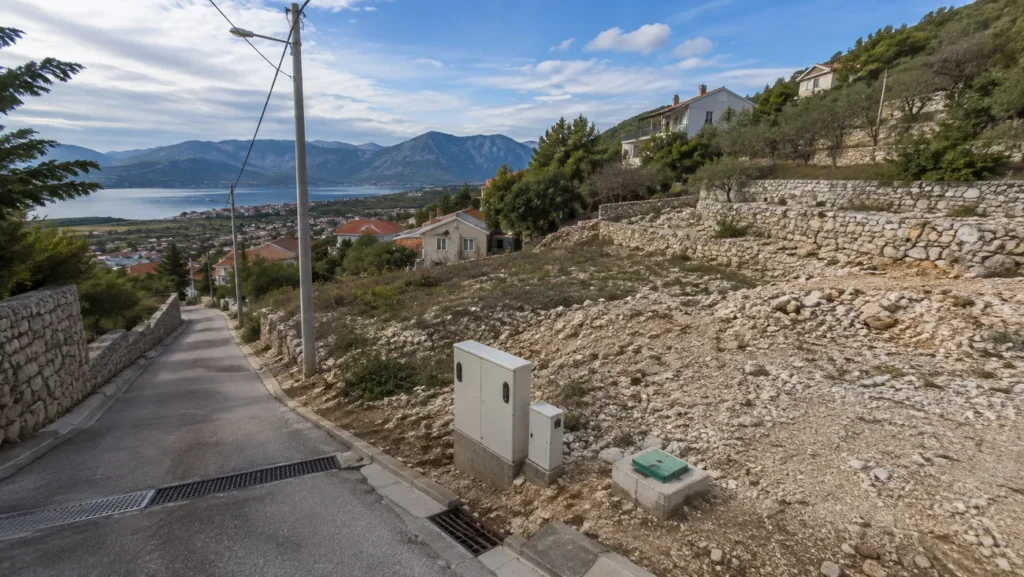
A practical scenario: A buyer identifies a 1,500-square-metre plot with a sea view, priced attractively on a per-square-metre basis. On investigation: the title is to a share in a larger cadastral parcel, not to a discrete plot; the urban plot in the planning document includes the neighbouring parcel owned by a third party; there is no registered easement for road access, only a track that passes over a neighbour’s land; and the urban and technical conditions specify a maximum gross floor area significantly smaller than the buyer had assumed. Each of these issues would have been apparent from a proper review of the List Nepokretnosti, the cadastral plan, the planning document and a licensed surveyor’s report — all of which should be obtained and reviewed before a deposit is paid.
For more detail on avoiding common pitfalls, see mistakes buying property in Montenegro.
Land Purchase and Residence
Buying property in Montenegro — including land — is sometimes discussed in connection with temporary residence, but the relationship is conditional and cannot be summarised as automatic.
Property ownership and temporary residence are governed by separate rules. The result may depend on the registered type and value of the property, the ownership structure and the immigration rules in force when the application is filed. Undeveloped land should not be assumed to qualify in the same way as a completed and registered residential property.
Because this topic is covered separately in Montenegro residence permit by property ownership, buyers should use that guide for the current threshold, valuation rules, required documents and transitional provisions.
General information on temporary residence in Montenegro is published by the Montenegrin government at gov.me/en/article/temporary-residence. This page sets out the categories and general conditions but does not constitute individual immigration advice and may not reflect the most recent legislative changes.
Buyers who purchase land with the expectation that it will support a residence application should take independent immigration advice from a qualified lawyer before committing to a transaction. The rules governing temporary residence have been subject to change, and the outcome of any specific application depends on individual circumstances and current law.
Who Should Buy Land?
Land purchases in Montenegro are not suitable for every buyer. A completed property — either resale or off-plan — may be the more practical choice for buyers who want to control their timeline, costs and outcome with more certainty. The four scenarios below help identify when a land purchase may make sense and what each requires.
Private home or villa. The buyer wants to build a house to their own specification on a plot they own. This is a scenario where land purchases are pursued by foreign buyers with a clear design and construction brief. It requires a plot with an adopted planning document, confirmed building parameters, legal access, utility feasibility and a clear path to a building permit. The planning review, design and permitting process adds time and cost compared to buying a finished property. For an overview of locations by region, see best places to buy property in Montenegro — planning context and infrastructure availability vary considerably between coastal municipalities, central areas and the north.
Small development project. The buyer intends to build two or more units for sale or rental. This adds complexity: planning parameters must support the intended number of units, the sales process involves additional regulatory steps, and the financial analysis requires detailed cost and revenue modelling. Legal and architectural input at the feasibility stage is essential before a price is agreed.
Long-term land investment. The buyer acquires land with the intention of holding it and selling later. This approach involves meaningful uncertainty: planning conditions may not evolve as expected, the land carries holding costs, and resale to another foreign buyer may face the same restrictions as the original purchase. Whether this is a suitable strategy depends on the buyer’s objectives, costs and risk tolerance.
Agricultural, hospitality or rural project. The buyer is considering land for an agricultural, agritourism, eco-lodge or rural hospitality concept. These projects often involve land categories that carry additional restrictions on direct foreign acquisition, specific planning and licensing regimes, and infrastructure challenges that are distinct from residential construction. Legal and planning advice specific to the project type and location is required before any transaction.
In all four scenarios, the question of whether a plot or a completed property is the better choice depends on the buyer’s timeline, budget, tolerance for complexity and access to qualified professional support in Montenegro.
Selected Property Opportunities in Montenegro


 Bar
Bar от 37,5м²
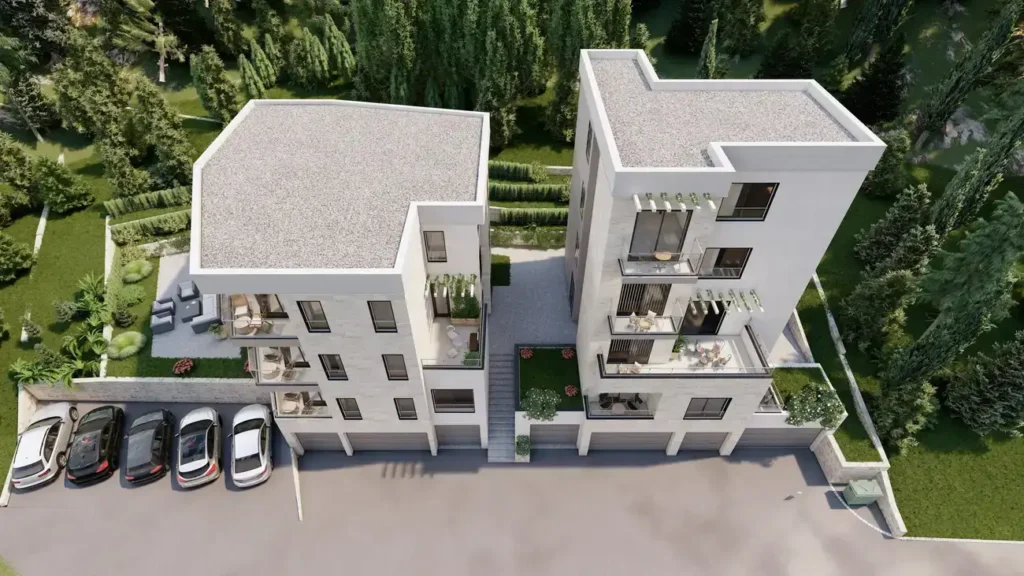 Tivatот 42м²
 Ulcinjот 31.77м²
 Budvaот 38.52м²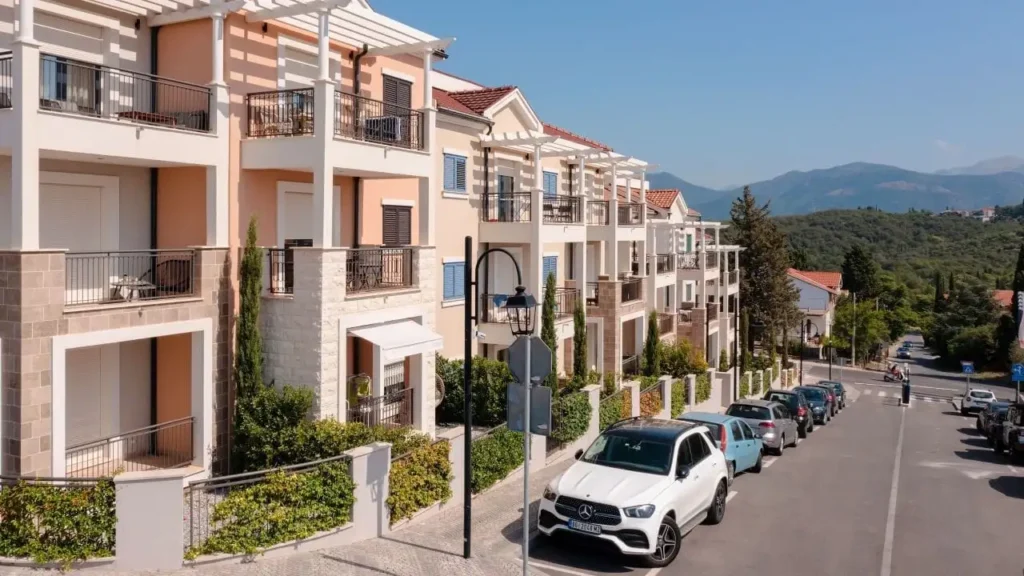
Did not find a suitable option? The public catalogue represents only part of the available market. Send us your preferred municipality, budget, plot size and intended project, and The Residence will prepare a personalised selection. Request a tailored Montenegro property shortlist
Key Takeaways
- Not all land categories are directly available to foreign buyers. Agricultural land, forests and certain other categories require additional analysis and may require a different purchase structure. A statutory exception may allow a foreign individual to acquire up to 5,000 m² of agricultural or forest land together with a residential building located on that land.
- The cadastral classification and the planning designation are separate. A parcel registered in one category in the cadastre may have a different designation in the planning documents. Both must be checked independently.
- Ownership of land does not confirm the right to build on it. Building rights are established by the applicable planning document, and a building permit is required under the framework in force since March 2025.
- Legal road access must be registered, not assumed. A visible track does not create an enforceable right of way.
- An urban plot and a cadastral parcel may not be the same thing. Building parameters apply to the urban plot or planning unit; a buyer may be acquiring only part of it.
- Purchasing through a Montenegrin DOO creates ongoing obligations and does not automatically allow acquisition of any restricted land category or bypass planning restrictions. A written legal opinion is required before proceeding.
- No payment should be made under a reservation or preliminary agreement until ownership, cadastral status, planning designation, access and purchase structure have been reviewed in writing by an independent lawyer.
- Independent legal, planning and technical due diligence is strongly advisable before a buyer makes any binding commitment.
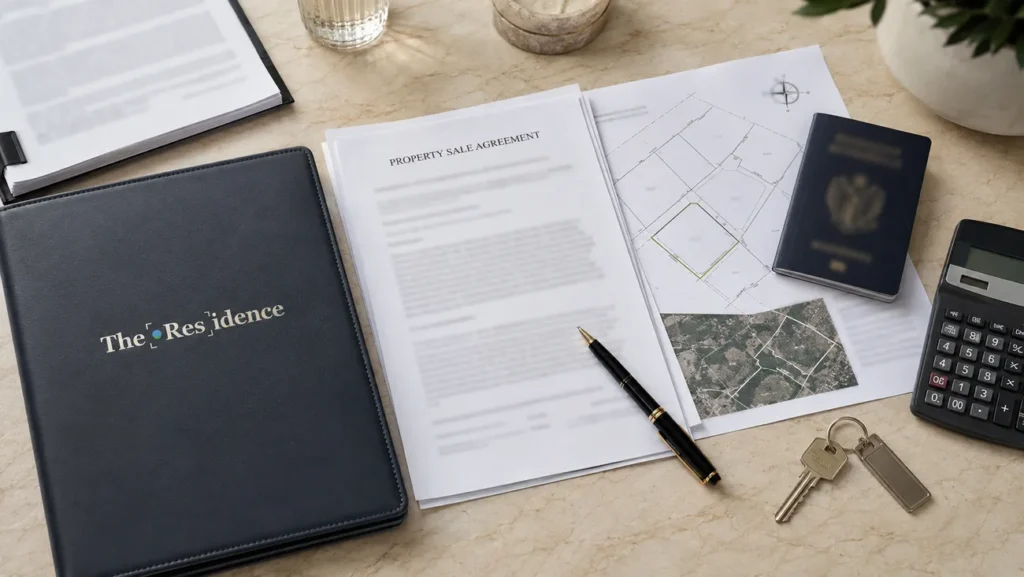
Common Myths About Foreign Land Ownership
| Myth | Reality |
|---|---|
| Foreigners cannot own land in Montenegro | Foreigners may generally acquire eligible construction land, while specific categories are restricted |
| Any plot below 5,000 m² can be bought directly | The 5,000 m² rule is a narrow exception requiring a residential building to be transferred with agricultural or forest land |
| An “urbanised plot” can automatically be built on | Planning designation, urban and technical conditions, access and a building permit must still be confirmed |
| A visible road proves legal access | Access should be established through a public-road status, registered easement or another enforceable legal basis |
| Opening a DOO solves every restriction | Corporate ownership depends on the land category, company structure and applicable legislation |
| Buying land automatically provides residence | Property ownership and temporary residence are separate legal questions |
Final Check Before You Proceed
Do not move forward until you can answer “yes” to each applicable question:
- Is the seller the registered owner or properly authorised representative?
- Can the buyer legally acquire this category of land?
- Does the inspected land match the cadastral parcel?
- Is the List Nepokretnosti current and acceptable to the buyer’s lawyer?
- Is the intended development permitted by the current planning documents?
- Have the urban plot and building parameters been confirmed in writing?
- Is road access public or supported by an enforceable registered right?
- Have utility connection conditions been checked?
- Have slope, soil and site-preparation risks been assessed?
- Is the correct tax treatment — transfer tax or VAT — confirmed?
- Are all additional costs included in the buyer’s budget?
- Does the agreement explain what happens to every advance or kapara if the transaction does not complete?
- Has the buyer received independent legal, planning and technical advice?
Final Guidance
Safe land acquisition in Montenegro begins not with the view, the area or the asking price, but with a structured series of checks: the registered land category and whether foreign acquisition is permitted under the applicable law, the cadastral record, the current planning document, the permitted building parameters, the status of road access, the feasibility of utility connections and the appropriate transaction structure for the buyer’s specific situation.
Each of these checks is independent. A positive result on one does not validate the others. A plot that clears the ownership check may fail on planning. A plot with an adopted planning document may have no registered road access. A plot with acceptable parameters may have a cadastral classification that restricts direct foreign acquisition. A company formed to acquire restricted land may not qualify unless the applicable law expressly permits it. The discipline of checking each question separately — in writing, through qualified professionals — is what distinguishes a purchase that proceeds smoothly from one that stalls or fails after funds have been committed.
A properly verified plot may be suitable for a private home, a development project or a long-term holding strategy, depending on the buyer’s objectives, costs and risk tolerance. That outcome depends on the quality of the due diligence undertaken before commitment, not on the attractiveness of the listing.
The Residence works with foreign buyers at every stage of land identification, screening and professional coordination in Montenegro. If you are considering a plot purchase and want to understand which options are consistent with your intended use and legal position, contact The Residence to begin the process on a properly informed basis.
 Real estate in Georgia
 Real estate in Cyprus
 Real estate in the UAE
 Real estate in Bali
 Real estate in Thailand
 Real estate in Spain
 Real estate in Saudi Arabia
 Real estate in Turkey
 Real estate in Zanzibar
 +382 60 099359
 hello@residence-estate.me
 The Old Bakery Residences, Budva 85310, Montenegro



 Get catalogue of TOP-7 objects