
 +382 60 099359


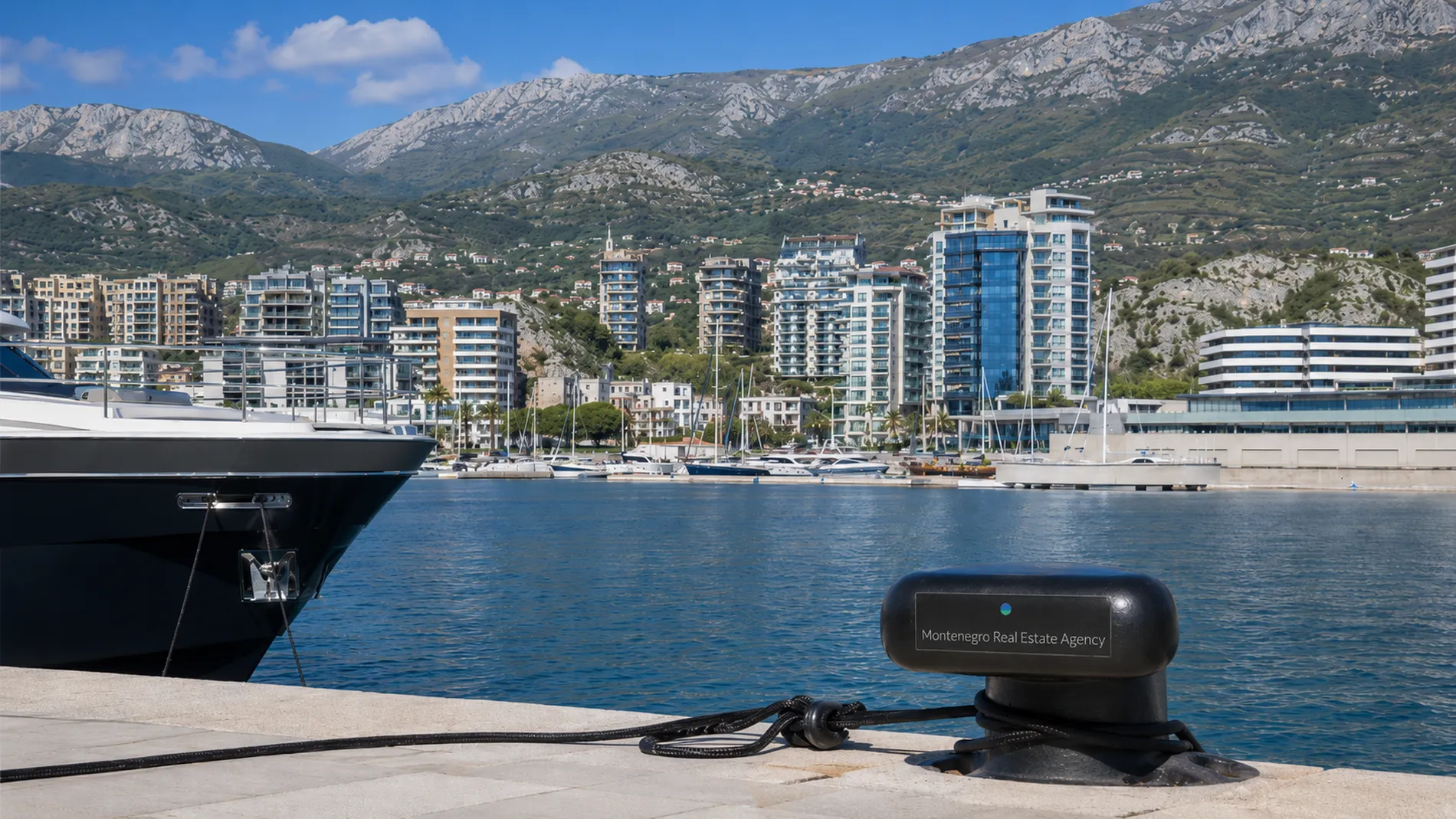
Bar is unlike most Montenegrin cities that buyers typically consider when looking for property. It is not the compact, walled historic center of Kotor, nor is it Budva, with its heavy tourist traffic and nightlife. Bar is a working port city on the southern Adriatic coast, where people live and work year-round, buses and trains run regularly, and shops, hospitals, and schools remain open throughout the year. Tourism seasonality is noticeably less pronounced here than in many other coastal towns in Montenegro.
That is exactly what makes Bar appealing to people who are looking for more than a three-month summer resort and want a genuinely livable seaside city. Bar combines a modern urban center with a waterfront promenade, cafés, and public services, the historic Stari Bar on the slopes of Mount Rumija, and several distinct coastal neighborhoods, each with its own character. Just a few kilometers inland, the landscape begins to transition toward Lake Skadar, one of the largest freshwater lakes in the Balkans.
The Municipality of Bar covers a much larger area than the city itself. It includes Sutomore, Dobra Voda, Utjeha, and a number of other settlements, each with its own lifestyle and practical realities. For anyone looking to buy property here, it is important to understand that a listing described simply as being in “Bar” may refer to very different locations, with significant differences in infrastructure, terrain, beach access, and year-round livability.
This guide is intended for readers who are seriously considering Bar as a place to live permanently, relocate with a family, buy a second home, or invest in property. It is not a tourist-style overview of local attractions, but a practical examination of the city, its neighborhoods, beaches, infrastructure, and real estate market.
Where Bar Is Located and What Sets It Apart
Bar lies on the southern stretch of Montenegro’s Adriatic coast, with Ulcinj roughly 25–30 km away by road. The distance to Tivat varies considerably depending on the route used. Immediately inland, the Rumija mountain range rises to more than 1,500 metres. This landscape strongly shapes the character of the area: some neighbourhoods occupy relatively flat coastal terrain, while others extend onto the slopes, where changes in elevation are much more pronounced.
It is important to distinguish between two terms that are often used interchangeably. The city of Bar is the compact urban area with the town centre, seafront promenade, shops, and key services. The Municipality of Bar is considerably larger than the city itself and includes Sutomore, Čanj, Dobra Voda, Utjeha, Stari Bar, Virpazar, and numerous smaller settlements. When a property listing says “Bar,” it may refer to an apartment five minutes’ walk from the promenade — or to a hillside villa 20 kilometres from the city centre.
The Port of Bar handles freight traffic and has also served seasonal passenger ferry routes to Italian ports. Passenger schedules can change by season and may be affected by operational disruptions, so current sailings should always be checked directly with the operator. The Government of Montenegro describes it as a strategic transport facility whose construction and development took place in several stages from the second half of the 20th century onward. Today, port activity is an integral part of Bar’s identity and one of the clearest differences between the city and predominantly tourism-driven destinations such as Budva or Petrovac. The port provides Bar with an important economic base and year-round employment, but it also gives parts of the waterfront a more industrial character — something worth considering when choosing where to live.
The Bar–Podgorica–Kolašin–Belgrade railway is one of the few active rail links in the region connecting the Adriatic coast with Montenegro’s interior and onward to Serbia. Built through exceptionally difficult mountainous terrain, the line is widely regarded as a major engineering achievement. For residents, it provides an accessible way to reach Podgorica in a little over an hour and, if needed, Belgrade on an overnight train. Bar’s railway station is located in the central part of the city, and its proximity can affect noise levels in some nearby residential areas.
By car, Podgorica is around 40–50 minutes away via the Sozina Tunnel under normal traffic conditions. Budva is typically about 50–65 minutes away, depending on traffic, while Petrovac is roughly half an hour from Bar. Ulcinj, to the south, is usually around 30–40 minutes away. In summer, particularly in July and August, travel times can increase significantly because of heavy tourist traffic on the coastal roads.
The nearest international airports are Podgorica Airport and Tivat Airport. Podgorica is usually the more practical option from Bar, while travel time to Tivat varies considerably depending on the route and summer traffic.
In character, Bar feels like a genuine coastal city rather than a resort destination that “wakes up” in June and “goes quiet” in October. The city centre, shops, public institutions, and transport infrastructure continue to operate normally throughout the year. That is one of the most important differences between Bar and many other settlements along Montenegro’s coast.
Table 1: Bar at a Glance
| Parameter | What You Need to Know |
|---|---|
| City profile | A working port city with full-scale urban infrastructure |
| Suitable for year-round living | Yes — the central parts of the city remain fully active throughout the year |
| Terrain | Mixed: flat coastal neighborhoods combined with steeper slopes closer to the mountains |
| Beaches | Mainly pebble and rocky beaches, with quality varying by location |
| Transport | Bus services, rail connections on the Bar–Podgorica–Belgrade route, and seasonal ferry services when operating |
| Main areas | Centar, Topolica, Ilino, Šušanj, Stari Bar, Sutomore, Dobra Voda, Utjeha |
| Tourism seasonality | Noticeable in summer, but generally less intense than in Budva or Petrovac |
| Main property types | Apartments in residential buildings, new developments, houses, hillside villas, and land plots |
City of Bar vs. Municipality of Bar
One distinction matters throughout this guide: “Bar” can mean either the city itself or the much larger municipality. Centar, Topolica, Ilino, Šušanj, and Bjeliši form part of the urban area around the city, while Sutomore, Čanj, Dobra Voda, Utjeha, Stari Bar, and Virpazar offer very different living environments. This distinction affects everything from walking access and schools to beach use, transport, utilities, and the type of property available. When comparing listings, always check the exact settlement and address rather than relying on “Bar” in the headline.
Bar Neighborhoods: Where to Live and Buy
When real estate agencies list a property simply as being in “Bar,” that label can refer to very different locations and very different types of housing. The advertised distance to the sea is only one factor, and often not the most important one. The actual walking route, elevation changes, the condition of the access road, noise from the railway or port, and whether there is a grocery store within 500 meters can all have a much greater impact on everyday comfort and a property’s resale appeal than an attractive distance figure in a listing.
Centar and Topolica
The city center and the adjoining Topolica district are what most people picture when they think of urban living by the sea. The terrain is largely flat, making everyday walking relatively easy and comfortable. Shops, pharmacies, banks, cafés, restaurants, and the waterfront promenade are all close by. Government offices, the hospital, and schools can also be reached without relying on a car.
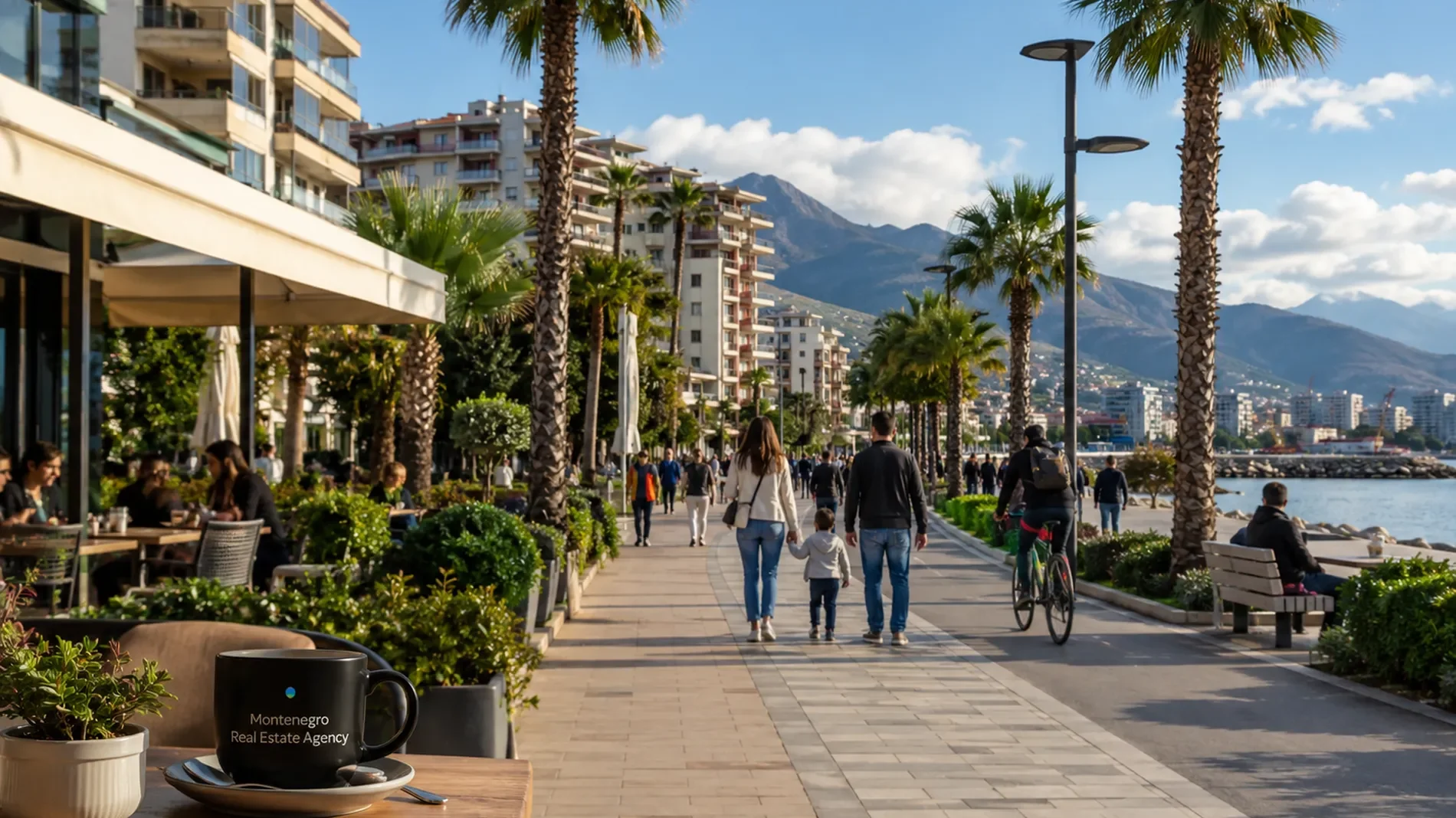
Bar’s waterfront promenade, the city’s main walking and leisure area, runs through these districts. It is lively in summer, but generally less chaotic than the busiest beach areas of Budva. In winter, city life continues at a calmer pace: restaurants and cafés remain open, buses continue to operate, and shops function year-round.
The typical housing stock consists of apartments in multi-unit buildings of different ages, ranging from older Yugoslav-era blocks to modern residential developments. For buyers planning to live in Bar permanently and looking for the greatest degree of urban convenience, Centar and Topolica are among the most logical choices. For buyers considering long-term rental, Centar and Topolica are worth evaluating because their shops, services, schools, transport, and other urban infrastructure operate throughout the year rather than only during the tourist season.
Ilino and Šušanj
Šušanj lies northwest of the city center and forms a transition between denser urban development and a more residential coastal environment. The area is best known for Žukotrlica Beach, a well-established local beach area in Šušanj.
The lower part of Šušanj is relatively flat and offers good pedestrian access to the beach. Higher up, the terrain gradually climbs the hillside, creating a situation typical of Montenegro’s coastal slopes: the view from a balcony may be excellent, while the actual route to the sea may involve stairs and significant elevation changes. Before choosing an apartment in the upper part of the district, it is worth walking the route yourself rather than judging it from a map.
The railway runs through Šušanj, which affects noise levels for some properties located close to the tracks. This does not make the area undesirable, but it is something that should be checked for each individual property. Parking is generally easier in the lower part of the district, while in the upper areas it depends heavily on the specific street and building.
Šušanj attracts both permanent residents and summer renters, with its proximity to the beach supporting tourist demand. Ilino adjoins Šušanj and has a broadly similar character: a mix of residential areas of varying density, with good access to the sea in the lower sections.
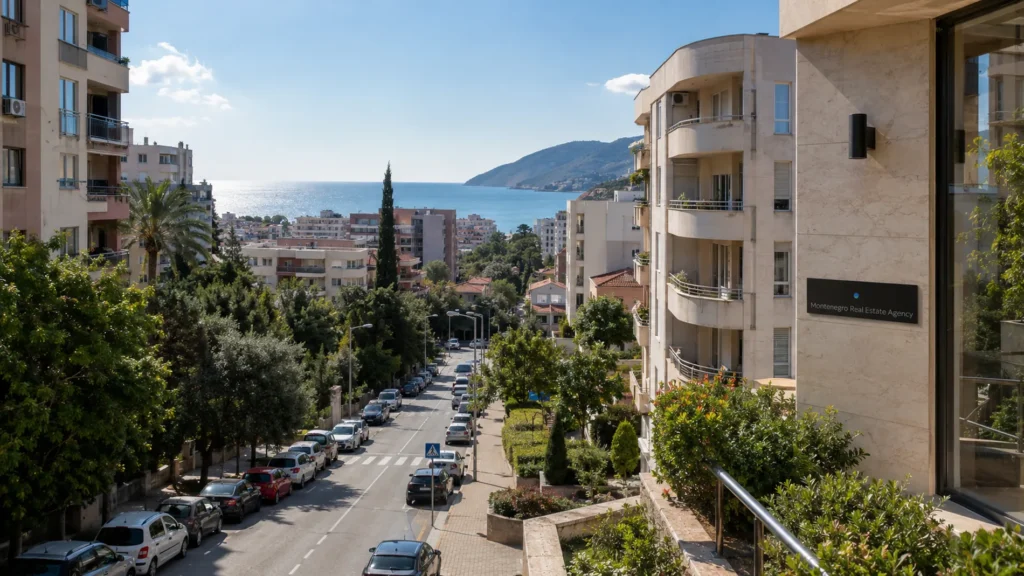
Bjeliši and Polje
These neighborhoods are located somewhat farther from the first coastal line and have a more everyday residential character. There is less tourist activity and more ordinary city life, with detached houses, small plots, and quieter streets.
Living without a car is noticeably less convenient here than in Centar. For buyers looking for a house with land while remaining within the wider urban area of Bar, Bjeliši and Polje can be worth considering, particularly when a car is already part of the plan. Their quieter residential character may appeal to families who do not need to live within walking distance of the waterfront and are comfortable relying on a car.
Stari Bar
Old Bar is not merely a historic district but a place with a distinct urban identity. The medieval fortified town on the slopes of Mount Rumija was heavily damaged during the 1979 earthquake and remains largely preserved as a protected historic site. Alongside the ruins is a living settlement with local residents, shops, and restaurants.
Stari Bar lies roughly 4–5 km from the coast. For someone whose priority is living close to the sea and being able to walk to the beach, that is a significant limitation. For buyers seeking a quieter historic atmosphere, traditional stone houses, or building plots among olive groves, however, the area may be exactly what they are looking for.
Property here requires particular attention to legal and planning status. Some buildings may be subject to heritage or conservation restrictions that affect renovation and reconstruction possibilities. Before purchasing in Stari Bar, buyers should carefully verify the relevant documentation with the Municipality of Bar’s Secretariat for Urban Planning and Spatial Planning.
Sutomore
Sutomore is a separate resort settlement in the northern part of the Municipality of Bar, around 10 km from the city center. It has its own railway station, a broad beach, shops, and restaurants. In summer, it attracts a large number of visitors, particularly from the countries of the former Yugoslavia, and operates under heavy seasonal pressure: more noise, dense traffic, and parking difficulties.
In winter, Sutomore feels completely different. Many businesses close, activity drops sharply, and the permanent population is relatively small. IIt is a classic seasonal-resort pattern: visitor activity is concentrated much more heavily in summer, while year-round life is quieter and more limited. Buyers considering permanent residence should visit in November or February as well as in summer, to see what the settlement is actually like outside the tourist season.
For buyers considering short-term tourist rental, Sutomore is primarily a summer-oriented location. Any rental calculation should therefore be based on the specific property, realistic seasonal occupancy assumptions, management costs, pricing, and competing listings rather than on the reputation of the area alone.


 Budva
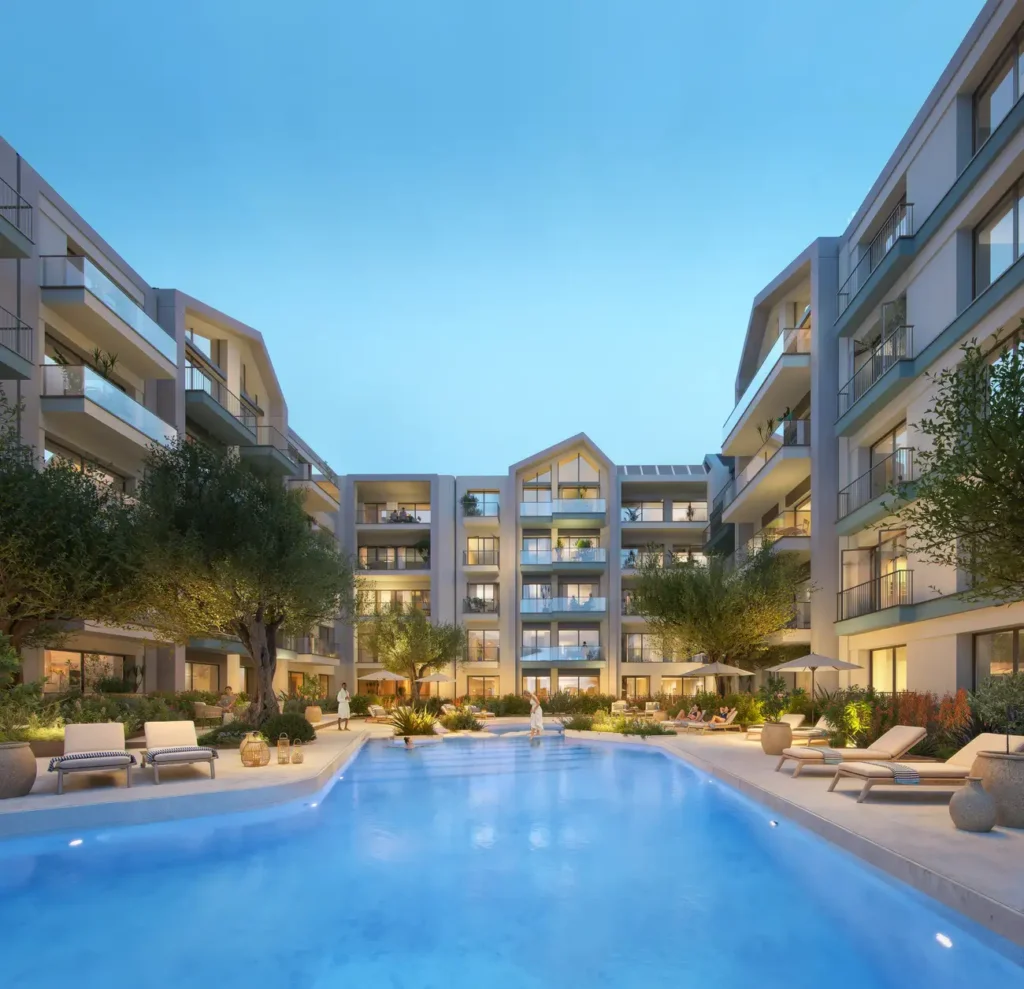
Budva от 37.9м²
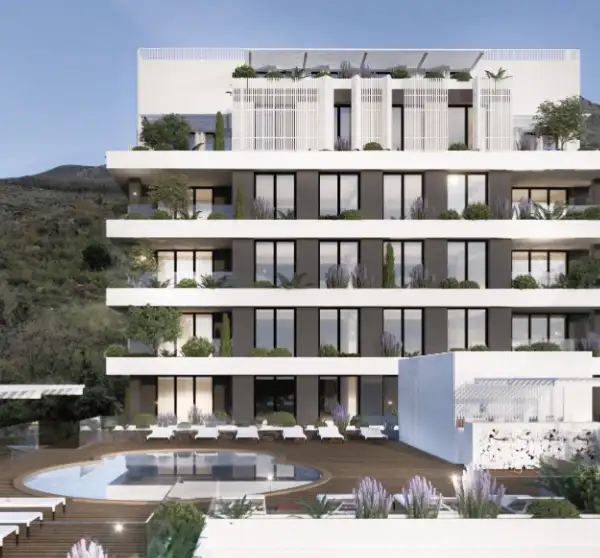
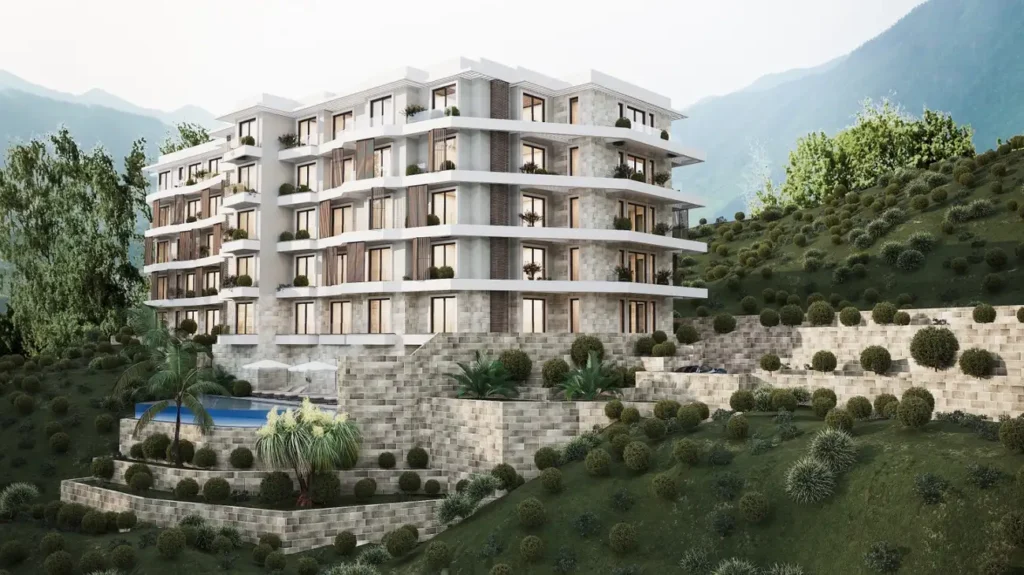 Budvaот 50,69м²
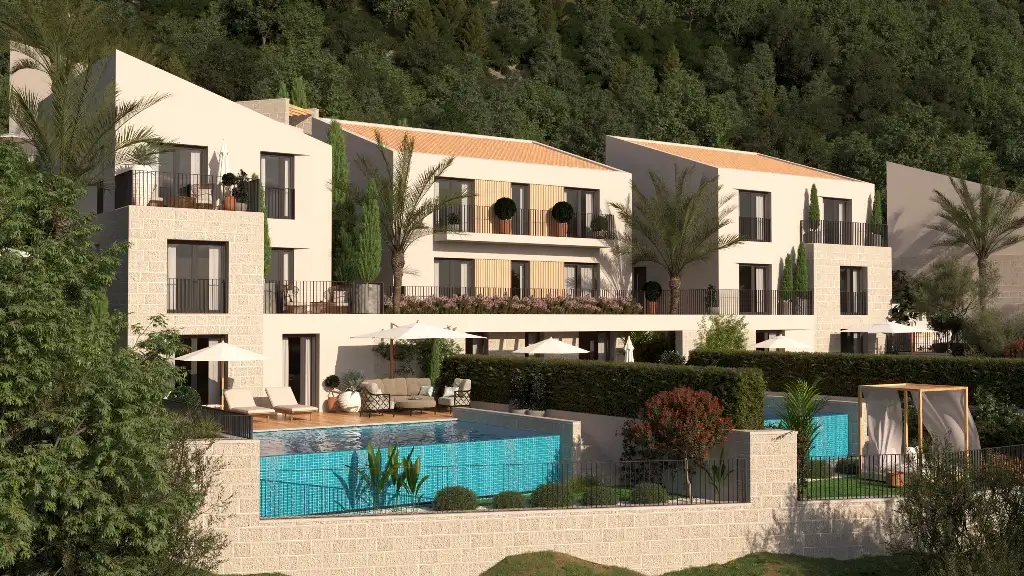 Budvaот 261.69м²
Dobra Voda and Utjeha
These two settlements lie southeast of central Bar and are characterized by pronounced hillside terrain and extensive sea views. This is where buyers often find villas and apartments with panoramic terraces that photograph particularly well.
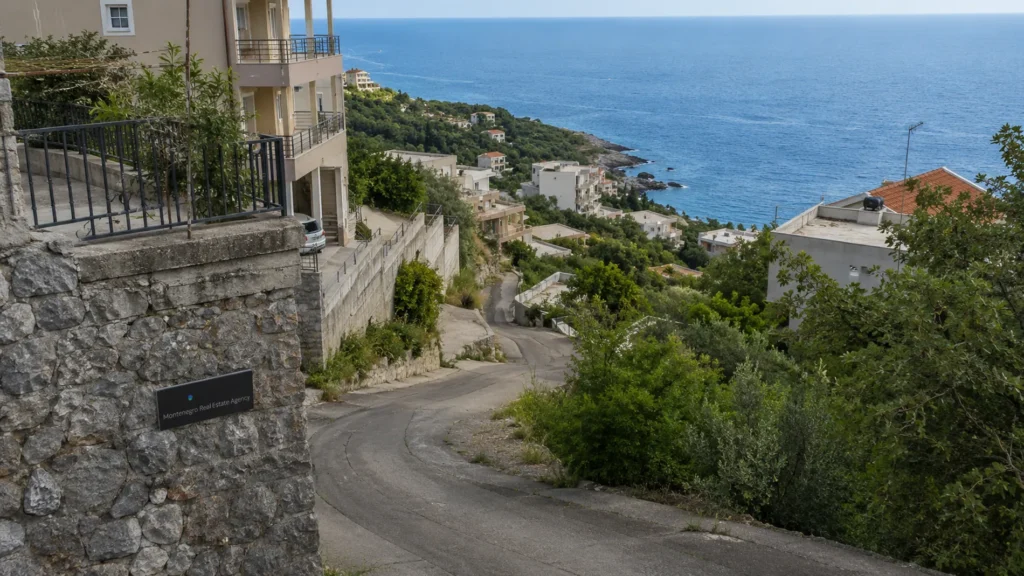
The distinction between “sea view” and “walkable access to the sea” is especially important here. From some properties, reaching the nearest beach on foot may be impractical or impossible, making a car necessary even for short trips. Access roads to individual villas can be steep, narrow, or in poor condition. In these areas, a car is not simply convenient; for many properties, it is essential.
When choosing property in Dobra Voda or Utjeha, buyers should separately verify the condition and legal status of the access road, including whether it is public, private, shared, or unregistered; the water supply system, whether centralized or based on a well or storage tank; wastewater arrangements, whether centralized or septic; hillside drainage; and the condition of retaining walls. The engineering setup should therefore be verified for each individual property rather than inferred from neighboring buildings or from the area as a whole.
Foreign buyers considering land in these areas should also review the current rules governing foreign ownership of land in Montenegro.
Table 2: Which Bar Neighborhood Should You Choose?
| Area | Best suited for | Terrain | Infrastructure | Car | Typical property | What to check |
|---|---|---|---|---|---|---|
| Centar | Permanent living, long-term rental | Flat | High | Not essential | Apartments, new developments | Noise from the port and railway |
| Topolica | Families, permanent living | Flat | High | Not essential | Apartments, houses | Proximity to everyday infrastructure |
| Ilino / Šušanj | Beach lifestyle, summer rental | Mixed | Medium–high | Recommended | Apartments, houses | Railway noise, actual walking route to the sea |
| Bjeliši / Polje | Houses with land | Mixed | Medium | Needed | Houses, plots | Distance from the beach |
| Stari Bar | Atmosphere, peace, history | Hillside | Low | Needed | Old houses, plots | Heritage status, documentation |
| Sutomore | Summer tourist rental | Mostly flat | Medium, seasonal | Recommended | Apartments, holiday units | Winter conditions, summer noise |
| Dobra Voda / Utjeha | Sea views, privacy, villas | Steep hillside | Low | Essential | Villas, apartments, plots | Road access, water, sewage, drainage |
After the table, a few practical guidelines are useful:
For year-round living, Centar and Topolica provide the strongest access to everyday infrastructure without making residents heavily dependent on a car.
For families with children, Centar, Topolica, and the lower part of Šušanj are generally the most practical options, depending on the location of schools and kindergartens.
For summer use and short-term rentals, Šušanj, Sutomore, and the lower parts of Dobra Voda are among the most relevant areas to consider.
For long-term rental scenarios, Centar and Topolica are worth evaluating because demand there is less directly tied to the summer beach season, while Šušanj combines permanent residential use with seasonal activity.
For buyers looking for a house with land, Bjeliši, Polje, Stari Bar, and Dobra Voda are worth considering, provided the utilities and technical infrastructure are checked carefully.
For buyers prioritizing an apartment with practical access to the sea while remaining close to city infrastructure, lower Šušanj and Topolica are two areas worth comparing.
For properties with panoramic sea views, Dobra Voda and Utjeha stand out, but only after careful inspection of road access and utility connections.
If you are choosing property in Bar and still comparing neighborhoods, property types, and purchase scenarios, complete our short property-matching questionnaire. Indicate your goals, key requirements, and budget, and we can help narrow the search to options that better match your situation.
Bar’s Beaches and Coastline
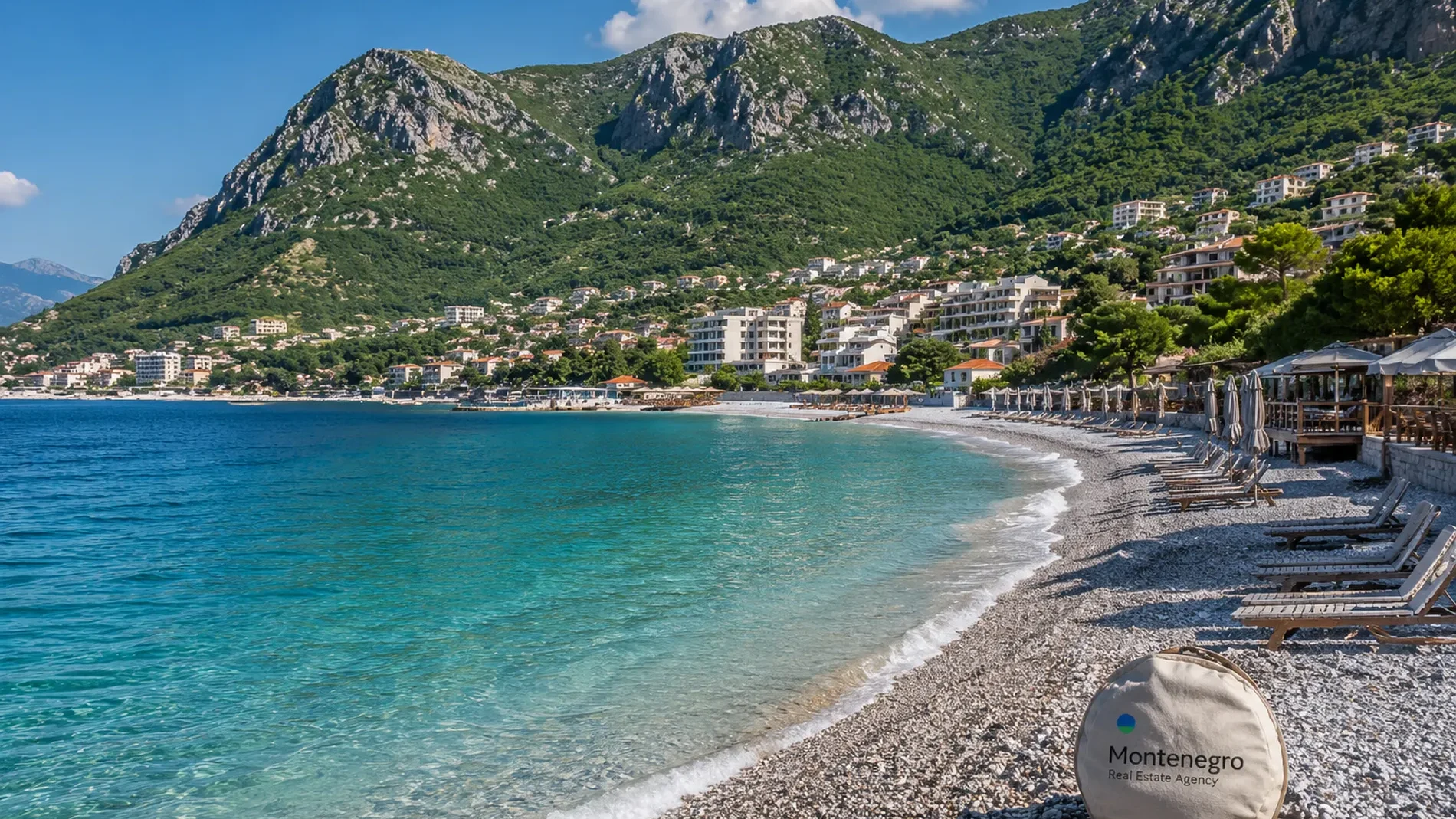
Bar’s beaches are not the city’s strongest tourist asset, and it is worth being honest about that. There are no long sandy beaches in the city itself. Most stretches of coastline are pebbly or rocky, with varying levels of facilities and maintenance.
The city waterfront in the Centar area includes a promenade and several equipped swimming spots. It is convenient and easily accessible on foot from the center, although it can get busy at the height of summer. Beach facilities largely shut down in winter, but the waterfront remains popular for walks year-round.
Topolica has another beach area close to the residential district of the same name. It is relatively quiet and easy to reach on foot from nearby neighborhoods.
Žukotrlica in Šušanj is a well-established local beach area with cafés and basic amenities nearby and relatively straightforward access from the lower part of the neighborhood.
Sutomore has one of the widest beaches in the municipality and attracts a large number of visitors in summer. Access from the residential part of the town is generally convenient, with many properties located within walking distance of the beach.
Čanj is a smaller coastal settlement north of Bar with its own beach and a more limited range of local services than larger resort areas such as Sutomore.
Veliki Pijesak in the Dobra Voda area is one of the municipality’s relatively sandier beach zones. From many properties in Dobra Voda, reaching it may involve either driving or walking down a steep slope, which once again highlights the importance of checking the actual route rather than relying only on map distance.
Utjeha has a pebble-and-rock coastal setting with relatively limited local infrastructure, particularly outside the main summer season
When buying property in Bar, the advertised distance to the sea matters less than the actual walking route, elevation change, road access, and infrastructure around the specific building.
What to Check If Living Near the Beach Matters
- The actual walking route: walk it yourself rather than relying on a map. Five hundred meters on level ground is very different from five hundred meters down a steep slope with stairs.
- Elevation change: in hilly areas, a significant gradient can have a major impact on daily comfort, especially for families with children or older residents.
- Railway tracks: check whether the route to the beach crosses the railway line and how the crossing is organized.
- Beach parking: this matters if you plan to drive; parking can become difficult in July and August.
- High-season noise: settlements with active summer rentals can become noticeably louder. A July night and a November evening in the same location can feel completely different.
- Winter opening hours: In Dobra Voda and Utjeha, many tourism-oriented cafés and restaurants reduce their hours or close outside the main summer season. Central Bar remains considerably more active year-round.
- Access to the water: check whether there is a proper swimming entry point or only a rocky shoreline.
Infrastructure and Everyday Life
This is the kind of section tourist guides rarely cover, yet it is often the first thing people considering a move want to understand.
Healthcare
Bar has a public hospital, Opšta bolnica Bar, which serves both local residents and patients from the surrounding area. It provides core medical specialties including surgery, internal medicine, obstetrics, pediatrics, and trauma care. For more complex cases or highly specialized treatment, people in Montenegro often travel to Podgorica, where the Clinical Centre of Montenegro is located.
Bar also has private medical practices and diagnostic centers. Specific providers and specialties change over time, so anyone planning a move should check the current options through local sources or municipal information rather than relying on outdated lists. For people with chronic conditions or those who require regular specialist care, it is worth researching healthcare access in advance. This can easily be done while you are still comparing neighborhoods and properties.
Schools and Kindergartens
Public kindergartens and primary schools in Bar teach in Montenegrin. For families planning a long-term move, the language of instruction should be considered in advance, particularly when choosing a school and planning the child’s transition
The Municipality of Bar’s current education listings do not include a full international school in the city. Families seeking an international curriculum should check current options in Montenegro directly with schools before choosing where to live, as programs and campuses can change. Families for whom international education is essential therefore need to think carefully about the logistics in advance: daily commuting, boarding options, or possibly choosing another city as a permanent base.
Shops and Everyday Services
Central Bar is well supplied with the basic retail and service infrastructure needed for everyday life. There are several supermarkets operated by major Montenegrin chains, local grocery stores, a market selling seasonal fruit and vegetables, pharmacies, bank branches, and ATMs. Everyday services such as tailoring, shoe repair, locksmiths, and building-supply stores are also widely available.
Cafés and restaurants in the central part of the city operate year-round, although the choice and opening hours expand noticeably in summer. The fish market is a familiar part of local food culture. For major shopping trips or more specialized purchases, residents often turn to Podgorica, where larger shopping centers and a much broader retail selection are available within roughly an hour’s drive.
Internet and Remote Work
Montenegro has relatively well-developed fiber-optic internet infrastructure in urban areas, and Bar is no exception. Central neighborhoods are generally well covered by providers offering high-speed connections.
That said, remote workers should always check the exact address, provider, and type of connection available, rather than relying on general claims about internet quality. Hillside neighborhoods, outlying settlements, and individual houses in elevated areas can have very different connectivity, with mobile internet sometimes being the only practical option. This should be verified before signing a rental agreement or completing a property purchase.
Sports and an Active Lifestyle
Bar’s waterfront promenade is well suited to everyday walking and running. The mountains surrounding the city provide good opportunities for hiking, with Mount Rumija offering views over the Adriatic coast and Lake Skadar and remaining a popular route among local hikers.
Lake Skadar, roughly 35–40 km from Bar via Virpazar, is a destination in its own right, known for boat trips, fishing, and distinctive natural scenery.
The city also has several gyms, sports grounds, and tennis courts. Seasonal coastal activities include swimming, kayaking, and sailing. In winter, outdoor activity tends to shift away from the beach and toward indoor sports or the surrounding mountains.
Winter vs. Summer
This is a distinction worth understanding before choosing both a neighborhood and a type of property.
Central Bar feels noticeably livelier in summer: there are more people, more traffic, and more places stay open late. Even so, it is not comparable to the peak-season intensity of Budva or Kotor. In winter, the city settles into a slower, everyday rhythm, with quieter roads, a peaceful promenade, and cafés still serving a largely local clientele.
The resort settlements within Bar Municipality, including Sutomore, Utjeha, and parts of Dobra Voda, change much more dramatically with the seasons. In summer they are busy and active; in winter many businesses close, streets become much quieter, and day-to-day life is far more dependent on having a car and being comfortable with a more self-sufficient lifestyle.
Anyone who first sees Sutomore in August and decides to buy there should ideally return in December before signing a contract.
Transport and Living Without a Car
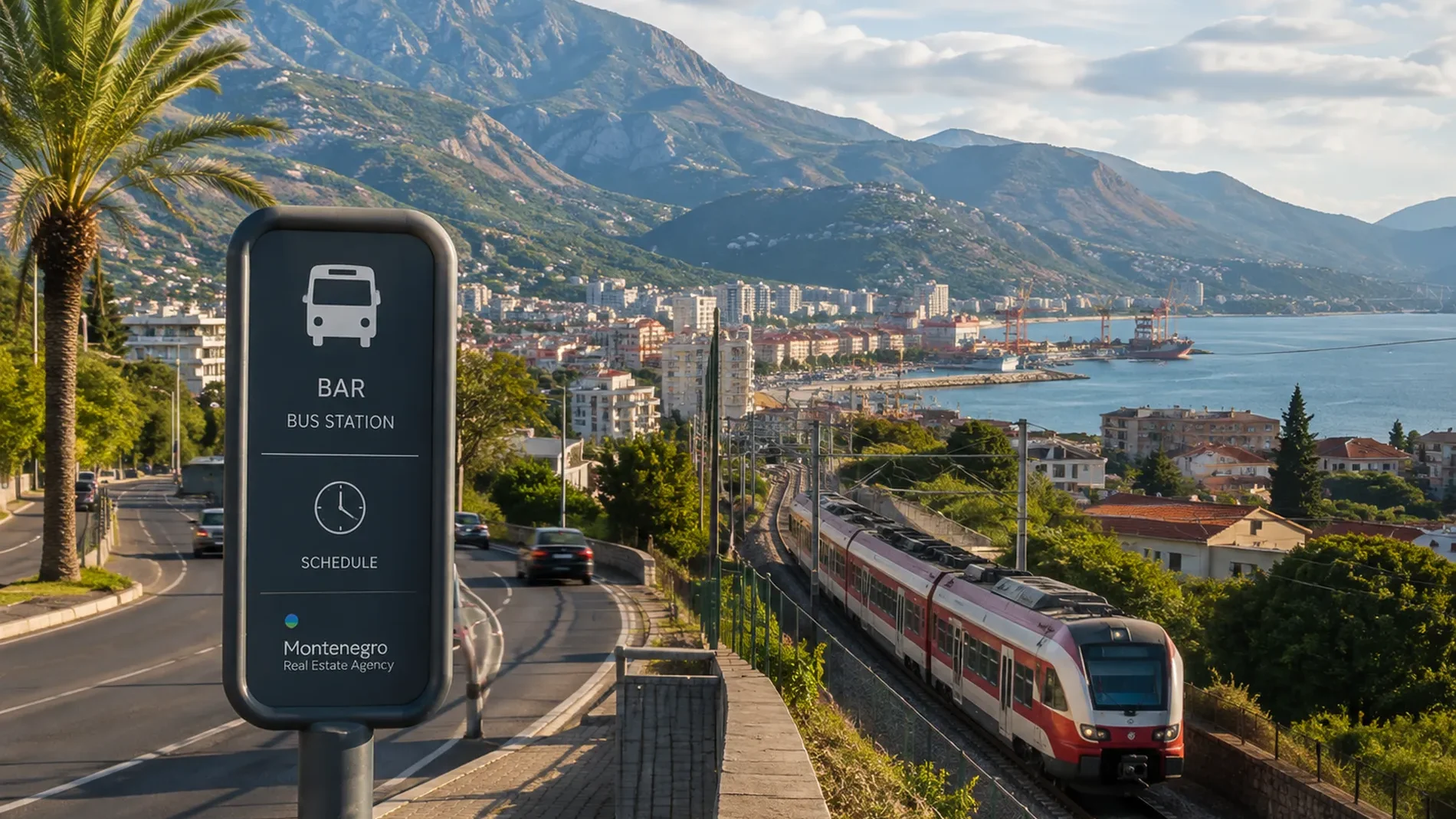
Bar is one of the few coastal cities in Montenegro where public transport remains genuinely functional outside the tourist season. It is not a major metropolitan area with a metro system, but neither is it a place where everyday life is completely dependent on owning a car.
Local bus routes connect the main residential neighborhoods with the city center. Timetables are available, although they may not always suit people with irregular working hours. For travel along the coast and beyond, regular intercity buses operate on routes such as Bar–Petrovac, Bar–Budva, Bar–Podgorica, and onward to other destinations.
Bar railway station is the terminus of the line running through Podgorica, Kolašin, and farther north toward Belgrade. Trains between Bar and Podgorica operate several times a day. Depending on the service, the scheduled journey is typically around one hour, so rail can be a practical alternative to driving for some trips to the capital. This makes rail a practical option for regular trips to the capital. The direct Bar–Belgrade service is used more for longer-distance travel than for routine commuting.
Seasonal passenger ferry services have connected Bar with Italian ports, but routes, operators, and sailing dates can change and services may be disrupted. Anyone planning to use the ferry should check the current timetable directly with the operator before making travel arrangements.
Bar itself does not have an airport. Podgorica Airport is the closest option for most year-round international travel. Tivat Airport offers a much broader range of direct destinations, although mainly during the summer season. The drive to Tivat typically takes around 80–100 minutes and can be considerably longer during the peak months.
Taxis are widely available in Bar, including through mobile apps. Taxis are available in Bar, but fares depend on the operator, distance, time, and destination. For regular trips to hillside or outlying areas, buyers should factor transport into their everyday routine rather than assume taxi use will always be convenient. Trips to outlying areas and hillside neighborhoods are naturally more expensive.
Summer traffic congestion is a genuine factor when planning journey times. The coastal road can become heavily congested in July and August, particularly around the Sozina Tunnel and on sections between Petrovac and Budva.
The differences between neighborhoods are fairly clear:
Relatively convenient without a car: the central districts of Centar and Topolica, as well as the lower part of Šušanj, where shops, bus stops, and the seafront are within comfortable walking distance.
A car becomes much more useful: the upper parts of the hilly neighborhoods, Stari Bar, Dobra Voda, Utjeha, more remote locations, and properties situated away from the main urban bus routes.
This is not an absolute rule. The reality depends on the exact address, public transport timetable, and your lifestyle. Still, when choosing a home in Bar, it is worth deciding in advance how comfortable you are with relying on a car and selecting the neighborhood accordingly.
Lifestyle in Bar
Bar moves at a pace that does not fit neatly into standard tourist clichés. It is neither a “picturesque seaside village” nor a “loud resort town.” It is a functioning city with a strong coastal character.
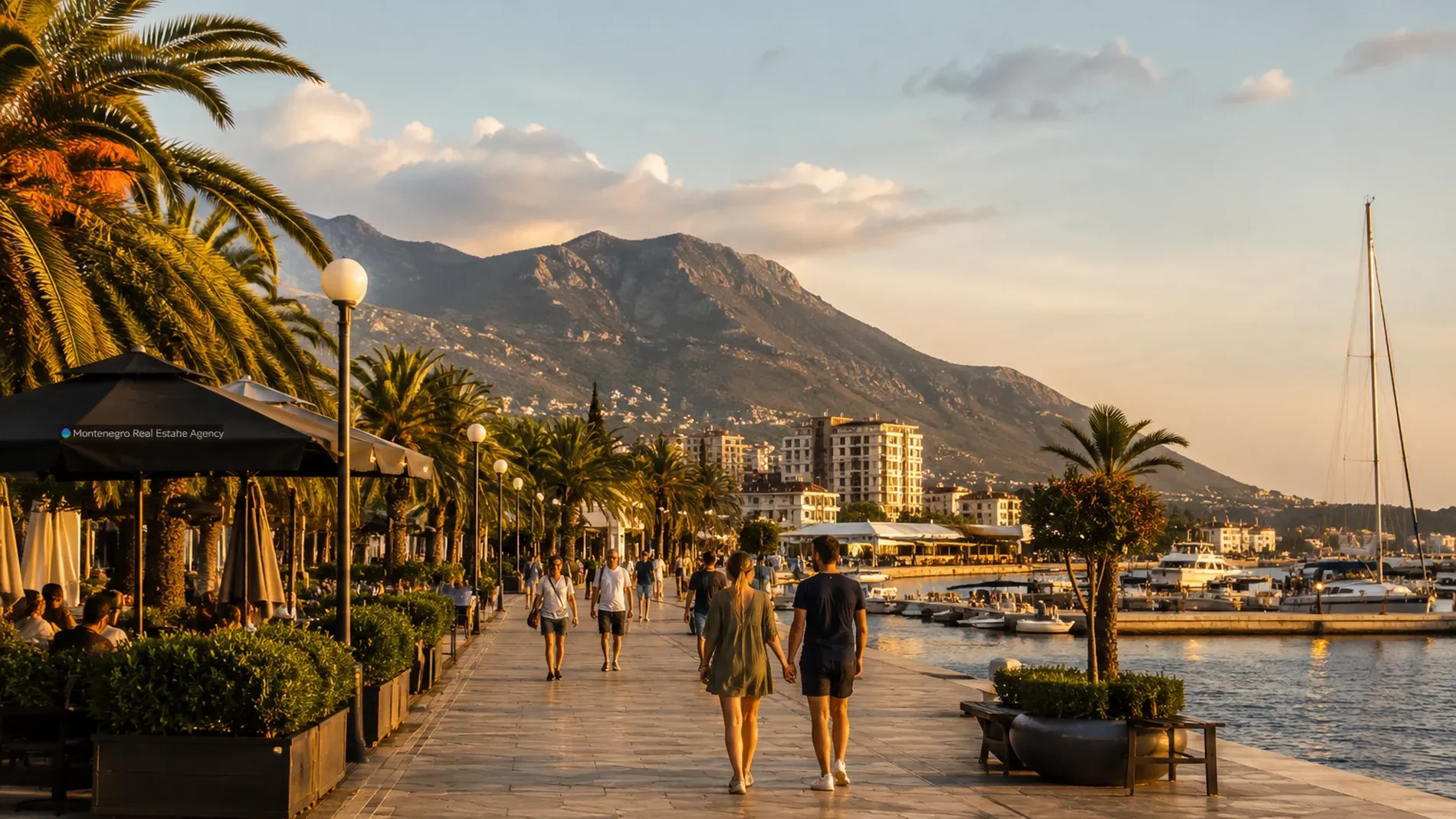
In the morning, locals stop for coffee along the waterfront or in the city center. During the day, shops, public offices, businesses, and the port are all active. In the evening, the promenade becomes livelier, especially in summer, but it never turns into an open-air nightclub. Bar does have nightlife, but it is not what defines the city.
For year-round residents, Bar’s main practical advantage is that everyday life is not built exclusively around tourism. Shops, healthcare, schools, public services, transport, cafés, and other city infrastructure continue operating outside the summer season. The experience still varies by neighborhood: central Bar is considerably more urban and walkable, while hillside and outlying areas require more planning around transport and local services.
What to See and Do
Bar does not position itself as one of Montenegro’s headline tourist centers, and in some ways that works in its favor. It does not have to perform as a resort town. The list of major attractions is not especially long, but the places that do stand out are genuinely distinctive.
Stari Bar is the municipality’s main historic landmark. Stari Bar is a historic fortified settlement on the slopes of Mount Rumija, with layers of architecture reflecting centuries of different rulers and periods. The old fortified core was gradually depopulated and suffered additional damage during the 1979 Montenegro earthquake; today it functions primarily as a protected historic and archaeological complex.Today, it is a protected ruin complex with several restored sections, a small museum, and viewpoints overlooking the surrounding area. Admission is paid, and most visits take between one and two hours, depending on pace and interest.
Stara Maslina, the Old Olive Tree in the Mirovica area, is considered one of the oldest olive trees in Europe. Estimates of its age vary, but even conservative assessments place it at several centuries old. It is a small attraction in terms of scale, yet impressive precisely because of its natural presence and longevity.
King Nikola’s Palace in central Bar was once the summer residence of Montenegro’s last monarch and now operates as a museum. Its exhibitions focus on the history of the Montenegrin royal period. The palace stands next to a city park, one of the most pleasant places for a walk in central Bar.
The waterfront and port are not tourist attractions in the conventional sense, but they are central to Bar’s identity. Ferries, cargo ships, fishermen, waterfront cafés, and the working port all form part of the city’s everyday character.
Mount Rumija offers hiking routes that climb to elevations of more than 1,500 meters. There is a church near the summit, and in clear weather the views extend toward both the Adriatic Sea and Lake Skadar.
Lake Skadar and Virpazar are roughly 35–40 kilometers from central Bar. The lake is part of a national park and is home to pelicans and many other species of waterfowl. Visitors can take boat trips, eat at local fish restaurants, and spend a full day outside the city without having to travel far. For Bar residents, it is a practical day-trip option from Bar.
Real Estate in Bar
Bar’s real estate market is structured differently from those of Kotor or Tivat. There is no single dominant segment comparable to Porto Montenegro and its ultra-premium positioning. Instead, the market offers a broad mix of properties across different price points, ages, conditions, and neighborhoods, each with very different characteristics.
Property Types
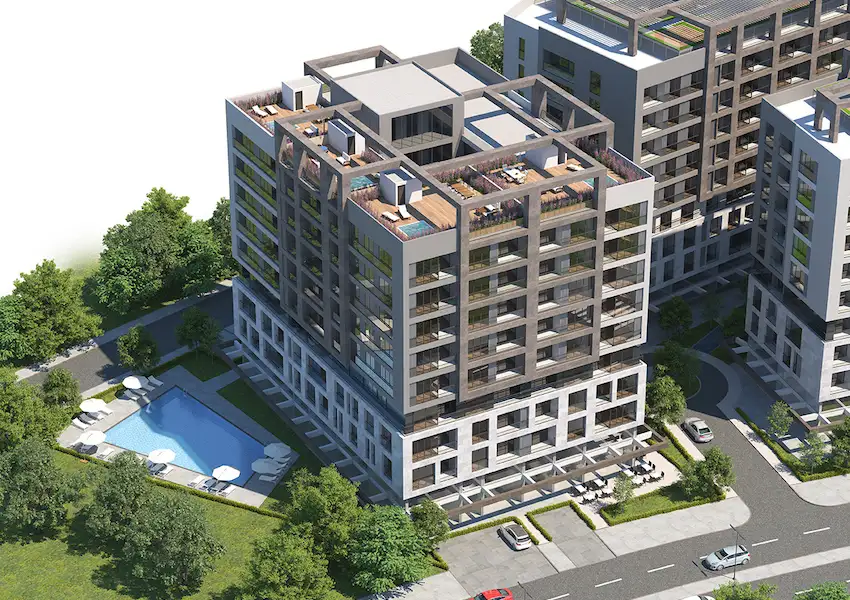
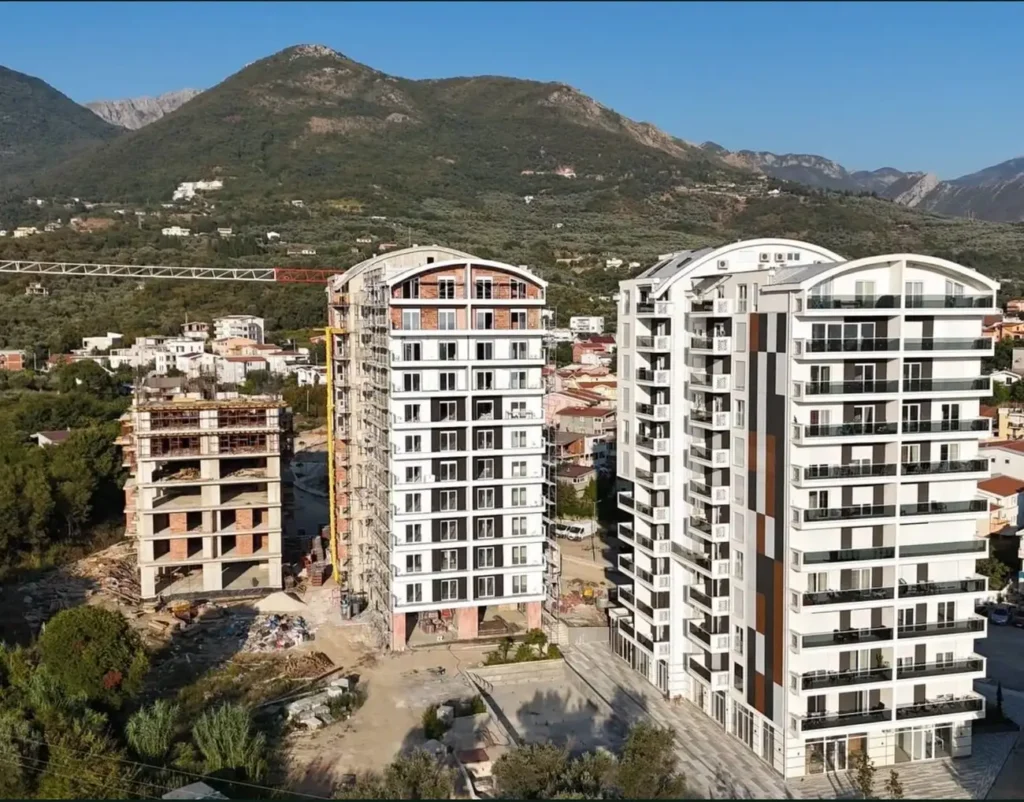
Bar’s property market includes apartments in multi-unit buildings, newer residential developments, resale units, detached houses, villas, and building plots. Studios and small apartments are a common entry point for rental investment or for buyers looking for an affordable home by the sea. One- and two-bedroom apartments are widely represented and can suit both year-round living and rental use, depending on location and building quality. New developments have appeared in several areas in recent years, including Centar, Topolica, and parts of the coastal zone. Resale apartments account for a significant share of available stock, with quality and condition varying widely. Houses and villas range from modest homes in Bjeliši to panoramic properties in Dobra Voda and Utjeha. Building plots are also available, with varying legal status and different levels of readiness for development.
You can browse current listings in the World Estate Homes Bar apartment catalogue.
 Barот 37,5м²
 Barот 30.95м²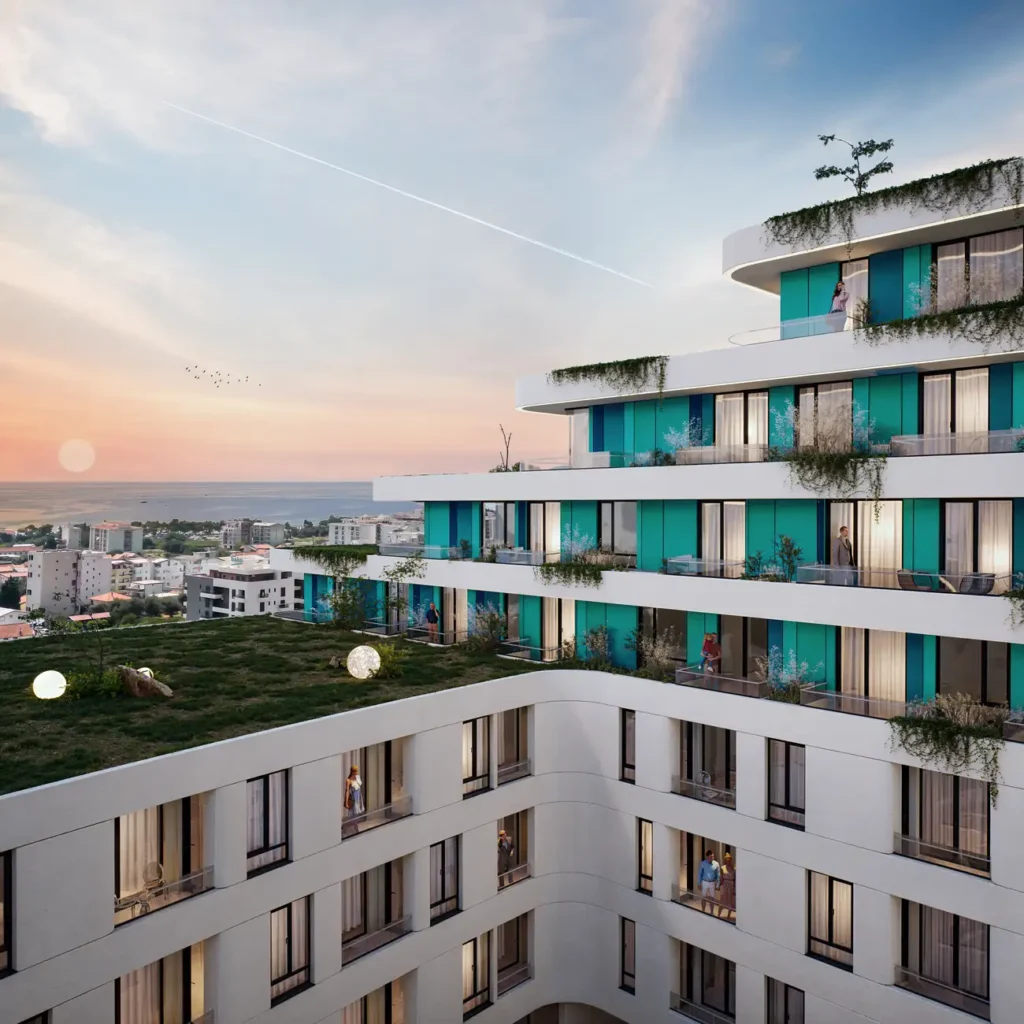
What Affects Property Prices
The price of a particular property in Bar is determined by a combination of factors, each of which can materially affect the final figure:
- Neighborhood and overall character — Location within the city — central addresses and properties close to the waterfront may be priced differently from more remote areas, but the size of any premium depends on the specific property and current market.
- Distance from the sea and the actual walking route — the figure shown on a map matters less than whether the route is genuinely convenient and free from steep elevation changes.
- Sea views — a view can influence buyer appeal and asking price, particularly in hillside locations, but it should be considered alongside access, floor level, parking, and building quality.
- Floor level and lift access —the importance of floor level depends heavily on whether the building has a lift, the quality of the view, accessibility, and the preferences of the target buyer.
- Parking — dedicated parking can be an important practical advantage in central and coastal neighborhoods, especially during the summer season.
- Construction quality and year built — newer buildings with modern utilities and older housing stock can differ considerably in terms of maintenance, insulation, infrastructure, and day-to-day operating characteristics.
- Documentation and legal status — properties with a complete and clear set of documents are generally easier to transact. Unregistered, partially legalized, or otherwise irregular properties can involve additional legal risk.
- Local infrastructure — shops, roads, water supply, and other everyday services all affect practical value.
- Access — for hillside houses and villas, the condition and legal status of the access road can directly affect both convenience and marketability.
- Running costs — utility bills, building-management fees, and ongoing maintenance should all be factored into the total cost of ownership.
Property Prices
Real estate prices in Bar change over time and vary substantially depending on the individual property, its condition, location, and current market demand. Public asking prices often differ from the prices ultimately agreed in completed transactions. MONSTAT publishes official statistics on prices of newly sold dwellings in new residential buildings. These data are useful as a broad market reference but do not cover the resale market, land, or every local property segment.
Any average price figures found online should therefore be treated only as a broad reference point. A specific property may sit well above or below the average depending on its location, condition, legal status, view, access, parking, and other characteristics.
Rental Potential
Rental property in Bar generally follows two very different models.
Short-term rental demand in the Municipality of Bar is strongly seasonal and is most closely associated with the warmer months and coastal locations. Areas such as Šušanj, Sutomore, and parts of Dobra Voda are more directly exposed to holiday demand than central Bar. Actual occupancy, however, varies by property, dates, pricing, reviews, amenities, management, and competing supply.
Long-term rental is less directly tied to the summer beach season, particularly in central Bar where urban infrastructure operates throughout the year. This does not guarantee continuous occupancy: demand and achieved rent still depend on the individual apartment, condition, location, price, and market conditions.
Buyers planning to purchase a property for rental purposes should also account for property taxes in Montenegro, as these affect the net financial result.
Who Might Benefit from Buying in Bar
- Year-round living: Centar or Topolica, where urban infrastructure, transport, and everyday services operate throughout the year.
- Seasonal stays of three to six months: an apartment near the sea in Šušanj or Sutomore, with the option of renting it out during the remaining months.
- Short-term tourist rental: Sutomore, Šušanj, and selected parts of Dobra Voda, with a clear understanding of the seasonal nature of demand.
- Long-term rental: Centar and Topolica, where demand is less dependent on the summer season.
- A house for permanent living: the lower parts of Bjeliši, Polje, or Šušanj, particularly for buyers who have a car.
- Investment in a new development: this requires careful due diligence on the developer, project documentation, and actual market demand in the specific neighborhood.
Table 4: Bar Real Estate by Buyer Objective
| Buyer Objective | Areas to Consider | Property Type | Main Criteria | Key Risks |
|---|---|---|---|---|
| Year-round living | Centar, Topolica | Apartment, house | Infrastructure, transport, noise levels | Railway or port noise |
| Family with children | Centar, Topolica, lower Šušanj | 2–3 bedroom apartment, house | Schools, parks, safety | Distance from school |
| Summer holidays | Šušanj, Sutomore, lower Dobra Voda | Apartment | Beach access, parking, view | Summer noise and density |
| Tourist rental | Šušanj, Sutomore | Studio, 1-bedroom apartment | Beach access, management | Seasonality, vacancies |
| Long-term rental | Centar, Topolica | 1–2 bedroom apartment | Infrastructure, transport | Competition from other listings |
| House or villa with a view | Dobra Voda, Utjeha | Villa, house | Access, utilities, road quality | Hillside engineering risks |
| New-build investment | Centar, Topolica, coastal areas | New development | Developer, documentation, demand | Completion delays, developer-related risk |
What to Check Before Buying
Montenegro has an established real estate market with formal legal procedures, but some properties, particularly in hillside and coastal locations, have characteristics that require closer scrutiny. The points below are not a substitute for legal advice; they are a practical checklist for buyers.
- Registered owner. Check the current cadastral records through Montenegro’s official registers. Confirm who is registered as the owner and verify the legal authority of any person acting on the owner’s behalf, including an agent or representative.
- Cadastral information. The registered area, plot boundaries, and designated land use should correspond with the property’s actual condition.
- Encumbrances and security interests. Mortgages, court restrictions, liens, or third-party rights should be identified before any contract is signed.
- Construction permits and legal status. Verify which construction, use, legalization, or planning documents apply to the specific property and whether its actual condition corresponds with the registered documentation. This does not automatically make a transaction impossible, but it can materially affect the level of legal risk.
- Access to the property. How are pedestrian and vehicle access arranged? Does the route cross privately owned land?
- Legal status of the access road. This is especially important for hillside properties. If the road is privately owned or its legal status is unclear, it may create practical and legal complications.
- Utility connections. Is the property officially connected to electricity, water, and sewerage, or does it rely partly or entirely on independent systems?
- Water and wastewater. In more remote areas, does the property use a well or water tank? Is wastewater handled through a septic system or a centralized sewer network? What condition are those systems in?
- Parking. Is the parking space formally included in the property documentation, or does it simply exist in practice without a registered right?
- Condition of the building. Check the foundations, roof, and internal utilities. If the building is more than 20 years old, an independent technical inspection is advisable.
- Management company and recurring charges. Clarify common-area fees, service charges, maintenance costs, who receives the payments, and how often they are due.
- Actual surrounding infrastructure. Walk the full route to the nearest shop, pharmacy, and public transport stop. Do this at different times of day.
- Summer and winter conditions. If the property is in a resort settlement, visit in both seasons before making a final decision.
When buying remotely in Bar — an approach used by many international buyers — it is important to have a reliable representative on the ground. For more detail, see our step-by-step guide to buying property in Montenegro remotely.
If the property is located on a hillside, carry out additional checks:
- Condition and gradient of the access road
- Presence and structural condition of retaining walls
- Drainage system and rainwater runoff
- Whether the property can realistically be reached on foot in wet weather
- History of the slope, including any known landslides or ground subsidence
Pros and Cons of Living in Bar
Pros
A genuine year-round city. Bar is not simply a resort; it is a functioning city with infrastructure that operates throughout the year. Hospitals, schools, shops, and public transport are all available in winter as well as summer.
Strong transport connections. Strong transport connections. Bar has rail and intercity bus connections to Podgorica and other parts of Montenegro, while seasonal ferry services may provide an additional international connection when operating.
A wide variety of neighborhoods. Buyers can choose between an apartment in the city center, a hillside house with sea views, a home near the beach, or even a plot surrounded by olive groves.
A calmer pace of life. For people who find Budva’s intensity more exhausting than appealing, Bar offers a more balanced alternative.
Easy access to nature. Mountains, Lake Skadar, and hiking routes are all within roughly 40 minutes of the city.
A broad range of property formats. The wider Bar market includes central apartments, newer developments, houses in established residential areas, and hillside villas, allowing buyers to compare very different ownership scenarios within the same municipality.
Limitations
The port. Parts of the waterfront have a distinctly industrial character, which may disappoint buyers expecting a purely resort-style coastal setting.
The beaches. There are no long, fully developed sandy beaches within the city itself. Pebble and rocky stretches are more typical — authentic, but not necessarily the most visually impressive.
The terrain. Many neighborhoods are hilly, which can create real day-to-day challenges for people without a car or for those with limited mobility.
Seasonal differences between areas. Some parts of the municipality — particularly Sutomore and Utjeha — feel very different in winter. Anyone who has only seen them during the summer season may be surprised by how much quieter they become.
More remote properties require extra due diligence. For hillside properties in Dobra Voda and Utjeha, utility connections, drainage, retaining structures, road access, and wastewater arrangements should be checked individually because these characteristics can vary significantly from one property to another.
No international school in the city itself. Families for whom an international curriculum is essential will need to plan their daily logistics carefully.
Who Is Bar Best Suited For?
Families with children. Bar offers the essentials of everyday family life: schools, kindergartens, healthcare, shops, and a waterfront promenade for walks. In summer, the sea becomes an additional advantage. The central neighborhoods are generally the most convenient, while international schooling should be planned in advance.
People aged 45+ or retirees looking for life by the sea. Bar is one of the more practical options on the Montenegrin coast. It does not have Budva’s level of tourist noise, yet it offers genuine year-round infrastructure, a mild Mediterranean climate, a seafront promenade for daily walks, and mountains close by. The main limitation is that some neighborhoods are much easier to live in with a car.
Remote professionals. Central Bar can be practical for remote work because everyday services remain available year-round. Before choosing a property, verify the exact fixed-line or mobile internet connection available at the address and whether the surrounding area works for your daily routine outside the tourist season.
Buyers looking for a second home for summer use. Šušanj, Sutomore, and other coastal parts of the municipality may suit buyers who prioritize beach access and primarily plan to use the property during warmer months.
Buyers considering rental income. The municipality contains both summer-oriented coastal locations and more urban areas suitable for long-term rental scenarios. Any investment decision should be based on the specific purchase price, realistic occupancy assumptions, operating costs, taxes, management, and an exit scenario rather than on broad expectations about the city as a whole.
People without a car. Car-free living is possible in Centar and Topolica. Outside the central districts, however, dependence on transport rises quickly. If you do not have a car and do not plan to buy one, choosing the right neighborhood becomes especially important.
Anyone considering a property purchase as a basis for obtaining residency should first review the current requirements for residency through property ownership in Montenegro.
Practical Logic for Choosing the Right Area
Bar is a place where the right choice starts not with apartment size or the distance to the sea stated in a listing, but with a more important question: what kind of lifestyle do you actually want?
Centar and Topolica offer a genuine urban environment by the sea, with relatively few compromises. If you want to walk to shops, use public transport, and maintain a full city lifestyle throughout the year, these areas make the most sense. The housing stock is dominated by apartments, and there is enough variety on the market to compare different options.
Šušanj and the lower part of Ilino represent a transition toward a more beach-oriented lifestyle while still remaining well connected to the city. For buyers who value walkable access to the sea while remaining connected to central Bar, Šušanj and lower Ilino are particularly relevant areas to compare. Higher sections require more tolerance for steep terrain and, in some locations, railway noise.
Stari Bar is a completely different proposition. It suits people looking for peace, history, and olive groves rather than a beach-centered lifestyle. Local infrastructure is limited and the sea is not close, but the atmosphere is entirely different from that of coastal Bar.
Sutomore follows a strongly seasonal tourism pattern. Summer brings substantially more visitors and beach activity, while the settlement becomes considerably quieter outside the main tourist season. In winter, it feels like a different town. Buying here without understanding this seasonal contrast means making a decision based on only part of the picture.
Dobra Voda and Utjeha are more about villas with panoramic views, privacy, and a distinctly hillside setting. The appeal is obvious, but a car is essential, utility and engineering conditions need to be checked carefully, and winter life tends to be more self-contained. That does not make these areas a poor choice; it simply makes them a more specific one.
What sets the Bar market apart from Montenegro’s better-known destinations is precisely this diversity. There are options for very different buyers with very different priorities. At the same time, that variety makes it even more important to understand your own lifestyle scenario before you begin searching for a property.
The first decision is not about square metres or the view from the terrace. It is about the lifestyle you want and the specific location that supports it. The square metres come second.
 Real estate in Georgia
 Real estate in Cyprus
 Real estate in the UAE
 Real estate in Bali
 Real estate in Thailand
 Real estate in Spain
 Real estate in Saudi Arabia
 Real estate in Turkey
 Real estate in Zanzibar
 +382 60 099359
 hello@residence-estate.me
 The Old Bakery Residences, Budva 85310, Montenegro


 Get catalogue of TOP-7 objects