
 +382 60 099359


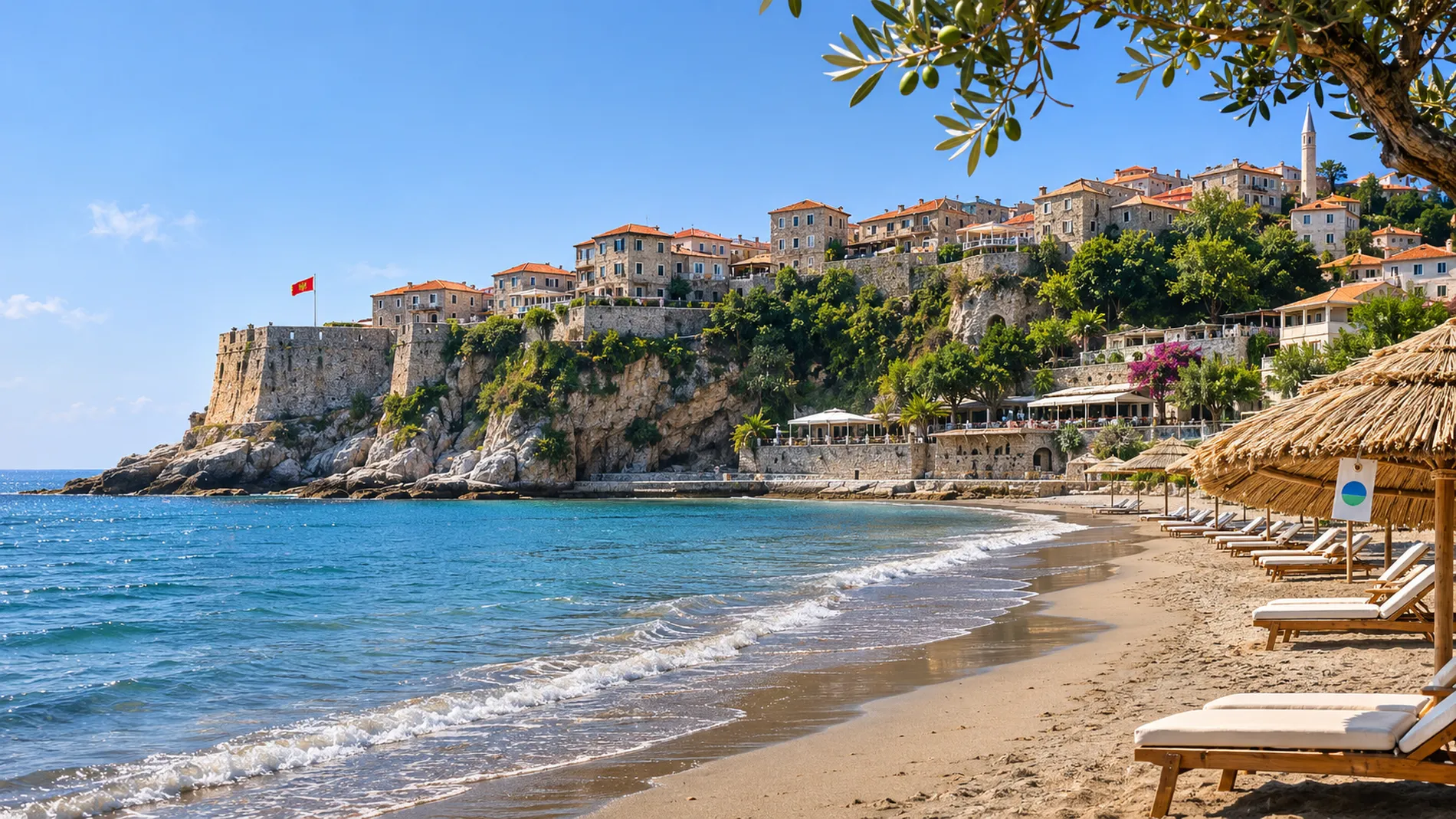

Ulcinj (Ulqin in Albanian; also rendered as Ульцинь or Улцинь in Russian) is Montenegro’s southernmost coastal resort town, close to the Albanian border. It is worth considering if you want sandy beaches, a choice of distinctly different neighbourhoods, and a home by the sea without the dense development associated with Budva. But the decision is not about “Ulcinj” as a whole: the exact address matters. Your street determines how you get to the sea, how comfortable the property is in winter, whether you can park, and what ownership will cost. This guide explains how to compare neighbourhoods, beaches, everyday infrastructure and properties according to your plans, whether for seasonal holidays, year-round living or rental income.
Contents
- What Makes Ulcinj Different
- Where to Live in Ulcinj
- Beaches and Coastal Leisure
- Infrastructure and Everyday Life
- Transport and Living Without a Car
- Real Estate: Prices and Costs
- What to Check Before Buying
- Ulcinj, Bar or Budva?
- Frequently Asked Questions
- How to Make Your Decision
What Makes Ulcinj Different
Ulcinj lies at the southern end of Montenegro’s coastline, closer to Albania than any other major resort in the country. That position gives it a distinctive setting: long sandy stretches of southern coastline, the Bojana River delta along the border, and extensive low-lying land around the town. The Old Town stands on a rock above the sea, while residential neighbourhoods extend away from it across the hillsides and along the coast.
It is important to distinguish the town of Ulcinj from the wider municipality. The municipality includes the town itself, its suburbs and more distant settlements; the characteristics of the centre cannot be applied to all of them. A listing described simply as “Ulcinj” might refer to an apartment five minutes from the Old Town or to a house in a village that is difficult to reach without a car.
The local environment is multilingual. You will hear Albanian and Montenegrin, alongside many other languages during the tourist season. For newcomers, this usually means that basic communication in shops, markets and service businesses is manageable. For official documents, schools and utility providers, however, it is sensible to plan for language requirements in advance.
The town’s rhythm changes with the seasons. In summer, the centre, waterfront promenades and nearby beaches are busy, with cafés and rental businesses operating at full pace. In winter, some businesses close and everyday activity concentrates in areas with permanent residents. It would be misleading to call the whole town either “quiet” or “noisy”: that depends on the particular street and time of year.
Ulcinj is worth a closer look for:
- Buyers seeking a second home for holidays, with an emphasis on beaches and a quieter setting;
- Families willing to compare several neighbourhoods and check schools, nurseries and transport;
- Buyers considering rental income who are prepared to calculate seasonality rather than rely on summer figures;
- Anyone willing to spend a trial winter here before buying.
If you want a lively resort atmosphere all year round or a major business centre close by, compare Ulcinj with other coastal towns. We return to those alternatives towards the end of this guide.
Where to Live in Ulcinj

Choose a neighbourhood according to what you actually need: shops within walking distance, proximity to the sea, the ability to live without a car, or peace and quiet in winter. The same area may be ideal for a holiday yet unsuitable for permanent living. Assess the individual address, not merely the neighbourhood name.
The Centre, Old Town and Nearby Neighbourhoods
The Old Town and the centre around Mala Plaža are the most urban parts of Ulcinj. The market, waterfront, restaurants, transport stops and nearest beach are all close together. The limitations are equally tangible: narrow streets, steep changes in elevation, staircases, limited parking and more noise in summer. Older stone houses need specific checks for damp and the condition of their building services.
Liman and neighbouring stretches around the town’s bay appeal to people who want to stay close to the centre without living in its busiest streets. Check how long it really takes to reach the sea and the shops on foot, and whether the route involves steep climbs.
Pinješ is a residential hillside neighbourhood. Views and a generally calmer setting are attractive, but hillside properties bring trade-offs: inclines, greater dependence on a car and the need to check where the parking space is actually located.
Towards Velika Plaža and Donji Štoj
Đerane lies on the route from the centre towards Velika Plaža. Established local housing sits alongside newer properties, and walking distances to the beach and shops vary considerably from street to street. Donji Štoj is a more spread-out settlement closer to the Bojana River and Ada Bojana, with a natural setting and considerable reliance on cars. It tends to be quieter outside the tourist season, but fewer services are available then.
Ada Bojana is a distinctive natural and tourist destination at the mouth of the Bojana River, not a conventional residential neighbourhood. Property arrangements here require particular caution because the location is an island close to Montenegro’s border with Albania, and the legal status of individual plots and structures may differ significantly. Montenegrin law restricts direct foreign ownership of real estate on islands and within the designated land-border zone, subject to the applicable legal framework and exceptions. A building’s physical existence, commercial use, or advertised availability does not establish that a foreign buyer can acquire ownership of it. Before considering any transaction, have an independent Montenegrin lawyer establish the land classification, ownership or use rights, building permits, access arrangements, utility connections, and whether the proposed transaction is legally permissible.
Table 1. Ulcinj Locations: Living Scenarios and Checks
| Location | Living scenario | Access to the sea | Importance of a car | What to check |
|---|---|---|---|---|
| Old Town and the centre near Mala Plaža | Urban living, seasonal holidays, walkable lifestyle | Short route to the town beach, but potentially with slopes and steps | Lower; parking is limited | Summer noise, damp in older houses, legal rights to a parking space |
| Liman | Year-round or seasonal living close to the centre | Depends on the street; walk the route | Moderate | Actual walking route to the water and shops |
| Pinješ | Buyers prioritising views and a calmer setting | Often involves uphill and downhill sections | High | Street gradient, winter access, parking |
| Đerane | Homes along the route to Velika Plaža | Not always within walking distance; depends on the property | Moderate to high | Pavements, distance to shops, roads after dark |
| Velika Plaža area | Holidays near a long sandy coast | Varies between beach sections | High | Access to the specific beach section, off-season services |
| Donji Štoj | Houses and plots in a natural setting | Depends on the exact position | High | Utilities, road access, seasonal availability of services |
| Ada Bojana | Nature-oriented holidays, specialist properties | Direct river or sea access at some locations | High | Land status, utilities, permitted use |
The table helps rule out obviously unsuitable options. If you do not drive, be particularly cautious about locations where a car is essential. After that, the individual property is what matters: walk from the entrance to the nearest shop and to the water at different times of day.
Check the route: A listing promising “five minutes to the beach” tells you nothing about gradients, staircases or pavements. Walk the route yourself, both during the day and in the evening.
Beaches and Coastal Leisure

Ulcinj’s principal beach destinations are Mala Plaža, Velika Plaža, Valdanos and Ada Bojana. Their shorelines, crowd levels and accessibility are quite different, so choose a beach in much the same way you choose a home: according to how you intend to use it.
Table 2. Ulcinj Beaches at a Glance
| Beach | Surface and coastal character | Who might consider it | Limitations and checks |
|---|---|---|---|
| Mala Plaža | Sandy town beach below the Old Town | Visitors who value proximity to the centre and urban services | Crowded in summer; confirm designated areas and current conditions locally |
| Velika Plaža | Extensive sandy coastline with distinct sections | Visitors looking for space along a long beach | Facilities and access differ by section; wind and waves |
| Valdanos | Small bay backed by an olive grove | Visitors seeking a more intimate setting | Check the surface, access and current conditions |
| Ada Bojana | River island at the Bojana estuary | Nature lovers and kitesurfing enthusiasts | Different rules apply to different sections; confirm access conditions before visiting |
Mala Plaža is a sandy urban beach within walking distance of the Old Town, as confirmed by the Ulcinj Tourist Organisation. Some commercial guides describe it as pebbly; the official source and your own inspection are better reference points. It is convenient for spending a few hours by the sea without a journey elsewhere, although it becomes noticeably more crowded in high season.
Velika Plaža is a long stretch of coastline whose sections differ in facilities, visitor density and access. Cafés and parking are generally easier to find nearer the town, while parts farther away can feel quieter. If you are considering a property advertised as “near Velika Plaža”, ask exactly which section it is near and how long the walk to the water takes: distances along this coast are considerable.
Shallow water near the shore does not guarantee safety. Swimming conditions depend on wind, waves, currents, warning flags and lifeguard provision. Pay attention to warnings on site and do not rely on advertising claims such as “perfect for children”. There are designated kitesurfing areas, which matter both if you intend to practise the sport and if your family plans to relax nearby.
Ada Bojana is an island at the river mouth on the Albanian border, known for its natural environment, fish restaurants and kitesurfing. Naturist rules apply in some parts of the island, but not throughout it, so check the arrangements for the exact section you intend to visit. Ada Bojana is rarely the obvious choice for conventional year-round living; it is better understood as a holiday destination with distinctive types of property.
“Close to the beach” in an advertisement does not necessarily mean a short or convenient walk. Check the road you will need to use, whether there is a pavement, whether the descent is steep and how long the journey takes with children, a beach umbrella or shopping bags.
Beyond the beaches, consider the Old Town, olive groves and the Ulcinj Salina, a wetland of salt pans near the town. These provide opportunities for walks and seasonal recreation rather than forming a formal sightseeing itinerary. The Ramsar Sites Information Service factsheet confirms the salina’s international conservation importance: it covers 1,477 hectares and received Ramsar status on 1 July 2019. The document does not establish visiting hours or entrance fees, so check those locally.
Infrastructure and Everyday Life

For a property buyer, everyday infrastructure matters more than the view from the window: it determines whether the home will actually work for you in winter. Evaluate services at the exact address, rather than relying on a general impression of the town.
Shops, Healthcare and Education
Shops and services. Everyday shops, markets, pharmacies and service businesses operate throughout the year in the centre and on main streets, although hours and product ranges can be reduced during the quieter months. In outlying beach areas, some businesses close for winter. Before buying, visit outside the tourist season and see what is actually open.
Healthcare. Primary care is available in the town, but arrangements for specialist treatment depend on the medical specialty you need. Establish where patients are referred, which documents are required and how appointments are arranged. Families with ongoing medical needs should clarify these practicalities before buying a home.
Schools and nurseries. Check the language of instruction, admission rules, availability of places and transport directly with the institution and local education authorities. Do not rely on second-hand summaries: requirements and enrolment levels can change.
Utilities and Household Costs
Internet. Check availability at the individual address: providers may offer different technologies and connection conditions even in neighbouring buildings. If you work remotely, request a speed test or speak with residents. Water, sewerage and electricity. Find out how the property is connected, whether it has a backup water tank, how wastewater is handled and whether seasonal interruptions occur. Heating and ventilation. Damp can be a problem in coastal properties during winter, so check heating provision, ventilation and protection against mould.
Long-term renting. Find out whether the tenancy runs through the summer, whether rent increases during peak season and whether utilities are included. This is not a minor contractual detail: some owners prefer holiday lets in summer, so a supposedly annual rental arrangement may in practice cover only the winter months.
Table 3. Housing Costs to Include in Your Budget
| Expense | What it covers | What determines the cost | What to request before choosing |
|---|---|---|---|
| Rent or ownership costs | Rent or payments relating to the house and building | Property type, season, contract | Agreement, rent increase terms, list of included charges |
| Electricity and heating | Electricity bills and heating arrangements | Insulation, floor area, heating type | Winter bills, type of heating |
| Water and sewerage | Water supply and wastewater disposal | Property connections, season | Connection details, history of interruptions |
| Internet | Installation and subscription fees | Technology, provider | On-site speed test, available providers |
| Car and parking | Vehicle, fuel, parking space | Location, availability | Parking documentation, cost of a space |
| Property maintenance | Cleaning, servicing, building management | Building type, shared areas | Management rules, charges |
| Repairs reserve | Savings for unexpected work | Building age, damp exposure | Date of last renovation, roof and service condition |
There are no sufficiently reliable local figures to justify quoting a single “average monthly budget” for Ulcinj. A more useful approach is to obtain actual bills for the property you are considering and calculate the costs in the table yourself.
Checklist 1. Seven Checks for a Home You Intend to Use in Winter
- Visit on a cold evening and see how well the house or apartment retains heat.
- Examine walls and corners for mould and signs of damp.
- Find out how the property is heated and request bills showing the actual cost of a heating season.
- Check water pressure, drainage and any backup water supply.
- Confirm the internet connection and test the speed.
- Ask neighbours how the building performs and what happens during wind and heavy rain.
- Find out what remains open nearby in January: a shop, pharmacy and transport stop.
The winter test: Almost any home can look convenient in summer. Before committing to year-round living, see how it performs in damp and windy weather.
Transport and Living Without a Car
In central Ulcinj, it is possible to manage without a car: the market, promenade, many shops and the nearest beach are relatively close together. But this does not apply to every neighbourhood. In more dispersed locations around Velika Plaža, Donji Štoj and Ada Bojana, a car is practically essential for regular shopping and other journeys.
The terrain changes what a “short distance” really means. Stairs, slopes and narrow streets without pavements make a journey with a pushchair, shopping bags or older family members considerably harder than it looks on a map. Check parking both legally and in person: establish whether a space is assigned to the apartment, included in the price and available all year round.
Connections with neighbouring towns are primarily by road. Bar can be reached by bus or car; there is no direct railway link to Ulcinj. Check winter bus timetables and service frequency separately rather than assuming summer schedules apply.
Your choice of airport depends on your route: Podgorica, Tivat and Tirana are all possibilities. Transfer times vary with the season, road congestion and, for journeys through Albania, border formalities. Do not rely on blanket claims of “90 minutes” in travel guides: check the route for the actual date and time of travel.
Checklist 2. How to Assess a Neighbourhood Before Renting or Buying
- Walk from the property to the beach, nearest shop and transport stop.
- Visit in the evening to check lighting, noise and parking.
- Assess vehicle access and parking: where you can park, how you enter and what happens in peak season.
- Return outside the tourist season, in autumn or winter.
- Compare the distance to a doctor, pharmacy and school with your household’s needs.
Real Estate: Prices and Costs

Ulcinj’s property market includes apartments in residential buildings, detached houses and properties with tourist or hotel-style management. For a second-home buyer, these are fundamentally different products, with different costs and restrictions.
What Determines Property Prices
Prices are shaped by the precise location, property and land documentation, building condition, parking, lifts, views, utilities and management arrangements. Two properties with the same floor area in neighbouring buildings can command different prices because of roof condition, legal status or noise from the street.
It is essential to distinguish legal status, actual use and the marketing description. An advertised “apartment by the sea” tells you nothing about how the property is registered or whether short-term rentals are permitted. Resale properties, homes under construction and completed new-builds also need to be assessed separately. With unfinished construction, completion delays are a greater concern; with resale property, existing defects and documentation matter; with new-builds, inspect the finish and the management company’s performance.
You should also distinguish the asking price from the completed transaction price: an advertisement shows what the seller is requesting, not the agreed price after negotiation. Compare usable living space with the advertised area, which may include terraces or a share of communal spaces.
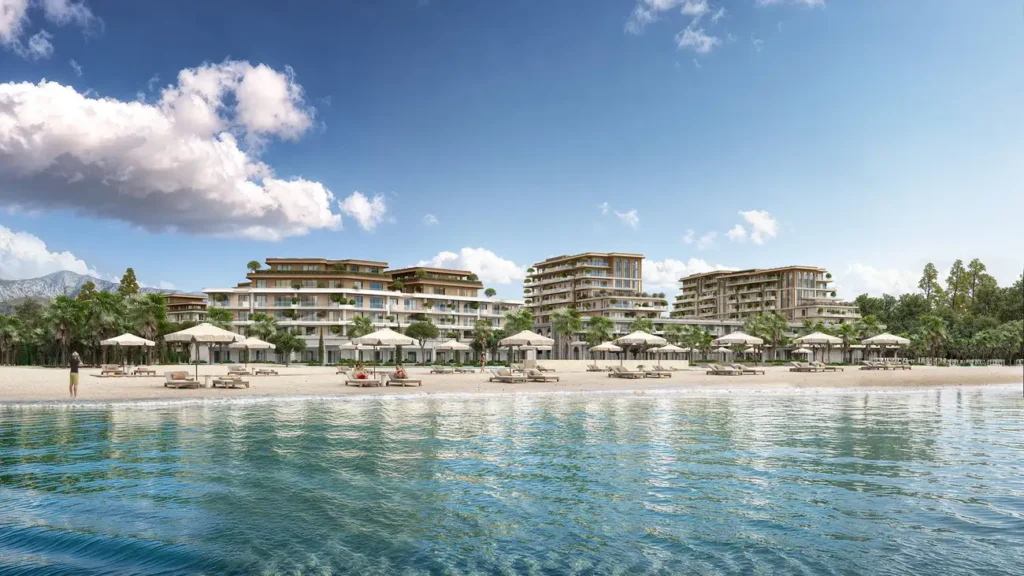

 Ulcinj
 от 31.77м²

The advertised purchase price is not the complete acquisition budget. Allow for notarial and registration expenses, applicable taxes, independent legal and technical due diligence, furnishing, utility connections, building charges, and a reserve for repairs. Montenegro applies progressive real estate transfer tax rates to taxable property transfers: 3% on values up to €150,000; €4,500 plus 5% of the portion exceeding €150,000 for values up to €500,000; and €22,000 plus 6% of the portion exceeding €500,000 for higher values. The first taxable sale of newly constructed property may instead be subject to 21% VAT, rather than real estate transfer tax, depending on the transaction. VAT may already be reflected in the developer’s advertised price, so it must not automatically be added again. The applicable tax base, exemptions, payment obligations, and final transaction costs should be confirmed for the specific property by an independent Montenegrin lawyer or tax adviser before signing.
There is no single verified price per square metre that adequately represents Ulcinj’s entire property market. A handful of advertisements cannot establish a reliable local average, particularly when they combine newly built apartments, resale homes, houses and properties with different legal or planning statuses. According to MONSTAT’s official methodology, its new-build price survey covers residential units sold for the first time under concluded contracts, with results published for Montenegro and broader regions rather than a comprehensive Ulcinj-specific property market. These figures should not be used as direct valuations of individual properties in Ulcinj. For a practical comparison, examine several genuinely comparable properties, accounting for building type, age, floor level, parking, distance from the sea, condition, registered area and legal status.
Rental Income and the Net Result
Short-term rental demand in Ulcinj is strongly influenced by the summer holiday season, although the occupancy pattern of an individual property depends on its location, amenities, target guests, pricing, and management. Do not multiply the revenue from a successful summer month by twelve to estimate annual income. Demand and achievable nightly rates may be substantially lower outside peak season, while many ownership costs continue throughout the year. Request monthly occupancy and revenue records for comparable properties, ideally covering several complete years, before preparing an investment forecast.
Before calculating rental income, establish whether the property can legally be offered as tourist accommodation. Montenegro regulates accommodation providers through its tourism and hospitality framework, including registration in the Central Tourist Register and applicable approval or categorisation requirements. The precise procedure depends on the accommodation type and the provider’s legal status. Hosts accommodating foreign guests must also comply with the applicable guest-registration requirements. A property described in an advertisement as suitable for holiday rentals is not automatically authorised for that use. Before purchase, verify the building’s permitted use, registration requirements, local tourist taxes, applicable income taxes, management arrangements, and any restrictions imposed by the building or development.
Here is the calculation framework:
Rental revenue = paid nights × actual average nightly rate.
Operating result before taxes and financing = revenue − management − commissions − owner’s expenses − maintenance − reserve.
Return on invested capital = operating result ÷ total initial investment × 100%.
Illustrative calculation — not a market forecast or an expected return for Ulcinj. Assume a property generates 100 paid nights at an average realised rate of €80 per night, producing €8,000 in gross rental revenue. Management costs are assumed to be €1,600 (20% of revenue), booking-platform commissions €960 (12%), utilities, internet and cleaning €1,500, maintenance €600, and the repairs reserve €500. The operating result before taxes and financing is €8,000 − €1,600 − €960 − €1,500 − €600 − €500 = €2,840. If the total initial investment, including acquisition, transaction expenses and furnishing, is €120,000, the illustrative annual return before taxes and financing is €2,840 ÷ €120,000 × 100% ≈ 2.4%. All inputs are hypothetical. The calculation excludes applicable taxes, borrowing costs, changes in property value, resale costs and any additional unbudgeted expenses. It must not be presented as an achievable or typical rental yield in Ulcinj.
Revenue and return are not the same thing: An impressive figure for “summer revenue” tells you nothing about what remains after expenses or how much capital was needed to buy the property.
No one can guarantee occupancy, rental returns or capital appreciation. Before committing, ask the management company for several years of data on paid nights, a breakdown of commissions and a complete list of costs borne by the owner.
Looking for property in Ulcinj for living, holidays or renting out? Enter your budget and priorities in the short questionnaire to start finding properties that fit your plans.

What to Check Before Buying
The legal status and terms of each purchase must be reviewed individually. The following checklist helps you prepare questions for the seller and your lawyer, but it does not replace professional due diligence.
Foreign buyers must also verify whether they are legally permitted to acquire the specific property. Under Article 415 of Montenegro’s Law on Property Relations, foreign ownership is restricted for certain categories of real estate, including agricultural land, forests and forest land, specified protected cultural property, land within one kilometre of the country’s land border, and real estate on islands. A limited exception applies to certain agricultural or forest plots of up to 5,000 m² when a residential building forms part of the transaction. These restrictions do not amount to a blanket ban on foreign property purchases in Ulcinj. However, they make independent legal checks particularly important for plots near the Albanian border, properties around the Bojana River and Ada Bojana, and land advertised for residential development. A Montenegrin lawyer should verify the cadastral classification, precise boundaries, permitted ownership structure, and applicable restrictions before any deposit or other binding commitment.
Legal reference: Article 415 of Montenegro’s Law on Property Relations. Buyers should have their lawyer confirm the applicable consolidated legislation and any relevant international agreements before proceeding.
Checklist 3. Checks to Complete Before Paying a Deposit
- Current property record (list nepokretnosti). This cadastral extract identifies the property, recorded floor area and entries concerning property rights.
- Seller’s identity and authority. Confirm that the seller is entitled to dispose of the property; if someone acts under a power of attorney, verify the scope of that authority.
- Encumbrances and register entries. Charges, mortgages, disputes and restrictions may affect the property and the buyer’s rights.
- Actual floor area and layout against the documentation. Discrepancies can affect value and completion of the transaction.
- Construction and use documentation. Requirements depend on whether the property is an apartment in a new building, a private house or a unit in a managed complex.
- Legalisation status, where relevant. Establish whether the process is complete and what documents prove the outcome.
- Rights to the plot and legally secured road access. An attractive driveway may in fact cross land belonging to someone else.
- Actual utility connections. Water, electricity and wastewater arrangements should work and have the appropriate documentation.
- Management rules, charges and rental conditions. Check fees, restrictions on short-term lets and rights to shared areas.
- Building condition, drainage and site-specific issues. Engage a qualified building surveyor or engineer for this assessment.
This does not mean that properties in any particular neighbourhood are inherently inferior. Each building must be assessed on its own merits. Coastal and conservation restrictions are also location-specific: the protected status of the Ulcinj Salina must not be assumed to apply to the entire municipality.
Buying property and obtaining a residence permit are separate legal procedures. Under the amendments to Montenegro’s Law on Foreigners that took effect in January 2026, a foreign applicant seeking temporary residence based on property ownership generally must own the property, or hold at least a one-half ownership share, and provide an official assessment showing a taxable property value of at least €150,000. The value is established through the relevant municipal real estate transfer tax assessment, rather than simply the advertised or contractual purchase price. The minimum-value requirement does not apply to citizens of EU member states, Iceland, Liechtenstein, Norway or Switzerland, or to qualifying family members. Transitional arrangements may apply to permits granted under the previous rules. Property ownership does not automatically confer residence or employment rights. Check the current version of Article 56 of the Law on Foreigners, your nationality-specific eligibility and the required documents with Montenegro’s Ministry of the Interior or a qualified immigration lawyer before relying on a property purchase as a basis for residence.
Ulcinj, Bar or Budva?
Comparing these towns helps you decide which compromises you are prepared to make. All three vary considerably from neighbourhood to neighbourhood, so the differences below are broad observations, not evaluations of individual addresses.
Table 4. Ulcinj, Bar and Budva Compared
| Criterion | Ulcinj | Bar | Budva |
|---|---|---|---|
| Coastal character | Long sandy stretches, Old Town, natural areas | Port town, different beach types, urban setting | Established resort centre with dense development |
| How to choose a home | Focus on micro-location and the route to the sea | Focus on neighbourhood and transport access | Focus on distance from noisy areas and access to services |
| Transport | A car matters outside the centre | Major transport hub for the region | Extensive tourist transport network |
| Seasonality | Pronounced; some businesses close in winter | Less dependent on the holiday season | Strong summer peak |
| Living scenarios | Holidays, families, quieter seasonal living | Year-round living with urban infrastructure | Resort lifestyle, active rental market |
The table does not name a “best” town: it highlights the questions worth asking. If you prefer a port town with a more pronounced urban character, read our complete guide to Bar. If an active resort lifestyle matters most, compare our guide to living and property in Budva. And if you are considering alternatives along the southern coast, our guide to Dobra Voda provides further context.
Checklist 4. Four Steps to Choosing
- Define your plans: holidays, permanent living or renting out.
- Test the location: on foot, by car, in the evening and outside the season.
- Assess the property and paperwork: condition, legal status and rights to the land.
- Calculate the entire budget: purchase price, transaction costs, maintenance and reserves.
How to Make Your Decision
Ulcinj should be judged against your own lifestyle and the individual property, not the town’s general reputation. For some buyers, a walkable centre will be decisive; others will value the open space around Velika Plaža; still others will prioritise winter comfort and services that remain reliable throughout the year. There is no single best neighbourhood for everyone.
A sensible next step is to work in this order. First, arrange a trial stay, ideally for at least a couple of weeks outside the busiest season. Then explore two or three neighbourhoods on foot, in the evening and in poor weather. Next, obtain the documents for the property you are considering and have an independent lawyer review them. Only then finalise the complete budget: purchase price, transaction expenses, maintenance, reserves and, if you plan to rent it out, actual ownership costs rather than headline summer revenue.
 Real estate in Georgia
 Real estate in Cyprus
 Real estate in the UAE
 Real estate in Bali
 Real estate in Thailand
 Real estate in Spain
 Real estate in Saudi Arabia
 Real estate in Turkey
 Real estate in Zanzibar
 +382 60 099359
 hello@residence-estate.me
 The Old Bakery Residences, Budva 85310, Montenegro


 Get catalogue of TOP-7 objects