
 +382 60 099359




If you own a property in Montenegro and receive rental income, you are generally liable to pay personal income tax on that income. The standard rate applied to taxable rental income is 15% — but the final amount you owe depends on which expenses can be deducted from your gross income and whether a municipal surtax applies in your location. Where an eligible expense deduction applies, Montenegrin income tax alone may amount to less than 15% of gross rental receipts; municipal surtax and any tax consequences in your country of residence must be assessed separately.
This guide explains how rental income tax works for individual property owners in Montenegro, including the three levels of standard expense deductions, the difference between long-term and tourist rentals, the obligations of non-resident landlords, filing procedures and deadlines, and the additional costs that affect net rental returns. The calculations here use illustrative scenarios to show how the numbers work in practice.
Tax treatment depends on the owner’s circumstances and current rules. A qualified Montenegrin tax adviser should review individual cases.
Montenegro Rental Income Tax in 2026: Key Figures
| Tax or requirement | 2026 rule |
|---|---|
| Personal income tax on rental income | 15% of the taxable base |
| Standard expense deduction | 30% where actual eligible costs are not documented |
| Qualifying tourist rental deduction | 50%, subject to statutory conditions |
| Special tourist rental deduction | 70%, subject to a qualifying arrangement and at least 60 days of average annual occupancy |
| Effective income tax with 30% deduction | 10.5% of gross rent, before municipal surtax |
| Effective income tax with 50% deduction | 7.5% of gross rent, before municipal surtax |
| Effective income tax with 70% deduction | 4.5% of gross rent, before municipal surtax |
| Municipal surtax | Generally 13% of assessed PIT; 15% in Podgorica and Cetinje |
| Standard annual GPPFL deadline | 30 April of the following year, where self-reporting is required |
| VAT registration threshold | Generally €30,000 of relevant turnover in a rolling 12-month period |
| Annual property tax | Separate from rental income tax; general statutory range of 0.25–1% of assessed property value |
Quick example: An individual landlord receiving €10,000 in annual residential rent and applying the 30% standard expense deduction would calculate €1,050 in income tax. With an illustrative 13% municipal surtax, the combined amount would be €1,186.50.
These figures apply to the relevant tax scenarios, not automatically to every owner. Tourist rental deductions, VAT treatment, local surtax and non-resident compliance requirements must be assessed individually.
How Rental Income Tax Works
In Montenegro, income from property — including rent from residential and tourist accommodation — is subject to personal income tax (PIT) under the Law on Personal Income Tax. The obligation applies to individual owners, whether Montenegrin citizens or foreign nationals. It does not matter where your bank account is held or what passport you carry: if the property is located in Montenegro and generates rental income, that income falls under Montenegrin tax rules.
The tax is not calculated on every euro of rent you collect. Instead, the law distinguishes between gross rental income (the total amount received from tenants or guests) and the taxable base — the figure after eligible deductions have been applied. The 15% rate applies to the taxable base, not to the gross amount. This is one of the most common points of confusion for property owners estimating their liability.
Montenegro taxes both tax residents and non-residents on income sourced within the country. If you are a tax resident of Montenegro, you are generally taxed on your worldwide income. If you are a non-resident, you are taxed on Montenegrin-source income only — which includes rent from a property located here. Residency for tax purposes is a legal determination that has nothing to do with property ownership or the type of visa you hold.
| Tax component | General rule | What it means for landlords |
|---|---|---|
| Rental income tax | 15% of taxable base | Tax is calculated after eligible deductions, not on gross rent |
| Standard expense deduction | 30%, 50% or 70% where eligible | Reduces the taxable base; conditions apply for the higher rates |
| Municipal surtax | Depends on location | Calculated on the assessed income tax amount, not on gross income |
| Annual property tax | Separate annual obligation | Not the same as rental income tax; payable regardless of rental activity |
| Tourist charges | Where applicable | A separate per-night levy; not part of the income tax calculation |
The practical takeaway for someone renting out a single apartment: your income tax bill will be based on a portion of what you earn, reduced by an allowable deduction, and then potentially increased by a modest local surtax. Getting both figures right — the deduction and the surtax — is what separates a realistic tax estimate from a rough guess.
Individual ownership vs company ownership: The 15% rental income tax and standard expense deductions discussed in this guide concern the relevant personal income tax treatment of individual landlords. Rental income earned through a Montenegrin company is generally assessed under corporate income tax rules, which have progressive rates of 9% to 15% depending on taxable profit. Corporate accounting, expenses, VAT and the taxation of distributions to shareholders require separate analysis.
Rental Tax Rates and Deductions
The taxable base is your gross rental income minus allowable deductible expenses. Montenegro’s tax rules give individual property owners two ways to establish those expenses: apply a standard (normative) percentage, or document actual costs and claim those instead.
Standard Expense Deductions
The Law on Personal Income Tax sets out three levels of standard deduction for income from property:
- 30% is the standard expense deduction generally recognised for rental income where actual qualifying expenses are not documented, under Article 35 of Montenegro’s Personal Income Tax Law. It is the rate typically applicable to regular long-term residential rental.
- 50% may apply to qualifying rooms, apartments or houses let to travellers and tourists where the applicable sojourn tax has been paid. It is not a default option for any property advertised on a short-term platform; keep evidence of sojourn tax payment. (See Article 35 of the Personal Income Tax Law for the applicable conditions.)
- 70% applies only where the qualifying accommodation is let under a contract with a travel agency or local tourism organisation and the statutory average occupancy requirement of at least 60 days per year is met. This is a specific legal provision, not a general benefit for owners listing properties on booking platforms. (See Article 35 of the Personal Income Tax Law.)
A higher standard deduction is not automatically available simply because a property is advertised on Airbnb or Booking.com. The 50% and 70% rates require confirmation that the legal conditions for each category are satisfied.
The distinction matters substantially for tax planning. Applying the wrong deduction rate — whether out of optimism or misunderstanding — produces an inaccurate tax estimate and a potentially incorrect return.
Legal reference: The standard expense deduction framework is established by Article 35 of Montenegro’s Law on Personal Income Tax. Owners should consult the current consolidated legislation and confirm their eligibility before using the 50% or 70% deduction.
Official source: Law on Personal Income Tax — Government of Montenegro.
2026 legal source: For the applicable personal income tax framework, consult the Law on Personal Income Tax, including amendments published in Official Gazette of Montenegro No. 160/2025. An English-language version was published by the Montenegrin Tax Administration on 16 September 2026. The applicable provisions should be checked against the current legislation before filing.
Actual Documented Expenses
Instead of using a standard percentage, a property owner may elect to deduct actual documented costs incurred in generating the rental income. This alternative requires proper invoices and records. The types of expenses that may qualify — subject to legal confirmation — typically include property management fees, repair and maintenance costs, commission charges, and certain administrative expenses directly related to the rental activity.
Not every cost associated with owning a property qualifies automatically. Costs must be genuinely connected to producing the rental income, and the burden of documentation falls on the owner. For landlords without extensive documented deductible costs, the standard deduction may simplify recordkeeping; compare it with actual eligible expenses before filing. Owners with higher actual costs — particularly those paying significant management or agency fees — may find it worth calculating both options.
When are actual expenses worth considering? Suppose a landlord receives €12,000 in annual rent. Under the ordinary 30% standard deduction, the taxable base would be €8,400 and PIT would be €1,260.
If the same landlord has €4,500 of genuinely eligible, documented rental expenses, the taxable base under the actual-expense method would be €7,500 and PIT would be €1,125.
The difference is €135 in PIT before municipal surtax. However, an owner cannot simply deduct every cash-flow expense: only expenses that qualify under the applicable law and can be properly documented should be included.
| Deduction scenario | Eligible situation | Taxable base on €10,000 gross | Income tax (15%) |
|---|---|---|---|
| 30% standard deduction | Standard long-term rental | €7,000 | €1,050 |
| 50% standard deduction | Qualifying tourist rental (conditions required) | €5,000 | €750 |
| 70% standard deduction | Special tourist accommodation regime (conditions required) | €3,000 | €450 |
These calculations are conditional illustrations only. The 50% case assumes payment of the sojourn tax for qualifying tourist accommodation; the 70% case assumes a qualifying contract with a travel agency or local tourism organisation and an average annual occupancy of at least 60 days. Neither rate should be applied without individual legal confirmation.
Effective Rental Income Tax Rates Including Municipal Surtax
| Expense deduction | PIT as % of gross rent | Total with 13% surtax | Total with 15% surtax |
|---|---|---|---|
| 30% | 10.50% | 11.865% | 12.075% |
| 50% | 7.50% | 8.475% | 8.625% |
| 70% | 4.50% | 5.085% | 5.175% |
These effective rates assume the relevant standard expense deduction is legally available and the stated municipal surtax applies. They exclude annual property tax, tourist charges, VAT, management fees and other operating costs.
For example, a qualifying tourist rental generating €20,000 annually with a 50% expense deduction would produce €1,500 in PIT and €195 in surtax at 13%, giving a combined liability of €1,695.
The difference between the 30% and 70% scenarios on €10,000 of income is €600 in tax — significant for smaller properties, material for larger ones. For that reason, it is worth confirming your eligibility before filing, rather than assuming either direction.
Looking for a rental property in Montenegro?
Tell us your budget, preferred location and whether you plan to rent long-term or seasonally. We can help you shortlist suitable properties and identify the questions to verify before buying.
Find Properties That Match Your Plan
How to Calculate Rental Income Tax
The formula for calculating Montenegro rental income tax involves three steps: determine gross rental income, subtract allowable expenses to arrive at the taxable base, then apply the 15% rate. If a municipal surtax applies, it is calculated on the assessed income tax — not on the gross income or the taxable base.
Core formula:
Gross rental income
− Allowable deductible expenses (30%, 50% or 70%, or actual)
= Taxable base

Taxable base × 15% = Income tax

Income tax × surtax rate = Municipal surtax

Income tax + Municipal surtax = Total tax liability
Municipal surtax rates in Montenegro are location-dependent. Most municipalities apply a rate of 13% on the assessed income tax. Podgorica and Cetinje apply 15%. This is a charge on the tax itself, not an additional percentage of your rental income. Verify the applicable municipality for your taxpayer circumstances — where the property is located does not always determine which municipality’s surtax applies.
Example A — Long-Term Residential Rental
An owner rents an apartment at €800 per month under a standard lease.
- Annual gross rental income: €9,600
- Standard expense deduction (30%): €2,880
- Taxable base: €6,720
- Income tax (15% of €6,720): €1,008
- Illustrative municipal surtax (13% of €1,008): €131.04
- Total tax liability: €1,139.04
This scenario uses the 30% standard deduction, which is the default for conventional long-term residential rental. The owner’s effective tax rate relative to gross income is approximately 11.9% — not 15%.
Example B — Tourist Rental (Eligible for 50% Deduction)
An owner rents a property as tourist accommodation and has confirmed eligibility for the 50% standard deduction under applicable law.
- Annual gross rental income: €18,000
- Standard expense deduction (50%): €9,000
- Taxable base: €9,000
- Income tax (15% of €9,000): €1,350
- Illustrative municipal surtax (13% of €1,350): €175.50
- Total tax liability: €1,525.50
The 50% deduction is used here on the assumption that all legal conditions are met. Owners who do not qualify for the 50% deduction should determine whether the ordinary 30% standard expense deduction or eligible documented actual expenses apply to their circumstances.
Example C — Special Tourist Accommodation Regime (Eligible for 70% Deduction)
An owner operates tourist accommodation under a qualifying arrangement through a registered tourism organisation, meeting all conditions specified in the law.
- Annual gross rental income: €24,000
- Standard expense deduction (70%): €16,800
- Taxable base: €7,200
- Income tax (15% of €7,200): €1,080
- Illustrative municipal surtax (13% of €1,080): €140.40
- Total tax liability: €1,220.40
This scenario does not reflect typical independent short-term rental activity. The 70% deduction is a specific legal provision tied to qualifying arrangements, not a general benefit for owners listing properties on booking platforms.
| Scenario | Gross income | Deduction | Taxable base | Income tax | Surtax (13%, illustrative) | Total tax |
|---|---|---|---|---|---|---|
| A — Long-term (30%) | €9,600 | €2,880 | €6,720 | €1,008.00 | €131.04 | €1,139.04 |
| B — Tourist rental (50%) | €18,000 | €9,000 | €9,000 | €1,350.00 | €175.50 | €1,525.50 |
| C — Special regime (70%) | €24,000 | €16,800 | €7,200 | €1,080.00 | €140.40 | €1,220.40 |
All figures are illustrative. Surtax rate varies by municipality. The 50% case assumes sojourn tax payment; the 70% case assumes a qualifying agency contract and at least 60 days average annual occupancy. Higher deduction rates require legal confirmation.

A recurring error in rental yield analysis is treating the income tax figure as equivalent to total operating cost. Your actual net cash flow also needs to account for property management fees, maintenance, insurance, utility costs during vacancies, and periods when the property is unoccupied. These operating costs reduce cash flow; some may also be relevant to the tax base if the taxpayer elects eligible, documented actual expenses rather than standard normative costs.
Long-Term vs Short-Term Rentals
The tax rate on rental income is the same regardless of whether you operate long-term or short-term — 15% on the taxable base in both cases. What differs substantially is the administrative framework, the cost structure, the available deductions, and the additional obligations that apply to tourist accommodation.
Long-term residential rental involves a lease agreement with a tenant, a predictable monthly income stream, and relatively straightforward tax reporting. The 30% standard expense deduction is generally recognised where actual qualifying expenses are not documented (Article 35, Personal Income Tax Law). The owner’s main administrative tasks generally include maintaining the lease contract, recording rental payments, and filing an annual personal income tax return where self-reporting is required rather than tax being withheld by the payer.
Tourist (short-term) rental involves a different legal classification. In Montenegro, tourist accommodation must be registered and categorised with the relevant local authority. Individual owners operating as tourist service providers must generally register and deregister foreign guests within 12 hours of arrival or departure, using the prescribed procedure through the relevant system, local tourist organisation or police. Verify current local filing arrangements before operating. A tourist (sojourn) tax is collected from guests per night and remitted to the local municipality — this is entirely separate from the rental income tax. The cost structure is typically higher, with more frequent cleaning, furnishing, and platform management expenses.
Key practical differences between the two models:
- Legal framework: Long-term rental uses a standard lease; tourist rental requires accommodation categorisation and registration.
- Guest registration: Tourist accommodation providers have specific guest registration and deregistration duties. Foreign nationals staying under longer-term residential arrangements may also be subject to separate immigration or residence registration requirements, depending on their circumstances.
- Tourist tax: Applies per night for short-term guests; not applicable to long-term tenants.
- Standard deduction rate: 30% for long-term rental; 50% or 70% only where qualifying conditions are confirmed for tourist rental.
- Operational costs: Short-term rental typically involves higher recurring expenses — platforms, cleaning, supplies, and management.
- Income predictability: Long-term rental provides stable monthly income; tourist rental varies seasonally and by occupancy.
Neither model is automatically more profitable. The higher gross income possible from tourist accommodation may be partially offset by greater operating costs, higher management complexity, and the need to confirm eligibility for the higher standard deduction. Any investment comparison should be based on net cash flow, not gross rental figures or headline tax rates.

Explore Apartments and Residential Complexes in Bar


 Bar
 от 37,5м²

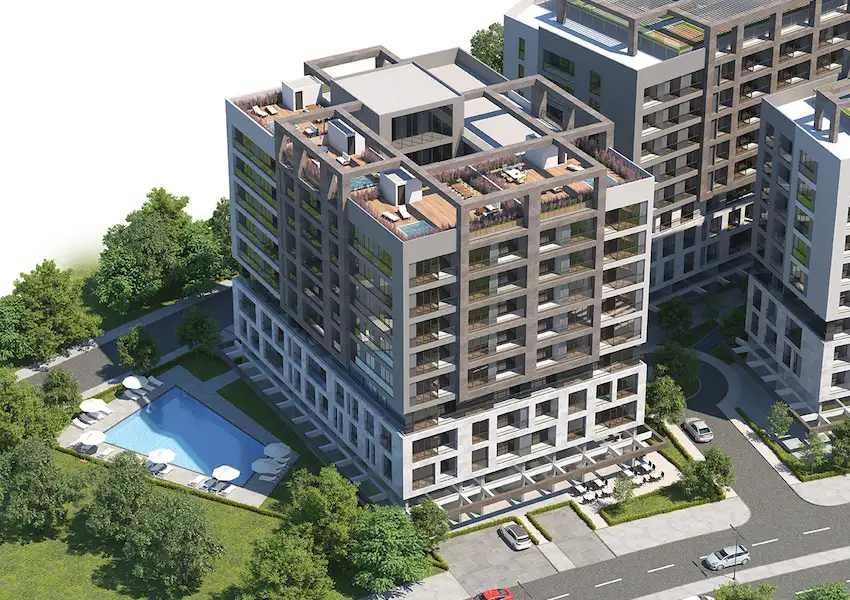 Barот 30.95м²
How to Start Renting Out Property in Montenegro: Step by Step
Buying an apartment does not automatically authorise every form of rental activity. The procedure depends on whether the property will be let to a residential tenant or offered as tourist accommodation.
- Verify the property’s legal status. Check the registered ownership, permitted use, building documentation and any contractual restrictions that could affect the intended rental activity.
- Choose the rental model. Decide whether to use a conventional residential lease or provide short-term tourist accommodation.
- Confirm the applicable registration requirements. Tourist accommodation generally requires approval and categorisation by the competent authority before operation.
- Determine who will manage the property. If an agency handles bookings, guest registration or tax administration, specify those responsibilities in a written contract.
- Establish the tax reporting method. Confirm whether income tax will be withheld by a qualifying payer or must be declared by the owner through GPPFL.
- Arrange tourist compliance where applicable. Confirm guest registration procedures, sojourn tax collection, recordkeeping and any fiscal obligations.
- Maintain income and expense records. Keep lease agreements, booking statements, payment records and invoices supporting any claimed actual expenses.
- Review annual obligations. Check the GPPFL deadline, annual property tax, applicable surtax and any VAT requirements.
A foreign owner should confirm tax representation and registration requirements with the Montenegrin Tax Administration or a qualified local adviser before the first taxable rental activity.
Tax Rules for Foreign Owners
Foreign nationals who own property in Montenegro and receive rental income from it are subject to Montenegrin tax on that income. Non-residents are taxed on Montenegro-source income, which includes rent generated by a property physically located in the country. This obligation exists regardless of where the owner lives, where their bank account is held, or how the rental payments are transferred.
Tax residency is not the same as citizenship or property ownership. Owning a flat in Kotor does not make you a Montenegrin tax resident. Tax residency is determined by legal criteria — primarily the number of days spent in the country and the location of one’s centre of vital interests. Limited time spent in Montenegro may weigh against Montenegrin tax residence, but residence in any other country depends on that jurisdiction’s own rules and any applicable tax treaty — it cannot be determined by absence from Montenegro alone. If you are considering longer stays that might affect your status, that is a separate question requiring specific legal advice. For context on how residency, property ownership and immigration status interact under Montenegrin law, see “Montenegro Property Residence Permit“. Holding a residence permit does not by itself establish tax residency — the two are governed by separate legal frameworks.
The 183-day rule: Under Montenegro’s domestic tax residency rules, an individual may be treated as a tax resident if they spend at least 183 days in Montenegro during the relevant tax year. Domicile or the centre of personal and economic interests can also establish residency, so spending fewer than 183 days does not automatically guarantee non-resident status. An applicable double taxation treaty may affect the final determination.
Owning a rental property abroad does not automatically make you a tax resident there — or remove your tax obligations at home.
Foreign property owners who are non-resident taxpayers may be subject to additional tax representation and registration requirements under Montenegro’s Tax Administration Law. Whether a representative must be appointed, and within what deadline, depends on the applicable statutory provisions and the owner’s circumstances. Confirm these requirements with the Montenegrin Tax Administration or a qualified local tax adviser.
Double taxation is a genuine concern for foreign property owners. If you are tax-resident in another country, that country may also have the right to tax your worldwide income, including Montenegrin rental income. Montenegro has signed double taxation avoidance agreements (DTAs) with a number of countries. These treaties typically provide a mechanism to avoid being taxed twice on the same income — usually through a tax credit or exemption — but the specific rules differ by treaty and by each country’s domestic rules. A DTA does not automatically eliminate your obligations at home; it determines how they interact with what you have paid in Montenegro.
Owners who receive rental payments into a foreign bank account, manage properties remotely through a local agency, or use international platforms need to maintain the same standard of documentation as those managing property directly. Tax obligations in Montenegro arise from the source of income, not from how or where payments are received.
Filing and Paying Rental Income Tax
The annual personal income tax return in Montenegro is filed using the GPPFL form (Godišnja prijava poreza na dohodak fizičkih lica — Annual Personal Income Tax Return). This form is generally used to report rental income for which tax has not been withheld at source — that is, when the landlord is responsible for declaring and paying the tax directly.
Who files: If you are an individual owner who receives rent directly from a private individual, the responsibility for reporting and paying tax generally falls on you, through the annual return. If the rent is paid by a Montenegrin legal entity or entrepreneur acting as a withholding agent, tax is generally withheld on payment; that payer follows the applicable withholding reporting procedure, and the landlord may not need to declare that income separately through a GPPFL return. The applicable path depends on the payer’s status and the nature of the payment — verify which procedure applies in your situation.
Who Reports and Pays Rental Income Tax?
| Rental situation | Who normally handles income tax? | Main compliance point |
|---|---|---|
| Individual landlord renting to a private individual | Landlord | Annual GPPFL self-reporting generally applies |
| Individual landlord renting to a qualifying Montenegrin company or entrepreneur | Withholding payer | The payer generally calculates, withholds and reports tax |
| Tourist rental through an international booking platform | Depends on the actual payment and withholding arrangement | Do not assume the platform has paid Montenegrin PIT |
| Non-resident landlord without a withholding payer | Landlord, subject to applicable representation rules | Confirm tax registration, representative requirements and annual filing |
| Rental income earned by a Montenegrin company | Company | Corporate taxation and reporting rules apply instead of the individual landlord regime |
Important: This is a general guide. The exact filing procedure depends on the legal status of the landlord and payer, the nature of the transaction and applicable withholding rules.
Standard filing and payment deadline: The GPPFL return and the tax payment are ordinarily due by 30 April of the year following the income year. Income earned in 2025 would normally be reported and paid by 30 April 2026. The Tax Administration of Montenegro publishes annual guidance on the process and deadlines.
2026 filing extension for the 2025 tax year: For the 2025 income year specifically, the Tax Administration extended the deadline for submitting the GPPFL return to 30 May 2026. However, the payment deadline remained 30 April 2026. This means taxpayers who filed late could still submit their return until 30 May, but those who owed tax and paid after 30 April may have incurred late payment consequences. This was a temporary administrative measure — not a permanent change to the standard rules — and should not be assumed to apply in future years. The official Tax Administration notice sets out the specific terms of that extension.
Where to file: For 2025 income, the Tax Administration specified mandatory IRMS (Integrated Revenue Management System) filing for principal self-employment income and permitted paper filing for other income categories, including property income. Check the channel available for your income category and status — this may vary. Non-residents with a tax representative will typically coordinate submission through that representative.
Practical document checklist for rental income reporting:
- Ownership documentation (deed or registered title confirming ownership of the property)
- Rental agreement (lease or tourist accommodation contract)
- Rent payment records (bank statements, transfer confirmations, or platform payout records)
- Expense invoices and receipts, if claiming actual documented expenses
- Tourist accommodation registration and category certificate, if applicable
- Taxpayer identification details and, for non-residents, details of the appointed tax representative
Not every item on this list is required in every situation — the documents you need depend on your rental model, residency status, and how expenses are being claimed. This checklist is a preparation guide, not a definitive legal requirement. Confirm the specific requirements with the Tax Administration or a local adviser before filing.
Keeping clear, complete records throughout the rental year is far simpler than reconstructing documentation at filing time. Platform payouts, direct transfers, and any cash arrangements should all be recorded consistently.

Airbnb, Booking.com and Tourist Taxes
Listing a property on Airbnb, Booking.com, or a similar platform does not replace the requirement to comply with Montenegrin tax law. Platform registration is a commercial arrangement between you and the platform; it has no legal effect on your obligations to the Tax Administration of Montenegro.
Accommodation categorisation: Short-term tourist rentals must be registered and categorised with the local municipality or relevant authority before the property can legally operate as tourist accommodation. This is a separate administrative process from tax registration, and it affects both your compliance status and your eligibility for any enhanced standard deductions.
Guest registration: Hosts providing tourist accommodation must generally register and deregister foreign guests within 12 hours of arrival or departure, using the prescribed procedure through the relevant system, local tourist organisation or police. This is an ongoing operational obligation for every stay, not a one-off registration. Verify current local filing arrangements before you begin operating.
Tourist (sojourn) tax: A sojourn tax normally applies to eligible tourist stays, subject to exemptions and reductions established by applicable legislation. The host should verify the relevant guest categories, local rates and collection requirements with the municipality or local tourist organisation. This charge is separate from rental income tax — it is collected from guests, not paid from the owner’s income — but the host carries the administrative responsibility for its collection and remittance.
Example — tourist tax in Tivat: According to the Tivat Tourist Organisation, the sojourn tax is €1 per person per day. Children under 12 are exempt, while visitors aged 12 to 18 pay €0.50 per day.
For two adults staying for seven chargeable days, the illustrative sojourn tax would be €14. This is separate from the landlord’s personal income tax.
Rates, exemptions and administrative arrangements should be verified for the relevant municipality before accepting guests.
Platform payouts and documentation: Income received through international platforms is still Montenegrin-source rental income and must be declared accordingly. Bank transfers from Airbnb or Booking.com confirm the amount received, but you also need to retain supporting documentation showing the underlying bookings, dates, and rates.
Platform payouts are not a substitute for properly documented rental income and tax records.
Platform commissions: Fees charged by platforms reduce the amount you actually receive. If you claim actual documented expenses, platform commissions may qualify as deductible. If you use the standard normative deduction, actual commissions are irrelevant to the calculation — the fixed percentage already accounts for costs of that nature.
VAT and the €30,000 threshold: Montenegro’s general VAT registration threshold is €30,000 of relevant turnover over the preceding 12 months. The standard VAT rate is 21%, while certain qualifying hospitality and accommodation services are subject to a reduced 15% rate under the rules applicable in 2026.
However, ordinary residential leasing and taxable tourist accommodation must be distinguished. The threshold does not mean that every individual landlord automatically becomes liable for VAT upon receiving €30,000 in residential rent. The classification of the activity, the nature of the supplies and the owner’s taxable-person status must be assessed first.
Owners operating tourist accommodation, multiple rental units or a business providing accommodation services should obtain an individual VAT assessment before relying on an exemption or applying a reduced rate.
Other Costs That Affect Net Income
Rental income tax is one component of the total cost of owning and operating a rental property in Montenegro. For an accurate picture of net returns, several other charges and expenses need to be factored in separately.
Property Taxes Across the Ownership Cycle
| Stage | Main tax | General 2026 rule |
|---|---|---|
| Buying a resale property | Real estate transfer tax | Progressive rates from 3% to 6%, depending on taxable value |
| Buying a qualifying new-build property | VAT | The applicable first-supply VAT treatment must be checked; standard rate 21% |
| Owning property | Annual property tax | General statutory range of 0.25%–1% of assessed property value, subject to local rules |
| Receiving rental income as an individual | Personal income tax | 15% of taxable rental income after allowable deductions |
| Operating qualifying tourist accommodation | Tourist charges and potentially VAT | Separate rules depending on activity and registration |
| Selling property at a taxable gain | Capital gains tax | Generally 15% of taxable gain, subject to applicable exemptions |
Tax deductibility versus cash-flow expenses: Not every ownership or operating expense is deductible for personal income tax purposes. When using the standard expense deduction, actual costs are not itemised again. Under the documented actual-expense method, the eligibility of repairs, insurance, utilities, management fees and other costs depends on their nature, connection to rental income and supporting records. Confirm individual expense categories with a qualified Montenegrin tax adviser.
The most common source of confusion is conflating rental income tax (an annual personal income tax on rent received) with annual property tax (a recurring levy on property ownership, payable regardless of whether the property generates income). The two are entirely separate obligations with different bases and different payment processes. See “Montenegro property taxes” for a full breakdown of ownership-related taxes.
| Cost | When it applies | Who usually pays | Included in income tax calculation? | Key consideration |
|---|---|---|---|---|
| Rental income tax | When rental income is received | Property owner (or withheld by corporate tenant) | n/a — this is the tax itself | 15% on taxable base after deductions |
| Municipal surtax | Alongside income tax | Property owner | Calculated on income tax amount | Rate is 13% or 15% depending on municipality |
| Annual property tax | Every year | Property owner | No | Separate from rental tax; based on property value |
| Tourist (sojourn) tax | For short-term tourist guests | Collected from guests, remitted by host | No | Collected per night, remitted to municipality |
| Property management fees | When a manager or agency is used | Owner | Only if claiming actual documented expenses | A significant cost for remote or tourist rental |
| Maintenance and repairs | Ongoing | Owner | Only if claiming actual documented expenses | Must be invoiced and documented to be deductible |
| Insurance | Ongoing | Owner | Only if claiming actual documented expenses | An operating expense; deductibility for PIT purposes must be confirmed against statutory expense rules and documentation |
| Utilities during vacancy | When property is unoccupied | Owner | No | Affects net cash flow but not taxable income |
| VAT (if applicable) | If activity triggers VAT registration | Owner | No — separate compliance obligation | Requires individual legal assessment |
Actual expenses may reduce the taxable base only where they meet the statutory eligibility and documentation requirements under Montenegro’s Personal Income Tax Law. The standard normative deduction is a fixed percentage that replaces individual itemisation — it does not interact with management fees or insurance costs separately.
Example: How Much Rental Income Does an Owner Actually Keep?
Consider an apartment purchased for €200,000 and rented long-term for €900 per month. The following is a hypothetical cash-flow model, not a market rent estimate or a guaranteed return.
| Item | Annual amount |
|---|---|
| Gross rental income (12 × €900) | €10,800 |
| Standard expense deduction for tax calculation (30%) | €3,240 |
| Taxable rental income | €7,560 |
| Personal income tax (15%) | €1,134 |
| Illustrative municipal surtax (13%) | €147.42 |
| Total PIT and surtax | €1,281.42 |
| Property management (illustrative) | €1,080 |
| Maintenance and repairs (illustrative) | €600 |
| Insurance (illustrative) | €200 |
| Annual property tax (illustrative) | €600 |
| Annual cash flow after listed expenses and taxes | €7,038.58 |
Gross rental yield: €10,800 / €200,000 = 5.40%.
Cash-flow yield after the listed costs and taxes: €7,038.58 / €200,000 = approximately 3.52%.
The model assumes 12 months of paid rent and no vacancy. It excludes acquisition costs, financing, major capital repairs and any additional tax in the owner’s country of residence. Actual expenses shown here reduce cash flow but are not deducted again from the taxable base because the calculation uses the 30% standard expense deduction.
Looking for a rental property in Montenegro? The Residence can help you evaluate locations and property types based on your planned rental strategy, budget, and management preferences. Find properties that match your plans.
Common Rental Tax Mistakes
The following are potential compliance mistakes for foreign property owners to avoid when navigating Montenegrin rental tax for the first time. Each has a practical remedy.
- Using the headline 15% rate in investment calculations. Before estimating net returns, calculate the taxable base using the applicable expense deduction and include municipal surtax. For example, the combined PIT and surtax on ordinary residential rent can amount to 11.865% of gross receipts under a 30% standard deduction and an illustrative 13% surtax.
- Ignoring the municipal surtax. Many owners focus on the 15% figure and overlook the surtax on top of it. In Podgorica and Cetinje the rate is 15% of the assessed tax; in most other municipalities it is 13%. It is not a large amount on modest income, but it belongs in the calculation.
- Assuming the 70% deduction applies automatically. The 70% rate requires both a qualifying contract with a travel agency or local tourism organisation and an average annual occupancy of at least 60 days. It does not apply to any property managed informally or simply listed on a booking platform. Using it without confirmed eligibility produces an incorrect return.
- Failing to keep expense records. If you plan to claim actual documented expenses, the documentation must exist at the time of filing. Receipts, invoices, and contracts cannot be reconstructed retroactively to the Tax Administration’s satisfaction.
- Confusing rental income tax with annual property tax. These are two separate legal obligations. Paying one does not satisfy the other.
- Not registering tourist accommodation. Operating short-term rental without category registration may affect your legal status, your eligibility for enhanced standard deductions, and your ability to manage tourist tax correctly.
- Assuming a foreign bank account removes tax liability. Montenegro taxes rental income at source. Receiving rent into a German, British, or UAE account makes no difference to your obligations here.
- Confusing the filing deadline with the payment deadline. In standard years, both fall on 30 April. In 2026 the filing deadline for 2025 returns was extended to 30 May — but the payment deadline remained 30 April. Paying late carries separate consequences from filing late.
- Calculating yields without accounting for vacancies and management costs. Net cash flow must absorb months without tenants, platform commissions, management fees, maintenance, and insurance. A gross yield figure says very little about actual returns.
Buying Property in Montenegro for Rental Income?
Avoid choosing an apartment based only on advertised rental yields. Compare location, property documentation, management costs and your intended use before committing.
Take the Property Selection Quiz
Final Thoughts
The key question for a property buyer is not simply how much rental income tax Montenegro charges, but how the tax affects annual cash flow after vacancies, management costs, property tax and other operating expenses. Before purchasing, compare rental strategies using realistic income assumptions, verify which deductions apply and confirm the reporting obligations for your ownership structure.
Before committing to a rental strategy, it is worth running your specific situation past a qualified Montenegrin tax accountant or adviser. Individual circumstances, the type of rental arrangement, and the property’s location all affect the final numbers.
For a broader overview of the purchase process, “How to buy property in Montenegro” covers the legal framework, ownership structures, and acquisition steps that are relevant before rental income becomes part of the picture.
 Real estate in Georgia
 Real estate in Cyprus
 Real estate in the UAE
 Real estate in Bali
 Real estate in Thailand
 Real estate in Spain
 Real estate in Saudi Arabia
 Real estate in Turkey
 Real estate in Zanzibar
 +382 60 099359
 hello@residence-estate.me
 The Old Bakery Residences, Budva 85310, Montenegro



 Get catalogue of TOP-7 objects